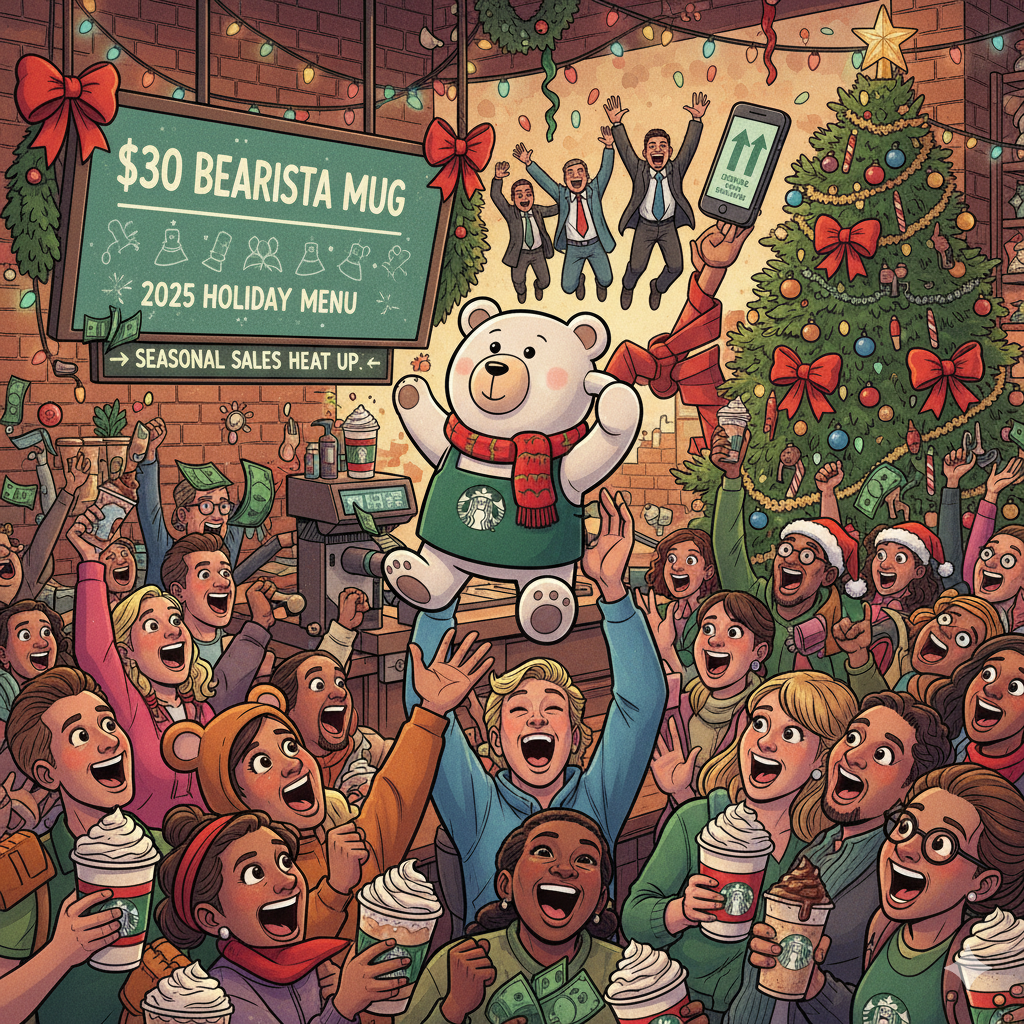
As the holiday season approaches, Starbucks Corporation (NASDAQ: SBUX) is once again leveraging its unmatched brand power, nostalgia, and creative marketing to spark joy—and sales—across its global customer base. On November 6, 2025, Starbucks rolled out its much-anticipated holiday menu and merchandise collection, reigniting the familiar red cup season with an offering that’s both emotionally resonant and financially strategic.
While customers see this as the start of festive cheer, investors see it as a pivotal moment for the company’s Q4 performance, often one of the strongest quarters in Starbucks’ fiscal year. Beyond the lattes and cake pops lies a sophisticated business model built on emotional branding, scarcity, and collectability—strategies that have become synonymous with Starbucks’ long-term success.
The Holiday Lineup: Familiar Comforts with Strategic Innovation
The 2025 Starbucks holiday menu is a blend of time-tested favorites and fresh innovations, designed to stir both nostalgia and curiosity. Seasonal staples like the Peppermint Mocha, Caramel Brulée Latte, Iced Sugar Cookie Latte, and Iced Gingerbread Chai are back—each acting as an annual comfort ritual for millions of customers.
In the bakery section, Starbucks introduced the Polar Bear Cake Pop and Cinnamon Pull-Apart Bread, which join holiday classics such as the Snowman Cookie and Cranberry Bliss Bar. The move isn’t just about flavor—it’s about maintaining emotional continuity with loyal customers while offering new incentives for repeat visits.
From an investor’s standpoint, this continuity matters. Starbucks has consistently demonstrated that its limited-time offerings (LTOs) significantly boost same-store sales and drive engagement on social platforms. Each festive season, the brand sees a notable uptick in customer frequency, app usage, and digital gift card purchases—all translating into robust seasonal revenue.
The $30 Bearista Mug: A Collector’s Dream, a Marketer’s Masterstroke
Perhaps the most talked-about element of Starbucks’ 2025 holiday rollout isn’t a drink—it’s a mug. The “Bearista” glass cold cup, a 20-ounce bear-shaped tumbler with a green beanie lid, priced at around $29.95, has taken social media by storm.
Within hours of its launch, the Bearista mug began selling out nationwide, sparking a secondary market frenzy. Online resellers are listing the limited-edition cup for anywhere between $150 and $400, proving once again that Starbucks’ holiday merchandise strategy is as lucrative as its beverage sales.
But there’s a deeper strategy behind this. Starbucks has long mastered the art of creating perceived scarcity. Each year, a handful of holiday merchandise items—especially limited-edition tumblers and mugs—become must-have collectibles. This generates massive earned media coverage, user-generated content, and brand buzz, all of which amplify Starbucks’ presence at virtually no additional advertising cost.
For investors, this is a marketing goldmine. Limited merchandise drops like the Bearista mug not only create short-term sales spikes but also strengthen brand loyalty—turning casual customers into brand advocates and collectors.
Design That Speaks the Language of Emotion
Starbucks’ 2025 holiday cup designs are another subtle yet powerful driver of brand sentiment. Inspired by baristas’ iconic green aprons, the new cups feature plaid patterns, ribbon motifs, and cheerful accents, all conveying warmth, nostalgia, and community.
Beyond aesthetics, these cups serve as emotional touchpoints. Each design evokes the feeling of shared experiences—the smell of coffee in winter, the chatter of a cozy café, and the joy of gifting. It’s this intangible connection that makes Starbucks not just a coffee brand, but a cultural phenomenon.
For Starbucks shareholders, that cultural power translates into pricing resilience. In an era of inflation and price sensitivity, Starbucks continues to maintain strong margins because its customers aren’t just buying coffee—they’re buying an experience.
Merchandise as a Revenue Stream and Brand Reinforcer
While drinks remain Starbucks’ primary revenue source, its merchandising arm has become a silent profit engine. Each year, Starbucks rolls out a festive collection of tumblers, mugs, and cold cups, often priced between $20 and $40.
These aren’t just accessories; they’re lifestyle symbols. Owning a Starbucks holiday mug is as much about self-expression as it is about caffeine. The company’s understanding of this emotional currency has allowed it to build a secondary product ecosystem that extends its brand into homes and offices.
Financially, the merchandise segment contributes meaningfully to incremental revenue, particularly during the holiday quarter. For instance, in previous years, analysts noted that Starbucks’ merchandise sales grew by double digits during festive periods—boosted further by exclusive online drops and app-based promotions.
Strategic Timing: Holiday Launch Aligns with Consumer Sentiment
The early-November launch is no coincidence. As inflation pressures consumers, Starbucks positions itself as a small luxury—a treat that feels indulgent yet attainable. This “affordable indulgence” strategy is vital in economically uncertain times when consumers cut back on big-ticket items but continue to spend on small comforts.
Historically, the holiday season contributes a significant share to Starbucks’ Q1 fiscal earnings (October–December). Analysts often watch this period closely to gauge the brand’s momentum heading into the new year. Early social media traction and positive consumer sentiment around the Bearista mug and returning beverages suggest a strong holiday quarter ahead.
Digital Engagement: The App That Keeps on Giving
The Starbucks Rewards app continues to be the backbone of its customer engagement strategy. Every seasonal launch is tightly integrated with the app ecosystem—offering early access, reward bonuses, and exclusive items to members.
This not only encourages digital ordering but also strengthens Starbucks’ data-driven insights into consumer behavior. By understanding what customers buy, when they buy it, and how often they return, Starbucks continuously refines its product mix and promotional timing.
For investors, the app’s growth translates directly into recurring revenue potential. Starbucks Rewards membership has historically grown in double digits year-over-year, and the company continues to report that Rewards customers account for over 50% of U.S. store revenue.
Stock Market Perspective: Brewing Confidence Amid Volatility
From an investor’s lens, Starbucks’ holiday success story comes at a crucial time. Global coffee prices have been volatile, wage costs are rising, and competition from boutique chains continues to intensify. Yet, Starbucks has consistently demonstrated its ability to maintain pricing power and customer loyalty even in challenging markets.
The 2025 holiday rollout reinforces that narrative. As analysts observe early consumer trends, many anticipate a positive impact on Q4 same-store sales (SSS) and overall revenue momentum heading into 2026.
Starbucks’ focus on emotional branding, innovative merchandise, and digital engagement positions it well to navigate macroeconomic headwinds. The company’s proven model of monetizing nostalgia and community continues to resonate across demographics, from Gen Z to retirees.
The Human Element: Why Starbucks Still Wins Hearts
What makes Starbucks’ strategy stand out is its understanding of human emotion. In a world of fast commerce and fleeting trends, Starbucks offers familiarity, comfort, and connection. A Peppermint Mocha isn’t just a drink—it’s a ritual. A holiday cup isn’t just packaging—it’s a keepsake.
That emotional resonance is something few brands achieve at this scale. It’s what keeps customers lining up for $6 lattes, collectors hunting for $30 mugs, and investors confident that Starbucks’ growth story is far from over.
Conclusion: Brewing Joy, Building Value
Starbucks’ 2025 holiday campaign is more than a seasonal celebration—it’s a strategic masterclass in brand longevity. By blending tradition with innovation, scarcity with accessibility, and emotion with strategy, Starbucks continues to set the gold standard for consumer engagement.
For investors, the message is clear: Starbucks isn’t just selling coffee this holiday season—it’s selling joy, nostalgia, and community. And as history shows, those are some of the most profitable assets in business.
2 thoughts on “Starbucks Brews Holiday Magic — and Investor Buzz — with Its 2025 Festive Menu and $30 Bearista Mug Craze”
Comments are closed.