How Trump’s Tariff Plans Could Reshape Global Markets and Investor Sentiment

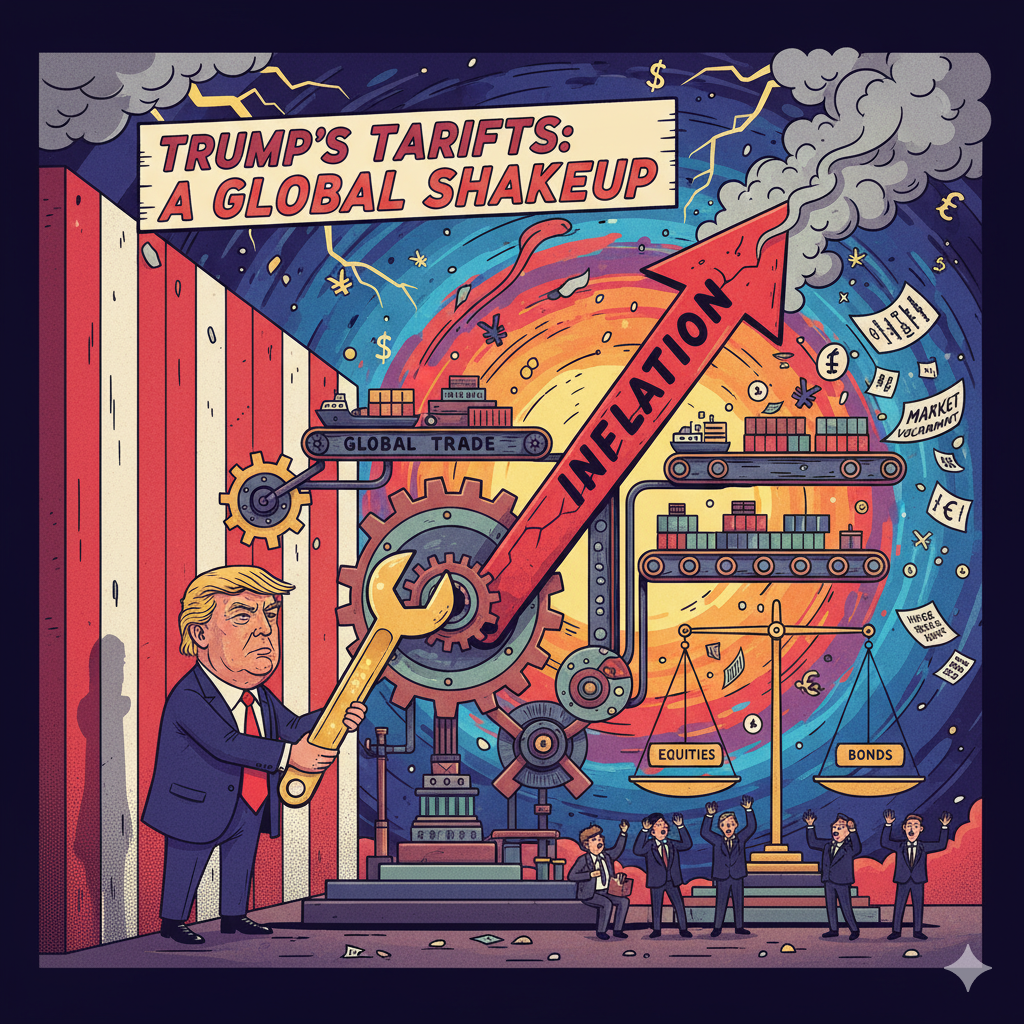
In the world of global investing, few things move markets as sharply as trade policy. With Donald Trump’s proposed tariff strategy back in focus, investors across equities, bonds, and commodities are once again recalibrating their expectations. The potential for a sweeping tariff policy—targeting both allies and rivals—raises questions about inflation, supply chains, and the future of global trade. As a market analyst, I see this as a pivotal moment where investors must balance caution with strategy.

The Tariff Ripple Effect: Inflation Concerns Return

The first and most immediate impact of Trump’s proposed tariffs lies in the inflation story. When tariffs increase the cost of imported goods, companies—particularly those in manufacturing and retail—are forced to absorb or pass on these costs. If passed to consumers, this can fuel inflation.

For an economy already wrestling with price pressures, a fresh round of tariffs could challenge the progress made by central banks in stabilizing inflation. This development could push the Federal Reserve to maintain higher interest rates for longer, curbing borrowing and investment appetite.

Market participants are already positioning themselves for this scenario. Treasury yields have inched higher, reflecting expectations that inflation might stay stickier than anticipated. For bond investors, that means being selective—favoring shorter-duration bonds or inflation-linked securities to protect real returns.

Equities Under the Microscope: Winners and Losers

Stock markets are often quick to react to changes in trade dynamics, and this time is no different. Companies with significant global exposure—particularly in technology, automotive, and consumer goods—are likely to face headwinds. Tariffs raise input costs and disrupt supply chains that have been optimized over decades of globalization.

For instance, U.S. automakers that rely heavily on imported components from Asia or Mexico may see production costs rise, squeezing profit margins. Similarly, tech giants dependent on semiconductor imports could face pricing pressure.

However, not all sectors will lose. Domestic producers and companies catering primarily to local markets might enjoy a relative advantage. Firms in defense, energy, and certain infrastructure-linked sectors could see renewed investor interest as capital shifts toward more insulated parts of the economy.

From an investor’s perspective, this is the time to reassess portfolio exposure. A tactical shift toward value-oriented sectors—such as industrials or utilities—might help offset volatility in global growth stocks.

Safe Havens in Demand: Bonds and Gold Gain Favor

Whenever uncertainty looms over trade, investors instinctively turn to safe havens. This time, government bonds and gold are reclaiming their appeal. As equity volatility rises and inflation risk re-emerges, U.S. Treasuries remain the go-to asset for risk-averse capital.

Gold, too, is showing signs of renewed strength. Historically, trade wars and tariff tensions have boosted gold prices as investors hedge against currency volatility and inflation. The recent uptick in bullion demand underscores this sentiment shift.

For traders, this period could offer opportunities in gold ETFs and inflation-protected securities (TIPS). The strategy isn’t about abandoning risk entirely but balancing it smartly—protecting capital while staying exposed to potential upside in cyclical recoveries.

The Currency Angle: Dollar Dynamics at Play

Tariffs can influence more than just goods and equities—they also reshape currency markets. When tariffs rise, global trade volumes can slow, reducing demand for certain currencies. Interestingly, the U.S. dollar often strengthens in such environments, as investors view it as a safe-haven currency amid global uncertainty.

However, a stronger dollar can create a double-edged sword. While it attracts capital inflows, it also makes U.S. exports less competitive—potentially worsening the trade balance that tariffs aim to fix. For emerging markets, a firm dollar can spell trouble, leading to capital outflows and weakening local currencies.

Currency traders, therefore, should prepare for higher volatility in USD pairs, particularly against Asian and Latin American currencies. Hedging positions or favoring stronger economies with current account surpluses could help manage currency risks effectively.

Corporate Strategy Shifts: Supply Chains and Sourcing Revisite

Beyond markets, corporate boardrooms are also bracing for impact. Global companies are reassessing their supply chains, a process already underway since the pandemic. Tariffs accelerate this trend by encouraging localization or “friend-shoring”—sourcing materials from politically aligned nations.

This strategic shift could benefit countries like India, Vietnam, and Mexico, as multinational firms diversify away from China. Investors tracking these economies might find opportunities in manufacturing, logistics, and infrastructure development.

For equity investors, exchange-traded funds (ETFs) focused on emerging markets that stand to gain from supply chain realignment could offer medium-term upside.

Policy Implications: Central Banks Caught in a Dilemma

Monetary policy could face its most complex test yet. On one hand, tariffs can dampen growth by raising costs and reducing global demand. On the other hand, they can spur inflation, forcing central banks to stay hawkish longer.

This tug-of-war means policymakers may need to balance between curbing inflation and avoiding a recession. The Federal Reserve, European Central Bank, and Bank of England will likely maintain a cautious stance, communicating a data-dependent approach.

For equity markets, this means earnings multiples may remain compressed, with growth stocks underperforming value names until policy clarity emerges.

Investor Strategy: Navigating Tariff-Driven Markets

For investors, uncertainty doesn’t necessarily mean inactivity—it calls for strategic positioning. Here are three practical approaches:

  1. Diversify Across Geographies: Reduce exposure to regions or sectors most vulnerable to trade disruption. Adding European or Indian equities could provide balance.
  2. Focus on Pricing Power: Companies with the ability to pass on higher costs to consumers—such as those in healthcare, luxury goods, or utilities—can protect margins better.
  3. Balance Risk with Real Assets: Exposure to commodities and real estate can offer a natural hedge against inflationary pressures.

Patience and discipline will be critical. While markets may react negatively in the short term, long-term investors can find value as volatility creates new entry points.

The Human Element: Investor Sentiment and Market Psychology

Markets are not just about numbers—they’re a reflection of collective psychology. The re-emergence of tariff fears can quickly erode investor confidence, even if fundamentals remain stable. This psychological element often drives markets to overreact, creating opportunities for those who remain calm and analytical.

Seasoned investors understand that volatility is the price of opportunity. As uncertainty unfolds, those with a clear framework—focused on long-term value rather than short-term noise—will likely come out ahead.

Conclusion: Preparing for a New Trade Reality

Trump’s tariff proposals, if implemented, could redefine the global trade order once again. The implications stretch far beyond economics—they affect politics, supply chains, and investment behavior worldwide.

For investors, this is not a time for fear, but for flexibility. Understanding how tariffs influence inflation, corporate earnings, and market sentiment will be key to navigating the months ahead. Whether you are a retail trader, institutional investor, or portfolio manager, the message is clear: stay informed, stay balanced, and stay adaptive.

As global markets adjust to the potential return of protectionist policies, those who manage risk intelligently and keep their eyes on long-term fundamentals will emerge stronger—because in markets, uncertainty isn’t a threat, it’s an opportunity waiting to be seized.
UK Construction Activity Falls at Fastest Pace in Over Five Years: A Warning Sign for the Broader Economy

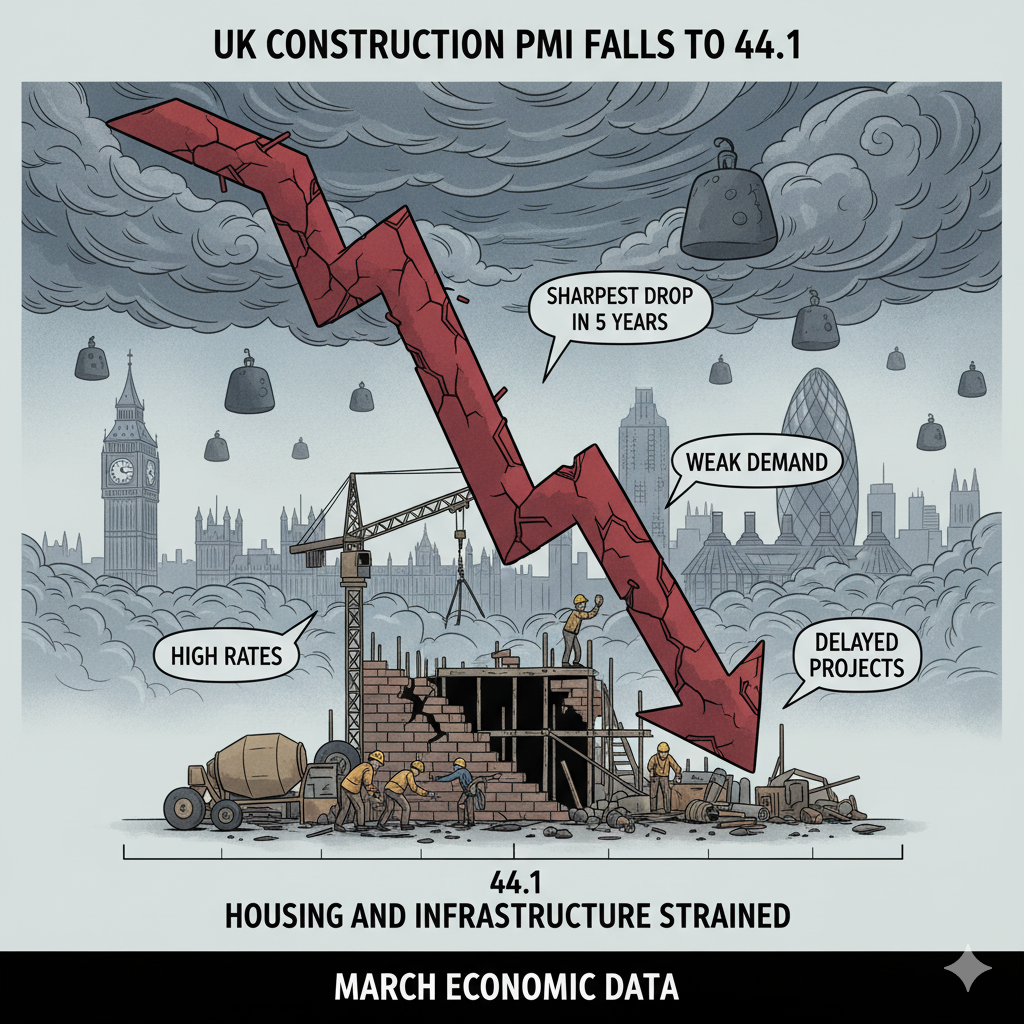
The latest data from S&P Global has sent ripples through the financial and real estate markets. The UK Construction Purchasing Managers’ Index (PMI) for October dropped to 44.1, down from 46.2 in September, marking the steepest decline in construction activity in more than five years. For market analysts and investors, this signals growing strain across one of the most economically sensitive sectors — a development that could ripple far beyond bricks and mortar.


The Numbers That Matter

A PMI reading below 50 typically indicates contraction. The latest figure of 44.1 is not just below that threshold; it is the lowest since the pandemic’s early disruption in May 2020. What’s even more concerning is that the contraction is broad-based — affecting civil engineering, residential construction, and commercial projects alike.

  • Civil engineering saw the sharpest fall, with an index level near 35.4, showing a steep drop in infrastructure projects.
  • Residential construction, the heartbeat of the housing market, slumped to 43.6, reflecting weak demand and high financing costs.
  • Commercial construction held up slightly better but still contracted, reflecting the cautious stance of corporations amid ongoing economic uncertainty.

Such widespread weakness across subsectors is rarely seen outside of recessions. It suggests that construction — a key pillar of the UK economy — is struggling under the weight of elevated interest rates, falling new orders, and fiscal restraint.


What’s Driving the Downturn?

The headline decline in activity stems from a combination of cyclical and structural factors. Let’s unpack them one by one:

  1. High Borrowing Costs:
    The Bank of England’s aggressive rate-hiking campaign to fight inflation has made financing new projects considerably more expensive. Mortgage rates remain elevated, curbing housing demand, while commercial developers are facing higher yields on borrowed capital, forcing many to delay or cancel planned investments.
  2. Weak Client Demand and Risk Aversion:
    Developers and public-sector clients alike are becoming increasingly cautious. With uncertainty surrounding economic growth and potential fiscal tightening after the next general election, there’s a growing “wait-and-see” attitude that slows project approvals.
  3. Reduced Infrastructure Spending:
    Civil engineering’s deep slump reflects government restraint. Major infrastructure projects have slowed, with several regional and transport initiatives delayed due to cost overruns and funding constraints.
  4. Supply Chain Stabilization but Low Demand:
    Interestingly, input costs and subcontractor availability have improved — suggesting supply-side pressures are easing. Yet, this improvement highlights a demand-side problem: materials are cheaper and easier to procure simply because fewer projects are being started.
  5. Lingering Inflationary Pressures:
    Although inflation has eased from double-digit levels, it continues to squeeze margins. Builders are caught between rising wages, lingering material costs, and clients unwilling to accept higher prices.

The result? A sector that is operationally stable but financially strained — one where businesses are surviving, not thriving.


The Ripple Effect on Housing and Real Estate Markets

The housing market is perhaps the most visible casualty of the construction slowdown. With residential construction activity weakening, the pipeline of new homes is tightening — even as affordability issues persist.

For potential homebuyers, this could create a paradoxical situation: fewer homes being built just as demand begins to recover once interest rates ease. That imbalance could fuel price stickiness, keeping homes expensive even in a sluggish market.

For real estate investors, this data also signals caution. Property developers may continue to struggle with cash flow and financing costs, while construction-linked stocks could face short-term headwinds. However, for long-term investors, the decline could open up attractive valuation opportunities once the rate environment stabilizes.


Investor Takeaways: Reading the Market Signals

From an equity investor’s lens, the construction PMI isn’t just an industry report — it’s a leading indicator of economic health, business confidence, and credit conditions. The drop to 44.1 is sending a message that the post-pandemic recovery momentum is losing steam.

Here’s how different asset classes might react:

  1. Construction and Building Material Stocks:
    Companies like CRH, Travis Perkins, and other infrastructure-related firms could experience short-term pressure as order books shrink. Investors may see earnings downgrades in the next quarter if this trend continues.
  2. Homebuilders:
    Major listed homebuilders such as Persimmon, Taylor Wimpey, and Barratt Developments might see weaker sales and a slowdown in new project launches. However, with their strong balance sheets, these firms could benefit from pent-up demand once interest rates begin to fall in 2025.
  3. REITs and Commercial Property Firms:
    Commercial real estate developers are facing both falling demand and higher financing costs. Office and retail spaces are still struggling with post-pandemic structural shifts, and the latest PMI data will likely compound investor caution in this space.
  4. Bonds and Fixed Income:
    The contraction in construction could be interpreted by bond markets as a sign that the economy is cooling. If the weakness spreads, it might strengthen the case for the Bank of England to consider rate cuts sooner than expected, which could support bond prices.
  5. The Pound Sterling:
    A softer economic outlook often weighs on the currency. If subsequent data confirm a slowdown in broader economic activity, the GBP may face renewed downward pressure, particularly against the USD and EUR.

A Silver Lining: Easing Costs and Improving Efficiency

Despite the bleak headline numbers, there are small positives to acknowledge. Input cost inflation has eased to its lowest level in a year, and subcontractor availability has improved — a sign that supply chains are normalizing after years of disruption.

This means construction firms can plan projects more efficiently and manage their budgets with greater predictability. However, without stronger demand, this improved efficiency may not translate into better profits in the near term.


Market Outlook: What Lies Ahead

Looking forward, most construction firms expect activity to stabilize or modestly improve in 2025, assuming borrowing costs begin to fall and public investment resumes. But much will depend on the timing and pace of the Bank of England’s monetary policy shift.

If inflation continues to cool and rate cuts arrive by mid-2025, we could see a rebound in housing and infrastructure spending later in the year. The pipeline for energy transition projects and digital infrastructure remains promising, suggesting long-term potential despite current turbulence.

However, in the near term, investors should prepare for lower corporate earnings in the construction and materials sector, along with subdued job creation and weaker demand for related financial products such as construction loans.


Final Thoughts: A Cautionary Pause, Not a Collapse

The UK’s construction downturn is serious but not catastrophic. The fall in PMI to 44.1 should be read as a pause driven by financial tightening and uncertainty, rather than an outright collapse in demand. Once interest rates begin to ease and government projects gain clarity, the sector could experience a meaningful rebound.

For now, though, investors and policymakers must tread carefully. The construction industry is not just a barometer of economic health — it’s a foundation for future growth. Its current weakness reminds us that the post-pandemic economy still stands on fragile ground.

In a world of inflation-adjusted caution and interest-rate fatigue, the message from the UK construction data is clear: the recovery isn’t over — it’s just waiting for the right conditions to build again.

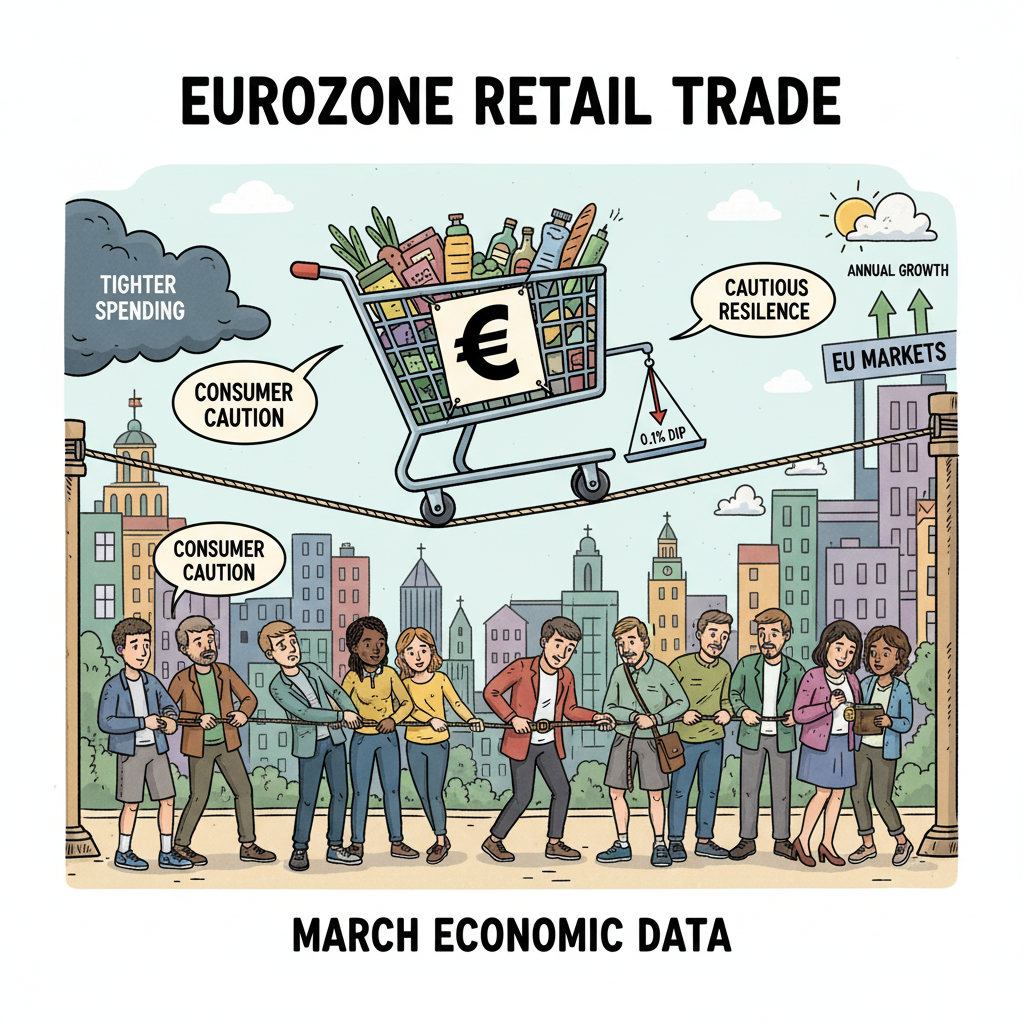
Retail Trade Volume Dips 0.1% in Euro Area and EU: What It Means for Markets and Consumers

The latest Eurostat data has offered another glimpse into Europe’s fragile economic balance — one that continues to dance between recovery and stagnation. According to the report, the volume of retail trade in the euro area and the European Union declined by 0.1% in March 2025 compared to February. While this may seem like a minor contraction, the subtle shift speaks volumes about the challenges facing consumer spending, inflationary pressures, and market sentiment across the continent.

As a stock market observer, such seemingly modest data points often act as early tremors of larger economic movements. When the backbone of the economy — the consumer — starts to show fatigue, the ripples are soon felt in corporate earnings, currency trends, and even central bank policy outlooks.

A Closer Look at the Numbers

The headline figures from Eurostat reveal a 0.1% month-on-month fall in retail trade volume in both the euro area and the broader EU. This marks a small but telling reversal following periods of mixed performance earlier in the year.

Breaking it down:

  • Sales of food, drinks, and tobacco showed a mild decline, pointing to possible belt-tightening among consumers even on essential items.
  • Non-food sales — typically an indicator of discretionary spending — also dipped, reinforcing concerns about weakening household confidence.
  • The only bright spot came from automotive fuel, which saw a 0.4% rise, hinting at increased travel or transport activity despite broader consumption softness.

These details may seem granular, but they reveal a nuanced story: while European households are still spending, their behavior has shifted toward necessity and away from indulgence.

Annual Data Shows a Resilient Yet Uneven Recovery

Interestingly, the year-over-year comparison paints a more positive picture. In March 2025, retail trade volumes rose by 1.5% in the euro area and by 1.4% in the EU compared to March 2024.

This suggests that despite short-term softness, the overall consumer economy remains stronger than it was a year ago. Inflation has cooled from the highs of 2022–2023, and wages have seen gradual improvement in several European economies. This combination has lent some breathing space to households — though not enough to trigger a robust rebound in consumption.

The takeaway? The European retail story is not one of collapse, but of cautious recalibration. Consumers are spending, but prudently. They are saving more, comparing prices, and waiting for discounts. It’s an environment that favors value-oriented retailers and challenges high-end discretionary brands.

Country Breakdown: Diverging Consumer Trends

The Eurostat data also highlights striking regional differences.

  • Slovenia (-2.0%), Estonia (-1.3%), and Slovakia (-0.9%) posted the sharpest monthly declines in retail trade.
  • Western European economies like France, Germany, and the Netherlands showed smaller movements, indicating relative stability.
  • Southern European countries, often more sensitive to tourism-driven spending, recorded marginal variations as the spring travel season began.

These disparities underscore how uneven the recovery remains. Smaller economies with tighter credit conditions and higher inflation are seeing quicker slowdowns in consumer demand. Larger economies, on the other hand, are cushioning the decline through government support and stronger labor markets.

For investors, this divergence is crucial. It suggests that the European retail landscape will remain fragmented — creating selective opportunities rather than a broad-based consumer rally.

What’s Driving the Weakness?

There are several intertwined factors behind the 0.1% decline:

  1. Persistent Inflationary Effects – Although inflation has moderated, the cost of living remains elevated. Many households are still prioritizing rent, utilities, and essentials over leisure and non-essential shopping.
  2. Higher Interest Rates – The European Central Bank’s previous rate hikes continue to weigh on borrowing and credit availability. With higher loan and mortgage costs, consumers are becoming more cautious with discretionary purchases.
  3. Geopolitical Uncertainty – Ongoing conflicts and supply chain disruptions have added a layer of unpredictability to household spending decisions. Consumers are simply not confident enough to splurge.
  4. Transition in Consumption Habits – Post-pandemic, there’s a noticeable shift toward experiences, travel, and digital services — areas not fully captured in traditional retail sales data.

These headwinds together explain why even a 0.1% decline is worth watching. In a low-growth, high-cost environment, small numbers often mask bigger behavioral shifts.

Market Implications: Reading Between the Lines

From a market standpoint, the retail trade data ties directly into monetary policy expectations, consumer stock valuations, and economic forecasts.

  • For equity markets, retail and consumer goods stocks may face renewed volatility. Companies dependent on household spending — from fashion to electronics — could see lower sales momentum reflected in upcoming earnings.
  • Bond markets might interpret the soft retail numbers as a signal that economic growth is cooling, potentially increasing bets on future ECB rate cuts.
  • Currency traders could see this as mildly bearish for the euro in the short term, as slower spending points to weaker GDP growth prospects.

However, it’s equally important to note the resilience in annual data. The fact that retail volumes remain above last year’s levels suggests Europe’s consumer sector isn’t collapsing — it’s merely pausing for breath. For long-term investors, this could mean a period of accumulation rather than panic selling.

Sectoral Outlook: Winners and Losers

Within the retail ecosystem, trends are becoming clearer:

  • Value Retailers and Discounters are gaining traction. As consumers hunt for deals, companies like Lidl, Aldi, and other low-cost chains are likely to benefit.
  • Luxury and Non-Essential Retailers may experience softness, particularly in Central and Eastern Europe where inflation has bitten hardest.
  • E-commerce Platforms continue to hold an advantage, especially with consumers comparing prices and opting for convenience.
  • Fuel and Mobility-related Businesses remain resilient, thanks to rising travel demand and a rebound in logistics.

For stock investors, diversification within the consumer segment is now more important than ever. Betting on high-end retail alone could expose portfolios to downside risk if spending tightens further.

A Delicate Balancing Act for Policymakers

The European Central Bank and national governments now face a familiar challenge — balancing the need to control inflation without strangling growth.

If weak retail data continues for a few more months, it could prompt a softer monetary tone from the ECB, particularly if other sectors show similar fatigue. On the other hand, policymakers remain wary of cutting rates too early, fearing a resurgence of inflationary pressures.

This creates a narrow corridor for decision-making. The next few months of consumer and employment data will be critical in shaping that path.

Final Thoughts: A Pause, Not a Panic

A 0.1% decline in retail trade volume may not make headlines, but it serves as a quiet reminder that Europe’s economic recovery remains fragile. Consumers are adjusting — not retreating — as they navigate inflation, interest rates, and uncertainty.

From an investor’s perspective, this environment calls for selectivity, patience, and perspective. Value-oriented retailers, essential goods producers, and diversified consumer companies are likely to emerge stronger, while high-growth discretionary names could face temporary pressure.

Europe’s story today isn’t one of crisis, but of cautious recalibration — a phase where stability matters more than speed, and resilience takes precedence over rapid growth.

In summary, the latest Eurostat figures tell a subtle yet important story: Europe’s consumers are still standing, just a little more careful with every euro they spend. And in the grand chessboard of the markets, that restraint might just shape the next few moves for stocks, currencies, and central bankers alike.

Treasury Yields Surge on Hawkish Fed Signals — What Investors Need to Understand Now

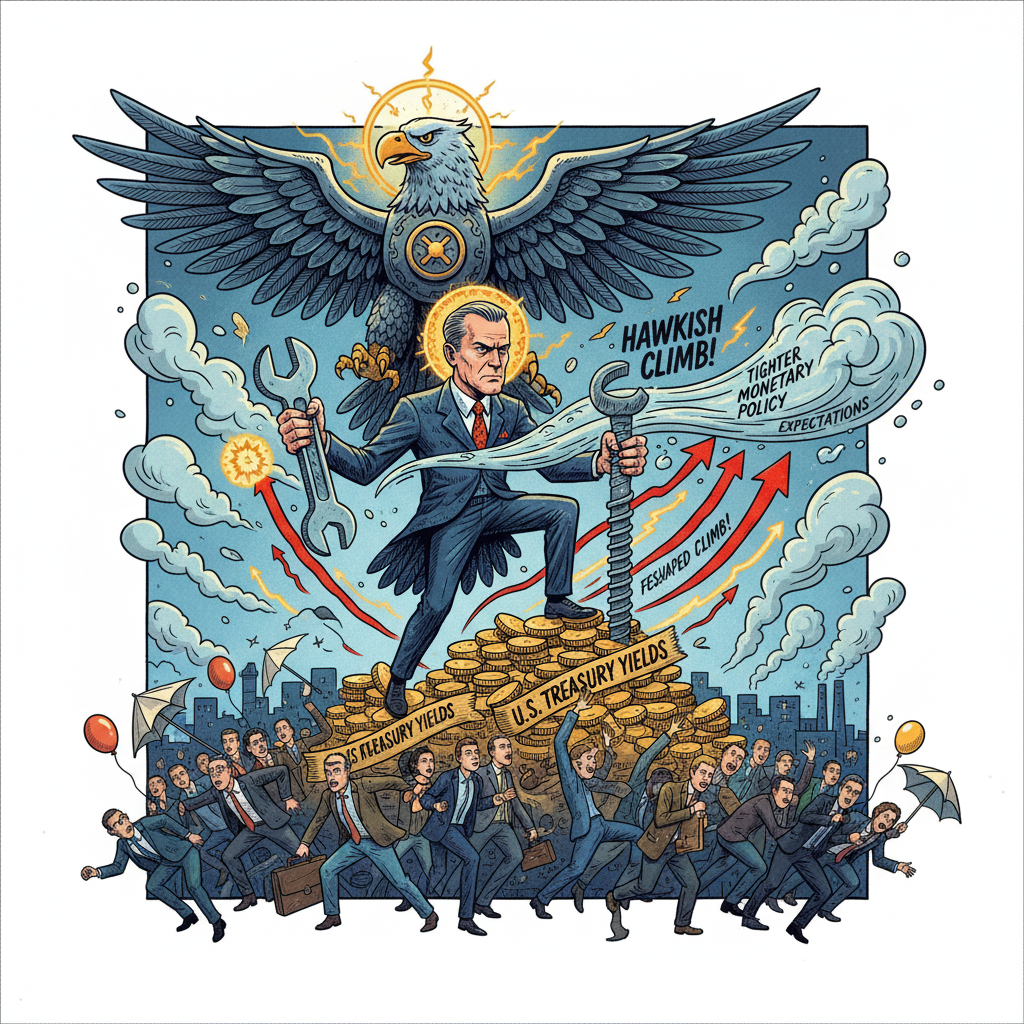
In recent weeks, U.S. Treasury yields have been on the move again — and this time, the surge has rattled both bond and equity markets. According to Kathy Jones, Chief Fixed Income Strategist at Charles Schwab, these moves are not just routine fluctuations. They’re a reflection of a more hawkish tone from Federal Reserve Chair Jerome Powell, signaling that the central bank may keep interest rates higher for longer than previously anticipated.

For investors trying to interpret what this means for portfolios, the shift in yields carries deep implications. As a market analyst who’s seen the cyclical dance between yields, inflation, and equities many times, I can tell you: this is a moment where understanding the “why” behind the yield curve is more important than ever.

The Rise in Treasury Yields: What’s Happening?

Treasury yields — the interest investors earn on U.S. government bonds — are the backbone of global financial markets. When yields rise, borrowing costs increase for governments, corporations, and consumers alike. Mortgage rates climb, stock valuations shift, and the entire cost of money in the system adjusts.

In late October and early November, yields on benchmark 10-year Treasuries rose sharply after Powell’s latest comments suggested the Fed is not yet convinced inflation is under control. Powell’s tone, described as “cautiously hawkish,” emphasized the need for vigilance, hinting that rate cuts may come much later than markets had been expecting earlier in the year.

This shift dashed the hopes of investors who had begun pricing in an early easing cycle. As a result, the bond market sold off, sending yields higher.

Why the Fed’s Tone Matters So Much

Monetary policy communication is one of the most powerful tools the Federal Reserve wields. When Powell speaks, markets listen — not just for what he says, but for what he implies.

Over the past few months, the Fed’s message has subtly changed. Earlier, Powell acknowledged progress in cooling inflation. But in recent statements, he’s been more cautious, highlighting persistent risks in wage growth and strong consumer spending that could reignite inflationary pressures.

This change in rhetoric is significant because bond traders adjust their expectations almost instantly. When investors anticipate that interest rates will stay higher for longer, they demand greater compensation — in the form of higher yields — for holding longer-term debt.

In essence, rising Treasury yields are not random — they’re a vote of confidence in the Fed’s resolve to keep monetary conditions tight until inflation is truly tamed.

The Mechanics: How Hawkishness Pushes Yields Higher

Let’s break down the process. When Powell or other Fed officials indicate that the central bank might delay rate cuts or even consider further tightening, several things happen simultaneously:

  1. Market Repricing: Traders reassess the future path of interest rates, leading to a selloff in bonds that were priced for lower rates.
  2. Term Premium Rises: Investors demand higher yields to compensate for the risk of holding longer-duration assets in an uncertain environment.
  3. Global Ripples: Since U.S. Treasuries are the world’s benchmark safe asset, their yield movement impacts global borrowing costs — from corporate bonds in Europe to mortgages in Asia.

This dynamic explains why even subtle changes in Fed communication can trigger significant shifts in global financial markets.

The “Higher-for-Longer” Environment: What It Means

The Federal Reserve’s stance suggests that even if inflation continues to moderate, interest rates won’t fall as quickly as many hoped. This new “higher-for-longer” reality has major implications across asset classes:

  • For bonds: Short-term Treasuries may remain attractive for yield-seeking investors, but long-term bonds could stay under pressure as yields remain elevated.
  • For stocks: Growth stocks, which rely heavily on future earnings, typically struggle when yields rise because their discounted cash flows become less valuable.
  • For housing: Mortgage rates, closely linked to the 10-year Treasury yield, could stay above 7%, keeping affordability low and weighing on home sales.
  • For currencies: A hawkish Fed often strengthens the U.S. dollar, pressuring emerging market currencies and commodity prices.

In short, higher yields can act like gravity on markets — pulling down valuations and tightening financial conditions across the board.

The Broader Context: Inflation and Market Psychology

While headline inflation has cooled from its 2022 highs, core inflation — which excludes food and energy — remains sticky. Wages are still growing faster than historical norms, and the job market, though softening slightly, remains tight.

This combination worries the Fed because it signals that inflationary pressures could reemerge if policy is loosened prematurely. Powell’s comments reflect this concern. His message to markets is simple: “We can’t declare victory yet.”

As a result, investors are recalibrating expectations. Instead of pricing in multiple rate cuts for 2025, markets are now bracing for an extended period of elevated policy rates. That’s why yields on the 10-year and 30-year Treasuries have climbed — investors are demanding compensation for long-term inflation uncertainty.

How Investors Should Navigate This Market

From a portfolio perspective, these moves in Treasury yields represent both risk and opportunity.

  1. Diversify Duration Exposure:
    Investors holding long-term bonds may face continued price volatility. Shifting part of the portfolio to shorter-duration instruments, such as 6-month or 1-year Treasuries, can lock in high yields with less exposure to rate swings.
  2. Look for Real Return Opportunities:
    Treasury Inflation-Protected Securities (TIPS) and floating-rate notes can provide a hedge against persistent inflation and policy uncertainty.
  3. Focus on Quality:
    In rising yield environments, credit spreads often widen. It’s prudent to favor high-quality corporate bonds over lower-rated debt, which could be hit harder if borrowing costs rise further.
  4. Stay Selective in Equities:
    Higher yields tend to compress price-to-earnings multiples, especially for tech and growth sectors. Investors may find better relative value in defensive industries like healthcare, utilities, and consumer staples.
  5. Don’t Overreact:
    Market psychology often swings to extremes. While yields may stay high in the near term, they can also present future opportunities for long-term investors once inflation stabilizes and policy pivots begin.

Global Implications: A Shifting Financial Landscape

The rise in U.S. Treasury yields doesn’t happen in isolation. It influences everything from global debt markets to emerging economies’ borrowing costs.

When U.S. yields rise, international investors often reallocate funds back to the U.S., attracted by higher returns and a strong dollar. This can drain liquidity from emerging markets, leading to currency depreciation and capital flight in vulnerable economies.

At the same time, higher U.S. yields increase competition for capital. Corporate and sovereign borrowers worldwide must offer more attractive rates to lure investors, effectively tightening global financial conditions.

In this way, Powell’s hawkish stance indirectly impacts everything from Tokyo’s bond yields to Mumbai’s equity flows.

Powell’s Balancing Act: The Tightrope Between Growth and Stability

The Federal Reserve faces a delicate balancing act. Keep rates too high for too long, and it risks triggering a deeper economic slowdown or recession. Cut rates too soon, and inflation could resurge — undermining hard-won progress.

Powell’s communication strategy reflects this tension. By emphasizing caution and flexibility, he’s trying to keep markets disciplined without choking off growth entirely.

For investors, this means navigating a narrow corridor of opportunity — one where timing, diversification, and discipline will define success.

Conclusion: Reading Between the Lines of the Yield Curve

In the end, the recent surge in Treasury yields is less about panic and more about recalibration. The market is adjusting to the reality that the Fed’s fight against inflation isn’t over yet.

For long-term investors, this is a moment to stay informed, not alarmed. Higher yields, while challenging in the short term, also restore value to fixed income markets after years of ultra-low rates.

The takeaway is simple: don’t fear the yield spike — understand it. It’s a reflection of an economy finding its equilibrium in a post-pandemic world where inflation, policy, and growth are being redefined.

For those who keep a steady hand and a long view, these turbulent yield movements may eventually pave the way for stronger, more balanced market returns.

In short: Treasury yields are rising not by accident but because the Fed, led by Jerome Powell, is signaling vigilance against inflation. Investors who adapt wisely to this “higher-for-longer” era can still find opportunity amid the volatility.

Rolex and Partners Group Take Swiss Tariff Plea Direct to Washington — What It Means for Markets

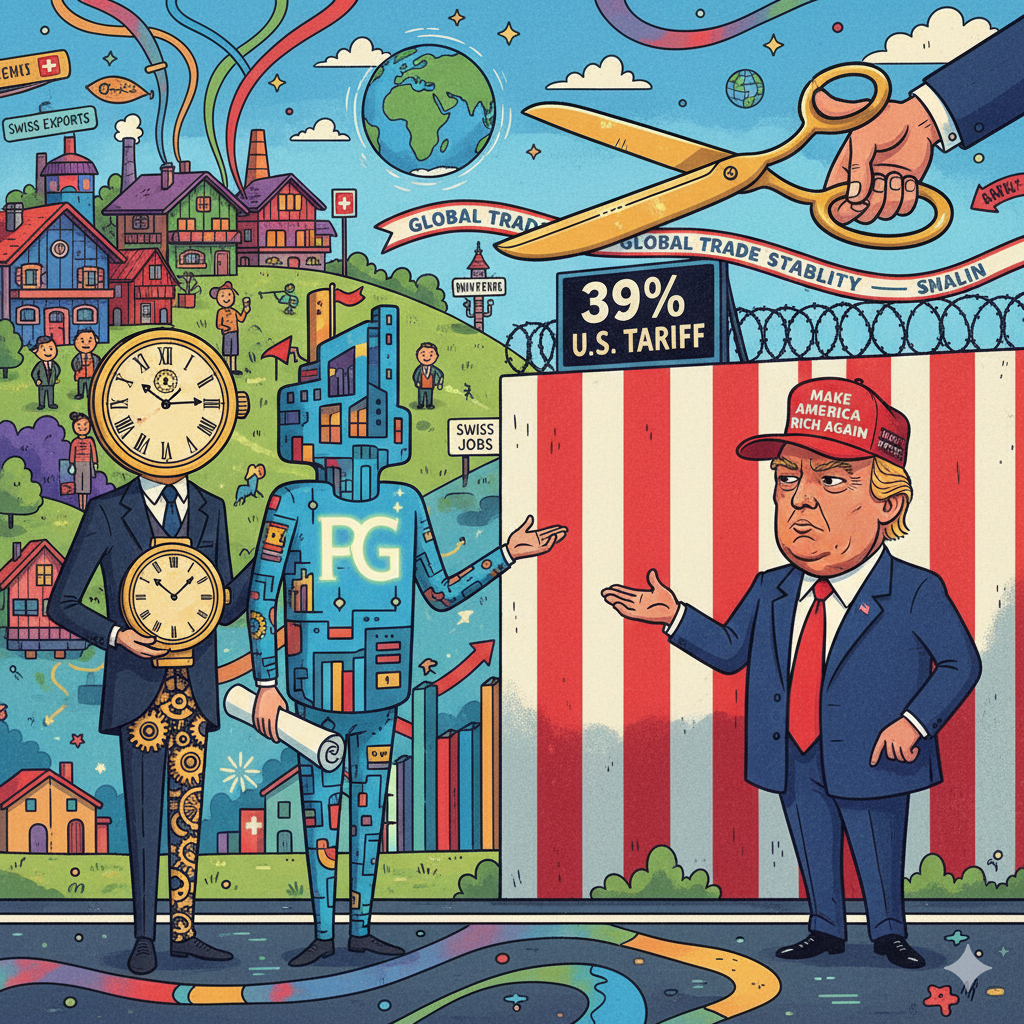
In a bold and rare move, top executives from Switzerland’s most prominent companies, including Rolex and Partners Group, have gone straight to the heart of power — Washington D.C. — to appeal directly to former U.S. President Donald Trump over the 39% tariff imposed on Swiss imports. This unprecedented tariff hike has sent ripples across global trade corridors and rattled the Swiss export sector, long celebrated for its precision, quality, and reliability.

As a market analyst observing the pulse of global trade, this development is more than just another trade headline. It’s a wake-up call — not only for Swiss exporters but also for investors and policymakers worldwide — about the fragility of global supply chains in the face of shifting political and economic tides.


The Unlikely Lobby: Rolex, Partners Group, and Swiss Industry Titans Unite

For decades, Switzerland has enjoyed a reputation for quiet diplomacy, political neutrality, and stability — qualities that have allowed its corporations to thrive globally without overt political interference. So, when the CEOs of Rolex, Partners Group, and several other Swiss giants decided to take their plea directly to the U.S., it signaled the seriousness of the situation.

The 39% tariff slapped on Swiss goods by the U.S. government marks one of the steepest duties levied on a developed economy. For an export-driven country like Switzerland, where watchmaking, precision instruments, and financial services form the backbone of national revenue, this tariff isn’t just a bureaucratic issue — it’s a potential blow to profitability, competitiveness, and long-term trade relations.

The delegation included representatives from sectors beyond watches — including gold refining, commodity trading, and shipping — reflecting how widespread the tariff’s impact truly is. These industries together contribute billions to the Swiss GDP and employ thousands globally.


The Tariff Shock and Its Economic Ripple Effect

The Swiss economy thrives on exports. Roughly 70% of Swiss GDP is tied to international trade, with the United States being one of its top export destinations. Products like luxury watches, pharmaceuticals, and machinery dominate the export list.

With a 39% tariff, the price competitiveness of Swiss goods in the U.S. market takes a heavy hit. For companies like Rolex, which already operate at premium pricing levels, passing on the full cost to consumers risks alienating buyers, especially when competing with brands from nations not subject to such steep duties.

For mid-tier exporters and industrial suppliers, the challenge is even greater. Margins in manufacturing and precision equipment are already tight. Absorbing additional costs could erode profits and, in the worst case, lead to layoffs or reduced production.

Investors, too, are watching closely. The Swiss Market Index (SMI) has shown signs of pressure, particularly in export-heavy stocks. Meanwhile, U.S.-listed retailers that depend on Swiss imports — from high-end watch boutiques to pharmaceutical distributors — are bracing for potential supply disruptions or higher inventory costs.


Behind the Move: Trump’s Trade Strategy and Its Global Impact

The Trump administration’s decision to impose tariffs on Swiss goods is part of a broader push to rebalance trade relationships that it deems unfair. The U.S. trade deficit and the dominance of foreign manufacturing have been recurring themes in Trump’s economic playbook, and Switzerland — despite its small size — has not escaped scrutiny.

From Washington’s perspective, the tariffs are a tool to encourage domestic production and renegotiate trade terms. From Switzerland’s standpoint, however, it feels like a diplomatic snub to one of the world’s most reliable trade partners.

The direct appeal by business leaders is both strategic and symbolic. It bypasses slow-moving government diplomacy and instead leverages personal engagement with the political figure who still wields significant influence in U.S. trade policy discussions.


Corporate Diplomacy in Action

The fact that Rolex and Partners Group led this delegation underscores how even traditional, discreet Swiss companies are evolving in their global engagement. These firms recognize that in a world where politics increasingly shapes economics, corporate diplomacy can be as crucial as financial strategy.

Rolex, beyond being a luxury watchmaker, represents Switzerland’s craftsmanship and precision — traits synonymous with the Swiss brand itself. Partners Group, a major investment firm managing over $150 billion globally, stands for Swiss financial strength and credibility. Together, they represent both the heart and the wallet of the Swiss economy.

By taking their concerns directly to Trump, these executives sent a clear message: the tariff is not just hurting corporate profits — it’s damaging bilateral trade relations and potentially consumer choice in the luxury and manufacturing markets.


Market Implications: What Investors Should Watch

For investors, this development raises several important considerations:

  1. Swiss Exporters Face Margin Pressure:
    Companies like Swatch Group, Richemont, and even niche watchmakers may see profit margins tighten as they grapple with higher tariffs and possible supply chain disruptions. Investors holding shares in these firms should monitor quarterly earnings and forward guidance closely.
  2. U.S. Retailers Could Face Price Hikes:
    U.S.-based luxury retailers that rely heavily on Swiss imports — such as high-end watch stores or authorized distributors — may have to raise prices, risking a slowdown in sales volumes.
  3. Currency Movements:
    The Swiss franc, traditionally a safe-haven currency, could experience volatility as markets react to changing trade expectations. A prolonged tariff regime might weaken the franc slightly to maintain export competitiveness.
  4. Policy Shifts and Negotiation Outcomes:
    The White House’s openness to further discussions suggests the potential for eventual tariff adjustments. Investors should stay alert for news of upcoming negotiations or trade concessions, which could provide relief rallies for affected stocks.

Beyond the Numbers: The Human Side of Trade

While the global focus remains on trade balances and corporate profits, it’s important to remember the human side of this story. Tariffs don’t just affect boardrooms — they impact thousands of skilled workers, artisans, and supply chain partners who depend on exports for their livelihoods.

In the Swiss watch industry, for instance, generations of craftsmen rely on steady global demand. A sudden tariff spike could mean fewer exports, trimmed production lines, and job insecurity in communities that have built their identity around precision watchmaking.

Moreover, consumers in the U.S. could also feel the impact. Higher tariffs on Swiss goods may translate to steeper prices for luxury watches, machinery, and specialized medical instruments — effectively making premium Swiss quality harder to afford.


The Road Ahead: Diplomacy or Division?

After the meeting, reports indicated that the White House was open to “further trade negotiations.” While no immediate deal was struck, this gesture provides a glimmer of hope. The U.S. and Switzerland share long-standing financial, technological, and cultural ties that neither side can afford to jeopardize.

For investors and businesses, this is a crucial period of observation. Whether the situation leads to tariff relief or escalates into a prolonged trade standoff will determine not just short-term market moves, but the future trajectory of U.S.-Swiss economic relations.


Conclusion: A Lesson in Global Interdependence

The Rolex and Partners Group initiative highlights a fundamental truth of modern economics — that markets are as much about relationships as they are about numbers. In a world increasingly shaped by political decisions, corporate leaders can no longer remain silent observers.

For investors, the message is clear: monitor not just earnings, but also diplomacy. Because in times like these, trade talks in Washington can move markets in Zurich.

As Switzerland’s top executives step into the political arena, they remind us that global trade is a two-way street — one that thrives not on tariffs, but on trust, cooperation, and mutual respect.


In short: the Swiss tariff standoff isn’t just a story about taxes and trade — it’s a reflection of how even the most stable economies must now navigate the unpredictable currents of geopolitics to protect their future.

Inflation: Why Money Supply, Not Corporate Profits, Holds the Real Power

Title: Inflation: Why Money Supply, Not Corporate Profits, Holds the Real Power

In recent years, the debate around inflation has become louder than ever. Many people point fingers at large corporations, accusing them of excessive greed and inflated profit margins as the main culprit behind soaring prices. This narrative, often dubbed “greedflation,” has captured headlines, political speeches, and even social media debates. But as any seasoned market observer or investor knows, the truth behind inflation runs much deeper — and much more complex — than just corporate behavior.

As a market analyst who’s spent years watching the ebb and flow of prices, currencies, and consumer sentiment, I can say with confidence: the expansion of the money supply, not corporate profits, is the real engine driving inflation.


The Misplaced Blame: Are Companies Really Causing Inflation?

Let’s start by dissecting the popular narrative. Many assume that corporations, driven by greed, simply raise prices to earn more money. It sounds simple and emotionally satisfying — especially when consumers feel the pain of higher grocery bills, rent, or fuel prices. But economics isn’t governed by emotions; it’s ruled by fundamentals.

In a functioning market, companies can’t just increase prices at will. Prices are not set in isolation — they’re the result of a delicate negotiation between sellers who want to maximize profit and buyers who aim to minimize spending. If a company decides to double the price of its product overnight, but customers aren’t willing to pay that premium, sales will drop, and profits will shrink. That’s not greed; that’s market discipline.

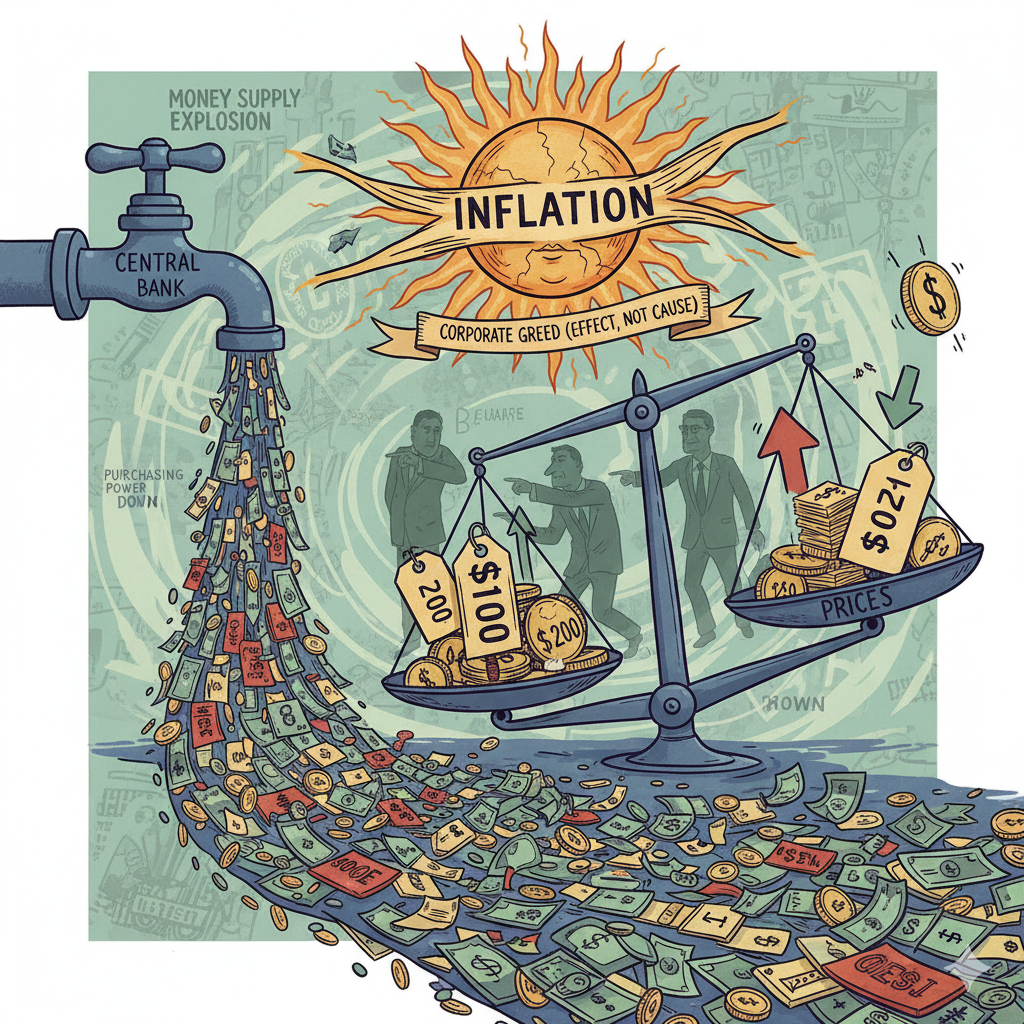
So, blaming corporate profit margins for persistent inflation is like blaming a thermometer for a fever. Profits might rise during inflationary periods, but they’re not what’s causing prices to rise across the board.


The Real Driver: Expansion of the Money Supply

To understand inflation, we must turn our attention to monetary policy — the invisible force that shapes the value of every dollar, rupee, or euro we hold. When central banks increase the money supply, they effectively create more purchasing power in the economy. But if the amount of goods and services doesn’t grow at the same pace, the balance between money and goods shifts — leading to higher prices.

Think of it this way: if there are 100 goods in an economy and $100 circulating, each good roughly costs $1. But if the money supply doubles to $200 while the number of goods remains 100, prices will naturally adjust upward to reflect the new equilibrium. Each good might now cost $2. That’s inflation in its purest form — a monetary imbalance, not corporate conspiracy.

In this sense, inflation is less about producers deciding to raise prices and more about the currency itself losing value. The more money that’s printed or injected into circulation without productivity growth, the weaker its purchasing power becomes.


Early Recipients Benefit First

One of the less discussed but crucial effects of money supply expansion is the “Cantillon Effect.” This concept explains that when new money enters the economy, it doesn’t reach everyone equally or simultaneously.

Those who receive the new money first — often government contractors, banks, or large institutions — get to spend it while prices are still relatively low. As this new money circulates and filters down to the broader public, demand increases and prices rise. By the time the average consumer or small business feels the effect, prices have already climbed, and their real purchasing power has declined.

In other words, inflation quietly redistributes wealth — benefiting those closest to the source of new money while hurting those at the end of the economic chain.


Why Corporate Profits Rise During Inflationary Periods

If corporate profits rise during inflation, it’s often a symptom rather than a cause. When money supply expands, consumer demand increases, at least temporarily. Companies may sell more goods at higher nominal prices, boosting revenue figures. However, these higher profits are often illusory — when adjusted for inflation, the real gains are far smaller.

For example, a company’s revenue may rise 10% year-on-year, but if inflation is running at 8%, the real growth is barely 2%. Meanwhile, input costs — wages, raw materials, logistics — also rise, squeezing margins. So, while it may appear that companies are profiting from inflation, in reality, they are often struggling to maintain profitability amid volatile costs and uncertain demand.


The Danger of Policy Missteps

When policymakers misdiagnose inflation, the solutions they propose often make the problem worse. Blaming corporate greed leads to price controls — restrictions that force companies to sell goods below market value. While such measures may sound appealing to consumers, they tend to backfire.

Price controls create shortages because producers lose the incentive to produce at unprofitable rates. Shelves empty, black markets thrive, and quality deteriorates. History has shown this repeatedly, from Venezuela’s grocery shortages to the U.S. fuel lines of the 1970s.

The only sustainable way to combat inflation is to control the growth of money supply and ensure that monetary expansion aligns with real economic productivity.


Investors’ Perspective: Navigating an Inflationary Landscape

As an investor, understanding the true cause of inflation helps you make smarter portfolio decisions. During inflationary periods driven by money supply growth, hard assets like gold, silver, real estate, and commodities tend to perform well. These assets preserve value as currencies weaken.

Meanwhile, long-term bonds and fixed-income instruments usually underperform because their returns are eroded by rising prices. Equity markets can offer protection, but only selectively — businesses with strong pricing power, low debt, and essential products tend to fare better than highly leveraged or speculative companies.

In essence, inflation reshuffles the investment landscape. The winners are those who understand where real value lies — not in nominal profits, but in purchasing power preservation.


The Bottom Line: It’s the Money, Not the Markets

The next time you see a headline blaming corporations for inflation, remember that markets don’t operate in a vacuum. Prices reflect the interaction of countless decisions by buyers and sellers, all influenced by one overarching factor — the quantity and value of money circulating in the system.

Corporate profits may fluctuate with inflation, but they are not the root cause. The real culprit is an overactive money supply, driven by policies that inject liquidity faster than the economy can absorb it.

Until policymakers recognize that controlling inflation means controlling money creation, we’ll continue to see cycles of price surges, political blame games, and misguided economic solutions.

As a market participant, the best strategy is not to look for villains but to understand the mechanics — because those who grasp the real forces behind inflation can protect their wealth, navigate volatility, and even find opportunity in chaos.


In short: Inflation isn’t a story of corporate greed — it’s a lesson in monetary discipline. And in finance, as in life, understanding what’s really driving the numbers makes all the difference.

In recent years, the debate around inflation has become louder than ever. Many people point fingers at large corporations, accusing them of excessive greed and inflated profit margins as the main culprit behind soaring prices. This narrative, often dubbed “greedflation,” has captured headlines, political speeches, and even social media debates. But as any seasoned market observer or investor knows, the truth behind inflation runs much deeper — and much more complex — than just corporate behavior.

As a market analyst who’s spent years watching the ebb and flow of prices, currencies, and consumer sentiment, I can say with confidence: the expansion of the money supply, not corporate profits, is the real engine driving inflation.


The Misplaced Blame: Are Companies Really Causing Inflation?

Let’s start by dissecting the popular narrative. Many assume that corporations, driven by greed, simply raise prices to earn more money. It sounds simple and emotionally satisfying — especially when consumers feel the pain of higher grocery bills, rent, or fuel prices. But economics isn’t governed by emotions; it’s ruled by fundamentals.

In a functioning market, companies can’t just increase prices at will. Prices are not set in isolation — they’re the result of a delicate negotiation between sellers who want to maximize profit and buyers who aim to minimize spending. If a company decides to double the price of its product overnight, but customers aren’t willing to pay that premium, sales will drop, and profits will shrink. That’s not greed; that’s market discipline.

So, blaming corporate profit margins for persistent inflation is like blaming a thermometer for a fever. Profits might rise during inflationary periods, but they’re not what’s causing prices to rise across the board.


The Real Driver: Expansion of the Money Supply

To understand inflation, we must turn our attention to monetary policy — the invisible force that shapes the value of every dollar, rupee, or euro we hold. When central banks increase the money supply, they effectively create more purchasing power in the economy. But if the amount of goods and services doesn’t grow at the same pace, the balance between money and goods shifts — leading to higher prices.

Think of it this way: if there are 100 goods in an economy and $100 circulating, each good roughly costs $1. But if the money supply doubles to $200 while the number of goods remains 100, prices will naturally adjust upward to reflect the new equilibrium. Each good might now cost $2. That’s inflation in its purest form — a monetary imbalance, not corporate conspiracy.

In this sense, inflation is less about producers deciding to raise prices and more about the currency itself losing value. The more money that’s printed or injected into circulation without productivity growth, the weaker its purchasing power becomes.


Early Recipients Benefit First

One of the less discussed but crucial effects of money supply expansion is the “Cantillon Effect.” This concept explains that when new money enters the economy, it doesn’t reach everyone equally or simultaneously.

Those who receive the new money first — often government contractors, banks, or large institutions — get to spend it while prices are still relatively low. As this new money circulates and filters down to the broader public, demand increases and prices rise. By the time the average consumer or small business feels the effect, prices have already climbed, and their real purchasing power has declined.

In other words, inflation quietly redistributes wealth — benefiting those closest to the source of new money while hurting those at the end of the economic chain.


Why Corporate Profits Rise During Inflationary Periods

If corporate profits rise during inflation, it’s often a symptom rather than a cause. When money supply expands, consumer demand increases, at least temporarily. Companies may sell more goods at higher nominal prices, boosting revenue figures. However, these higher profits are often illusory — when adjusted for inflation, the real gains are far smaller.

For example, a company’s revenue may rise 10% year-on-year, but if inflation is running at 8%, the real growth is barely 2%. Meanwhile, input costs — wages, raw materials, logistics — also rise, squeezing margins. So, while it may appear that companies are profiting from inflation, in reality, they are often struggling to maintain profitability amid volatile costs and uncertain demand.


The Danger of Policy Missteps

When policymakers misdiagnose inflation, the solutions they propose often make the problem worse. Blaming corporate greed leads to price controls — restrictions that force companies to sell goods below market value. While such measures may sound appealing to consumers, they tend to backfire.

Price controls create shortages because producers lose the incentive to produce at unprofitable rates. Shelves empty, black markets thrive, and quality deteriorates. History has shown this repeatedly, from Venezuela’s grocery shortages to the U.S. fuel lines of the 1970s.

The only sustainable way to combat inflation is to control the growth of money supply and ensure that monetary expansion aligns with real economic productivity.


Investors’ Perspective: Navigating an Inflationary Landscape

As an investor, understanding the true cause of inflation helps you make smarter portfolio decisions. During inflationary periods driven by money supply growth, hard assets like gold, silver, real estate, and commodities tend to perform well. These assets preserve value as currencies weaken.

Meanwhile, long-term bonds and fixed-income instruments usually underperform because their returns are eroded by rising prices. Equity markets can offer protection, but only selectively — businesses with strong pricing power, low debt, and essential products tend to fare better than highly leveraged or speculative companies.

In essence, inflation reshuffles the investment landscape. The winners are those who understand where real value lies — not in nominal profits, but in purchasing power preservation.


The Bottom Line: It’s the Money, Not the Markets

The next time you see a headline blaming corporations for inflation, remember that markets don’t operate in a vacuum. Prices reflect the interaction of countless decisions by buyers and sellers, all influenced by one overarching factor — the quantity and value of money circulating in the system.

Corporate profits may fluctuate with inflation, but they are not the root cause. The real culprit is an overactive money supply, driven by policies that inject liquidity faster than the economy can absorb it.

Until policymakers recognize that controlling inflation means controlling money creation, we’ll continue to see cycles of price surges, political blame games, and misguided economic solutions.

As a market participant, the best strategy is not to look for villains but to understand the mechanics — because those who grasp the real forces behind inflation can protect their wealth, navigate volatility, and even find opportunity in chaos.


In short: Inflation isn’t a story of corporate greed — it’s a lesson in monetary discipline. And in finance, as in life, understanding what’s really driving the numbers makes all the difference.

OctaTrader Unveils AI-Powered Candlestick Pattern Tool to Revolutionize Smart Trading

:
OctaTrader Unveils AI-Powered Candlestick Pattern Search: A Game-Changer for Modern Traders

In the ever-evolving world of trading, technology continues to shape how investors read markets, make decisions, and manage risks. The introduction of artificial intelligence (AI) in trading platforms has already revolutionized data analysis and decision-making. Now, OctaTrader, one of the prominent trading platforms globally, has taken a bold step forward with the launch of its AI-powered candlestick pattern search tool.

This new feature is designed to make trading more efficient, insightful, and accessible—especially for those who rely on technical analysis to interpret market behavior. Let’s explore what makes this innovation significant, how it empowers traders, and what it means for the broader financial ecosystem.

A New Era of Chart Analysis

. They visually represent market sentiment and price movements within specific timeframes, providing traders with crucial insights into potential reversals or continuations. However, recognizing these patterns manually requires experience, time, and focus—something that not all traders, especially beginners, can master quickly.

OctaTrader’s AI-powered pattern search addresses this exact challenge. The platform can now detect over 60 candlestick patterns across a wide range of instruments and timeframes, automatically labeling and highlighting them with directional arrows. This allows traders to see patterns instantly, eliminating the need for manual identification and reducing human error.

One-Tap Simplicity, Cross-Platform Power

What truly enhances the appeal of OctaTrader’s new AI feature is its seamless integration across mobile (iOS and Android) and web platforms. With just a single tap, users can apply pattern recognition on live charts. The tool not only marks potential setups but also provides the name and direction of the pattern—whether it signals a bullish or bearish sentiment.

This feature is particularly beneficial for traders who are constantly on the move. By combining speed, accuracy, and accessibility, OctaTrader empowers users to stay informed and react faster to market shifts—something that can make a major difference in today’s fast-paced financial markets.

AI as an Assistant, Not a Replacement

One of the most refreshing aspects of OctaTrader’s approach is its balanced message about the role of AI. The company emphasizes that this feature is meant to support traders, not replace them.

While AI efficiently identifies technical patterns, human judgment remains crucial in confirming signals and making well-rounded decisions. Market analysis still requires understanding broader fundamentals, economic context, and risk management—all areas where human intuition and experience play a vital role.

This philosophy underscores the idea that technology and human intelligence can work hand-in-hand to produce better results. AI can handle the repetitive, data-heavy aspects of trading, freeing traders to focus on strategy and execution.

Enhancing Trader Confidence and Education

For novice traders, one of the biggest barriers to success is the lack of confidence in reading charts and identifying setups. OctaTrader’s AI-powered pattern recognition directly tackles this issue.

By visually demonstrating recognized candlestick formations—such as Doji, Hammer, Engulfing, Morning Star, or Shooting Star—the feature acts as an educational guide. New traders can quickly learn how patterns look in real market conditions, accelerating their understanding of price behavior.

Over time, this exposure can strengthen analytical skills, making users more confident and independent. In this sense, OctaTrader is not just offering a trading tool—it’s offering a learning companion that grows with the trader’s experience.

Bridging the Gap Between Data and Decision

In financial markets, data is everything. But data without interpretation is just noise. The challenge lies in converting vast amounts of price data into actionable insights. This is where AI’s power becomes evident.

By instantly scanning thousands of price points, OctaTrader’s AI can spot emerging trends and reversal signals that might go unnoticed by the human eye. The system’s efficiency ensures traders don’t miss opportunities due to delayed recognition.

Moreover, the AI pattern search is customizable across instruments and timeframes, making it suitable for scalpers, swing traders, and long-term investors alike. Whether someone trades forex pairs, commodities, or indices, the AI adapts its analysis to suit individual strategies.

A Step Toward the Future of Intelligent Trading

The integration of AI tools into trading platforms isn’t new—but OctaTrader’s move represents a significant step toward mainstream adoption of intelligent analytics. By simplifying a traditionally complex task, OctaTrader is making advanced trading techniques accessible to a broader audience.

The release also aligns with the global trend of AI democratization—the idea that sophisticated data tools should not be limited to hedge funds or institutional traders. Everyday retail investors can now access similar analytical power with user-friendly interfaces and minimal learning curves.

This democratization of trading intelligence could mark the beginning of a more balanced financial ecosystem, where information asymmetry is reduced and retail traders have a fairer shot at success.

User Experience and Market Impact

Feedback from early adopters of OctaTrader’s AI feature has been largely positive. Traders appreciate the intuitive interface, instant detection, and educational value.

The feature also encourages smarter trade planning, as users can combine AI-generated insights with their own technical setups. This hybrid approach can lead to more disciplined decision-making—reducing impulsive trades driven by emotion rather than evidence.

From a market perspective, tools like these also improve overall trading behavior. As more traders rely on AI-assisted analysis, the quality of decision-making improves, which could lead to more stable liquidity and reduced volatility over time.

Octa’s Vision: Blending Technology with Human Empowerment

Octa’s introduction of AI-powered pattern search fits within its broader vision—to combine technology with trader education. Over the years, the company has built a strong reputation for offering transparent trading conditions, educational resources, and innovative tools.

By embedding AI directly into its platform, Octa reinforces its commitment to creating a smarter and more inclusive trading environment. It’s not about replacing traditional analysis—it’s about enhancing it, guiding users toward better understanding and control.

Final Thoughts: The Future Belongs to Adaptive Traders

The launch of OctaTrader’s AI candlestick pattern search tool represents more than a technological update—it symbolizes the future of adaptive trading.

U.S. Private Sector Adds 42,000 Jobs: A Modest Recovery That Keeps the Fed on Its Toes

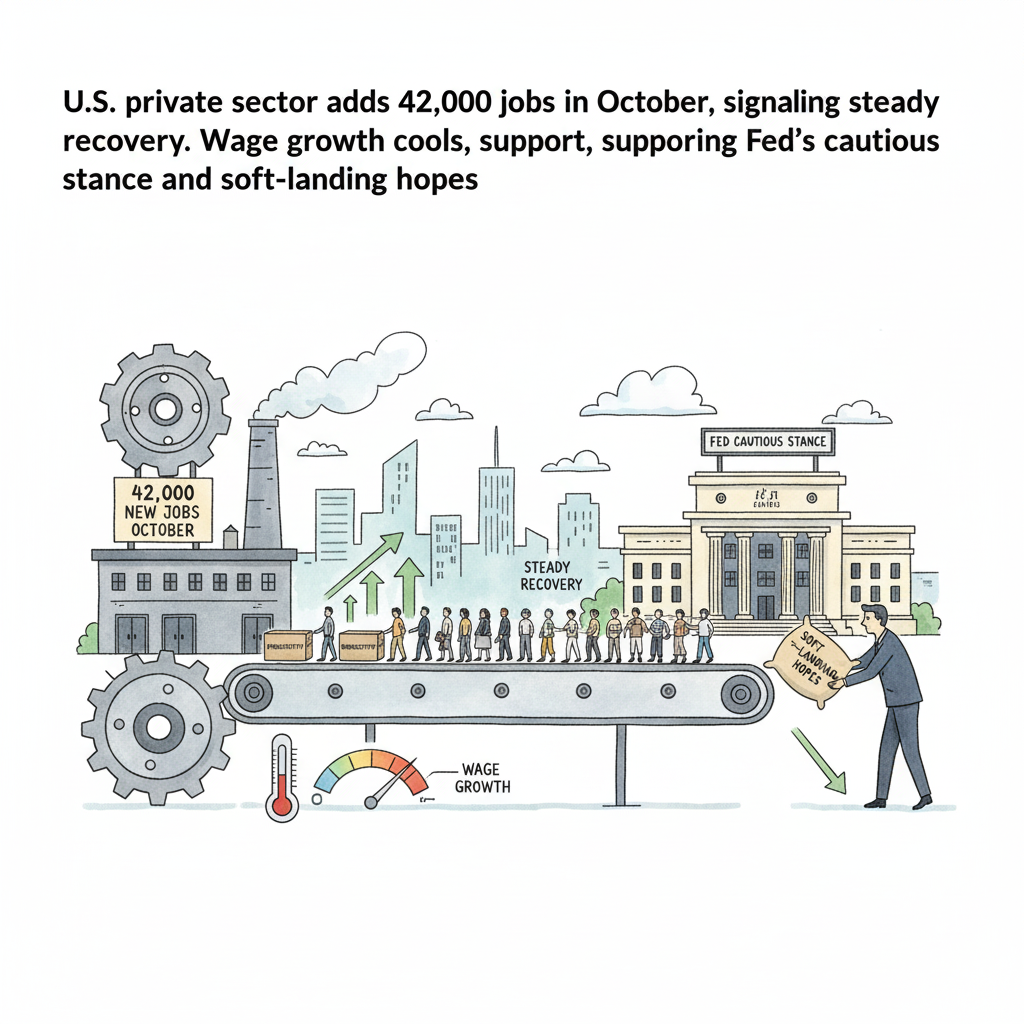
The latest U.S. employment data brought a mix of cautious optimism and economic realism to the markets. According to fresh ADP figures, the U.S. private sector added 42,000 jobs in October 2025, marking the first meaningful rebound in hiring after two consecutive months of decline. While the number may not seem overly impressive, its implications run deeper — particularly for monetary policy, inflation expectations, and equity markets.

As a market analyst, I view this as a signal that the U.S. labor market is stabilizing, not overheating, allowing the Federal Reserve to maintain its current cautious stance without being forced into abrupt tightening or loosening of policy.


A Rebound After Weak Summer Months

The U.S. job market had shown signs of fatigue through August and September, with hiring slowing across key industries. The October data reverses that trend — albeit modestly — suggesting that employers are finding a more balanced footing amid slowing inflation and steady consumer demand.

The 42,000 jobs added exceeded economists’ consensus expectations, which hovered around 28,000 to 30,000, indicating that the private sector may be more resilient than previously thought. However, the recovery remains uneven.

Most of the gains were concentrated in trade, transportation, and utilities, as well as education and health services — sectors less sensitive to interest rate fluctuations. Meanwhile, professional and business services and leisure and hospitality continued to contract, underscoring the lingering weakness in areas reliant on discretionary spending.


Large Firms Lead the Hiring Charge

One of the most telling aspects of the report was the breakdown by firm size. Large companies (those with more than 500 employees) added around 73,000 jobs, whereas small and mid-sized businesses collectively shed positions.

This divergence points to an ongoing labor market consolidation, where large corporations — with stronger balance sheets and access to cheaper financing — are better equipped to navigate a high-rate environment. Smaller firms, on the other hand, continue to grapple with rising costs, tighter credit conditions, and cooling consumer demand.

For investors, this imbalance highlights a broader trend: big-cap equities may continue to outperform smaller firms, as operational scale becomes a critical competitive advantage in a slower-growth economy.


Wage Growth: Still Strong but Cooling

On the wage front, the data showed steady but moderating growth. “Job-stayers” saw a 4.5% annual increase in wages, while “job-changers” recorded 6.7% growth.

This wage trend aligns with the Fed’s inflation management goals — strong enough to sustain consumption, yet cooling enough to prevent an inflationary rebound. A year ago, wage growth above 7% among job changers was seen as a warning sign; today, the numbers indicate the labor market is still healthy, but not overheating.

That’s critical for equities and bond investors alike. If wage growth were to re-accelerate sharply, it could reignite inflationary fears and force the Fed into more aggressive rate moves. But with current figures stabilizing, the probability of a soft landing for the U.S. economy remains alive.


Sectoral Shifts Reveal Economic Transition

A closer look at the sectors paints a picture of how structural economic shifts are unfolding:

  • Trade, Transportation, and Utilities: These sectors added the most jobs, reflecting resilient logistics demand and improving consumer sentiment.
  • Education and Health Services: Hiring continues to rise as healthcare demand grows and educational institutions stabilize post-pandemic staffing.
  • Manufacturing: Hiring remains muted, affected by global trade headwinds and slower export growth.
  • Professional and Business Services: Still seeing layoffs, suggesting corporate cost-cutting and delayed expansion projects.
  • Leisure and Hospitality: Despite being one of the hardest-hit sectors during the pandemic, hiring has plateaued, likely due to softer travel and entertainment spending.

These shifts reveal a realignment toward defensive, essential sectors, a pattern typically observed during late economic cycles. Investors should note this as an opportunity to rebalance portfolios toward sectors with stable earnings and pricing power — such as healthcare, utilities, and select industrials.


Monetary Policy Implications

The labor market’s modest recovery provides the Federal Reserve with breathing space. Policymakers can interpret this as a sign that the economy is cooling gradually, without tipping into recession territory.

Markets will likely see this report as supporting a data-dependent pause in Fed rate actions for the next few months. The bond market, already pricing in rate cuts for early 2026, might not adjust dramatically unless future employment or inflation data deviates significantly.

However, if the labor market continues to add jobs at this pace — slow but steady — the Fed could feel justified in holding rates longer to ensure inflation stays anchored near its 2% target.


Investor Sentiment and Market Reaction

Equity markets initially responded positively to the jobs data, viewing it as a sign of economic resilience rather than weakness. The S&P 500 futures rose slightly, while Treasury yields held steady.

The U.S. dollar index (DXY), which had strengthened recently amid global uncertainties, traded sideways as traders weighed whether the data could alter Fed expectations. Meanwhile, gold prices edged higher, reflecting modest safe-haven demand and cautious risk appetite.

For forex traders, the modest job growth hints at a potential range-bound scenario for USD pairs. The dollar may find some support if the data reinforces the “higher for longer” narrative, but significant upside could be capped if markets believe the Fed’s tightening cycle is effectively over.


What It Means for Investors

From an investment perspective, the data underscores the importance of focusing on fundamental strength and adaptability. Large-cap companies in defensive sectors — particularly those with pricing power and global exposure — remain well-positioned.

At the same time, bond investors can view this as an opportunity to lock in attractive yields before rate cuts potentially begin in mid-2026. The yield curve may steepen slightly as short-term policy expectations adjust, but long-term inflation fears appear contained.

In the forex space, traders should watch for further U.S. labor reports and inflation data, as these will shape near-term dollar direction. For now, the market’s tone is cautious but optimistic — a reflection of a labor market that’s not booming, but also far from collapsing.


Conclusion: A Delicate Balancing Act

The addition of 42,000 private sector jobs in October is a small but meaningful step toward economic normalization. It shows that despite global uncertainties, high interest rates, and sluggish productivity, the U.S. labor market remains resilient.

For the Federal Reserve, this is the kind of data it wants to see — modest job growth, steady wages, and cooling inflation pressure. For investors, it signals a continued shift toward quality, stability, and selective growth opportunities in both equities and bonds.

The next few months will reveal whether this recovery is sustainable or just a temporary reprieve. But for now, the numbers suggest one thing clearly: the U.S. economy isn’t sprinting, but it’s not stumbling either. It’s walking a fine line — and doing so with surprising balance.

Rabobank’s USD/CAD Forecast: Why the Loonie Could Gain Ground in 2025 Despite Near-Term Challenges

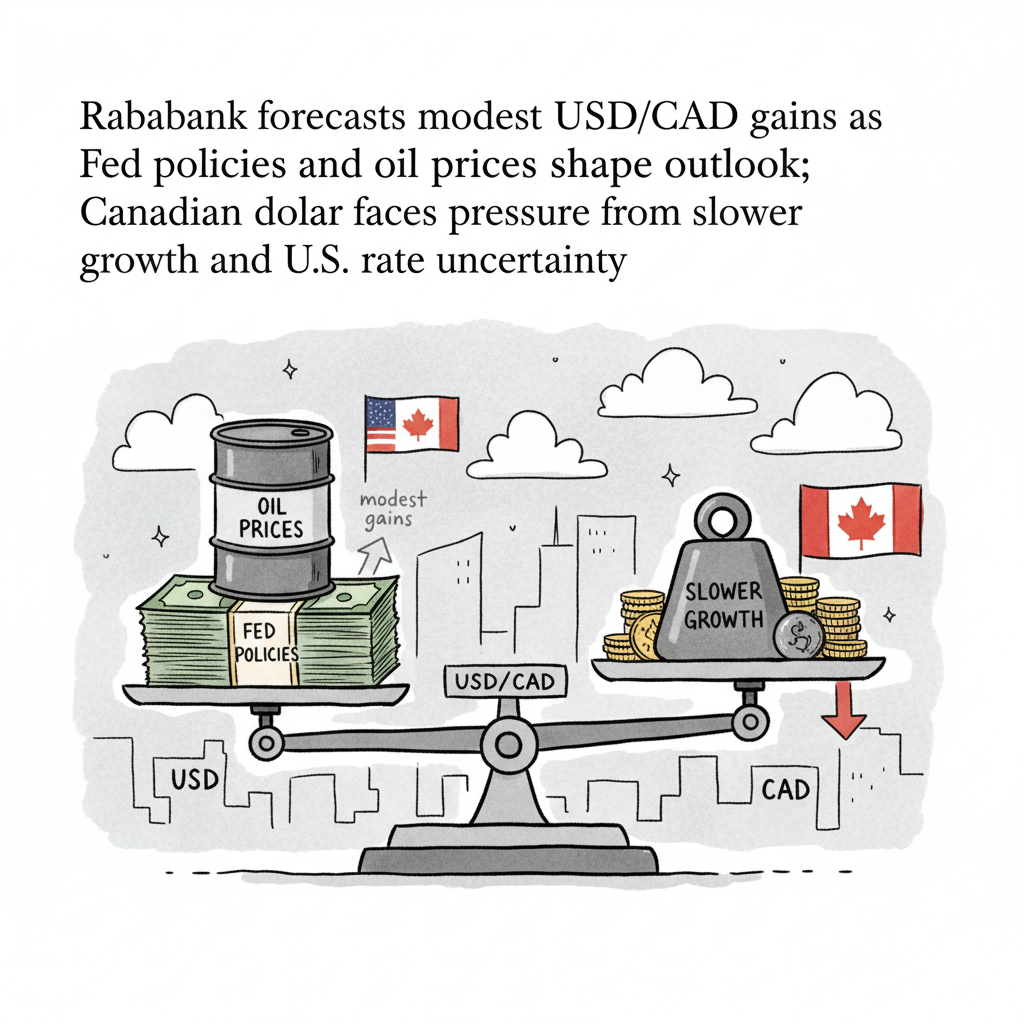
In the ever-volatile world of foreign exchange, traders and investors are constantly looking for clues about currency direction — and Rabobank’s latest outlook for the U.S. dollar to Canadian dollar (USD/CAD) pair has given markets something to talk about. According to the bank, the pair could drift down toward 1.36 in the next six months, signaling a possible strengthening of the Canadian dollar (CAD) against its U.S. counterpart.

As a stock and currency analyst, I find this prediction particularly interesting because it touches on several key themes shaping global markets — interest rate shifts, oil prices, trade relations, and the broader macroeconomic health of North America. Let’s unpack what’s behind Rabobank’s forecast and what it means for traders, investors, and businesses exposed to the Canadian economy.

1. The Big Picture: A Pair at the Crossroads

The USD/CAD pair has hovered above 1.41 recently, reflecting a prolonged phase of U.S. dollar dominance. The greenback’s resilience stems from stronger U.S. economic data, cautious Federal Reserve policies, and its safe-haven appeal amid global uncertainty.

. A combination of soft domestic growth, slowing consumer demand, and cooling housing activity has weighed on sentiment.

Yet, Rabobank’s latest analysis suggests a turning point may be on the horizon. The bank expects a gradual downward shift toward 1.36 in the coming months, meaning that the Canadian dollar could strengthen modestly against the U.S. dollar as certain economic forces begin to realign.

2. Interest Rate Dynamics: The Core Driver

One of the central reasons for Rabobank’s forecast is the narrowing interest rate differential between the U.S. and Canada.

The Bank of Canada (BoC) has likely reached the end of its rate-cutting cycle, signaling a pause as inflation stabilizes and the economy seeks balance. Meanwhile, the U.S. Federal Reserve — which has held rates higher for longer to combat inflation — is expected to begin easing monetary policy in early 2025.

This shift could erode the yield advantage that has supported the U.S. dollar over the past year. When interest rate differentials narrow, investors who once favored the higher-yielding currency — in this case, the U.S. dollar — tend to rebalance portfolios toward alternatives like the Canadian dollar.

As a result, Rabobank believes the USD/CAD rate could face downward pressure, particularly if the Fed’s first rate cuts coincide with a stabilizing Canadian economic outlook.

3. The Canadian Economy: Weak, But Not Broken

While Canada’s economy is currently facing headwinds, it’s important to note that not all indicators are negative. Yes, GDP growth has slowed, and consumer sentiment has softened. But the underlying fundamentals — particularly labor market stability, energy exports, and trade diversification — remain supportive in the medium term.

Canada’s dependence on energy exports, especially crude oil and natural gas, plays a key role in shaping the loonie’s performance. Historically, the CAD tends to strengthen when oil prices rise because higher energy revenues support government finances and boost foreign investment inflows.

With global energy demand expected to firm up in 2025 amid gradual economic recovery in China and Europe, the commodity-linked Canadian dollar could benefit — especially if crude prices stay above $80 per barrel.

However, Rabobank cautions that near-term gains might be limited. Until domestic growth rebounds and exports pick up, the CAD’s path to recovery may be slow and uneven.

4. Trade Relations: The Silent Influence

Another subtle but significant factor in Rabobank’s outlook is the U.S.–Canada trade relationship. Ongoing negotiations and trade policy uncertainty have weighed on Canada’s outlook, particularly as both nations reassess supply chains and cross-border agreements.

For now, trade volumes remain robust, but any friction or tariffs could temper confidence in the loonie. Rabobank’s analysts believe that while these challenges are unlikely to derail the currency entirely, they could keep USD/CAD range-bound between 1.34 and 1.36 in the short term.

This range-bound forecast reflects the broader sentiment in the market — cautious optimism but no expectation of dramatic moves unless a major macroeconomic shift occurs.

5. Technical Outlook: Patience Pays

From a technical analysis standpoint, USD/CAD has faced stiff resistance near 1.41–1.42, a level that has historically capped upside moves. On the downside, 1.36 remains a critical support level, aligning closely with Rabobank’s six-month forecast.

Traders watching this pair should pay close attention to central bank commentary, employment data, and oil price movements. A breakout below 1.36 could open the door to further CAD gains, while a rebound above 1.40 would suggest renewed U.S. dollar strength.

In short, the market seems to be in “wait and see” mode, with both currencies looking for clear directional cues.

6. Broader Implications: Lessons for Investors

For investors, Rabobank’s forecast provides valuable insight into cross-market linkages. The Canadian dollar isn’t just a currency — it’s a barometer of North American trade health, global oil demand, and risk sentiment.

Here are a few lessons investors can draw:

Diversification matters: Currency fluctuations can impact global portfolios, especially for those holding energy or commodity stocks. Hedging against USD/CAD volatility could protect returns.

Watch the Fed-BoC gap: Any unexpected policy move by either central bank could shift market sentiment quickly.

Energy correlation remains strong: A sustained rise in oil prices could give the loonie more traction than interest rate changes alone.

For long-term investors, a stronger CAD could benefit Canadian equities and energy exporters, while U.S. multinationals might face mild headwinds from a softer dollar.

7. The Human Element: Balancing Expectation and Reality

Ex-Hawks Executive’s $3.8 Million Fraud Scandal Exposes Financial Oversight Gaps in Sports Franchises

In a case that has sent shockwaves through both the sports and financial communities, Lester T. Jones Jr., a former senior finance executive of the Atlanta Hawks, has been accused of embezzling approximately $3.8 million from the team over several years. The story, while centered around one man’s alleged misconduct, underscores a larger issue — the need for stronger financial governance in high-value organizations, especially professional sports franchises where millions move daily across accounts.

A Trusted Insider Turns Suspect

Jones’s fall from grace is particularly startling given his trusted position within the Atlanta Hawks’ organization. Joining the franchise in 2016, he gradually rose through the ranks, eventually becoming the Senior Vice President of Finance in 2021. In this role, Jones held significant authority over accounts payable, payroll, budgeting, and expense reimbursements.

According to prosecutors, this authority enabled him to execute his fraudulent activities with minimal scrutiny. Over the course of several years, Jones allegedly manipulated corporate credit cards, fabricated reimbursements, and submitted false invoices for lavish expenses.

The Department of Justice alleges that Jones issued himself multiple American Express cards, which he used for personal luxury spending — from first-class vacations in Thailand, Switzerland, and the Bahamas, to designer shopping sprees at Louis Vuitton and the purchase of a Porsche sports car.

The Red Flag: A Fake $230,000 Hotel Bill

Investigators point to one transaction in particular — a nearly $230,000 reimbursement request for a supposed stay at the Wynn Hotel in Las Vegas — as one of the glaring red flags that finally led to his exposure. The reimbursement was allegedly fabricated, and there were no records of any such event or business purpose tied to the expense.

Such bold misuse of funds often stems from an insider’s awareness of the loopholes in corporate audit systems. Jones’s knowledge of internal financial operations may have helped him mask his activities for years without triggering alarms.

How the Fraud Was Uncovered

The embezzlement came to light during an internal audit conducted by the Atlanta Hawks. Financial discrepancies between the team’s credit card accounts and reimbursement records prompted deeper scrutiny. Once irregularities were confirmed, the case was escalated to federal authorities, resulting in Jones’s indictment for wire fraud.

Jones has pleaded not guilty and is currently out on bond, awaiting further legal proceedings. If convicted, he could face severe federal penalties, including substantial prison time and financial restitution.

The Broader Financial Lesson for Sports Organizations

While this incident might appear isolated, it serves as a wake-up call for professional sports teams and large corporations alike. Franchises like the Atlanta Hawks operate as multi-million-dollar businesses, handling player salaries, sponsorship revenues, ticket sales, and event management budgets. With so much financial movement, internal checks and balances become critical to prevent misuse.

Experts in corporate governance emphasize that fraud prevention isn’t just about audits — it’s about building a culture of transparency and accountability. When an organization places too much trust in a single executive without adequate oversight, it inadvertently creates an environment ripe for abuse.

In this case, the sheer scale of Jones’s alleged fraud indicates that standard review mechanisms either failed or were insufficiently enforced. Financial segregation of duties — ensuring that no single person has control over multiple stages of financial transactions — could have been a vital safeguard.

The Role of Technology in Fraud Detection

In modern financial systems, AI-driven auditing tools and real-time monitoring platforms are transforming how companies detect anomalies. Had such systems been in place, the Atlanta Hawks might have identified unusual spending patterns much earlier.

AI algorithms can detect behavioral irregularities, such as repeated reimbursements from the same vendor or outlier expenses inconsistent with corporate norms. For instance, a luxury travel expense exceeding typical operational costs could automatically trigger an internal review before approval.

For sports franchises with large operational budgets, implementing automated expense verification could be a crucial deterrent to future frauds.

Impact on Team Reputation and Stakeholders

Financial scandals can have a serious reputational impact on sports teams. For the Atlanta Hawks, an organization known for its professionalism and community engagement, this event casts an unfortunate shadow on its internal controls. However, early transparency and cooperation with authorities have helped the team maintain credibility.

The Hawks issued a statement confirming full cooperation with the ongoing investigation and reassured stakeholders that measures are being taken to strengthen financial oversight. While this may not immediately erase the damage, proactive communication plays a key role in preserving brand trust.

Investors and corporate partners tend to view such incidents through a risk-management lens. A robust financial governance framework not only prevents fraud but also signals stability and reliability to sponsors and investors — an essential factor in sustaining long-term partnerships.

A Cautionary Tale for Corporate Leadership

The alleged misconduct by Jones underscores a timeless truth: fraud often thrives where trust replaces verification. Even the most senior executives should be subject to regular independent audits.

It also reminds leaders that ethical lapses can emerge from within trusted ranks. Many large-scale corporate frauds, from Enron to Wells Fargo, share a common theme — excessive autonomy granted to a few individuals without adequate oversight. The Hawks case, albeit smaller in scale, reinforces that principle.

For companies and sports organizations alike, the lesson is clear: governance frameworks must evolve alongside operational growth. As teams expand globally, the complexity of their financial operations also increases, making risk management a continuous process rather than an annual checkup.

Looking Ahead

As the case proceeds through court, the sports and finance industries will closely monitor its outcome. If Jones is convicted, it will likely lead to stricter compliance measures across NBA franchises and perhaps set a precedent for enhanced corporate accountability in the sporting world.

Moreover, the scandal highlights the intersection of finance, ethics, and trust — pillars upon which professional organizations must stand. The Atlanta Hawks’ swift action after discovering the irregularities shows that while no system is immune to fraud, responsible crisis management can mitigate long-term damage.

Conclusion

The alleged $3.8 million embezzlement by ex-Hawks executive Lester Jones is more than a criminal case — it’s a lesson in financial vigilance. It exposes how even the most structured institutions can become vulnerable when oversight weakens.

For investors, team owners, and corporate leaders, this incident emphasizes the importance of modern audit systems, transparent culture, and ethical leadership.

In the end, the story isn’t just about one man’s betrayal of trust — it’s about how an organization responds, learns, and strengthens itself in the face of deception. The Hawks’ experience should remind all industries that safeguarding integrity is not optional — it’s the foundation of sustainable success.