XRP ETF Countdown in Full Swing After 21Shares and Franklin Submit SEC Amendments

The long-awaited race to bring a spot XRP Exchange-Traded Fund (ETF) to U.S. markets has entered an exciting new phase. Two major players—21Shares and Franklin Templeton—have formally updated their filings with the U.S. Securities and Exchange Commission (SEC), setting off what many in the cryptocurrency community are calling a potential 20-day countdown to approval.

If successful, this development could mark a watershed moment not only for XRP, the digital asset associated with Ripple Labs, but also for the broader crypto ETF landscape that has so far been dominated by Bitcoin and Ethereum. The filings, which remove key delaying clauses, indicate growing confidence among institutional players that a U.S.-listed spot XRP ETF could soon become reality.


1. The XRP ETF Journey Reaches a Crucial Stage

For years, the idea of an XRP-based ETF has been discussed but never realized, largely due to regulatory uncertainty surrounding Ripple’s ongoing legal battles with the SEC. Now, with clearer legal outcomes and a shifting regulatory tone, that vision may finally be within reach.

The recent move by 21Shares and Franklin Templeton, two well-established investment management firms, signals strong institutional interest. Their decision to amend their S-1 filings with the SEC suggests that they are ready to advance to the next stage of the approval process.

These amendments are particularly noteworthy because they remove or modify the “delaying amendment” clause—a standard provision that allows issuers to postpone a registration statement indefinitely. By removing it, the firms have effectively started a 20-day automatic countdown under Section 8(a) of the U.S. Securities Act.

Unless the SEC intervenes within that window, the registration statements could automatically become effective, potentially paving the way for the first-ever U.S. spot XRP ETF.


2. What Makes This Different from Past Filings

This latest development stands out for several reasons. Unlike previous filings for crypto-based ETFs, which often languished in regulatory limbo, these amendments appear to be timed strategically.

The SEC’s recent approval of multiple spot Bitcoin ETFs has set a new precedent. After years of resistance, the regulator’s decision in early 2024 to greenlight Bitcoin-based ETFs opened the door to other digital assets receiving similar treatment.

For XRP, the path is somewhat unique. Unlike Bitcoin, XRP was once caught in the crossfire of a high-profile SEC lawsuit that questioned whether it should be classified as a security. That case has since seen major progress in Ripple’s favor, with courts clarifying that secondary XRP sales on exchanges do not constitute securities transactions.

This ruling has given institutional investors new confidence that XRP can be included in regulated financial products such as ETFs—an outcome that seemed unlikely just a year ago.


3. How the 20-Day Countdown Works

The “20-day countdown” has become the most talked-about phrase in the crypto world this week. Under Section 8(a) of the Securities Act of 1933, a registration statement becomes automatically effective 20 days after filing unless the SEC acts to delay or reject it.

By submitting their amended filings without a delaying clause, 21Shares and Franklin Templeton have effectively started that timer.

In simple terms, if the SEC does not intervene during that period, the ETFs could automatically gain approval and move toward listing on major exchanges. Of course, this doesn’t mean a launch is guaranteed—regulators still have the authority to pause the process if they raise new concerns or request revisions.

Still, the move reflects growing confidence among issuers that the SEC may be ready to consider XRP-based ETFs, especially given the regulatory momentum building across the crypto asset space.


4. Why an XRP ETF Matters

An approved spot XRP ETF would represent more than just another product launch—it would symbolize a major leap in mainstream crypto adoption.

Until now, only Bitcoin and Ethereum have been seen as “ETF-ready” digital assets in the U.S. market. The addition of XRP to that short list would not only validate its standing as a legitimate, non-security digital asset but also give investors a regulated way to gain exposure without dealing directly with crypto exchanges.

For traditional investors, ETFs offer several advantages:

  • Ease of access through traditional brokerage accounts.
  • Regulatory oversight, which increases confidence.
  • Liquidity and price discovery via major exchanges.

For XRP, this could translate into stronger institutional demand and greater price stability over time. The crypto market tends to react positively when new investment vehicles open the door for pension funds, asset managers, and retail investors to participate.

Moreover, the XRP network itself has evolved into a critical part of the global payments infrastructure, with Ripple focusing on cross-border transactions, banking partnerships, and tokenized asset settlement. A spot ETF would amplify that narrative and potentially attract new institutional partnerships.


5. Institutional Competition Heats Up

The XRP ETF filing is also part of a larger race among asset managers to capture the next wave of institutional crypto investment. After the success of spot Bitcoin ETFs earlier this year—which saw billions of dollars in inflows during their first weeks—many firms are eager to expand their offerings.

Besides 21Shares and Franklin Templeton, several other major names are rumored to be exploring XRP or Solana-based ETFs. Each firm is positioning itself to be first to market, knowing that early movers often attract the lion’s share of investor interest.

This surge of competition also underscores a broader trend: traditional finance (TradFi) and digital assets are converging faster than ever before. The once-clear boundary between crypto natives and Wall Street institutions is blurring, as major firms compete to provide regulated access to blockchain-based assets.


6. The SEC’s Role: Approval or Intervention?

While optimism is high, the path forward is far from certain. The SEC still has full authority to delay, deny, or request amendments to the filings before the automatic approval window closes.

Historically, the Commission has been cautious about approving ETFs tied to digital assets beyond Bitcoin. Its main concerns typically revolve around market manipulation, liquidity, and custodial safety.

However, the landscape is evolving. The SEC’s acceptance of spot Bitcoin ETFs earlier this year shows that regulators may now be more open to digital-asset products—provided that issuers can demonstrate robust surveillance-sharing agreements and transparent custody arrangements.

For XRP, custodianship will be a key point of scrutiny. How the ETFs plan to store and secure XRP holdings—whether through regulated entities like Coinbase Custody or specialized crypto custodians—could determine the SEC’s comfort level with approval.


7. Broader Implications for Crypto Markets

The possibility of an XRP ETF approval is not just about one token—it represents the next chapter in the financialization of crypto.

If successful, it could:

  • Trigger a price rally in XRP as institutional investors gain easier access.
  • Strengthen XRP’s legitimacy as a global payment asset.
  • Encourage similar filings for other altcoins such as Solana, Cardano, or Avalanche.
  • Broaden the crypto ETF ecosystem beyond just Bitcoin and Ethereum.

Analysts predict that a spot XRP ETF could see significant initial inflows, particularly from investors seeking diversification within the crypto space. Even conservative exposure—such as 1–2% of institutional portfolios—could inject billions in liquidity.


8. The Countdown Begins

With the amended filings now submitted, the 20-day clock is ticking. Market participants are closely watching the SEC’s response, social media buzz is growing, and speculation about the ETF’s potential launch date is already circulating.

If approved, the XRP ETF would be a major win for both Ripple and the broader crypto community—signaling a clear shift toward regulatory normalization in the United States.

But even if the SEC intervenes to delay or request further amendments, the fact that such filings are advancing this far shows undeniable progress. The crypto ETF race has officially expanded beyond Bitcoin, and XRP is leading the charge into the next era of digital-asset investing.


Conclusion

The submission of amended filings by 21Shares and Franklin Templeton marks a turning point in the long pursuit of a U.S. spot XRP ETF. The countdown has begun, and the next few weeks could reshape how institutional investors engage with one of crypto’s most established assets.

While the SEC’s final decision remains uncertain, one thing is clear: the push for crypto integration into traditional finance is accelerating—and XRP is poised to play a defining role in that evolution.


A $15 Million Dinosaur Skeleton: The Intersection of Fossils and Luxury Collectibles in the Modern Market

In a world where high-end luxury collectibles continue to capture the imagination of wealthy investors, one of the most unusual—and fascinating—items hitting the auction block is a remarkably well-preserved dinosaur skeleton. This isn’t just any fossil. It’s the skeleton of a Gorgosaurus, a fearsome predator from the Late Cretaceous period, estimated to fetch as much as $15 million. This auction, set to take place at Sotheby’s New York, has caught the attention of not only paleontologists and dinosaur enthusiasts but also investors looking to diversify into a new and niche market: prehistoric artifacts.

The Gorgosaurus skeleton, which is over 75% complete, could set a new benchmark for dinosaur fossils in the world of luxury collectibles. But beyond the scientific and historical value, there’s a compelling story for investors about the increasing crossover between fossils, luxury markets, and alternative investments. In this article, we’ll explore what the sale means for the luxury collectibles market, its potential for setting new trends in investment, and what stock market investors can learn from this auction.

The Gorgosaurus: A Unique Specimen with Scientific and Financial Appeal

The star of this auction is the Gorgosaurus, a relative of the famous Tyrannosaurus rex. Living approximately 76 million years ago, the Gorgosaurus was a top predator of its time, preying on smaller dinosaurs and mammals. Its well-preserved skeleton—over 75% intact—makes it a rare and valuable specimen for scientists and fossil collectors alike. In fact, only a handful of Gorgosaurus skeletons have been discovered, making this find especially significant.

From a scientific standpoint, the fossil’s pristine condition allows paleontologists to study aspects of the Gorgosaurus’s biology and behavior that would otherwise be impossible. Researchers can now glean more information about its size, movement, and even how it interacted with its environment millions of years ago. The high degree of preservation also increases the specimen’s educational and research value, especially for museums looking to add an iconic piece to their collection.

However, beyond its academic worth, the Gorgosaurus skeleton has become a coveted item for collectors. The rare nature of such fossils, combined with their ability to capture the public’s imagination, has created a growing market for prehistoric relics—especially among the ultra-wealthy.

Fossils as Luxury Collectibles: A Growing Niche Market

Over the past decade, we’ve seen a rising trend where high-net-worth individuals (HNWIs) and investors are flocking to alternative asset classes like art, vintage cars, wines, and rare collectibles as a way to diversify their portfolios. Fossils, once primarily a subject of academic study and museum curation, have entered this space as an increasingly sought-after investment.

What makes dinosaur fossils especially appealing as a luxury collectible? First and foremost, they represent an extraordinary link to a time long past—a tangible connection to Earth’s prehistoric era. For those who can afford them, owning a piece of natural history is not just about having a unique item; it’s about acquiring a status symbol with inherent rarity and fascination. Fossils like the Gorgosaurus not only provide an aesthetic or historical value but also act as tangible investments that can appreciate over time.

Unlike many traditional luxury goods, such as luxury cars or watches, fossils are appreciating assets that, in many cases, have proven to deliver strong returns. For instance, in 2020, a Tyrannosaurus rex skeleton, named “Sue,” sold for over $8.36 million, setting a new record at the time. The market for dinosaur fossils is growing, with prices rising as more collectors look to diversify into these rare and exotic items.

The appeal of prehistoric fossils goes beyond their novelty. There is an element of exclusivity and even mystery that attracts both investors and collectors. As high-net-worth individuals look for unique ways to stand out, the market for dinosaur fossils—and specifically fully intact specimens—could become an even more attractive avenue for investment. Investors who can afford these rare items see them as not just an asset to hold but as an heirloom to pass down, making them an investment that transcends generations.

The Investment Case for Dinosaur Fossils

For investors, the key question is whether dinosaur fossils represent a viable asset class for diversification. In the case of the Gorgosaurus skeleton, the expected price tag of $15 million raises an intriguing point: can fossils deliver returns comparable to more traditional asset classes such as stocks, bonds, or real estate? The short answer is that fossil investing is highly speculative, but with the right piece, it offers substantial upside potential.

  1. Scarcity Drives Value: The rarity of fully preserved dinosaur fossils is the primary driver of their value. Fossils like the Gorgosaurus represent a once-in-a-lifetime find. Only a handful of dinosaur skeletons, especially those over 75% complete, are found each year, making them highly collectible. The unique nature of these fossils ensures that they will continue to be rare and valuable in the market.
  2. Appreciation Over Time: While dinosaur fossils are not typically traded on public exchanges, the prices of major fossil auctions have demonstrated consistent appreciation. As the market grows, more investors and institutions are showing interest in fossil investments. The rise in prices of iconic pieces, like the T. rex skeleton, reflects a growing recognition of fossils as long-term assets that can appreciate significantly over time.
  3. Alternative Asset Class: Fossils provide an alternative investment opportunity, especially in times of stock market volatility. They are not correlated with traditional financial markets, which means they can serve as a hedge against economic downturns or market corrections. For high-net-worth individuals looking to diversify away from more conventional assets, fossils offer an intriguing alternative that is tangible, physical, and distinctive.
  4. Cultural and Historical Appeal: Unlike other forms of investment, such as stocks or real estate, dinosaur fossils hold cultural and historical value. Investors who purchase fossils like the Gorgosaurus aren’t just buying an asset; they’re acquiring a unique piece of natural history that carries with it a sense of wonder and fascination. This dual appeal—both financial and emotional—adds to the value proposition of owning such rare pieces.

Risks and Ethical Considerations

However, as with any investment, there are risks to consider when purchasing dinosaur fossils. First, the market for fossils is still niche and speculative. While the market has seen consistent growth in recent years, it is not as liquid or established as other traditional assets. Additionally, the legal and ethical issues surrounding the sale of fossils are becoming increasingly complex. Fossils are often excavated on public lands, and the question of ownership and rights can raise concerns about the commercialization of scientific heritage.

For investors considering purchasing fossils as a collectible or investment, it’s crucial to understand these ethical dimensions and ensure that their acquisitions are legitimate. Moreover, because the market for fossils is still developing, determining the long-term value of a specific specimen can be challenging, and prices can fluctuate dramatically depending on the rarity and provenance of the item.

Conclusion: A New Era for Luxury Collectibles and Investment

The Gorgosaurus skeleton auction is a fascinating intersection of science, history, and luxury collectibles. It highlights a growing trend in alternative investments where rare, one-of-a-kind items hold significant appeal not just for their intrinsic value but for their uniqueness as luxury assets. For stock market investors, the rise of fossils as a valuable asset class opens up new opportunities for diversification and growth in an increasingly complex financial landscape.

While the market for dinosaur fossils may not be for everyone, the emerging trend suggests that alternative collectibles can play an important role in the investment world, offering investors a chance to tap into a market where rarity, history, and exclusivity create a potent combination. For those looking to get involved, understanding the unique dynamics of this space—and the speculative risks involved—is crucial. The Gorgosaurus skeleton is more than just a piece of natural history; it represents the potential for fossil investments to evolve into a recognized luxury asset class in the years ahead.


This article blends the uniqueness of the Gorgosaurus fossil auction with a focus on its investment potential. Would you like a deeper dive into how investors can access this niche market, or any other insights?

You said:

Brief in 158 characters

ChatGPT said:

A rare Gorgosaurus skeleton could fetch up to $15M at auction, highlighting growing interest in fossils as luxury collectibles and alternative investments.

AI in Central Banking: How the Bundesbank’s Use of AI to Track Policy Tone Impacts the Stock Market

In the evolving world of finance, technology continues to make waves. One of the most recent and intriguing developments comes from Germany’s central bank, the Bundesbank, which has adopted Artificial Intelligence (AI) to track the tone of statements made by policymakers in relation to monetary policy. While this may seem like a small shift, it could have far-reaching implications, particularly for stock market investors who rely on accurate forecasts and insights into central bank actions. This shift marks a fascinating convergence between traditional monetary policy analysis and cutting-edge technology, offering investors an invaluable new tool to predict future policy shifts.

AI and the Dovish-Hawkish Debate

The primary purpose behind the Bundesbank’s move is to use AI to assess whether policymakers are leaning more towards a dovish or hawkish stance. For those unfamiliar with these terms, a dovish approach refers to a monetary policy that favors lower interest rates and stimulative measures to foster economic growth. On the other hand, a hawkish stance typically involves advocating for higher interest rates to combat inflation, even at the risk of slowing down economic activity.

In central banking, these opposing views often create a fine balance, particularly within the European Central Bank (ECB), where policymakers must navigate the needs of 19 different economies within the Eurozone. The problem is that verbal cues about policy direction can be quite subtle, and interpreting the tone of statements made by central bankers can often be subjective. One official might phrase their comments cautiously, while another might be more direct or assertive. This is where AI comes into play.

Using advanced AI algorithms, the Bundesbank’s new tool is designed to scan and assess the language used by ECB officials. By quantifying the tone of their remarks—whether optimistic, cautious, or hawkish—the AI tool provides an objective, data-driven analysis of the overall sentiment within the ECB. This allows the Bundesbank to gain a clearer picture of the ECB’s intended direction in its monetary policy.

Why Does This Matter for Investors?

For stock market investors, understanding the monetary policy stance of the ECB is crucial. The European Central Bank controls one of the most influential levers in the global economy—interest rates. Interest rates directly affect corporate profitability, consumer spending, and investment strategies. The higher the rates, the more expensive it becomes to borrow money, which can slow economic activity. Conversely, lower rates tend to encourage borrowing and investment, stimulating growth.

Thus, stock market investors, especially those in European markets, closely watch the ECB’s policy decisions. However, interpreting the signals from the central bank is not always easy. Official policy changes are typically made in press releases or at scheduled meetings, but the comments made by officials between these announcements often provide key clues. A subtle shift in tone—such as a slight change in language or rhetoric—could indicate a change in policy direction. For instance, if an ECB official begins using more hawkish language, it could signal an interest rate hike, which may cause stocks to fall.

The new AI tool from the Bundesbank can now help investors interpret these clues more objectively, improving their ability to anticipate moves by the ECB. By analyzing how policymakers’ statements are framed—whether they’re leaning towards tighter or looser monetary conditions—the AI tool helps investors gain insights into future rate hikes or cuts, inflation concerns, and the overall health of the Eurozone economy.

The Market Implications of AI-Powered Policy Insights

So, how will this AI-driven analysis impact the stock market? Let’s break it down:

1. Better Anticipation of Policy Shifts

As the Bundesbank uses this AI tool to assess the policy tone of ECB officials, stock market participants can gain more clarity on the likely direction of monetary policy. If the tool consistently detects a shift towards a more dovish stance, it could signal that the ECB is likely to keep interest rates low for longer. Conversely, if the AI detects a hawkish tilt in statements, markets may begin pricing in the possibility of rate hikes. For investors, early access to this type of information could provide a significant advantage in adjusting their portfolios in response to evolving policy expectations.

2. Enhanced Decision-Making

Stock investors—especially those focused on European equities—will be able to make better-informed decisions based on a more accurate reading of central bank sentiment. Investors who are able to accurately predict the ECB’s monetary policy actions may be able to position themselves in sectors that are more likely to benefit from certain policy shifts. For example, a dovish stance (i.e., low interest rates) would likely benefit growth stocks, particularly in sectors such as technology, which rely on easy access to capital. On the other hand, hawkish rhetoric might drive investors to favor value stocks or those in defensive sectors like utilities.

3. Improved Risk Management

A central tenet of investing is managing risk, and one of the most effective ways to mitigate risk is by anticipating potential shifts in the macroeconomic environment. With the AI tool providing clearer insights into ECB policy tone, investors can adjust their portfolios to manage risk better. For example, if the AI signals a shift towards tightening monetary policy, investors might reduce their exposure to highly leveraged stocks, as these companies are more sensitive to interest rate increases. Similarly, they may allocate more funds to companies that can benefit from a higher rate environment, such as banks, which typically perform better when interest rates rise.

4. Global Spillover Effects

While the Bundesbank’s AI tool focuses on ECB policy, its influence goes beyond just Germany or the Eurozone. The European Central Bank has a significant impact on global markets. Interest rate changes or shifts in sentiment at the ECB often have repercussions in global markets, particularly in the currency markets, commodities, and emerging markets. A hawkish shift in ECB policy could strengthen the euro, leading to a more challenging environment for companies that export goods to the Eurozone. Conversely, a dovish stance could weaken the euro, benefiting European exporters. The AI tool, by providing clearer signals about ECB policy shifts, allows investors to anticipate these global spillovers, thus refining their strategies in international markets.

5. Transparency and Trust in Central Bank Communications

This AI-powered tool also brings an element of transparency to central bank communications. Historically, interpreting the language of central bankers has been both an art and a science—where financial analysts often had to rely on subjective interpretations of tone. With AI, investors have access to a more consistent, systematic analysis of these statements, which could lead to greater confidence in market predictions. For those with an interest in European markets, this increased transparency can help build trust in the decision-making processes of central banks, providing more stability for long-term investors.

The Future of AI in Central Banking

While the Bundesbank’s AI tool is a pioneering step in the use of technology to track monetary policy sentiment, this could just be the beginning. Central banks around the world could begin adopting similar AI-driven tools to analyze and forecast policy shifts. The increased reliance on data-driven insights could enhance the transparency and effectiveness of central banking, ultimately benefiting financial markets by providing more accurate predictions of monetary policy moves.

In the future, we may also see the integration of AI into other aspects of monetary policy, such as forecasting inflation, GDP growth, or employment trends. AI could help central banks more effectively navigate the complexities of the global economy and respond to crises with greater agility.

Conclusion

The Bundesbank’s decision to use AI to monitor the tone of ECB statements is a game-changer for investors. By providing clearer, more objective insights into central bank sentiment, this tool will help investors make more informed decisions, manage risk better, and improve their understanding of the broader economic landscape. As the financial world continues to evolve, the role of AI in monetary policy analysis will only grow, offering new opportunities for investors who are able to adapt and leverage these technological advancements.

In a world where information is power, the ability to predict shifts in central bank policy with greater precision could provide a significant edge to those in the stock market. As always, the key for investors will be to stay ahead of the curve, using the latest tools and technologies to guide their investment decisions.


This article explores the use of AI in monetary policy analysis and how it could impact stock market investing. Would you like to dive deeper into any specific aspect of this development or discuss its broader implications?

“U.S. Consumer Health: Resilience Amid Rising Inflation and Debt—What It Means for Investors”

A Check on the Health of U.S. Consumers: What It Means for the Stock Market

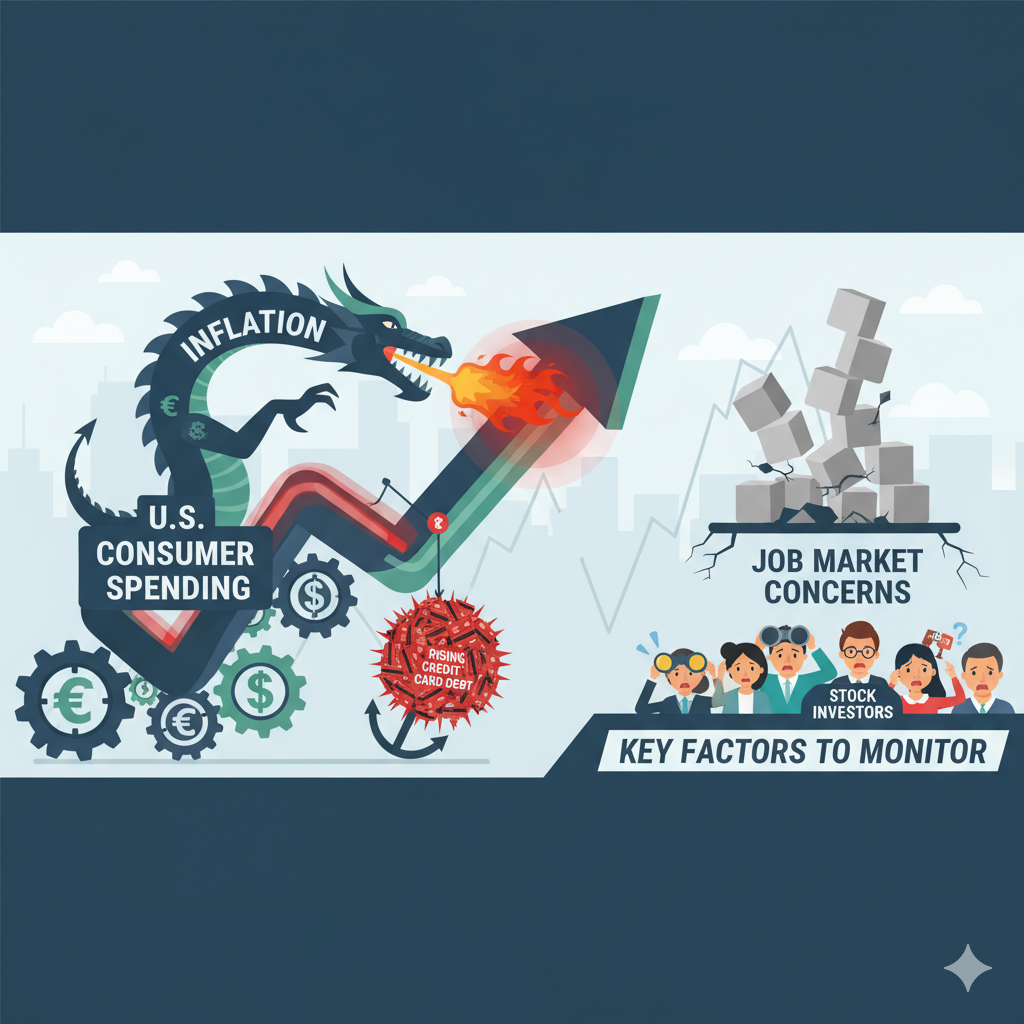
As we enter the final quarter of the year, one of the key areas investors need to keep a close eye on is the health of U.S. consumers. Consumer spending has long been the backbone of the U.S. economy, and it serves as an essential indicator for gauging economic strength. But with inflationary pressures, rising credit card debt, and fluctuating job market conditions, how are consumers holding up? And more importantly, what does this mean for the stock market in the coming months?

Resilient Consumer Spending Amid Economic Pressure

Despite the roller-coaster ride that the economy has been on over the last couple of years, one thing has remained relatively stable: consumer spending. The U.S. consumer, accounting for approximately 70% of the nation’s GDP, continues to show resilience. According to recent data, consumer spending has remained steady, particularly in sectors like retail and housing, where recovery has been more pronounced.

Retail sales, in particular, are a bright spot. While growth has slowed from pandemic-era highs, consumer confidence is picking up, particularly in luxury goods and high-end retail. The shift towards online shopping has continued to grow, with e-commerce giants like Amazon and Walmart benefiting from the ongoing trend. The housing market has also shown signs of life, particularly in areas where home values have not been as affected by rising interest rates.

For stock market investors, this resilience in consumer spending provides some comfort. Companies in the consumer discretionary sector—such as Amazon, Nike, and Home Depot—are often seen as a bellwether for overall economic health. As consumer spending holds steady, these companies are likely to continue seeing steady earnings growth, which bodes well for their stock prices.

However, it’s important to note that while consumer spending remains strong, it is not impervious to inflation. Rising costs of goods and services—especially in sectors like food, energy, and healthcare—continue to weigh heavily on the average consumer’s wallet. As inflation cools off in some areas, it still represents a significant headwind for households, particularly those in lower-income brackets. For investors, this means that while overall consumer spending may be stable, the composition of that spending is shifting.

Inflation: The Elephant in the Room

Inflation is one of the most significant factors influencing consumer behavior right now. Even as consumer spending shows resilience, the rising cost of living is making things difficult for many households. The Consumer Price Index (CPI) has slowed from its peak levels, but inflation is still above the Federal Reserve’s target of 2%. The cost of essentials, particularly food and energy, has remained high, creating a situation where consumers feel the pinch.

One area where inflation has had a noticeable impact is in credit card spending. Consumers are increasingly relying on credit to maintain their lifestyles, particularly in high-cost regions like California and New York. The Federal Reserve’s interest rate hikes, aimed at curbing inflation, have led to higher borrowing costs, and credit card interest rates are hitting multi-year highs.

For stock investors, this is a potential red flag. The rise in consumer debt levels, particularly revolving credit, could lead to slower consumption in the future if consumers find themselves buried under debt. Companies that rely heavily on consumer debt—like credit card providers or certain retail businesses—may see slower growth as a result.

The Labor Market: A Double-Edged Sword

The labor market has been another bright spot in the U.S. economy. Job growth has continued at a solid pace, and wages have been rising, especially for lower-income workers. These factors have supported consumer confidence, even amid higher costs and rising debt. Many consumers feel they can weather inflationary pressures as long as they remain employed and their wages continue to rise.

However, there are cracks in the labor market that investors should keep an eye on. While unemployment remains low, there is growing concern about the long-term impact of higher interest rates on job creation. Sectors like housing, construction, and real estate have already begun to feel the effects of the Fed’s rate hikes, and other industries could follow suit if the central bank continues to tighten monetary policy.

A slowdown in job growth could trigger a pullback in consumer spending. If consumers feel less secure in their jobs, they are less likely to make large purchases or take on new credit. This, in turn, could lead to a dip in stock prices, especially for companies that depend on strong consumer sentiment to drive revenue.

Credit Card Debt: A Growing Concern

While consumer spending has held up well, one area of concern for many economists is the rising level of credit card debt. According to the Federal Reserve, credit card balances in the U.S. have risen sharply, nearing pre-pandemic levels. At the same time, credit card interest rates have climbed, leaving many consumers in a precarious financial situation.

The rise in credit card debt is significant because it suggests that many consumers are relying on borrowing to keep up with the cost of living. This is particularly true for middle-income households, which have seen wage growth outpaced by inflation. With more disposable income being allocated to paying off interest on credit cards, there is less money available for discretionary spending, which could hurt companies in the consumer goods and services sectors.

From a stock market perspective, this could be a double-edged sword. On one hand, the credit card companies themselves—Visa, Mastercard, and American Express—could benefit from higher interest rates and increased consumer borrowing. However, if the trend of rising debt continues unchecked, there could be a slowdown in overall consumer spending, which would negatively impact consumer-facing stocks.

Savings Rates: The Decline of Financial Cushion

Another key indicator to watch is the rate at which Americans are saving. Household savings rates, which spiked during the pandemic, have since declined significantly. Many consumers are now spending a larger portion of their disposable income rather than saving for the future. While this may seem like a positive sign for the economy in the short term, it could have longer-term consequences.

As savings rates decline, consumers may find themselves more vulnerable to economic shocks—whether it be a downturn in the job market, unexpected medical expenses, or a financial crisis. This could lead to a reduction in consumer confidence, which would have a ripple effect on the stock market.

Investors should keep an eye on the personal savings rate as it can offer valuable insight into how consumers are positioned financially. A further decline could signal that many consumers are living paycheck to paycheck, which could limit their ability to maintain current levels of spending in the future.

The Outlook for Stock Market Investors

So, what does all this mean for the stock market in the near future? The overall outlook for consumer spending is somewhat mixed. While the consumer has remained resilient, inflationary pressures, rising credit card debt, and the potential for a slowdown in the labor market all present risks to continued spending.

That being said, there are still opportunities for investors. Sectors like luxury goods, e-commerce, and travel are likely to continue benefiting from strong consumer demand. At the same time, companies in the financial sector, particularly credit card providers, could see a boost from rising borrowing costs, though they should remain cautious of any consumer credit crisis.

Ultimately, stock market investors should monitor consumer health indicators closely—consumer sentiment, debt levels, savings rates, and job market trends. These factors will provide valuable insight into the future direction of the economy and the companies that will thrive in it.

As always, diversification remains a key strategy for managing risk. While consumer-facing companies may face challenges, other sectors—such as technology and energy—may continue to perform well, regardless of consumer sentiment. In this volatile economic environment, a well-rounded portfolio could be the best approach for long-term investors.

This article provides a comprehensive look at how the health of U.S. consumers can affect the stock market. Would you like me to dive deeper into any of the points discussed or explore potential investment strategies based on these trends?

EUR/USD Price Forecast: Navigating the Euro’s Bullish Momentum

The foreign exchange market is a labyrinth of trends, economic data, and geopolitical events, and for those looking to trade the euro against the U.S. dollar (EUR/USD), understanding the current market dynamics is crucial. Over the past few weeks, the euro has been regaining strength against the U.S. dollar, driven by a combination of technical factors and evolving economic sentiment. In this article, we’ll take a deep dive into the current state of the EUR/USD pair, the forces at play, and the outlook for traders and investors as they navigate these waters.

Current Market Overview: A Resilient Euro

EUR/USD, the most widely traded currency pair in the world, is a barometer for global economic sentiment. After months of fluctuating between a range of levels, the euro has managed to stage a recovery against the dollar. As of the latest market updates, the pair is hovering near the crucial resistance level of 1.1600, which has sparked the interest of many market watchers. For investors and traders alike, this level represents a critical point for determining whether the current bullish trend will continue or face a potential reversal.

Technical Indicators Suggest a Bullish Momentum

One of the most telling aspects of the current EUR/USD price action is the bullish momentum visible on various technical indicators. The Moving Average Convergence Divergence (MACD) is flashing positive signals, suggesting that the pair could see further upward movement if the momentum sustains. Traders often look at MACD as a reliable tool for identifying trend reversals and confirmations. In this case, the MACD’s positive divergence implies that the bulls are in control, at least for the short-term.

Additionally, the Relative Strength Index (RSI), a widely used momentum oscillator, is approaching the 60-70 range, signaling that the pair is neither overbought nor oversold, leaving room for potential upside. RSI readings above 70 typically indicate an overbought condition, while readings below 30 suggest oversold conditions. Right now, EUR/USD’s position indicates room for further bullish movement without the risk of an immediate correction.

Resistance at 1.1600: Key Level to Watch

Traders should closely monitor the 1.1600 level as it marks a significant resistance point. A break above this level could trigger a surge towards the next major resistance at 1.1620. The 1.1600-1.1620 range is a critical zone, as it is where the pair faced previous selling pressure, and any breakout here could signal the beginning of a new uptrend.

The importance of 1.1600 cannot be overstated. It is a psychological barrier as well as a technical one. If the euro manages to close above this level on a daily chart, it would indicate that the bulls have gained enough momentum to push the pair higher. For traders, this would be the signal to adjust positions, potentially moving into long trades to capitalize on the continuation of the bullish trend.

On the flip side, if the euro fails to break above 1.1600 and begins to retrace, we could see a test of support levels around 1.1550. This support level, which has held firm in recent trading sessions, will be crucial for maintaining the current trend. If it breaks, traders may need to reassess their positions and prepare for further downside risk.

Support Levels: Protecting the Uptrend

While resistance levels often capture the spotlight, support levels are just as important in forecasting potential price action. As the EUR/USD pair moves upwards, support levels play a key role in protecting the bullish momentum. Currently, support is found near the 1.1550 mark. This level has proven to be a cushion for the pair, preventing it from slipping back into a bearish trend.

Should the price fall toward this level, a bounce off 1.1550 would reinforce the idea that the uptrend is intact. However, if the support fails, it could signal a reversal or at least a pause in the current rally. In such a case, the next support level to watch would be around 1.1500, followed by 1.1450.

The key takeaway here for traders is the importance of managing risk. For those looking to enter long positions, it’s crucial to place stop-loss orders just below 1.1550 to safeguard against a potential breakdown. On the other hand, short traders would be wise to wait for confirmation of a breakdown below 1.1550 before entering any trades.

Economic Data and Central Bank Policies: Major Drivers of EUR/USD

The EUR/USD exchange rate is heavily influenced by economic data, particularly from the European Central Bank (ECB) and the Federal Reserve. The contrasting monetary policies of the ECB and the Fed play a significant role in shaping the outlook for the euro and the dollar.

On the ECB front, the central bank has been maintaining a relatively dovish stance, especially in comparison to the Fed’s aggressive tightening measures over the past year. While the ECB has raised interest rates to combat inflation, the Fed’s policy actions have been more aggressive, making the dollar stronger in the process. The ongoing divergence in central bank policies has contributed to the euro’s recent struggles but also provides a window of opportunity for a recovery as market expectations around U.S. rate hikes begin to stabilize.

The upcoming U.S. economic data releases, including employment figures, inflation reports, and GDP growth estimates, will be critical in determining whether the dollar continues to hold its ground or if the euro can capitalize on any potential U.S. economic weakness. Any signs of a slowdown in the U.S. economy or a more dovish Fed stance could weigh on the dollar, providing further support for the euro.

Geopolitical Factors to Consider

In addition to economic factors, geopolitical events can also influence the EUR/USD pair. European markets, in particular, are sensitive to political developments within the Eurozone. Issues such as trade policies, political stability, and regional elections can all cause volatility in the EUR/USD pair.

Recently, concerns over energy prices, particularly natural gas, have been a source of uncertainty in Europe. A prolonged energy crisis, or further supply disruptions, could put pressure on the euro and undermine its recent strength. However, if Europe manages to navigate these challenges and demonstrate resilience, the euro could maintain its bullish trend against the U.S. dollar.

Outlook for EUR/USD: What’s Next?

Looking ahead, the outlook for the EUR/USD currency pair remains cautiously optimistic, provided that key levels of resistance and support hold. A break above 1.1600 would be a positive development for the bulls, signaling a potential continuation of the rally towards 1.1620 or higher. However, caution is warranted, as the U.S. dollar remains a formidable opponent, with the Fed’s monetary policy and U.S. economic data continuing to be major factors in determining the pair’s direction.

For traders, it’s essential to stay alert to developments from both the ECB and the Fed, as well as any shifts in the global economic landscape. Trading around key technical levels—such as 1.1600 and 1.1550—will be critical in managing risk and positioning for potential opportunities.

Conclusion

EUR/USD has shown impressive resilience, and with the current bullish momentum, there’s reason to be cautiously optimistic about the pair’s near-term prospects. While resistance at 1.1600 remains a critical hurdle, a successful breakout could pave the way for further gains. Conversely, if the pair falters, traders should keep a close eye on key support levels, particularly around 1.1550. As always, successful trading in the forex market requires a balanced approach, combining technical analysis with a keen awareness of macroeconomic and geopolitical events.

For traders, it’s not just about chasing the trend—it’s about understanding the broader market context and adapting strategies accordingly. Whether you’re a long-term investor or a short-term trader, the EUR/USD currency pair presents both challenges and opportunities in equal measure.

China’s Export Slump Signals Mounting Trade Headwinds: What Investors Need to Know

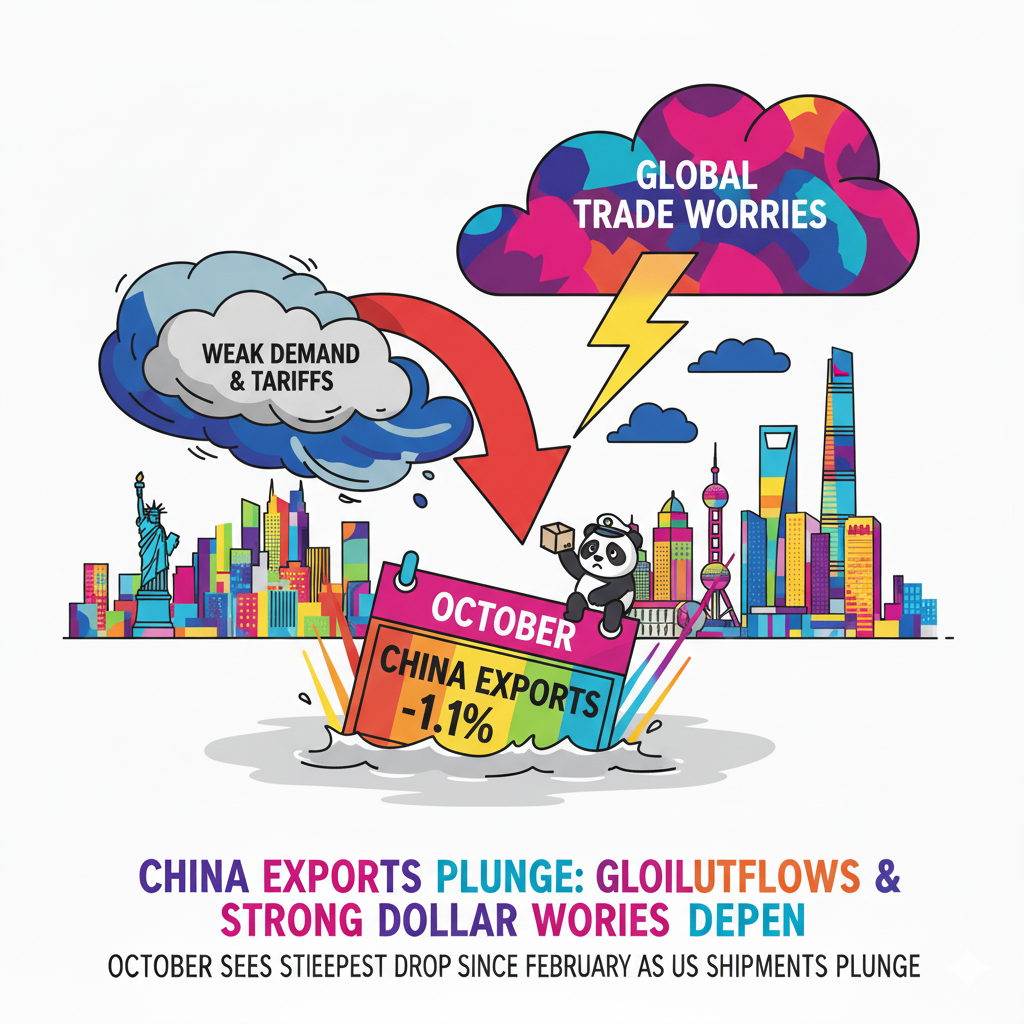
China, the world’s manufacturing powerhouse, has hit a troubling patch again. Recent trade data revealed that China’s exports plunged 1.1% year-on-year in October 2025, marking the sharpest downturn since February. The decline has sparked renewed concern among investors and global markets alike, suggesting that the world’s second-largest economy is still grappling with the aftershocks of trade disruptions, softening global demand, and growing protectionist policies — particularly from the United States.

As a stock market observer and analyst, it’s hard to ignore the signals this downturn sends — not only for China but also for global equities, commodities, and currencies tied to Asia’s economic engine. Let’s unpack what’s happening beneath the surface and what it could mean for your portfolio.

A Deeper Look into the Data

China’s 1.1% export decline in October may seem modest at first glance, but the composition tells a far deeper story. Exports to the United States nosedived by around 25%, representing the sharpest fall in several months. This single data point reflects the growing toll of renewed tariffs and the cooling of US consumer demand as inflation and interest rate uncertainty persist.

Meanwhile, exports to the European Union rose by 0.9% and to Southeast Asia by nearly 8.9%, showing that Chinese exporters are trying to diversify their markets. Yet, those gains couldn’t offset the sheer scale of lost business from the US — still China’s largest export destination.

Adding to the concern, imports grew by only 1%, the slowest in five months. Weak import data signals that domestic demand within China remains subdued, despite government efforts to stimulate consumption and stabilize property markets.

Tariffs, Trade Tensions, and the Shadow of the Trump Doctrine

One of the major catalysts behind the export downturn is the reintroduction and expansion of US tariffs on Chinese goods, a move that reignited trade friction between the world’s two largest economies. With the Trump administration’s policies back in focus, several categories of Chinese products — from electronics to steel and automotive components — have faced higher tariffs.

This escalation has forced many US companies to shift sourcing to alternative markets like Vietnam, India, and Mexico. The ripple effect has been a significant loss of competitiveness for Chinese manufacturers, particularly in electronics, textiles, and machinery.

Investors should note that trade tensions are not just political headlines — they directly influence supply chains, profit margins, and stock valuations. For instance, multinational corporations relying heavily on Chinese factories may see rising input costs, delayed shipments, and disrupted logistics — all of which weigh on quarterly earnings and investor sentiment.

The Weak Domestic Demand Story

Beyond external pressures, China’s internal economic structure is showing signs of fatigue. Imports rising only 1% underlines a broader issue: Chinese consumers are not spending at expected levels.

Despite various stimulus measures — such as rate cuts by the People’s Bank of China and local government bond issuances for infrastructure projects — household confidence remains low. The lingering property crisis, combined with stagnant wage growth, has restrained spending across urban households.

For investors, this is crucial. Weak domestic demand translates into lower consumption-driven growth, meaning that sectors like retail, consumer goods, and tourism may underperform relative to manufacturing and exports. However, even exports are no longer the reliable growth pillar they once were.

Global Ripple Effects: Stocks, Commodities, and Currencies

The Chinese export slump has far-reaching implications for global markets.

  1. Asian Stock Markets:
    Regional equity markets such as Hong Kong’s Hang Seng and South Korea’s KOSPI tend to react sharply to Chinese trade data. Weak exports often trigger risk aversion, as investors anticipate lower demand for semiconductors, electronics, and industrial materials — key sectors tied to China’s factory activity.
  2. Commodities:
    China is the world’s largest consumer of raw materials, from copper to crude oil. A slowdown in exports and industrial output typically means reduced commodity imports, which can weigh on prices. Copper and iron ore — often considered barometers of Chinese manufacturing health — could see softening demand in the near term.
  3. Currencies:
    The Chinese yuan (CNY) has remained relatively stable, thanks to active intervention by the People’s Bank of China. However, continued trade weakness could renew depreciation pressures. The Australian dollar (AUD) and other commodity-linked currencies may also face selling pressure due to their close trade ties with China.
  4. Global Growth Outlook:
    China’s export sector is a critical driver of global supply chains. Prolonged weakness could feed into lower global trade volumes, hurting logistics companies, port operators, and shipping firms. The slowdown may also reduce inflationary pressures in developed economies by lowering import costs.

Analysts’ Reactions: More Caution Ahead

Economists warn that the October numbers are not an isolated blip but part of a longer-term structural adjustment. China is transitioning from an export-led growth model toward one based on domestic consumption and high-tech industries. However, that shift will take time — and comes with growing pains.

Several analysts have estimated that the sharp fall in US-bound exports shaved nearly 2 percentage points off total export growth, equivalent to around 0.3% of GDP. This decline may not derail China’s annual growth targets, but it does point to a slower recovery than expected.

In response, policymakers are likely to maintain a pro-stimulus stance — possibly with targeted measures for exporters, new incentives for technology manufacturers, and continued liquidity injections into the banking system.

What This Means for Investors

For global investors, China’s trade weakness offers both risks and opportunities.

  • Short-term Caution:
    Export-oriented sectors — particularly those linked to low-cost manufacturing — could face earnings pressure. Companies heavily reliant on US orders, such as consumer electronics assemblers, may see squeezed margins.
  • Long-term Opportunity:
    China’s pivot toward domestic innovation and technology upgrading could eventually yield growth in sectors such as AI hardware, renewable energy, and electric vehicles. These industries are expected to benefit from state-backed subsidies and R&D support.
  • Portfolio Implications:
    Investors may want to diversify exposure across Asia, favoring economies like India, Vietnam, and Indonesia, which are increasingly capturing manufacturing relocations from China. Meanwhile, maintaining exposure to Chinese tech and green sectors could offer upside potential when policy support intensifies.

A Reality Check: China Still Matters

Despite the headlines, it’s essential to remember that China remains the backbone of global manufacturing. A single month’s data doesn’t erase decades of infrastructure, logistics capability, and skilled labor that keep China central to the global supply chain.

However, the warning signs are clear: the combination of trade barriers, weak consumption, and external competition has slowed the Chinese growth engine. For global investors, that means being selective, data-driven, and forward-looking in how they engage with China-related assets.

Final Thoughts

China’s worst export downturn since February underscores the fragile balance in the global economy. With US tariffs biting, consumer demand slowing, and trade alliances shifting, China’s export machine is under serious strain.

Yet, history has shown that China is resilient — capable of recalibrating policy and markets when needed. As the world watches closely, investors should prepare for a year of volatility but also strategic opportunity — particularly in the sectors and regions best positioned to adapt to this new trade reality.

In short: The Chinese export decline is not just a data point — it’s a signal of the global economy’s ongoing transformation. For investors, the challenge lies in reading that signal correctly and positioning portfolios to benefit from the shifts ahead.

USD/INR Rises Despite Trade Deal Optimism: Why the Rupee Is Struggling to Find Its Footing

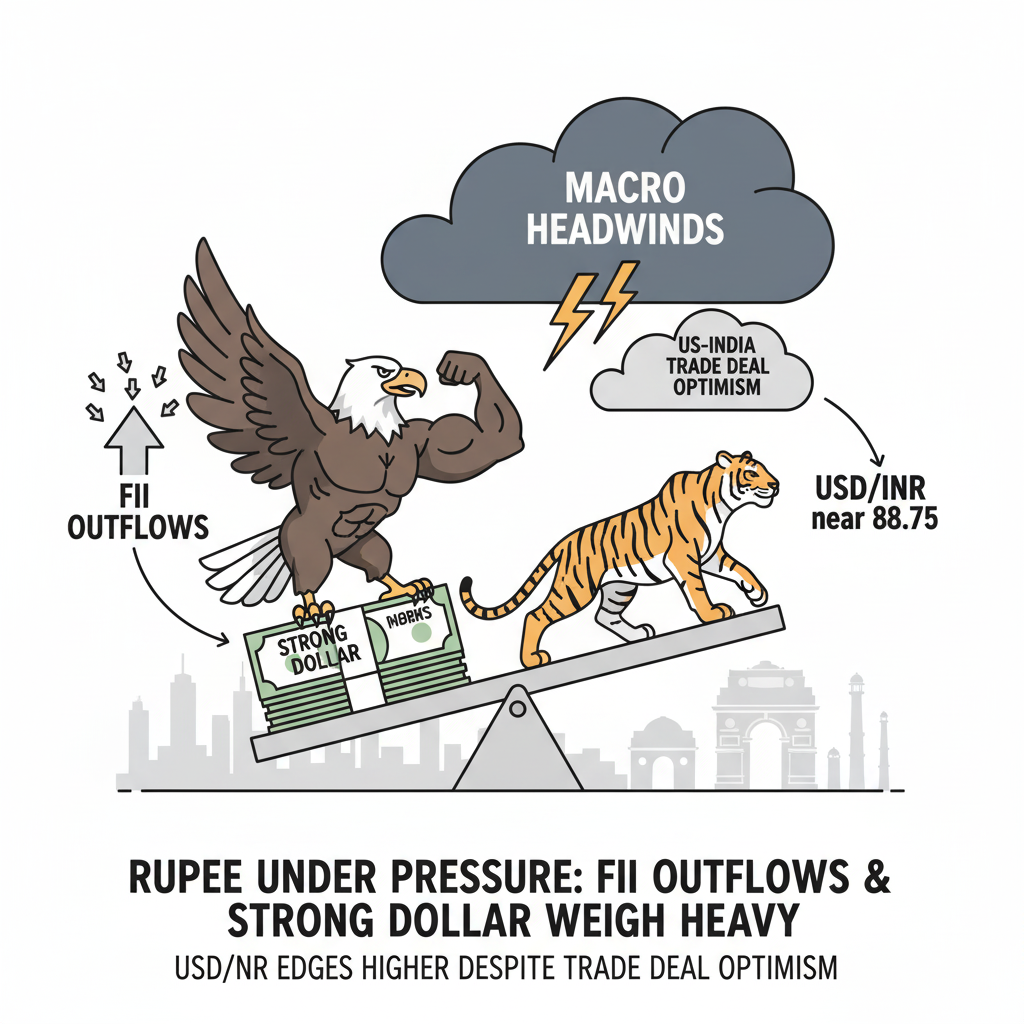
In a week marked by optimism over a potential US-India trade deal, the Indian rupee still found itself on the defensive. Despite positive diplomatic signals and improving global sentiment, the USD/INR pair edged higher toward 88.75, reflecting persistent structural challenges in India’s currency landscape. For investors and market watchers, this development offers a crucial reminder: short-term optimism can often be overshadowed by deeper macroeconomic currents.

Rupee Weakens Amid Trade Deal Hopes

The latest price action in the USD/INR pair underscores the complex interplay between political optimism and economic fundamentals. While both Washington and New Delhi expressed positive tones about strengthening trade relations, the rupee failed to gain traction.

US President Donald Trump’s recent comments about his “excellent relationship” with Prime Minister Narendra Modi, along with his hint of a potential India visit next year, briefly lifted sentiment in domestic markets. However, the move was not enough to offset the broader headwinds facing the rupee.

In normal circumstances, such diplomatic developments would be viewed as a catalyst for capital inflows and currency strength. But current market behavior tells a different story—investors are cautious, prioritizing global risk sentiment, yield differentials, and liquidity over trade rhetoric.

FII Outflows Weigh on Market Confidence

One of the primary reasons behind the rupee’s muted response is the continued selling by Foreign Institutional Investors (FIIs). The Indian equity market has seen net outflows for the third consecutive session, suggesting a growing preference for safer assets amid global uncertainty.

When FIIs pull money out of Indian equities or bonds, they convert their rupee holdings into dollars, thereby increasing demand for the greenback. This process naturally exerts upward pressure on the USD/INR pair, as seen this week.

Despite India’s robust long-term growth story, foreign investors have become increasingly sensitive to short-term global cues—rising US Treasury yields, a strong dollar index, and uncertainty over geopolitical tensions. The net result is a rupee that continues to trade on the weaker side of its recent range, even in the face of positive domestic developments.

Dollar Dominance Persists

Another key factor supporting the dollar and weighing on the rupee is the strength of the US Dollar Index (DXY), which remains elevated around 99.80. The DXY’s resilience is a reflection of ongoing risk aversion and the market’s expectation that the US Federal Reserve will keep interest rates higher for longer to ensure inflation stability.

A stronger dollar globally translates into weaker emerging-market currencies, including the rupee. Even as the Indian economy demonstrates solid GDP growth and relatively contained inflation, global investors continue to favor the safety and yield advantage of US assets.

This environment makes it difficult for the rupee to sustain gains unless there is a decisive turnaround in the DXY or a surge in foreign inflows.

Technical Picture: Bulls Retain Control

From a technical perspective, the USD/INR pair remains in a bullish zone. The currency pair is currently hovering near its 20-day Exponential Moving Average (EMA) at 88.60, signaling strong near-term support.

Moreover, the 14-day Relative Strength Index (RSI) has moved above the 60 mark—an indicator that momentum may be shifting back toward buyers. This suggests that unless there is a sudden surge in rupee demand, the pair could retest its previous record high near 89.12 in the coming sessions.

On the downside, support for the rupee lies around 87.07, which coincides with the August 21 low. A break below this level could indicate renewed strength in the Indian currency, but for now, the trend remains biased toward the dollar.

Macroeconomic Underpinnings: Trade, Inflation, and Oil

Beyond short-term technicals, the rupee’s performance also reflects India’s macroeconomic backdrop. The country’s trade deficit remains elevated, driven by strong imports and steady demand for crude oil. As one of the world’s largest oil importers, India is particularly vulnerable to fluctuations in global energy prices.

When oil prices rise, India’s import bill expands, increasing the demand for US dollars and exerting pressure on the rupee. Although oil has remained relatively stable in recent weeks, any renewed geopolitical tension—especially in the Middle East—could quickly tilt the balance.

At the same time, domestic inflation has stayed above the Reserve Bank of India’s (RBI) comfort zone for much of the year. While the central bank has kept policy rates steady, its cautious tone suggests that it will continue to monitor price pressures closely. A stable but cautious monetary policy means the RBI is unlikely to aggressively intervene to strengthen the rupee unless volatility becomes disruptive.

RBI’s Stance: Controlled Flexibility

The Reserve Bank of India has long maintained a policy of allowing the rupee to find its fair value while intervening only to prevent excessive volatility. This approach helps preserve foreign exchange reserves and maintain investor confidence in the market’s natural price mechanisms.

Recent price movements suggest that the RBI is comfortable with the rupee hovering in the 88–89 range, provided the depreciation is orderly. The central bank’s interventions, when they occur, are typically aimed at smoothing sharp moves rather than defending a specific level.

For traders, this implies that volatility in USD/INR will likely remain contained, but sustained rupee appreciation will require a shift in broader macroeconomic trends, such as a weaker dollar or renewed FII inflows.

US-India Trade Deal: A Long-Term Catalyst, Not a Quick Fix

The potential US-India trade deal has generated optimism about deeper economic cooperation and potential tariff reductions between the two nations. However, currency markets tend to discount such political developments until they translate into measurable trade and investment flows.

If the deal progresses and leads to increased US investment in India’s manufacturing, defense, and digital sectors, it could provide a long-term boost to the rupee by improving the current account balance and strengthening foreign exchange inflows.

For now, though, traders are focusing on the immediate fundamentals—FII flows, inflation trends, and global risk sentiment. These near-term factors are likely to dominate USD/INR movements until the trade deal moves from headlines to execution.

Global Context: Mixed Risk Sentiment

Global market sentiment remains uneven. While optimism around trade diplomacy provides some tailwinds, concerns over US-China tensions, Middle East conflicts, and slowing global growth continue to drive risk aversion. Emerging-market currencies, including the rupee, often bear the brunt of such volatility.

Adding to the mix, US bond yields remain near multi-month highs, drawing capital away from emerging markets. This trend underscores why, despite positive domestic headlines, the rupee’s upside remains capped.

Outlook: Rupee’s Path Ahead

For investors and traders, the outlook for the rupee over the next few months will depend on a few key factors:

  1. Dollar Index Trends: A sustained pullback in the DXY could offer some relief to the rupee, particularly if global investors rotate back into emerging-market assets.
  2. RBI Interventions: Subtle but steady RBI activity in the forex market could help cap volatility and prevent runaway depreciation.
  3. FII Behavior: Renewed foreign inflows into Indian equities and debt would provide fundamental support to the rupee.
  4. Global Oil Prices: Stable or lower crude prices would ease the pressure on India’s current account deficit and help stabilize the currency.

If these conditions align, the rupee could gradually strengthen toward 87 levels. However, if global uncertainty persists and dollar demand remains firm, the pair may hover near the upper end of its range, between 88.50 and 89.00.

Final Thoughts: Patience Over Panic

From an investor’s standpoint, the recent weakness in the rupee is not a cause for alarm but a reflection of current global realities. India’s economic fundamentals remain sound, with strong growth potential, a vibrant manufacturing base, and robust domestic demand.

In the short term, the USD/INR uptrend reflects global risk dynamics more than domestic weakness. Once inflation moderates and FII confidence returns, the rupee could find firmer footing.

As a stock market expert, I believe this period offers an opportunity for long-term investors to stay patient. The rupee’s short-term softness could set the stage for stronger capital inflows once macro conditions improve. The US-India trade optimism, while not an immediate catalyst, reinforces the long-term bullish case for India’s economic narrative.

Until then, the message is clear: the rupee may bend under global pressures, but it is far from breaking.

CNB Holds Steady: Elevated Core Inflation Keeps Czech Interest Rates Firm

In a global economy still feeling the aftershocks of inflation and monetary tightening, central banks are treading cautiously between fostering growth and maintaining price stability. The Czech National Bank (CNB) has now joined this delicate balancing act, signaling a firm commitment to keeping rates steady amid elevated core inflation.

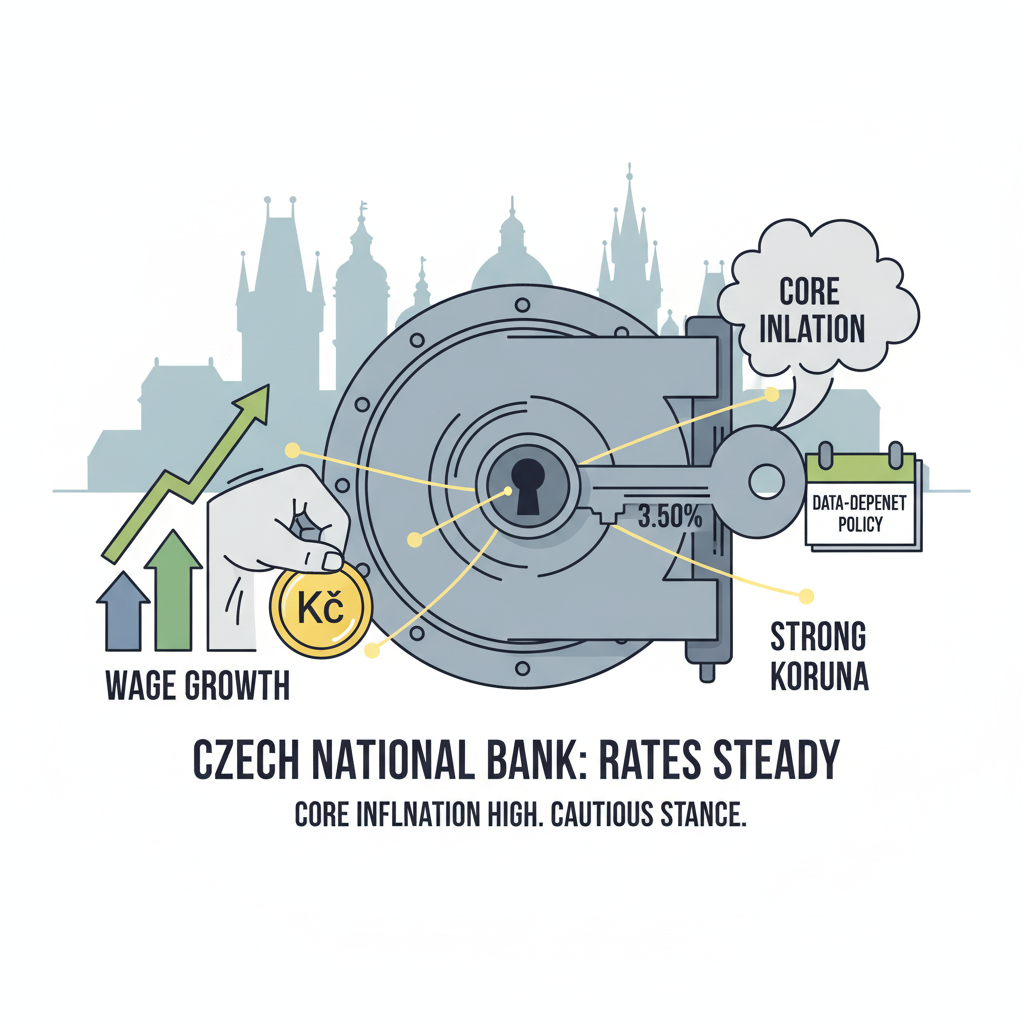
As a market observer and stock analyst, I see this decision not merely as a domestic policy stance but as a reflection of broader regional and global trends—where inflation’s persistence is challenging central banks’ resolve to pivot toward easing. The CNB’s focus on rate stability at 3.50% is a prudent, data-driven response to an economy that remains vulnerable to price and wage pressures.

Inflation’s Shadow Still Looms Over the Czech Economy

The CNB’s key takeaway is clear: inflation in the Czech Republic has moderated from its peaks, but it hasn’t cooled enough to justify a rate cut. The more stubborn component—core inflation—remains elevated. Unlike headline inflation, which fluctuates with energy and food prices, core inflation captures persistent price trends in services and labor.

This stickiness in prices, especially within the services sector, is being driven by rising wages and strong consumer demand. Wage growth in the Czech Republic has accelerated beyond productivity gains, increasing the risk of second-round inflationary effects. Essentially, as workers demand higher pay to offset past inflation, companies raise prices to maintain profit margins, feeding a cycle of sustained inflation.

For the CNB, this means caution. Even as global commodity prices ease and supply chains normalize, domestic inflationary dynamics remain a concern. The central bank’s latest communication underscores its focus on preventing premature policy easing that could undo the progress made in bringing inflation down.

Why the CNB Is Choosing Rate Stability Over Aggressive Cuts

Investors and analysts were watching closely for any hints of a rate cut. However, the CNB has signaled that holding steady is the best course of action for now. This restraint stems from several intertwined factors:

  1. Persistent Core Inflation:
    Despite improvement in headline figures, the underlying inflation trend remains above the bank’s comfort zone. The CNB cannot risk loosening policy when inflation expectations haven’t fully anchored back to target.
  2. Wage Pressures:
    The Czech labor market remains tight, with unemployment among the lowest in Europe. Rising wages continue to feed into service-sector inflation, making it difficult for the CNB to declare victory over inflation.
  3. Currency Considerations:
    The Czech koruna has remained relatively firm, supported by the CNB’s cautious stance. Any premature easing could weaken the currency, leading to imported inflation through higher import costs.
  4. External Monetary Dynamics:
    The European Central Bank (ECB) and other major peers are also signaling caution, balancing the need to support slowing economies while keeping inflation anchored. The CNB’s alignment with this cautious tone reinforces its credibility and currency stability.

For equity markets, this decision signals continuity and predictability—two qualities that investors value. While high interest rates may cap short-term borrowing and spending, they also provide a foundation of monetary discipline that stabilizes investor confidence.

Forward Guidance: The CNB’s New Compass

The CNB has placed a strong emphasis on forward guidance, indicating that markets should pay attention to its upcoming economic forecast rather than expecting immediate policy shifts. This move reflects a sophisticated communication strategy that aims to manage investor expectations in an uncertain environment.

By anchoring its message around “data dependency,” the CNB effectively keeps all options open. If inflation begins to recede meaningfully and wage growth moderates, there may be room for rate cuts in the second half of next year. However, if core inflation remains sticky, the central bank will likely extend its restrictive stance longer than markets currently anticipate.

For stock investors, this signals that interest-sensitive sectors, such as real estate, banking, and consumer discretionary, may experience continued short-term pressure. However, defensive sectors like utilities, consumer staples, and healthcare could maintain stability amid steady monetary conditions.

How Investors Should Read CNB’s Decision

From an investment perspective, the CNB’s policy posture carries several implications:

  1. Banking Sector Outlook:
    Higher interest rates are a double-edged sword for banks. On one hand, they support net interest margins; on the other, they slow credit demand. Czech banks have so far shown resilience, maintaining profitability thanks to conservative balance sheets and low default rates. A stable rate environment supports this equilibrium, offering steady earnings visibility.
  2. Consumer Spending and Retail:
    Elevated rates tend to dampen household spending, but the Czech consumer has remained surprisingly resilient. With wages rising and inflation expectations moderating, purchasing power is gradually stabilizing. However, if inflation persists, discretionary spending could remain under pressure.
  3. Equity Valuations:
    Stock market valuations across Central Europe have already priced in higher rates. The CNB’s signal of stability reduces uncertainty, which could attract renewed foreign interest—especially if the koruna remains strong and inflation moderates in the coming quarters.
  4. Bond Markets:
    For fixed-income investors, stable policy implies limited near-term volatility. Longer-dated Czech government bonds may benefit if inflation expectations ease, providing opportunities for modest capital appreciation.

Global Context: A Mirror of Broader Central Bank Trends

The CNB’s approach is in line with what we’re witnessing globally—caution in the face of lingering inflation. The Federal Reserve, the ECB, and the Bank of England have all adopted similar tones, emphasizing that rate cuts will only come once inflation data provides consistent evidence of cooling.

In many ways, the CNB’s challenge is magnified by its smaller, open economy. The Czech Republic is highly integrated with the European Union, and global supply shocks or commodity fluctuations quickly ripple through its system. A stable interest rate serves as both a shield and a signal—shielding against volatility and signaling the bank’s credibility to markets and investors.

The Czech Koruna: A Quiet Beneficiary

The CNB’s firm stance on rates also indirectly supports the Czech koruna (CZK). A stable or strong currency helps control imported inflation, keeping energy and raw material costs in check. This, in turn, supports the CNB’s longer-term goal of achieving sustainable price stability.

Currency traders have taken note. The koruna’s relative strength has been one of the few bright spots in the Central European FX landscape, outperforming peers such as the Polish zloty and Hungarian forint at various points this year. If the CNB maintains its hawkish bias while others begin to ease, the CZK could retain its strength into 2025.

Risks Ahead: Economic Growth vs. Inflation

While the CNB’s cautious stance is understandable, the policy comes with trade-offs. Keeping rates high for too long could weigh on economic growth, corporate investment, and consumer sentiment. GDP growth in the Czech Republic has been modest, and prolonged monetary restriction could risk a slowdown in industrial output and domestic demand.

The challenge for policymakers will be timing the pivot—easing rates early enough to support growth without reigniting inflation. Investors should monitor data on wage growth, core inflation, and business sentiment as leading indicators of when the CNB might consider its first rate cut.

Conclusion: Stability Over Stimulus

In the current economic climate, the CNB’s decision to maintain rate stability is a signal of prudence, not paralysis. By keeping its policy rate steady and emphasizing forward guidance, the central bank is reinforcing its credibility in a complex inflationary environment.

For investors, the takeaway is clear:

  • Expect continued monetary restraint in the short term.
  • Focus on sectors resilient to high rates.
  • Monitor inflation and wage data closely for signs of a potential shift in policy next year.

The Czech economy may not be roaring ahead, but it’s staying steady—and in today’s volatile global backdrop, steady often beats risky. The CNB’s decision underscores a central truth of modern monetary policy: when inflation refuses to fade quietly, patience becomes the most valuable asset in a policymaker’s toolkit.

In short, elevated core inflation supports CNB’s rate stability—and for investors, this stability offers both reassurance and a clear signal of where the Czech financial markets are headed next.

Starbucks Brews Holiday Magic — and Investor Buzz — with Its 2025 Festive Menu and $30 Bearista Mug Craze

As the holiday season approaches, Starbucks Corporation (NASDAQ: SBUX) is once again leveraging its unmatched brand power, nostalgia, and creative marketing to spark joy—and sales—across its global customer base. On November 6, 2025, Starbucks rolled out its much-anticipated holiday menu and merchandise collection, reigniting the familiar red cup season with an offering that’s both emotionally resonant and financially strategic.

While customers see this as the start of festive cheer, investors see it as a pivotal moment for the company’s Q4 performance, often one of the strongest quarters in Starbucks’ fiscal year. Beyond the lattes and cake pops lies a sophisticated business model built on emotional branding, scarcity, and collectability—strategies that have become synonymous with Starbucks’ long-term success.


The Holiday Lineup: Familiar Comforts with Strategic Innovation

The 2025 Starbucks holiday menu is a blend of time-tested favorites and fresh innovations, designed to stir both nostalgia and curiosity. Seasonal staples like the Peppermint Mocha, Caramel Brulée Latte, Iced Sugar Cookie Latte, and Iced Gingerbread Chai are back—each acting as an annual comfort ritual for millions of customers.

In the bakery section, Starbucks introduced the Polar Bear Cake Pop and Cinnamon Pull-Apart Bread, which join holiday classics such as the Snowman Cookie and Cranberry Bliss Bar. The move isn’t just about flavor—it’s about maintaining emotional continuity with loyal customers while offering new incentives for repeat visits.

From an investor’s standpoint, this continuity matters. Starbucks has consistently demonstrated that its limited-time offerings (LTOs) significantly boost same-store sales and drive engagement on social platforms. Each festive season, the brand sees a notable uptick in customer frequency, app usage, and digital gift card purchases—all translating into robust seasonal revenue.


The $30 Bearista Mug: A Collector’s Dream, a Marketer’s Masterstroke

Perhaps the most talked-about element of Starbucks’ 2025 holiday rollout isn’t a drink—it’s a mug. The “Bearista” glass cold cup, a 20-ounce bear-shaped tumbler with a green beanie lid, priced at around $29.95, has taken social media by storm.

Within hours of its launch, the Bearista mug began selling out nationwide, sparking a secondary market frenzy. Online resellers are listing the limited-edition cup for anywhere between $150 and $400, proving once again that Starbucks’ holiday merchandise strategy is as lucrative as its beverage sales.

But there’s a deeper strategy behind this. Starbucks has long mastered the art of creating perceived scarcity. Each year, a handful of holiday merchandise items—especially limited-edition tumblers and mugs—become must-have collectibles. This generates massive earned media coverage, user-generated content, and brand buzz, all of which amplify Starbucks’ presence at virtually no additional advertising cost.

For investors, this is a marketing goldmine. Limited merchandise drops like the Bearista mug not only create short-term sales spikes but also strengthen brand loyalty—turning casual customers into brand advocates and collectors.


Design That Speaks the Language of Emotion

Starbucks’ 2025 holiday cup designs are another subtle yet powerful driver of brand sentiment. Inspired by baristas’ iconic green aprons, the new cups feature plaid patterns, ribbon motifs, and cheerful accents, all conveying warmth, nostalgia, and community.

Beyond aesthetics, these cups serve as emotional touchpoints. Each design evokes the feeling of shared experiences—the smell of coffee in winter, the chatter of a cozy café, and the joy of gifting. It’s this intangible connection that makes Starbucks not just a coffee brand, but a cultural phenomenon.

For Starbucks shareholders, that cultural power translates into pricing resilience. In an era of inflation and price sensitivity, Starbucks continues to maintain strong margins because its customers aren’t just buying coffee—they’re buying an experience.


Merchandise as a Revenue Stream and Brand Reinforcer

While drinks remain Starbucks’ primary revenue source, its merchandising arm has become a silent profit engine. Each year, Starbucks rolls out a festive collection of tumblers, mugs, and cold cups, often priced between $20 and $40.

These aren’t just accessories; they’re lifestyle symbols. Owning a Starbucks holiday mug is as much about self-expression as it is about caffeine. The company’s understanding of this emotional currency has allowed it to build a secondary product ecosystem that extends its brand into homes and offices.

Financially, the merchandise segment contributes meaningfully to incremental revenue, particularly during the holiday quarter. For instance, in previous years, analysts noted that Starbucks’ merchandise sales grew by double digits during festive periods—boosted further by exclusive online drops and app-based promotions.


Strategic Timing: Holiday Launch Aligns with Consumer Sentiment

The early-November launch is no coincidence. As inflation pressures consumers, Starbucks positions itself as a small luxury—a treat that feels indulgent yet attainable. This “affordable indulgence” strategy is vital in economically uncertain times when consumers cut back on big-ticket items but continue to spend on small comforts.

Historically, the holiday season contributes a significant share to Starbucks’ Q1 fiscal earnings (October–December). Analysts often watch this period closely to gauge the brand’s momentum heading into the new year. Early social media traction and positive consumer sentiment around the Bearista mug and returning beverages suggest a strong holiday quarter ahead.


Digital Engagement: The App That Keeps on Giving

The Starbucks Rewards app continues to be the backbone of its customer engagement strategy. Every seasonal launch is tightly integrated with the app ecosystem—offering early access, reward bonuses, and exclusive items to members.

This not only encourages digital ordering but also strengthens Starbucks’ data-driven insights into consumer behavior. By understanding what customers buy, when they buy it, and how often they return, Starbucks continuously refines its product mix and promotional timing.

For investors, the app’s growth translates directly into recurring revenue potential. Starbucks Rewards membership has historically grown in double digits year-over-year, and the company continues to report that Rewards customers account for over 50% of U.S. store revenue.


Stock Market Perspective: Brewing Confidence Amid Volatility

From an investor’s lens, Starbucks’ holiday success story comes at a crucial time. Global coffee prices have been volatile, wage costs are rising, and competition from boutique chains continues to intensify. Yet, Starbucks has consistently demonstrated its ability to maintain pricing power and customer loyalty even in challenging markets.

The 2025 holiday rollout reinforces that narrative. As analysts observe early consumer trends, many anticipate a positive impact on Q4 same-store sales (SSS) and overall revenue momentum heading into 2026.

Starbucks’ focus on emotional branding, innovative merchandise, and digital engagement positions it well to navigate macroeconomic headwinds. The company’s proven model of monetizing nostalgia and community continues to resonate across demographics, from Gen Z to retirees.


The Human Element: Why Starbucks Still Wins Hearts

What makes Starbucks’ strategy stand out is its understanding of human emotion. In a world of fast commerce and fleeting trends, Starbucks offers familiarity, comfort, and connection. A Peppermint Mocha isn’t just a drink—it’s a ritual. A holiday cup isn’t just packaging—it’s a keepsake.

That emotional resonance is something few brands achieve at this scale. It’s what keeps customers lining up for $6 lattes, collectors hunting for $30 mugs, and investors confident that Starbucks’ growth story is far from over.


Conclusion: Brewing Joy, Building Value

Starbucks’ 2025 holiday campaign is more than a seasonal celebration—it’s a strategic masterclass in brand longevity. By blending tradition with innovation, scarcity with accessibility, and emotion with strategy, Starbucks continues to set the gold standard for consumer engagement.

For investors, the message is clear: Starbucks isn’t just selling coffee this holiday season—it’s selling joy, nostalgia, and community. And as history shows, those are some of the most profitable assets in business.

BoE Governor Bailey Sees “Good” Inflation Data — What It Means for Markets and Investors

When central bankers speak, markets listen — and when that central banker is Andrew Bailey, Governor of the Bank of England (BoE), every word carries weight. Recently, Bailey struck a cautiously optimistic tone, calling the latest UK inflation data “good.” It’s a subtle phrase, but one that’s stirring renewed confidence across the markets.

After months of battling stubborn price pressures, the UK economy may finally be showing signs that inflation has peaked. Yet, as every seasoned investor knows, central banks don’t celebrate too early — and neither should we. The key lies in understanding what “good” inflation data really means for bonds, equities, and the British pound in the months ahead.


Inflation Relief: A Turning Point for the UK Economy

The latest inflation figure, hovering around 3.8%, represents a significant improvement from the double-digit highs witnessed in 2023. For households and businesses battered by cost-of-living pressures, this moderation is a welcome sign.

But to the trained eye, this data is more than a number — it’s a potential signal that the Bank of England’s long, painful rate-hiking cycle is achieving its purpose. By pushing the base rate to 4%, the BoE sought to rein in demand and curb price surges. And it seems to be working.

However, Bailey remains cautious. His message was clear: “This is good data, but we’re not out of the woods yet.” That tone of tempered optimism is crucial. It tells markets that while inflation may be easing, structural risks — like wage growth and persistent services inflation — are far from solved.


Markets React: Relief Rally with a Side of Caution

Financial markets thrive on expectation, not certainty. So when Bailey hinted that inflation pressures were easing, investors immediately priced in a less aggressive monetary stance from the BoE.

UK gilt yields fell modestly, reflecting growing confidence that rate cuts could be on the horizon in 2025. Meanwhile, the FTSE 100 saw selective strength — particularly among consumer discretionary and real estate stocks, which typically benefit from lower rate expectations.

But this rally came with a dose of realism. Traders know that the BoE is unlikely to cut rates prematurely. Bailey has repeatedly stressed the importance of ensuring inflation remains anchored around the 2% target before any policy easing.

As a stock expert, I see this as a critical juncture for investors: optimism is warranted, but overexuberance could be punished if inflation surprises on the upside again.


Interest Rates: A Long Plateau Ahead

For more than two years, the Bank of England has navigated a fine line — tightening monetary policy just enough to control inflation without triggering a deep recession. With inflation finally cooling, the question now is not “if” rates will fall, but “when.”

Markets initially expected rate cuts to begin early in 2025, but Bailey’s tone suggests a longer plateau. He’s essentially signaling that the BoE wants to observe sustained progress before making any moves.

This stance serves a dual purpose:

  1. It keeps inflation expectations under control by reminding markets that monetary vigilance remains in play.
  2. It gives the BoE time to assess wage pressures — which remain elevated in the services sector.

In essence, the BoE wants to avoid repeating the mistakes of past cycles, where policy easing came too early and reignited inflation.


The Impact on Bonds and Fixed Income Markets

From a fixed-income perspective, Bailey’s comments reinforce a period of stability — something bond investors have long awaited.

The UK government bond (gilt) market, which suffered historic losses in 2022, has started to regain investor confidence. Lower inflation expectations mean real yields could stabilize, supporting bond prices.

For conservative investors, this environment presents an attractive entry point into medium-term gilts or high-quality corporate bonds. While yields may not surge higher, the relative safety and predictable returns could outperform riskier equities during uncertain times.


Sterling Holds Firm Amid Policy Clarity

Interestingly, the British pound held steady following Bailey’s remarks. This resilience highlights investor confidence in the BoE’s measured communication.

A clear, data-dependent policy approach supports the currency by reducing speculative uncertainty. If inflation continues to fall and the BoE maintains policy discipline, sterling could remain a strong performer against the euro and even the U.S. dollar in the medium term.

Currency traders should, however, stay alert to global dynamics — especially U.S. Federal Reserve decisions. If the Fed moves faster on rate cuts than the BoE, the pound could see additional tailwinds.


Sectoral Implications: Who Gains and Who Waits

A cooling inflation environment often reshapes sector performance across the stock market. For UK investors, Bailey’s remarks signal a gradual shift from defensive positioning to selective cyclical exposure.

  • Winners:
    • Consumer Discretionary: Lower inflation boosts household spending power, benefiting retailers, travel, and leisure stocks.
    • Real Estate: Stabilizing interest rates can revive investor interest in property developers and REITs.
    • Financials: Banks may gain from a prolonged high-rate environment before cuts eventually arrive, preserving net interest margins.
  • Cautious Zones:
    • Utilities and Staples: These sectors, which performed well during inflationary uncertainty, may underperform as investors rotate toward growth and cyclical plays.
    • Exporters: A stronger pound could marginally weigh on companies with large international revenue exposure.

As a stock strategist, I’d recommend maintaining a diversified mix — overweighting domestic growth sectors while retaining a defensive cushion through dividend-yielding blue chips.


Inflation’s Core Drivers Still in Focus

Bailey’s optimism stems from headline inflation easing, but he remains wary of core inflation — the version that excludes volatile food and energy prices. Core inflation, particularly in services and wages, has proven stubbornly sticky.

The BoE is closely monitoring wage settlements, which have risen faster than expected in many sectors. Persistent wage growth risks creating a feedback loop, where higher pay sustains consumer demand and keeps inflation elevated longer than desired.

This is why Bailey’s comments carry a dual message: progress is real, but complacency would be dangerous.


Global Context: UK Policy in Line with Peers

The BoE’s cautious optimism mirrors that of other major central banks. The U.S. Federal Reserve and the European Central Bank are also holding steady — not yet ready to cut, but clearly done with aggressive hikes.

This synchronized global pause provides breathing room for markets. It suggests that policymakers believe they’ve done enough tightening to eventually restore price stability without inflicting severe economic pain.

For international investors, the UK stands out as a relatively balanced market — offering a blend of policy credibility, moderate inflation improvement, and attractive equity valuations compared to the U.S.


Investor Takeaway: Optimism with a Safety Net

The latest inflation data and Bailey’s comments offer a clear message for investors: the storm may be easing, but caution remains essential.

Here’s how to think about positioning in the months ahead:

  • Stay invested, but disciplined: The path to normalization is gradual, not linear. Avoid overreacting to short-term data surprises.
  • Favor quality stocks: Companies with strong balance sheets and pricing power are best equipped to navigate lingering volatility.
  • Consider bonds again: After years of underperformance, fixed income is regaining its role as a portfolio stabilizer.
  • Diversify globally: Don’t rely solely on UK assets. Exposure to U.S. and European equities provides balance against localized risks.

Conclusion: “Good” Data, Better Prospects

Andrew Bailey’s simple phrase — “the latest inflation data is good” — carries far more significance than it appears. It marks a potential shift from crisis management to cautious confidence.

For the UK economy, this means inflation may finally be under control. For markets, it signals the beginning of a new phase — one defined by stability, patience, and selective opportunity.

Investors who understand the nuance in Bailey’s tone will recognize this as a moment not for exuberance, but for steady optimism. Inflation’s fight may not be over, but the direction of travel is, at last, positive — and that’s good news worth believing in.