P/E and P/B Ratio Explained: The Two Most Important Valuation Tools in the Stock Market

When people start investing, they often find it difficult to understand whether a stock is expensive or reasonably priced. That’s where valuation ratios come in. Among them, the Price-to-Earnings (P/E) ratio and Price-to-Book (P/B) ratio are two of the most commonly used indicators to judge a company’s value. These ratios do not guarantee profits, but they help investors make more informed decisions.


What is the P/E Ratio?

The P/E ratio shows how much investors are willing to pay today for the company’s earnings. It connects a stock’s market price with the profit the company makes per share.

Formula:

P/E Ratio = Share Price ÷ Earnings Per Share (EPS)

The P/E ratio is essentially a reflection of market expectations.

  • A high P/E ratio usually suggests that investors expect the company to grow strongly in the future. Sectors like IT, FMCG, and pharma often trade at higher P/E multiples.
  • A low P/E ratio may indicate that the stock is undervalued or that the company’s future performance is uncertain.

Example

If a stock trades at ₹200 and the company generates an EPS of ₹10, the P/E ratio would be:

200 ÷ 10 = 20

This means investors are paying ₹20 for every ₹1 the company earns.

When is P/E useful?

  • When comparing companies within the same sector
  • For profitable businesses
  • For understanding market confidence and growth expectations

What is the P/B Ratio?

The Price-to-Book (P/B) ratio helps investors understand how the market values the company’s net assets. Book value refers to the company’s assets minus its liabilities.

Formula:

P/B Ratio = Share Price ÷ Book Value per Share

The P/B ratio helps identify whether the market is valuing a company higher or lower than the worth of its physical assets.

  • A P/B below 1 may mean the stock is undervalued and trading below its actual asset value.
  • A P/B between 1–3 is considered healthy for most companies.
  • A P/B above 3 usually indicates strong investor confidence or that the company operates with fewer tangible assets (for example, technology businesses).

Example

If a share is priced at ₹300 and its book value per share is ₹100, then:

300 ÷ 100 = 3

This means investors are ready to pay ₹3 for every ₹1 of the company’s net assets.

When is P/B useful?

  • For banks, NBFCs, and manufacturing companies
  • For companies with significant tangible assets
  • For identifying undervalued opportunities during market correction

P/E vs P/B: What’s the Difference?

AspectP/E RatioP/B Ratio
MeasuresPrice vs EarningsPrice vs Company Assets
Best ForProfitable and growing companiesAsset-heavy sectors like banking
IndicatesGrowth expectationsWhether stock is undervalued or overvalued based on assets

In simple terms, P/E tells you how expensive the stock is compared to its profits, while P/B tells you how expensive it is compared to its net assets.


Why Should Investors Care About These Ratios?

No single ratio can tell the whole story about a company, but P/E and P/B provide a strong foundation for evaluating a stock. Together, they help you answer key investment questions:

  • Is the stock overpriced?
  • Is it available at a fair value?
  • Does the company justify its current market price?

By combining these ratios with other metrics like ROE, Debt-to-Equity, and future growth prospects, investors can build a clearer picture of the company’s true value.


Conclusion

Understanding P/E and P/B ratios is essential for anyone who wants to invest confidently. These simple yet powerful tools help investors compare companies, identify undervalued opportunities, and avoid overpriced stocks. While they should not be used in isolation, they serve as the first step towards informed and intelligent investing.

Japan’s FY2025 Extra Budget Set to Exceed ¥14 Trillion: What It Means for the Economy

Japan is gearing up for one of its largest supplementary budgets in recent years, with the government preparing an FY2025 extra budget that is expected to surpass the previous year’s ¥13.9 trillion package. This move signals a clear shift in fiscal priorities under the current administration, which is leaning heavily toward economic stimulus and long-term strategic investment rather than strict budget discipline. As Japan continues to navigate a complex environment shaped by inflationary pressures, demographic challenges, global geopolitical tensions, and slowing external demand, the government’s latest fiscal approach aims to support households, strengthen national competitiveness, and accelerate technological advancement.


A Bigger Budget to Meet Growing Economic Demands

Every year, Japan announces a supplementary budget to address emerging economic challenges, policy needs, and unforeseen developments. But the FY2025 extra budget stands out for its sheer scale and ambition. According to internal projections and recommendations from economic advisers, the government is preparing a package that will exceed ¥14 trillion—which would make it larger than the already substantial ¥13.9 trillion extra budget approved in FY2024.

This increase reflects a growing recognition that Japan needs stronger fiscal firepower to address deep-rooted structural issues and to boost economic momentum. As global uncertainty rises, policymakers believe that the country must not only maintain economic stability but also push ahead with proactive investments that could shape its future competitiveness.


Why Policy Advisers Want More Than ¥14 Trillion

A key source of pressure for a larger extra budget comes from members of the Council on Economic and Fiscal Policy, a body consisting of private-sector leaders, academics, and government officials. These advisers have urged the government to pursue an extra budget of more than ¥14 trillion, arguing that anything less would be insufficient to meet the scale of current challenges.

Their argument is anchored in several concerns:

  • Economic growth remains fragile.
    While Japan has seen moderate improvements in consumer spending and corporate investment, the pace of growth is still uneven.
  • Inflation remains a pressing issue.
    Rising prices for essentials—especially energy and imported goods—have placed pressure on households and smaller businesses.
  • Global competition is intensifying.
    Countries worldwide are investing heavily in artificial intelligence, semiconductor capabilities, and supply-chain resilience. Japan risks falling behind if it does not act quickly.
  • Domestic geopolitical and demographic realities are shifting.
    Japan faces a rapidly aging population, shrinking workforce, and increasing regional security concerns that require strategic investment.

Against this backdrop, advisers argue that a robust supplementary budget is essential to maintain economic confidence and push forward ambitious reforms.


A Stimulus Package Aimed at Strategic Sectors

The upcoming extra budget is expected to support a broad economic stimulus package focused on long-term national priorities. Unlike past stimulus measures that focused primarily on short-term consumption boosts, this package is expected to align closely with Japan’s long-term strategic roadmap.

1. Boosting Artificial Intelligence and Digital Transformation

Japan aims to accelerate adoption of AI technologies across industries and government operations. This includes funding for research, digital infrastructure, and human-capital development in emerging tech sectors.

2. Strengthening Semiconductor and Advanced Manufacturing Capabilities

Amid global chip shortages and geopolitical tensions, Japan plans to expand its semiconductor industry through subsidies, partnerships with global firms, and increased investment in domestic R&D facilities.

3. Supporting Households Affected by Inflation

Targeted subsidies, energy support measures, and relief programs for low-income households are expected to be part of the package. These measures aim to stabilize consumption and mitigate the cost-of-living pressures that continue to burden families.

4. Enhancing Economic Security and Supply Chain Resilience

Japan is allocating more resources toward reshoring manufacturing facilities, diversifying import sources, and building strategic stockpiles to reduce dependence on vulnerable foreign supply chains.

5. Promoting Green Technologies and Energy Transition

Investment in renewable energy, hydrogen technologies, and energy-efficient infrastructure is also expected, reflecting Japan’s longer-term carbon-neutrality commitments.

By targeting these areas, the extra budget is positioned not only as a short-term stimulus but as a strategic investment in Japan’s future.


Shifting Away From Fiscal Austerity

Perhaps the most striking element of the FY2025 extra budget is Japan’s apparent shift away from its long-standing commitment to achieving a primary budget surplus. For years, the government has promised to balance its primary budget—excluding debt-servicing costs—to ensure long-term fiscal sustainability. But recent statements and policy signals suggest that the administration is moving away from this target.

There are several reasons behind this shift:

  • Japan’s economy needs investment, not austerity.
    After decades of slow growth, policymakers increasingly believe that under-investing in key sectors is far riskier than temporarily increasing debt.
  • Inflation has changed the fiscal landscape.
    Moderate inflation can help reduce the relative size of public debt over time, giving governments more room to borrow and invest.
  • Geopolitical pressures are rising.
    From regional tensions to global competition in technology and energy, Japan faces new challenges that require strong fiscal responses.
  • The global policy environment has shifted.
    Many advanced economies are adopting expansionary fiscal policies, and Japan is aligning with these trends to remain competitive.

This more flexible fiscal stance marks a significant policy evolution, emphasizing strategic spending over strict fiscal consolidation.


Borrowing Will Likely Rise—And That Raises Questions

Given the size of the upcoming extra budget, Japan will likely need to issue more government bonds to finance it. This raises important questions about debt sustainability, since Japan already has one of the highest public-debt-to-GDP ratios in the world.

However, Japan also has several unique financial strengths:

  • Strong domestic demand for government bonds, especially from pension funds, insurers, and banks.
  • Ultra-low interest rates that keep borrowing costs manageable.
  • The Bank of Japan’s continued support, which helps stabilize the bond market.

Still, increased borrowing could pose future risks if global interest rates rise sharply or if domestic appetite for government bonds weakens over time.


A Policy Shift Toward Growth Over Austerity

The decision to pursue a larger-than-expected extra budget highlights Japan’s renewed focus on growth and resilience. Rather than concentrating on deficit reduction, the government is prioritizing:

  • Economic security
  • Technological competitiveness
  • Household support
  • Industrial revival
  • Digital and green transformation

This marks a notable turning point in Japan’s fiscal strategy—a shift from primarily managing constraints to actively investing in opportunities.


What the Budget Means for Japan’s Future

As Japan prepares to unveil its FY2025 extra budget, the message appears clear: the country is ready to invest aggressively in its future. Policymakers understand that the challenges Japan faces—from demographic shifts to global competition—require bold action rather than incremental adjustments.

If executed effectively, the large-scale stimulus could strengthen Japan’s long-term economic foundations, accelerate innovation, and enhance resilience in key sectors. But the success of the strategy will depend on careful implementation, transparent budgeting, and continued investor confidence.

For now, Japan is choosing investment over austerity—and the world will be watching closely to see how this ambitious fiscal approach unfolds.

Sterling and Gilts Under Pressure: Why Markets Are Losing Confidence in the UK’s Fiscal Outlook

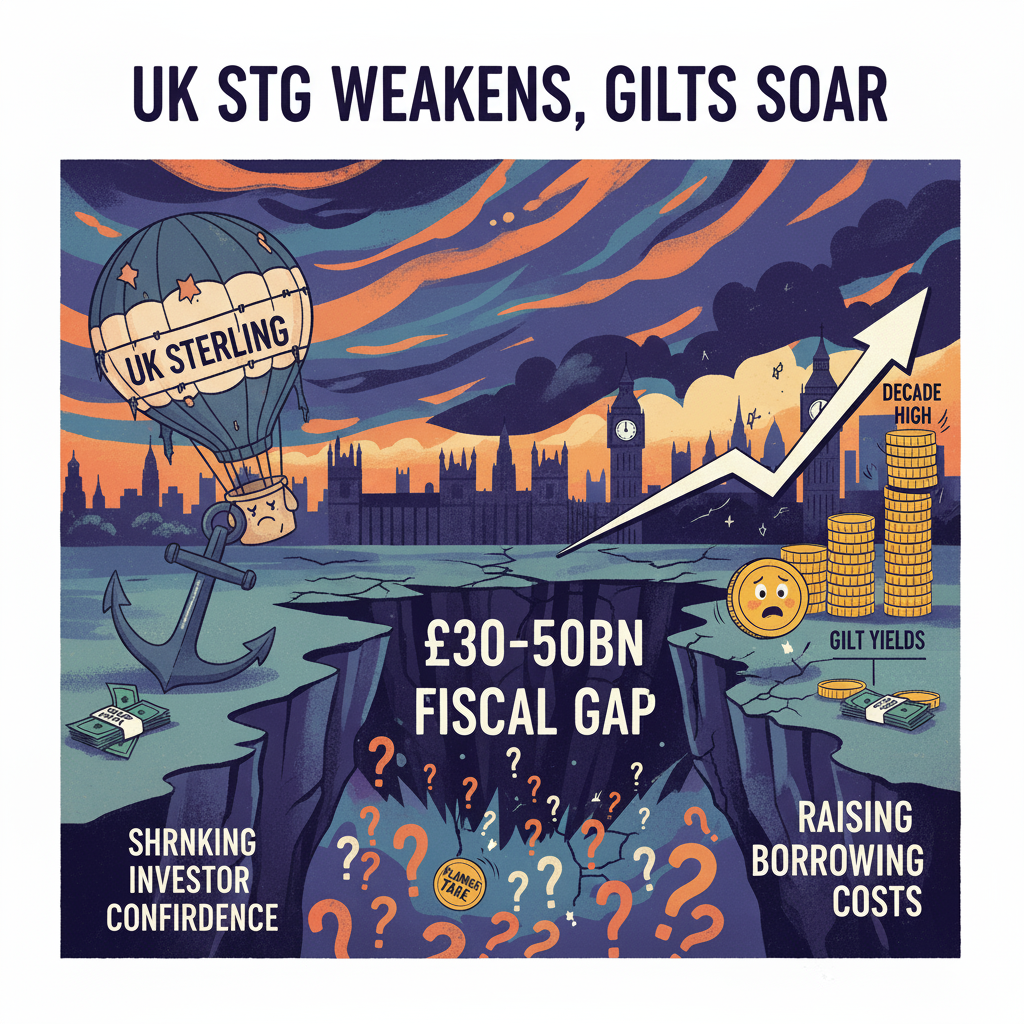
The British financial markets have entered a period of renewed turbulence, as both sterling and UK government bonds—known as gilts—come under heavy selling pressure. This latest market reaction highlights growing concerns around the UK government’s fiscal strategy, rising borrowing requirements, and the broader economic environment that continues to challenge policymakers.

In recent weeks, bond yields have surged to levels not seen in decades, the pound has weakened against major currencies, and investors are signalling doubts about the government’s ability to manage a widening fiscal gap. These dynamics are not isolated developments; they are deeply interconnected, forming a picture of a country struggling to convince financial markets that its long-term plans are sustainable.

To understand why this is happening, and what it means for the UK’s economy, it’s worth unpacking the forces at play.


A Surge in Gilt Yields: The First Sign of Market Strain

One of the clearest indicators of market stress is the dramatic rise in gilt yields. Yields on long-term UK government debt have climbed to their highest point since the late 1990s. The last time Britain experienced yields this elevated was during a different economic era—one with higher structural inflation and a far more robust interest-rate environment.

A rise in yields effectively means that the UK government must pay more to borrow money. For a government already dealing with record-high debt servicing costs, this is a troubling development. Higher yields increase borrowing costs, limit fiscal room, and place additional pressure on policymakers to demonstrate credibility.

Bond traders often say that markets act as a mirror to government decisions. Right now, that mirror is reflecting uncertainty. When investors demand higher returns to hold a country’s debt, it is usually because they perceive greater risk—either economic, fiscal, or political.


The Pound Weakens as Confidence Slips

Alongside rising yields, the pound has been steadily losing value against major global currencies. Sterling’s depreciation is linked to the same core issue: declining investor confidence.

Foreign exchange markets reward stability and punish uncertainty. With questions swirling around the government’s fiscal plans, the pound has become less attractive relative to currencies backed by stronger fiscal frameworks or more predictable monetary environments. The resulting depreciation not only reflects external investor sentiment but also creates additional challenges for the domestic economy, such as raising import costs and pressuring inflation.

It’s a feedback loop policymakers would prefer to avoid: weak currency, rising yields, and a jittery investor base.


An Overstretched Fiscal Framework

Behind the market reaction lies a common theme: Britain is facing a sizable fiscal gap. Estimates vary, but the government is likely dealing with a shortfall in the range of tens of billions of pounds. This gap stems from multiple factors:

  • Sluggish economic growth
  • High public spending commitments
  • Rising interest payments on public debt
  • Slower-than-expected tax revenue growth

These pressures make it harder for the government to balance the books without either cutting spending, raising taxes, or increasing borrowing. None of these options are politically appealing, and each carries economic consequences.

Shifting financial realities mean that the government’s fiscal “head-room”—the flexibility it has to manoeuvre—has diminished considerably. Any misstep, real or perceived, can quickly translate into market stress.


Gilt Auctions Reveal Investor Hesitation

Another important signal from the markets is the cooling demand for UK government debt. Recent gilt auctions have shown weaker bid-to-cover ratios—a measure of how much demand exists relative to the amount of bonds being issued.

Lower demand for government bonds means investors are not as eager to lend to the UK. This partly explains why yields are rising: when demand falls, governments must offer higher interest rates to attract buyers.

In normal conditions, gilt auctions are a routine aspect of the financial system. When they begin to falter, however, it is usually an early warning flag. Investors are essentially voting with their money, and right now, their vote indicates unease.


Markets Want a Clear and Credible Plan

Markets are not inherently against government spending, nor are they automatically opposed to borrowing. What they demand is clarity, stability, and coherence in policy direction.

At present, the UK government has yet to convince investors that its long-term strategy is fully viable. There is still uncertainty over whether the government will rely on tax increases, spending cuts, or additional borrowing to address the fiscal gap. The delay in outlining a comprehensive fiscal strategy has left a vacuum of information, and markets tend to fill vacuums with speculation—not optimism.

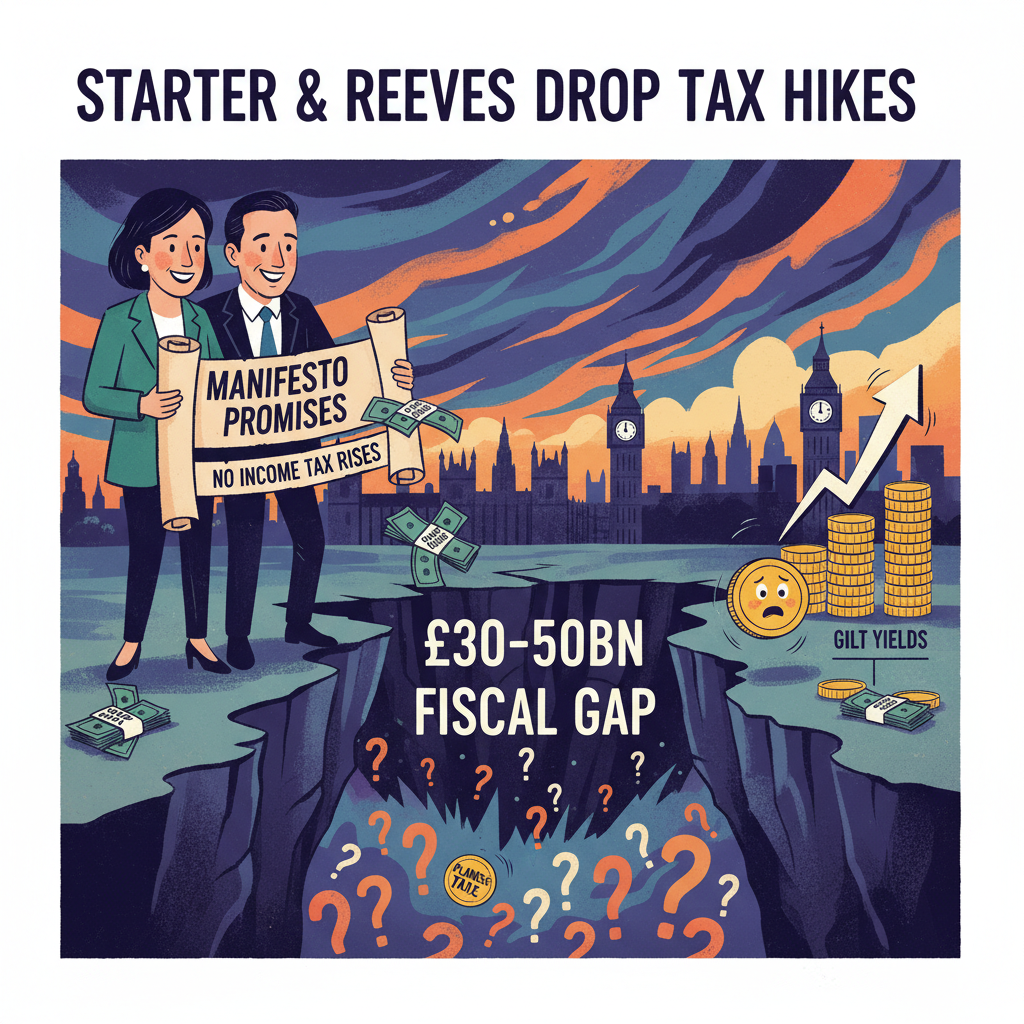
The government’s recent decision not to raise income tax rates, while politically popular, also raises questions about how the fiscal gap will be bridged. Without new revenue from major taxes, investors fear the government may have to rely on borrowing—a potentially risky path when yields are already rising.


A Costly Time for Debt Servicing

Another major concern is the rising cost of debt servicing. As yields climb, the cost of refinancing existing debt or issuing new bonds becomes more expensive. For a government with hundreds of billions in gilts that regularly need to be rolled over, high yields translate into billions of pounds of additional annual cost.

This dynamic creates a structural challenge: the more the government spends on interest payments, the less it has available for essential public services, investment projects, or economic stimulus. This squeeze puts both the economy and political stability at risk.


The Broader Economic Implications

Market volatility doesn’t just affect bond traders or currency desks. The ripple effects spread through the entire economy.

1. Higher borrowing costs for businesses and households

Gilt yields are closely linked to interest rates across the economy. When yields rise, mortgages, business loans, and corporate financing all become more expensive.

2. Pressure on inflation

A weaker pound can raise the cost of imports—from energy to food to manufacturing inputs—keeping inflation elevated and complicating the Bank of England’s policy decisions.

3. Reduced business confidence

Market instability creates an uncertain environment that discourages investment. Companies prefer to operate in predictable economic conditions, and sudden swings in yields or currency values can derail expansion plans.


What the Government Can Do Next

To regain control of the narrative and restore market confidence, the government has several paths it can pursue. Each comes with trade-offs:

  • Present a clear fiscal strategy that outlines how the deficit will be managed.
  • Enhance transparency around spending priorities and timelines.
  • Introduce targeted revenue measures that don’t break key political promises but still raise funds.
  • Signal spending discipline without undermining essential services or growth-driven investment.

Markets don’t require perfection—they require predictability. A credible roadmap may be enough to stabilize yields and support the pound.


Conclusion: A Moment of Reckoning for UK Economic Policy

The current pressure on sterling and gilts is more than a temporary market movement. It reflects deeper concerns about the UK’s fiscal direction and its ability to navigate a difficult economic landscape. Rising yields, a weakening currency, and hesitant investors all point to the need for a clear, disciplined, and forward-looking strategy.

As the government prepares its next set of economic decisions, its ability to communicate effectively, act decisively, and reassure markets will determine whether this period of volatility becomes a brief episode—or the beginning of a more prolonged challenge.

Starmer and Reeves Drop Income Tax Rise Plan: What It Means for the UK’s Fiscal Future

In a significant political and economic development, the UK government under Prime Minister Keir Starmer and Chancellor Rachel Reeves has decided to drop its initial plan to raise headline income-tax rates in the upcoming budget. This reversal marks one of the most closely watched policy decisions since the Labour government took office and is now shaping expectations for the 26 November fiscal announcement.

The decision wasn’t made in isolation. It came after weeks of internal discussion, external scrutiny, and mounting concerns about the balance between fiscal responsibility and political integrity. To understand why this shift matters—and what it signals for the country’s economic direction—it helps to look closely at the motivations behind the move, the reactions it triggered, and the challenges that now lie ahead for the government.


A Manifesto Promise That Shaped the Decision

During the election campaign, Labour made a clear and emphatic pledge: there would be no increases in taxes traditionally associated with working people—specifically income tax, national insurance, and VAT. This promise was a central part of their argument that economic growth, not tax hikes, would be the foundation of Britain’s recovery and long-term development.

However, as the government began preparing its first full budget, the harsh reality of public finances came into clearer focus. Britain is facing one of the largest fiscal gaps in recent memory. Estimates vary, but most projections place the shortfall between £30 billion and £50 billion. This gap presented a dilemma: honor the manifesto pledge, or find new sources of revenue to prevent borrowing from spiraling and to maintain the confidence of investors.

Initially, raising income-tax rates—particularly for higher earners—was among the proposals under consideration. But after weighing the political costs, economic implications, and public expectations, both Starmer and Reeves ultimately concluded that breaking a major manifesto promise so early in their term could severely damage trust. The decision to abandon the plan was therefore both a political calculation and an attempt to reaffirm their commitment to transparency and credibility.


Economic Pressures Behind the Scenes

The fiscal gap is not a theoretical challenge—it is immediate and pressing. The UK has been wrestling with sluggish growth, rising debt-servicing costs, and spending commitments that continue to grow faster than revenue. At the same time, markets have become far more sensitive to fiscal signals after years of instability, including the fallout from the short-lived Truss government’s mini-budget crisis.

This budget will be the first major test of how Starmer and Reeves plan to steer the economy under these conditions. While raising income taxes may have appeared to be a straightforward way to bring in additional revenue, it risked undermining the government’s broader narrative that economic growth—not higher taxation—is the path forward.

Moreover, increasing income taxes carries economic consequences of its own. It could dampen consumer spending at a time when the government is hoping to stimulate activity. It might also affect investment decisions, particularly among higher earners and entrepreneurs. Balancing these factors was critical to the final decision.


Immediate Market Reactions

Financial markets responded quickly to the government’s decision to rule out income-tax hikes. The British pound weakened, and UK government bond yields rose, signaling investor concern about how the government plans to fill the fiscal gap without the extra revenue such tax increases could have provided.

Higher bond yields imply that borrowing is becoming more expensive, which in turn puts additional pressure on the government’s fiscal position. Markets are effectively sending a message: credibility matters, and investors want reassurance that the UK has a realistic plan to manage its deficit.

This reaction also reflects a broader trend. Global financial markets have become increasingly cautious about large deficits and uncertain fiscal strategies. Countries seen as lacking coherent economic plans have faced currency volatility, rating downgrades, and rising borrowing costs. Britain, with its recent history of fiscal turbulence, is especially vulnerable to shifts in investor confidence.


If Not Income Taxes, Then What?

With headline income-tax increases off the table, the government must look elsewhere for solutions. Several options are now being discussed by policymakers and economists:

  1. Threshold Adjustments:
    Instead of raising tax rates, the government may adjust tax thresholds—essentially allowing “fiscal drag” to continue. When thresholds fail to rise with inflation, more workers gradually move into higher tax brackets, increasing government revenue quietly and steadily.
  2. Smaller Tax Tweaks:
    Policy changes that affect high earners or specific sectors—such as reforms to non-domiciled status, capital gains tax alignment, or adjustments in dividend taxation—remain possibilities.
  3. Spending Cuts or Delays:
    Capital investment projects are often among the first areas targeted. While politically unpopular and potentially harmful for long-term growth, delaying or scaling down large infrastructure commitments could help balance the books in the short term.
  4. Borrowing Adjustments:
    The government might choose to borrow slightly more in the short term, arguing that targeted investment can pay dividends in higher growth later. However, with rising yields, this option is risky.
  5. Growth-Focused Measures:
    Reeves has repeatedly emphasized that increasing productivity, improving business confidence, and accelerating growth are central to the government’s economic strategy. While essential, such measures take time and do not offer immediate fiscal relief.

Political Fallout and Public Debate

Abandoning the income-tax rise has sparked debate across the political spectrum. Supporters argue that keeping manifesto promises is crucial to restoring public trust after years of volatile governance and shifting policy frameworks. Critics, however, say the government is boxing itself in and making it harder to manage public finances responsibly.

Some Labour backbenchers privately expressed concern that without new tax revenue, key public services could face cuts or stagnation. Others support the leadership’s stance, believing that proving fiscal reliability early on is essential to rebuilding the country’s economic reputation.

Among the public, the reaction is mixed. Many voters appreciate the decision to protect incomes during a time of rising living costs. But there is also growing worry about whether the government can deliver improvements to the NHS, education, and transportation without increasing revenue.


Looking Ahead: The Budget Will Be a Defining Moment

The upcoming budget now carries heightened expectations—and scrutiny. By ruling out income-tax increases, Starmer and Reeves have set the stage for a highly watched fiscal announcement that must reconcile political promises with economic reality.

The government’s credibility, both domestically and internationally, will hinge on whether the budget outlines a coherent, realistic, and growth-oriented plan. Investors, businesses, and households will be watching closely.

In the end, the decision to ditch the income-tax rise reflects the complex balancing act facing any government: upholding commitments, managing market expectations, and steering the economy toward stability. What comes next will determine whether this move strengthens Labour’s position—or adds new challenges to an already demanding fiscal landscape.

१३ नोव्हेंबरचे लक्षवेधी शेअर्स: टाटा स्टील, एशियन पेंट्स, वेदांता, नजराचा टेक आणि इतर कंपन्या फोकसमध्ये

*आज, १३ नोव्हेंबर रोजी भारतीय शेअर बाजार किंचित कमजोर सुरुवात करू शकतो. GIFT Nifty सुमारे ३६ अंकांनी खाली सुरू होण्याचे संकेत देत आहे. आजचा दिवस अर्जन (Earnings) सत्रामुळे विशेष लक्षवेधी ठरणार आहे, कारण ६०० पेक्षा जास्त कंपन्या आपले Q2 FY26 निकाल जाहीर करणार आहेत.

खाली पाहूया कोणते शेअर्स आज बाजारात सर्वाधिक चर्चेत राहतील आणि त्यामागची कारणे काय आहेत.


१. टाटा स्टील: जबरदस्त नफा, गुंतवणूकदारांचा आत्मविश्वास वाढला

टाटा स्टीलने दुसऱ्या तिमाहीत (Q2 FY26) चारपट नफा वाढ नोंदवला असून कंपनीची कामगिरी अपेक्षेपेक्षा अधिक मजबूत राहिली आहे.

घटकQ2 FY26Q2 FY25बदल
निव्वळ नफा₹३,१८३ कोटी₹७५९ कोटी↑ ३१९%
एकूण उत्पन्न₹५९,०५३ कोटी₹५४,५०३ कोटी↑ ८%

देशांतर्गत मागणी टिकून राहणे आणि खर्च नियंत्रण यामुळे परिणाम सकारात्मक राहिला. जागतिक स्टील किंमती अस्थिर असतानाही, टाटा स्टीलचे प्रदर्शन गुंतवणूकदारांना आशादायक वाटत आहे.


२. एशियन पेंट्स: रंगीत निकाल, शेअर नवीन उच्चांकावर

पेंट क्षेत्रातील दिग्गज एशियन पेंट्सने पुन्हा एकदा दमदार निकाल सादर केला आहे.

घटकQ2 FY26Q2 FY25बदल
निव्वळ नफा₹१,०१८ कोटी₹६९४ कोटी↑ ४७%
उत्पन्न₹८,५३१ कोटी₹८,०२८ कोटी↑ ६%
EBITDA₹१,५०३ कोटी₹१,२३९ कोटी↑ २१%

सजावटी पेंट विभागातील मजबूत मागणी आणि मार्जिन सुधारल्याने शेअरने ५२ आठवड्यांचा उच्चांक गाठला आहे.


३. वेदांता: डी-मर्जर निर्णयावर नजर

वेदांता लिमिटेडच्या डी-मर्जर (विभाजन) प्रस्तावावर NCLTने सुनावणी पूर्ण करून आदेश राखून ठेवला आहे.
हा निर्णय कंपनीच्या पुढील मूल्यांकनावर मोठा परिणाम करणार आहे. आदेश जाहीर झाल्यानंतर शेअरमध्ये अस्थिरता दिसू शकते.


४. नजराचा टेक्नॉलॉजीज: गेमिंग बंदीमुळे एकवेळ नुकसान

नजराचा टेक्नॉलॉजीजने महसुलात प्रचंड वाढ दाखवली असली तरी कंपनीला एकवेळ नुकसान सहन करावे लागले. हे नुकसान PokerBaazi (Moonshine Technologies) मधील गुंतवणुकीवरील घटलेली किंमत (impairment) यामुळे झाले, कारण रिअल-मनी गेमिंग बंदी लागू करण्यात आली आहे.

घटकQ2 FY26Q2 FY25बदल
निव्वळ नफा / तोटा–₹३३.९ कोटी₹१६.२ कोटी
उत्पन्न₹५२६.५ कोटी₹३१९ कोटी↑ ६५%
EBITDA₹६२ कोटी₹२५ कोटी↑ १४६%

ऑपरेशनल स्तरावर कंपनीची कामगिरी मजबूत राहिली असून, नियामक स्पष्टता आल्यास पुन्हा वाढीची शक्यता आहे.


५. आयशर मोटर्स: सातत्यपूर्ण वेग

रॉयल एनफिल्ड उत्पादक आयशर मोटर्सने सातत्यपूर्ण वाढ कायम ठेवली आहे.

घटकQ2 FY26Q2 FY25बदल
निव्वळ नफा₹१,३६९ कोटी₹१,१०३ कोटी↑ २४%
उत्पन्न₹४,२१६ कोटी₹२,९०४ कोटी↑ ४५%

मजबूत विक्री आणि परदेशी बाजारातील मागणीमुळे कंपनीचा निकाल उत्तम राहिला आहे.


६. एलजी इलेक्ट्रॉनिक्स इंडिया: उत्पन्न स्थिर, नफा घटला

ग्राहक उपकरण निर्माती एलजी इलेक्ट्रॉनिक्स इंडियाला खर्चवाढीमुळे नफ्यात घट दिसून आली आहे.

घटकQ2 FY26Q2 FY25बदल
निव्वळ नफा₹३८९ कोटी₹५३३ कोटी↓ २७%
उत्पन्न₹६,९८३ कोटी₹६,९१० कोटी↑ १%

उत्सव हंगामातील मागणीमुळे पुढील तिमाहीत सुधारणा होण्याची अपेक्षा आहे.


७. भारत डायनॅमिक्स: संरक्षण क्षेत्रात चमकदार निकाल

संरक्षण क्षेत्रातील सरकारी कंपनी **भारत डायनॅमिक्स लिमिटेड (BDL)**ने दुसऱ्या तिमाहीत जोरदार कामगिरी केली आहे.

घटकQ2 FY26Q2 FY25बदल
उत्पन्न₹१,१४७ कोटी₹५४० कोटी↑ ११२%
निव्वळ नफा₹२१५ कोटी₹९७ कोटी↑ १२२%

सरकारी संरक्षण आदेश आणि “मेक इन इंडिया” उपक्रमामुळे कंपनीला भविष्यात मजबूत वाढीची शक्यता आहे.


📊 बाजाराचे चित्र

निर्देशांकस्थिती
GIFT Niftyसुमारे ३६ अंकांनी खाली
Q2 निकाल६००+ कंपन्यांचे निकाल जाहीर
फोकस सेक्टरमेटल्स, पेंट्स, ऑटो, डिफेन्स, गेमिंग

📈 तज्ज्ञांचे मत

बाजारतज्ज्ञांचे मत आहे की आजच्या व्यवहारात शेअर-विशिष्ट हालचालींना अधिक महत्त्व राहील.

  • मेटल्स: टाटा स्टीलच्या मजबूत निकालामुळे क्षेत्रातील भावना सुधारू शकते.
  • कंझम्प्शन: एशियन पेंट्सने मार्जिन स्थिर ठेवून दमदार कामगिरी दाखवली आहे.
  • डिफेन्स आणि ऑटो: भारत डायनॅमिक्स आणि आयशर मोटर्सवर गुंतवणूकदारांचे लक्ष राहील.
  • टेक आणि गेमिंग: नजराचा टेकचा तोटा अल्पकालीन आव्हान असू शकतो.

🧭 निष्कर्ष

१३ नोव्हेंबरचा व्यवहार दिवस अनेक संधी आणि अस्थिरतेने भरलेला असेल. टाटा स्टील, एशियन पेंट्स, वेदांता आणि नजराचा टेक हे आजच्या सर्वाधिक लक्षवेधी शेअर्स ठरतील.
काही क्षेत्रे जसे की मेटल्स आणि डिफेन्स तेजीत आहेत, तर काहींना खर्चदाब आणि नियामक अडचणींचा सामना करावा लागत आहे.

ट्रेडर्ससाठी हा दिवस योग्य आहे फंडामेंटल आणि टेक्निकल विश्लेषण एकत्र वापरून संभाव्य ब्रेकआउट शेअर्स ओळखण्यासाठी.

*

UK GDP Growth Slows in September 2025 as Manufacturing Weakness Weighs on Economy

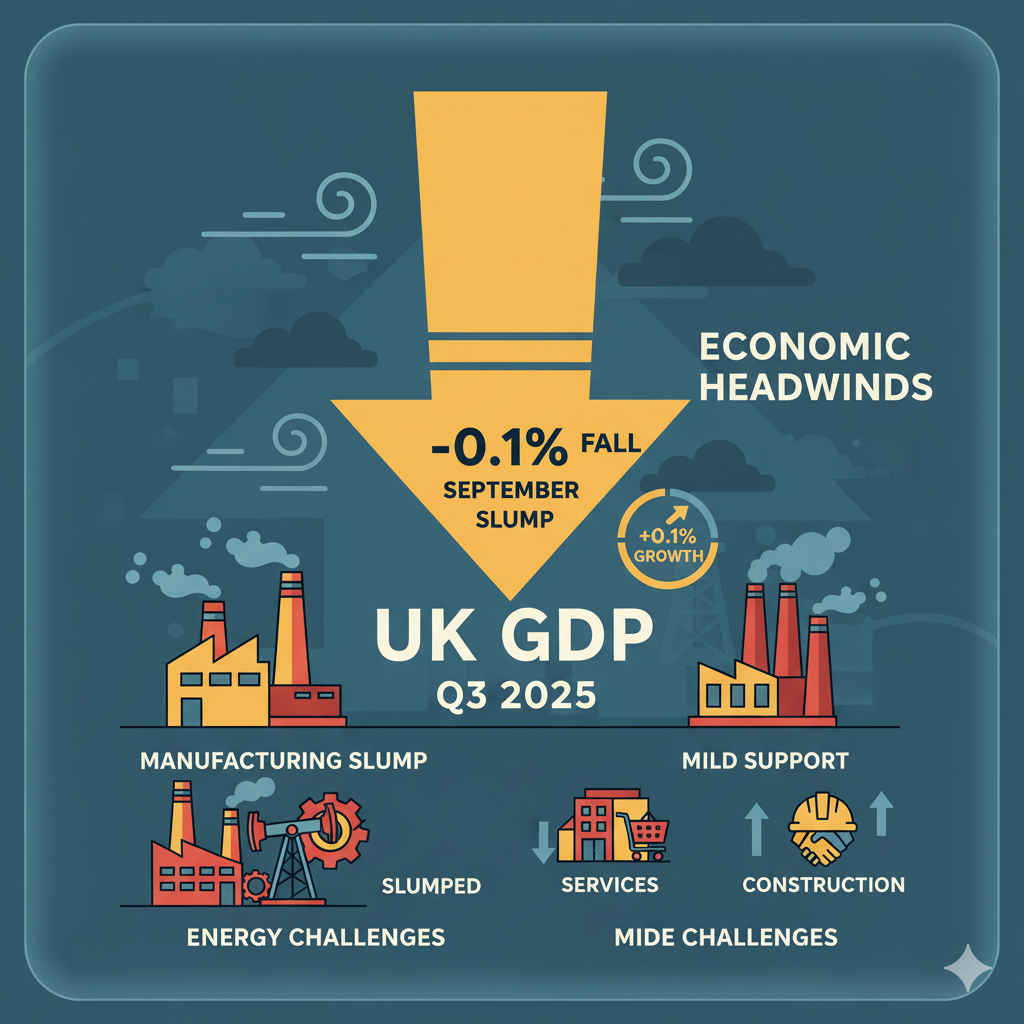
The United Kingdom’s economy continued to tread cautiously in September 2025, revealing the ongoing struggle between resilient service activity and faltering industrial output. According to the latest Office for National Statistics (ONS) report, the country’s Gross Domestic Product (GDP) grew by a modest 0.1% in the three months to September 2025, compared with the previous three-month period ending in June.

However, the monthly data told a slightly more concerning story — GDP contracted by 0.1% in September, after showing no growth in August and a minor dip in July. The figures suggest that while the UK economy has managed to stay afloat, underlying momentum remains fragile amid persistent challenges in manufacturing, high borrowing costs, and uncertain global demand.


A Fragile Economic Balance

The ONS report paints a mixed picture of the British economy. The service sector, which dominates over 70% of the country’s economic output, continued to provide the primary cushion against broader economic weakness. It expanded by 0.2% in both September and the three-month period, driven by growth in areas such as professional services, information technology, and hospitality.

In contrast, the production sector posted a sharp decline, contracting by 2.0% in September. This fall was largely attributed to a steep drop in motor vehicle manufacturing — a sector that has struggled with ongoing supply chain bottlenecks, component shortages, and weaker export demand.

The manufacture of motor vehicles, trailers, and semi-trailers plunged by an alarming 28.6% in September, making it the single biggest drag on overall GDP. This sector alone reduced total monthly GDP by about 0.17 percentage points, highlighting the deep impact industrial volatility can have on national performance.


Manufacturing Sector Under Strain

The latest data underscore a familiar trend — the UK’s manufacturing sector remains under significant pressure. Global automotive demand has been uneven, with high interest rates affecting consumer spending on durable goods such as cars. Additionally, many manufacturers continue to face delays in securing essential parts, including semiconductors, which have disrupted production schedules.

The automotive industry, long seen as a bellwether for industrial health, has also faced headwinds from declining exports to the European Union. Post-Brexit trade complexities and new customs requirements continue to strain supply chains, leading to longer delivery times and rising costs.

While other manufacturing segments such as pharmaceuticals and food production have performed relatively better, they have not been strong enough to offset the slump in automotive output. The result is a manufacturing base that is currently struggling to regain pre-pandemic levels of stability.


Services Sector Remains the Key Driver

Despite the industrial slowdown, the services sector remains the engine of the UK economy. It grew by 0.2% in September, mirroring the steady pace of expansion seen in recent months. Key growth drivers included professional and scientific services, information technology, and consumer-facing sectors such as accommodation and food services.

Consumer activity has remained resilient despite the lingering cost-of-living pressures. A slight improvement in real wages and lower inflation in late 2025 helped support discretionary spending. This resilience has been crucial in keeping the UK economy from slipping into recession, even as industrial output falters.

The financial services industry also showed stable growth, buoyed by steady investment flows and improved market sentiment as inflation pressures eased. These incremental gains across services highlight the importance of domestic demand in sustaining overall GDP.


Construction Sees Marginal Growth

The construction sector offered a small but notable boost to GDP, growing by 0.2% in September and 0.1% over the three-month period. The growth came primarily from infrastructure development and new housing projects.

While rising borrowing costs have dampened private real estate activity, public sector investment — particularly in transportation and renewable energy infrastructure — has helped sustain momentum. Government-backed initiatives focusing on housing development and sustainable construction have also played a role in stabilizing the sector.

Still, challenges persist. High material costs and labor shortages continue to limit output potential. Many firms report tighter profit margins and slower project completions due to elevated financing rates and input price volatility.


Energy and Industrial Challenges

One of the weaker aspects of the September data was the continued decline in energy production. Electricity and gas output decreased as lower seasonal demand and the transition toward renewable energy sources altered traditional production patterns.

The UK’s broader shift to sustainable energy — while positive for long-term environmental goals — has introduced short-term fluctuations in industrial output. With older fossil-fuel plants being phased out and renewable projects still scaling up, the energy sector is undergoing a transitional phase that affects monthly production data.


Economic Headwinds and Policy Considerations

Economists warn that the sluggish GDP trend in September reflects deeper structural challenges. The UK is still adjusting to post-Brexit trade realities, high interest rates, and soft global demand. Businesses face rising input costs and uncertainty about future consumer behavior, while productivity growth remains subdued.

The Bank of England (BoE) has maintained its cautious monetary policy stance in response to these dynamics. With inflation easing gradually toward target levels, there is speculation that the BoE could consider interest rate cuts in 2026 — a move that might stimulate investment and manufacturing. However, policymakers remain wary of reigniting inflationary pressures prematurely.

Fiscal policy also plays a crucial role. The government has focused on encouraging investment in green technology, advanced manufacturing, and digital transformation. These initiatives aim to enhance long-term competitiveness, but their short-term impact on GDP has been limited so far.


International Context and Trade Outlook

The UK’s economic trajectory continues to be shaped by international developments. The slowdown in global trade, particularly in Europe and Asia, has dampened export demand for British goods. Meanwhile, geopolitical uncertainties — including the ongoing tensions in global supply chains and the energy market — continue to weigh on business confidence.

However, there are some bright spots. The UK’s efforts to diversify trade partnerships beyond the EU — including new agreements with Asia-Pacific and North American partners — are gradually bearing fruit. Over time, these could reduce dependency on European markets and open new avenues for growth.

The weaker pound sterling has also provided some relief for exporters, making UK goods more competitive abroad. Still, the benefits have been partially offset by the higher costs of imported raw materials and components.


Outlook for the Rest of 2025

Looking ahead, analysts expect modest GDP growth through the final quarter of 2025. The ONS data suggest the economy is likely to continue expanding at a slow pace, supported mainly by the services and construction sectors.

The manufacturing sector may recover slightly if supply chain conditions improve and global demand stabilizes, particularly in the automotive and chemical industries. However, sustained growth will depend heavily on domestic consumption and fiscal stimulus measures.

The broader consensus among economists is that the UK economy will likely avoid a recession, but remain stuck in a low-growth cycle until stronger business investment and productivity gains take hold.


Conclusion

The September 2025 GDP report underscores the delicate balance within the UK economy. While the 0.1% quarterly growth signals ongoing resilience, the 0.1% monthly contraction serves as a warning of lingering vulnerabilities.

Strength in the services and construction sectors has kept the economy on its feet, but persistent weakness in manufacturing and production highlights structural challenges that must be addressed through innovation, trade diversification, and supportive monetary policy.

The road ahead for the UK economy is one of cautious optimism. The fundamentals remain sound, but recovery will depend on how effectively the nation navigates its industrial transition, sustains domestic demand, and adapts to the shifting global landscape.

UK Industrial Output Shows Gradual Recovery in September 2025, Supported by Manufacturing Strength

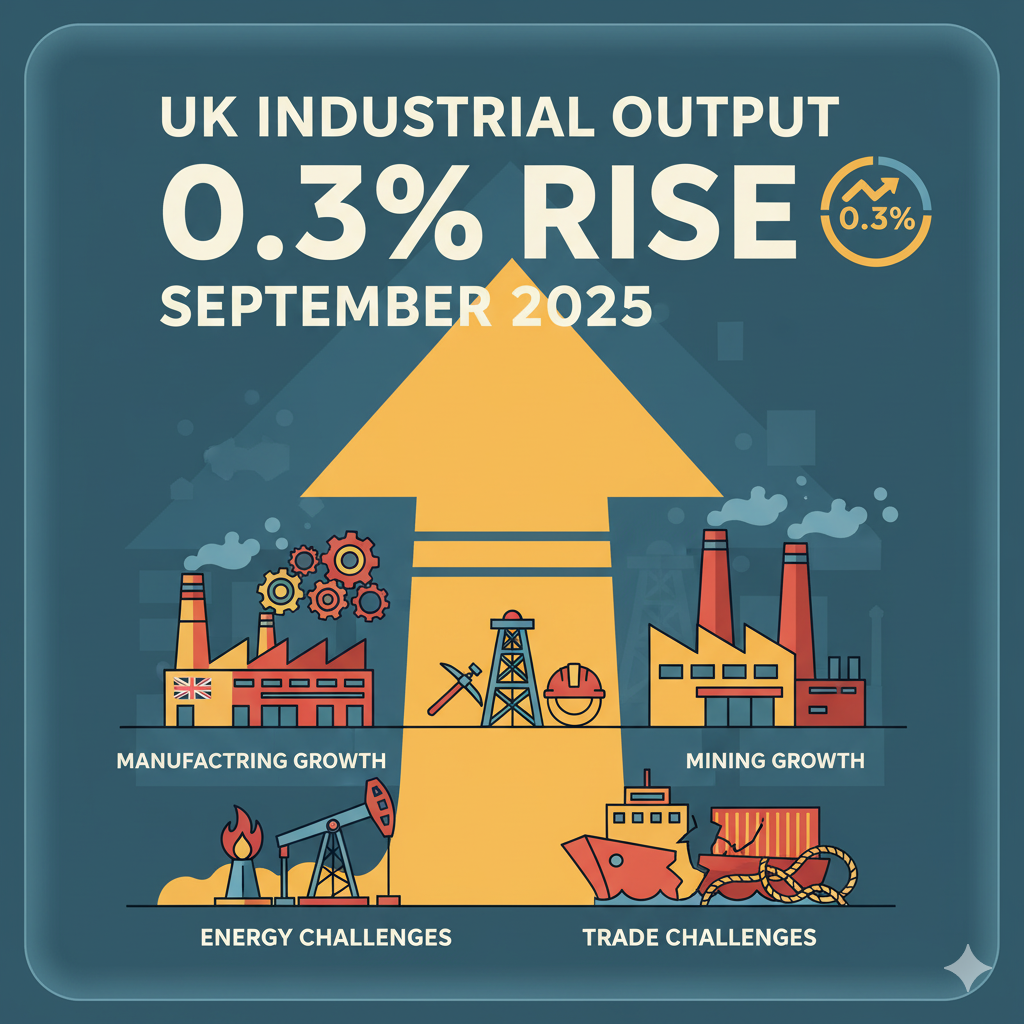
The United Kingdom’s industrial sector posted a moderate yet encouraging improvement in September 2025, signaling resilience amid a complex global economic landscape. According to the latest data from the Office for National Statistics (ONS), the Index of Production (IoP) recorded a 0.3% month-on-month increase, underscoring steady progress in the country’s key production sectors.

While the gains may appear modest at first glance, the data marks a continuation of the UK’s gradual industrial recovery following a challenging year shaped by supply chain disruptions, fluctuating energy costs, and uncertain export demand. The 1.4% year-on-year rise in total production further reinforces optimism that the UK’s manufacturing and industrial bases are stabilizing.


Manufacturing Leads the Way

The standout performer in the latest IoP report was the manufacturing sector, which rose by 0.4% in September 2025. This growth was primarily driven by strength in transport equipment manufacturing, reflecting robust demand for vehicles and parts as both domestic and international orders picked up.

Additionally, chemical production showed a healthy rebound, buoyed by improvements in raw material availability and a gradual normalization of input costs. This resurgence in manufacturing output suggests that earlier concerns about energy price pressures and weak global demand may be easing, at least in the short term.

Manufacturing remains a cornerstone of the UK economy, accounting for around 10% of GDP and providing essential export revenue. The sector’s consistent improvement offers a measure of stability to an otherwise mixed economic outlook, especially as service industries and construction continue to face varied levels of performance.


Energy Production Faces Headwinds

Despite the positive movement in manufacturing, energy production was a drag on overall industrial growth during September. The ONS reported a decline in electricity and gas output, primarily due to lower seasonal demand and shifts in energy sourcing patterns.

The UK’s energy industry has undergone significant changes in recent years, particularly with the transition toward renewable sources and reduced reliance on fossil fuels. While this structural shift supports long-term sustainability goals, it has introduced short-term volatility in production data.

Energy firms have also been navigating global commodity price fluctuations and regulatory changes tied to the UK’s decarbonization targets. These factors contributed to the subdued performance within the energy sector during September, slightly offsetting gains made elsewhere in the industrial landscape.


Mining and Quarrying Add Support

In contrast, the mining and quarrying sectors registered a moderate increase in output, offering additional support to the IoP. The growth was attributed to stable oil and gas extraction activities, which remained resilient despite external market challenges.

Steady extraction rates and improved maintenance efficiency in offshore operations helped maintain consistent production levels. While this sector is smaller compared to manufacturing, its contribution to industrial stability remains important, especially given the role of energy commodities in the UK’s broader economic balance.

The performance of mining and quarrying also underscores the gradual normalization of global commodity markets after several years of volatility. This steady footing could provide a buffer for the UK industrial base as it continues to adapt to post-pandemic economic realities.


Industrial Stability Amid Broader Economic Challenges

Analysts have interpreted the September 2025 figures as a sign of industrial stability, noting that consistent monthly gains, even if modest, represent progress in an otherwise uncertain environment.

The UK’s industrial sector continues to face multiple headwinds, including soft export demand in the European Union, persistent supply chain frictions, and fluctuating input prices. However, the ability of core sectors like manufacturing and mining to maintain growth highlights their resilience and adaptability.

Several economists suggest that industrial production could remain on a positive path if global trade conditions improve and energy prices remain stable through the winter. Continued fiscal discipline and targeted government incentives for domestic manufacturing could also enhance long-term growth prospects.


Policy Support and Market Implications

The Bank of England (BoE) has kept a close watch on industrial data, viewing it as a key indicator of underlying economic momentum. A consistent rise in the IoP aligns with the central bank’s objective of ensuring steady, sustainable growth amid a cautious monetary environment.

With inflation showing gradual moderation in late 2025, the BoE’s current policy stance may allow for a balanced approach to managing growth without reigniting price pressures. The industrial sector’s recovery could therefore contribute to a more optimistic outlook for the UK’s fourth-quarter performance.

Financial markets have also reacted positively to the latest production figures. The pound sterling remained stable following the release, while equity investors expressed confidence in sectors tied to manufacturing, logistics, and energy infrastructure. This sentiment suggests a gradual improvement in investor perception of the UK’s industrial prospects.


Export Trends and Global Linkages

The UK’s export-oriented manufacturers have benefited from a combination of improving global demand and a relatively competitive exchange rate. Demand from non-EU trading partners, particularly the United States and parts of Asia, has helped offset weaker orders from Europe.

However, businesses continue to cite customs delays and regulatory frictions as barriers to smoother trade flows. The ongoing need for clarity around trade policies and international standards remains a priority for sustaining growth in export-driven industries.

The government’s continued push for new trade agreements and partnerships aims to diversify export markets, reducing dependency on a few key regions. If successful, such diversification could reinforce industrial output and shield the UK from external shocks.


Outlook for the Remainder of 2025

Looking ahead, most analysts anticipate that industrial production will maintain modest growth through the remainder of 2025, supported by improving supply chains, stable energy conditions, and policy alignment.

However, the pace of recovery is expected to be gradual rather than rapid. A sustained uptick in industrial activity will likely depend on factors such as global economic stability, domestic demand, and continued progress in digital transformation across production facilities.

In the longer term, the UK government’s emphasis on green manufacturing, renewable energy projects, and advanced technology integration could help build a more resilient industrial base. These efforts aim to enhance productivity, reduce emissions, and position the UK as a leader in sustainable industrial development.


Conclusion

The UK’s Index of Production for September 2025 offers a cautiously positive picture of the nation’s industrial performance. With overall output rising 0.3% month-on-month and 1.4% year-on-year, the data points to slow but steady progress in key sectors.

Manufacturing remains the main growth driver, powered by transport and chemical production, while mining and quarrying provide additional support. Energy production, though weaker, reflects ongoing structural shifts rather than a fundamental decline.

In essence, the UK’s industrial sector appears to be regaining stability, underpinned by resilience, adaptability, and targeted policy support. While challenges remain, the latest figures highlight that Britain’s production base retains the strength and capacity needed to navigate an evolving global economic environment.

PBoC: China Has Solid Foundation to Achieve 2025 Targets

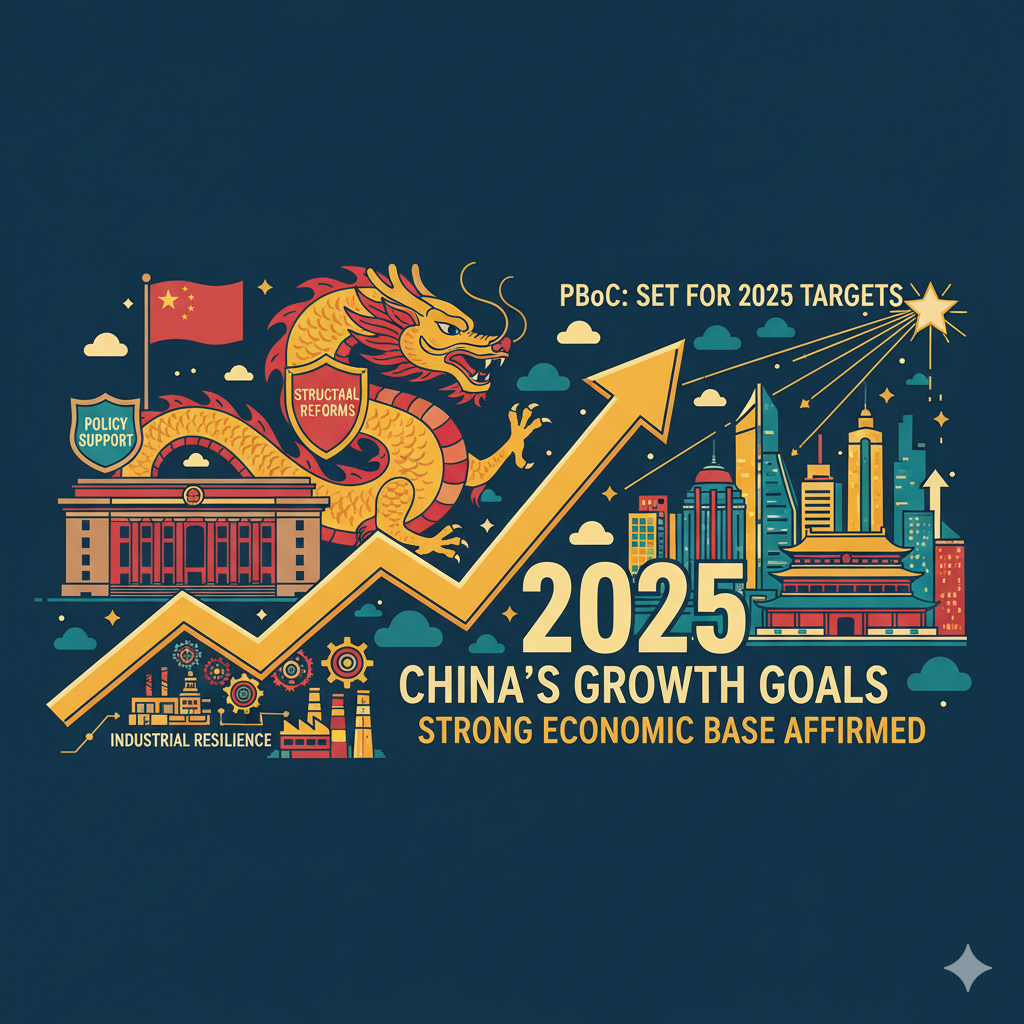
As the global economy continues to navigate uncertainty, the People’s Bank of China (PBoC) has expressed renewed confidence in the nation’s ability to meet its 2025 economic goals. In its latest assessment, the central bank emphasized that China’s economy possesses a “solid foundation” built on structural resilience, coordinated policy support, and an industrial base capable of sustaining growth despite external and domestic pressures.

This statement from China’s top monetary authority comes at a critical time, as investors and analysts have been closely watching for signs of how the world’s second-largest economy plans to balance stability with growth in the coming year.


Resilience at the Core of China’s Economic Outlook

The PBoC underscored that China’s economic fundamentals remain sound. Despite headwinds from weak global demand and ongoing property-sector challenges, the bank stressed that the nation’s core strengths — industrial diversity, infrastructure investment, and technological progress — continue to drive stability.

According to the central bank, the economy is operating on a firm macroeconomic base that supports sustainable growth in 2025. This confidence stems from China’s ability to rebound from previous slowdowns, maintain low inflation, and continue expanding key industries such as advanced manufacturing, green energy, and digital services.

In essence, the message is clear: China’s economy is not fragile, nor dependent on short-term boosts. Instead, it has evolved into a more mature system capable of absorbing shocks and maintaining forward momentum even in challenging conditions.


Stronger Policy Support Reinforces Confidence

A major factor behind the PBoC’s optimism lies in coordinated policy support. The report highlighted that both monetary and fiscal policies have become more proactive and targeted, reflecting lessons learned from earlier economic fluctuations.

The PBoC has focused on ensuring adequate liquidity in financial markets while guiding credit toward productive sectors such as small and medium-sized enterprises (SMEs), innovation-driven industries, and green development projects. Meanwhile, fiscal policy has become more supportive through measures like infrastructure investment, tax cuts, and incentives for consumption.

This dual approach has created a balanced environment — stimulating growth without triggering excessive financial risks. The central bank believes that this framework will allow China to pursue steady, sustainable progress rather than short-lived surges fueled by heavy stimulus.

By emphasizing measured expansion, policymakers aim to build a healthier economic cycle where productivity gains and innovation play a greater role than credit-driven booms.


Industrial Strength and Structural Maturity

One of the PBoC’s central messages is that China’s economic structure has matured significantly. Over the past decade, the country has moved away from overreliance on real estate and export-led growth toward a more balanced model that includes consumption, services, and advanced manufacturing.

China’s manufacturing ecosystem remains one of the world’s most sophisticated, with supply chains extending across every major sector — from semiconductors and renewable energy to electric vehicles and pharmaceuticals. This structural depth gives the economy an edge in adapting to disruptions, whether caused by global trade tensions or supply bottlenecks.

Moreover, the financial system has grown stronger. While the PBoC acknowledged existing vulnerabilities, such as local government debt and property-sector risks, it pointed to ongoing reforms aimed at improving transparency, managing defaults, and promoting responsible lending.

In short, the PBoC believes that China’s structural maturity provides stability — a key reason why it expects the country to meet its 2025 objectives even amid uncertain global conditions.


Acknowledging Risks but Managing Them Prudently

The central bank did not dismiss existing risks. It recognized the challenges posed by sluggish domestic demand, lingering real estate concerns, and external trade headwinds. However, it emphasized that these pressures remain under control and do not threaten the broader economic foundation.

China’s property market has undergone a significant adjustment, with developers deleveraging and home sales stabilizing after several volatile years. While the transition has been painful, the PBoC noted that it is essential for long-term balance.

At the same time, efforts to stimulate consumption — such as policies supporting household income growth and new consumer credit channels — are gradually improving domestic demand. On the trade front, China continues to diversify export markets through regional partnerships and stronger ties with emerging economies, reducing reliance on traditional Western markets.

The PBoC’s overall tone reflects measured optimism: while short-term fluctuations are inevitable, the long-term trajectory remains secure thanks to strong institutional frameworks and consistent policymaking.


Shifting from Stimulus to Structural Support

Another key takeaway from the PBoC’s statement is the shift in policy focus. The central bank signaled that 2025 will be about maintaining quality and stability, not aggressive expansion.

In previous cycles, China often relied on large-scale stimulus packages to counter slowdowns. However, policymakers now appear more committed to structural measures — encouraging innovation, supporting small businesses, and improving capital efficiency — instead of blanket liquidity injections.

This change indicates growing confidence that China’s economy can sustain momentum on its own, using internal strengths rather than artificial boosts. It also reflects a cautious stance toward preventing asset bubbles, particularly in real estate and stock markets.

The PBoC’s message aligns with broader government goals emphasizing “high-quality growth.” In practice, this means focusing on productivity, green transformation, and domestic technological independence rather than simply chasing headline GDP numbers.


Global Context and China’s Strategic Advantage

The PBoC’s remarks also carry a global dimension. As major economies like the United States and Europe grapple with inflation and tightening credit conditions, China’s relatively low inflation and stable monetary environment stand out.

The central bank pointed out that maintaining monetary stability provides China with flexibility to adjust policies when needed, without the risk of overheating. This allows the government to continue investing in strategic sectors like renewable energy, artificial intelligence, and semiconductor manufacturing — areas critical to long-term competitiveness.

Moreover, China’s participation in multilateral trade frameworks such as the Regional Comprehensive Economic Partnership (RCEP) and the Belt and Road Initiative (BRI) ensures continued access to international markets and resources, further solidifying its economic foundation.

These external linkages, combined with domestic reforms, give China a strategic advantage heading into 2025, enabling it to weather global slowdowns better than many other large economies.


Looking Ahead: Building on Strength, Not Surges

In summary, the People’s Bank of China’s outlook for 2025 is one of steady confidence rather than exuberant optimism. The institution believes the country has already laid a firm base through years of policy coordination, industrial upgrades, and financial discipline.

Rather than counting on a sudden rebound or large-scale stimulus, China aims to build on existing momentum. The focus is on gradual progress, sustainable investment, and continued structural reform — a model designed to ensure stability even in a turbulent global environment.

By reinforcing its message that “the foundation is solid,” the PBoC is signaling to global markets that China’s growth story remains intact, and its economic system is capable of balancing resilience with reform.

If the central bank’s projections hold true, China’s approach could serve as a model for other emerging economies seeking to achieve steady development without sacrificing long-term financial health.


Conclusion

China’s path to achieving its 2025 targets is underpinned by strong fundamentals, proactive policies, and institutional maturity. The PBoC’s message is that the economy no longer depends on short-lived boosts but thrives on accumulated strength.

By maintaining disciplined monetary policy, encouraging innovation, and promoting sustainable growth, China aims to navigate global headwinds while preserving internal stability.

In a world where many economies remain vulnerable to shocks, China’s focus on resilience and structural integrity could indeed make its 2025 goals not only achievable but sustainable in the years beyond.

2026 Outlook: Forex vs. Crypto — Who Actually Wins?

As 2026 approaches, traders and investors find themselves asking one key question — which market will deliver better opportunities in the coming years: Forex or crypto? Both have dominated global financial headlines in their own ways. Forex, the world’s largest financial market, offers stability, regulation, and liquidity, while crypto continues to attract attention with innovation, volatility, and potential for astronomical returns.

The debate isn’t just about profits anymore; it’s about sustainability, safety, and long-term viability. To understand which might lead in 2026, we need to look closely at their fundamentals, market dynamics, and the broader macroeconomic landscape.


The Forex Market: Stability and Scalability

The foreign exchange (Forex or FX) market has long been considered the bedrock of global trading. Every day, trillions of dollars are exchanged as currencies fluctuate based on interest rates, geopolitical developments, and macroeconomic data.

In 2026, the Forex market is expected to maintain its dominance largely because of its scalability and risk-adjusted returns. Unlike crypto, which can surge or crash within hours, Forex moves in more predictable patterns influenced by measurable factors such as inflation, monetary policy, and trade balances.

Institutional investors favor Forex for its liquidity and structure. It’s one of the few markets where large trades can be executed efficiently without causing major price swings. Central banks, governments, hedge funds, and major corporations all operate in the FX space, ensuring constant activity and transparency.

The beauty of Forex lies in its accessibility and resilience. It thrives in both bull and bear environments, adapting to shifting economic trends. For 2026, experts believe that steady inflation rates, global trade recovery, and gradual interest-rate realignments will make Forex a strong performer, especially for investors looking for predictable, consistent returns rather than speculative gains.


Crypto’s Appeal: High Risk, High Reward

On the other hand, the cryptocurrency market continues to captivate investors despite its volatility. Bitcoin, Ethereum, and a growing list of altcoins have transformed how people perceive money, assets, and technology.

Crypto’s greatest strength is its potential for outsized returns. A single bull run can multiply investments several times over, and innovation within blockchain, decentralized finance (DeFi), and digital asset tokenization keeps drawing new participants.

However, this potential comes with a heavy price — instability and uncertainty. Prices in the crypto market are influenced not only by supply and demand but also by social sentiment, media narratives, and regulatory news. Unlike Forex, which operates under well-established legal frameworks, crypto still faces regulatory ambiguity across most jurisdictions.

2026 might see governments taking firmer stances on how cryptocurrencies are classified, taxed, and traded. While that could bring more legitimacy, it may also limit speculative freedom — something that has been a key driver of crypto’s explosive growth.

Still, many analysts agree that crypto will continue to attract a younger, risk-tolerant generation of traders seeking faster profits. The decentralized nature of digital assets also appeals to those skeptical of central bank policies and fiat currency inflation. If inflation remains a concern in 2026, crypto might again find a supportive narrative as a potential hedge, even if its volatility makes it unreliable as a true store of value.


Macroeconomic Conditions Favor Forex’s Framework

The macroeconomic landscape remains one of the biggest deciding factors between these two markets. As inflationary pressures linger and central banks recalibrate policies, the Forex market benefits from clear data-driven movements.

Currencies respond to well-known triggers: interest rate changes, GDP growth, trade deficits, and policy announcements. Traders can build models around these fundamentals, using proven strategies for consistent performance.

Crypto, by contrast, is driven more by sentiment and liquidity cycles. When risk appetite increases, investors flood into digital assets; when uncertainty rises, they flee back to cash or bonds. This cyclical behavior makes crypto more of a speculative instrument rather than a stable trading environment.

For 2026, most analysts expect central banks to maintain a delicate balance between controlling inflation and supporting growth. This environment typically creates sustained volatility in currency pairs — exactly what Forex traders thrive on.


Institutional Preference: Regulation and Infrastructure

One of the strongest arguments in favor of Forex is its institutional reliability. Forex is globally regulated, offering transparency, risk management tools, and established infrastructure. Banks and corporations can hedge risks effectively, ensuring stability in international trade.

Crypto, despite its innovations, remains fragmented. Many exchanges are unregulated, security breaches are frequent, and investors often face issues like wallet losses or lack of customer protection. Institutional investors are cautious; while they recognize crypto’s innovation potential, they are hesitant to allocate significant funds without solid legal assurance.

In 2026, the gap between these two markets may narrow if more crypto regulations are introduced. However, until the digital asset space gains the same level of credibility and compliance as Forex, large investors are likely to prioritize the safer and more reliable FX environment.


The Potential for Crypto’s Comeback

Despite these challenges, crypto should not be written off. The industry has shown remarkable resilience and an ability to reinvent itself after every downturn. If 2026 witnesses favorable regulatory developments, crypto could experience another wave of growth, especially through new use cases like tokenized assets, digital identity, and decentralized financial applications.

The upcoming evolution of central bank digital currencies (CBDCs) may also reshape the landscape, blurring the line between traditional finance and crypto. As mainstream adoption grows, crypto could integrate more deeply into the financial system, becoming less volatile and more functional.

However, this optimistic scenario depends on several uncertain factors — global cooperation on regulation, technological progress, and renewed investor confidence. Without those, crypto risks another cycle of hype followed by disillusionment.


2026 May Not Have a Clear Winner

Ultimately, the 2026 outlook doesn’t present a binary choice between Forex and crypto. Each serves a different purpose and caters to different types of investors. Forex offers steadiness, liquidity, and trust, while crypto provides innovation, excitement, and the chance for exponential gains.

The Forex market will likely continue to attract conservative investors, hedge funds, and institutions seeking dependable returns. Crypto, meanwhile, will draw risk-takers, innovators, and those betting on the future of digital finance.

A smart approach for 2026 might involve diversification — balancing exposure to both markets. Allocating a majority of funds to Forex for stability, while maintaining a smaller position in crypto for high-reward opportunities, could offer the best of both worlds.

As the financial world continues to evolve, the true winner may not be one market over the other, but those investors who understand how to leverage both. Success in 2026 will depend less on choosing sides and more on adapting strategies to capture opportunities from each sector’s unique strengths.


Conclusion

The 2026 financial outlook paints a complex picture. Forex stands as a proven, institutionally backed marketplace with consistent potential and minimal surprises. Crypto, though unpredictable, remains a hub of innovation and possibility.

Those seeking steady growth and lower risk will likely find comfort in the Forex market’s structured environment. Those with higher risk tolerance and a vision for future technological disruption may continue to chase crypto’s potential.

In truth, 2026 may not crown one absolute winner. Instead, it could mark the year when investors finally learn that Forex and crypto can coexist, each playing a crucial role in shaping modern finance — one built on trust, and the other on transformation.

Stephen Miran Urges Caution: Inflation Data Shouldn’t Be Taken at Face Value

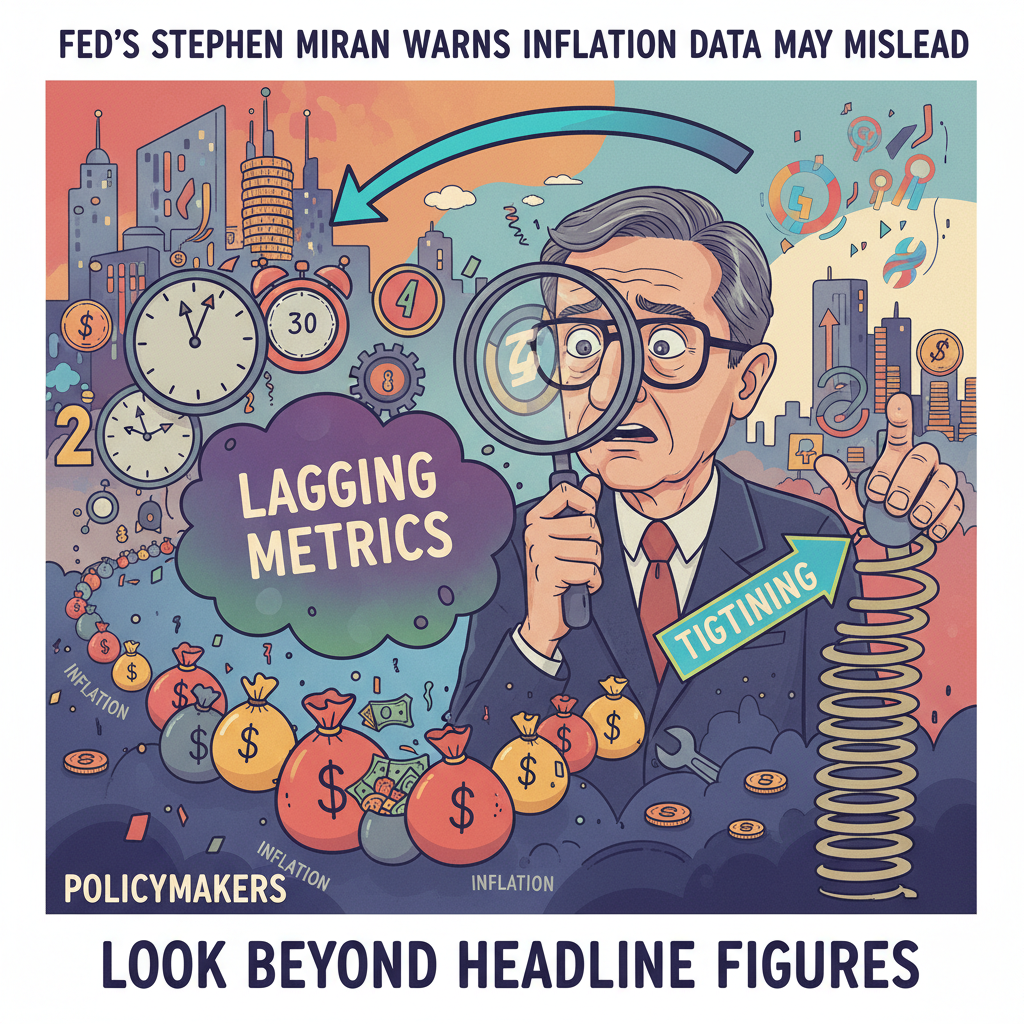
In a time when inflation remains one of the most closely watched economic indicators, Federal Reserve official Stephen Miran has struck a cautionary tone. According to him, the current inflation readings might not be telling the whole truth. He argues that policymakers and the public should be careful not to take these figures at face value because of how inflation is measured and reported. Miran’s remarks highlight a growing debate within the Federal Reserve over how much weight should be given to traditional data and whether the current restrictive stance on interest rates could risk slowing the economy more than necessary.

The Nature of Inflation Data: Why It Can Mislead

Inflation data is often viewed as the most important guide for central bankers setting monetary policy. However, Miran suggests that the numbers can be misleading because of the lagging nature of certain components, particularly in housing and rental costs. These categories make up a large portion of the Consumer Price Index (CPI) and the Personal Consumption Expenditures (PCE) price index—the two primary measures of inflation in the U.S. economy.

He explained that housing costs are typically measured using rents or “owners’ equivalent rent,” which tends to move more slowly than real-time market trends. This means that even if housing prices or rental rates have already cooled in the real world, official inflation data may still reflect outdated increases. As a result, inflation appears stickier than it actually is, potentially leading policymakers to keep interest rates higher for longer than necessary.

Miran pointed out that this lag effect was already visible in the data, with rental price growth slowing substantially in private-sector surveys, even as official inflation readings remained elevated. “If the data doesn’t reflect the actual trend, we risk misjudging the economy’s true state,” he warned.

Monetary Policy Already Restrictive

Stephen Miran also emphasized that the Federal Reserve’s monetary policy is already restrictive. The Fed has raised interest rates significantly over the past few years to combat high inflation, making borrowing more expensive for businesses and consumers alike. Higher rates tend to slow economic activity by reducing spending and investment, which can cool inflation—but they can also put jobs and growth at risk.

In Miran’s view, the current stance may already be tight enough to ensure inflation continues to ease. He believes that if policymakers focus too heavily on the headline inflation numbers, which are affected by temporary or delayed factors, they might keep rates too high for too long. That could lead to unnecessary harm to the labor market, with potential job losses and weaker consumer demand.

His comments come as other Fed officials signal patience in adjusting policy. While the majority prefer to wait for clear, sustained evidence of inflation returning to the 2% target before cutting rates, Miran seems more open to the idea that policy might already be doing its job.

A Different Perspective Inside the Fed

Miran’s position sets him apart from many of his colleagues within the Federal Reserve. Some policymakers, including the more hawkish members, maintain that inflation remains too high and that lowering rates too soon could reignite price pressures. But Miran believes the risk balance has shifted—that is, the danger of keeping policy overly tight now outweighs the risk of inflation rebounding.

He argues that, given the lagging nature of inflation measurement, the real economy might already be feeling the effects of restrictive policy more strongly than current data suggests. “We are likely underestimating the cooling in price growth that is already taking place,” he noted in a recent discussion.

His remarks echo those of several independent economists who argue that traditional inflation metrics were designed for a slower-moving economy. In today’s world of real-time data, online pricing, and rapid market shifts, these measures may fail to capture the true dynamics of price changes as they happen.

Potential for Rate Cuts Sooner Than Expected

If Miran’s interpretation proves correct, the Federal Reserve could find itself with room to cut interest rates sooner than expected. His reasoning is that if the apparent persistence in inflation is largely a data artifact—caused by measurement delays—then inflation is already moving closer to target in real terms.

That would justify a modest easing of monetary policy to prevent overtightening and safeguard employment. While Miran stopped short of calling directly for immediate rate cuts, he did suggest that the Fed should remain flexible and open to revising its stance as more accurate, forward-looking data becomes available.

For market participants, Miran’s comments could be significant. Investors and analysts closely watch any shift in tone from Fed officials, as such statements can influence expectations around rate decisions. A perception that rate cuts may come earlier could lead to changes in bond yields, stock valuations, and currency movements.

Conditional Optimism: Data Still Matters

Despite his cautious optimism about the inflation outlook, Miran emphasized that his view is conditional. He remains open to changing his assessment if new data suggest inflationary pressures are returning. In particular, he is watching housing and rent trends closely. If those costs begin to rise again, it could signal that inflation’s underlying momentum is not yet fully contained.

He also noted that factors such as energy prices, supply chain disruptions, or shifts in consumer spending could still affect inflation in unpredictable ways. Therefore, while he warns against overreacting to lagging data, he also recognizes that the inflation fight is not over.

A Call for Deeper Analysis

Ultimately, Stephen Miran’s message is that headline inflation numbers should be analyzed carefully rather than taken literally. Policymakers, investors, and even the public should understand what drives these figures before drawing strong conclusions. “Data should guide us, not mislead us,” he said.

By encouraging a more nuanced view of inflation, Miran is contributing to a broader discussion about how economic data should inform policy in the 21st century. His remarks suggest a need for more real-time measurement tools that better reflect current conditions, rather than relying solely on backward-looking indicators.

Balancing Inflation and Growth

The debate Miran highlights touches the core of the Federal Reserve’s dual mandate—price stability and maximum employment. The challenge for policymakers is finding the right balance between controlling inflation and supporting growth.

If inflation is overstated due to measurement distortions, keeping rates too high could unnecessarily suppress job creation and economic output. Conversely, moving too quickly to ease policy could risk inflation flaring up again. Miran’s approach advocates a middle ground—remaining data-dependent but also critical of the data’s limitations.

Conclusion: A Reminder to Look Beneath the Surface

Stephen Miran’s warning serves as a reminder that economic data is not infallible. Behind every statistic lies a complex set of assumptions, methodologies, and timing issues that can distort the picture. As he urges the Federal Reserve and the public not to take inflation data at face value, Miran underscores the importance of context, critical thinking, and flexibility in economic policymaking.

In an era of rapid change, relying solely on traditional measures could lead to outdated conclusions. Miran’s message is clear: before acting on inflation figures, understand what they truly represent. Only then can policy decisions achieve the right balance between stability, growth, and the long-term health of the U.S. economy.