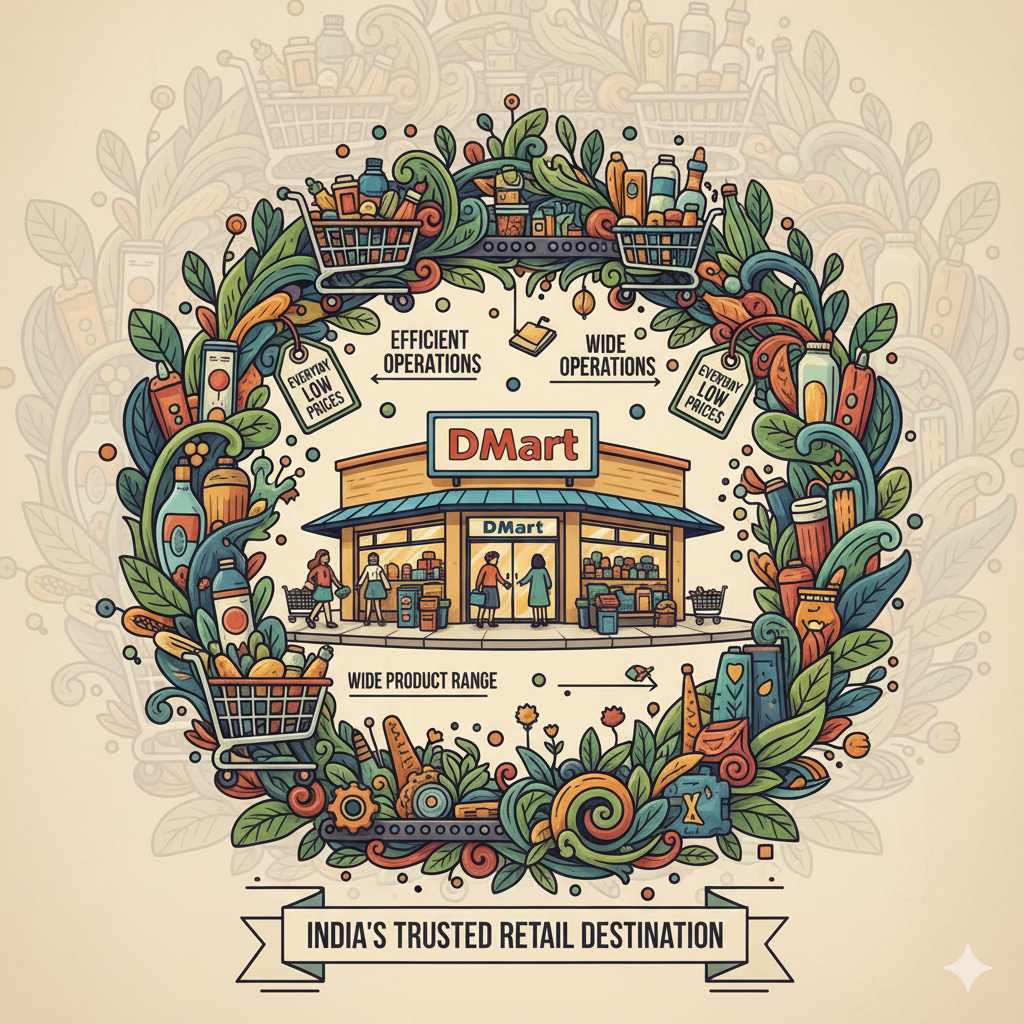
In a country where retail competition is fierce and consumer expectations are constantly evolving, DMart has managed to carve out a unique identity—one built on consistency, affordability, and trust. Over the years, the brand has risen from being just another supermarket chain to becoming one of India’s most admired retail success stories. People across states rely on DMart not just for groceries but for a wide range of essentials, confident that they will find both quality and value under one roof.
DMart, owned and operated by Avenue Supermarts Ltd, reflects the philosophy of its founder, Radhakishan Damani. Known for his quiet demeanor and sharp business acumen, Damani envisioned a retail format that focused on everyday needs, stable pricing, and operational discipline. That foundation remains the backbone of DMart’s impressive growth story.
A Retail Format Built Around Everyday Needs
From the beginning, DMart was designed to serve the Indian household. Unlike high-end supermarkets or hypermarkets that may focus heavily on premium categories, DMart took a different approach—prioritize essential daily-use items and offer them at prices customers can consistently trust. This philosophy allowed the brand to become a go-to shopping destination for families.
The stores carry a vast assortment of products across multiple categories. Groceries and staples form the core of DMart’s offerings: rice, wheat, pulses, spices, and cooking essentials—everything a family needs for its kitchen.
DMart also stocks a wide range of home and lifestyle products. These include kitchenware, plastic storage, steel utensils, appliances, home linen, apparel for men, women, and children, and even basic electronics. Because of this broad assortment, customers do not need to visit multiple stores—DMart becomes their one-stop solution for monthly, weekly, and even daily needs.
The Everyday Low Price Strategy: DMart’s Winning Edge
One of the biggest reasons shoppers repeatedly choose DMart is its pricing strategy. The company follows a philosophy known as “Everyday Low Cost – Everyday Low Price,” often referred to as EDLC-EDLP. What this means is simple: DMart aims to keep operational costs as low as possible so that savings can be passed on to customers in the form of lower prices.
Unlike retailers who host frequent discount events or offer inconsistent promotions, DMart’s prices stay low throughout the year. Customers know they will receive great value no matter when they shop. This builds trust and eliminates the dependency on festival sales or limited-time offers.
DMart achieves this through disciplined business practices. It minimizes overheads, optimizes store layouts, and purchases goods in bulk directly from manufacturers whenever possible. The company also avoids heavy spending on advertising, choosing instead to let word of mouth and customer loyalty drive growth.
Distinct Expansion Strategy: The Cluster Model
DMart has never believed in aggressive, scattered expansion just for the sake of opening more stores. Instead, it follows a cluster-based growth model. Before moving into a new region, the company ensures it has built a strong supply chain network and a solid customer base in nearby locations.
By building clusters of stores within close geographic proximity, DMart greatly reduces its logistical burden. This allows it to move products efficiently between warehouses and stores, reducing waste, fuel costs, and overall operational complexity.
This approach not only supports DMart’s low-cost strategy but also enhances availability of products. Stores seldom run out of stock because the supply chain supporting them is well-planned and regionally optimized.
Building a Strong Nationwide Presence
Over the years, DMart has expanded into many Indian states and continues to grow steadily. Its stores span urban centers, suburban areas, and even emerging towns where modern retail is still developing. Families across regions trust DMart as a reliable partner for their household needs.
The brand’s presence extends over hundreds of stores across India, covering millions of square feet of retail space. But what’s even more remarkable is the consistency with which DMart manages its vast network. Whether a customer visits a store in Mumbai, Hyderabad, Pune, Indore, or Bengaluru, the experience remains consistent—clean aisles, well-stocked shelves, friendly staff, and value-driven pricing.
This uniformity reflects the company’s disciplined approach to retail operations. DMart insists on owning most of its store properties instead of renting them, ensuring long-term stability and cost control. While this strategy increases upfront investment, it helps maintain margin stability in the long run, one of the reasons the company remains profitable even in a challenging retail environment.
A Shopping Experience Tailored for Everyday Consumers
DMart stores are designed with practicality and convenience in mind. Instead of flashy decorations or elaborate visual merchandising, the focus is on clear layout, efficient movement, and easy product access. Shelves are stacked in ways that help customers quickly find what they want.
The company pays close attention to customer behavior and consistently updates store formats based on what shoppers prefer. Their aisles are wide, signage is clear, and product placement is intuitive. The idea is to reduce shopping time while ensuring customers can explore a wide variety of choices in each category.
The checkout experience is also designed to be quick and efficient, with multiple counters and well-trained staff to handle high footfall. During peak hours, DMart deploys additional staff members to ensure smooth operations.
A Culture of Efficiency and Discipline
Behind DMart’s success lies a strong culture centered on efficiency, value creation, and customer trust. Employees are trained to maintain high standards of cleanliness, product availability, and service. Suppliers also form an integral part of DMart’s ecosystem. Over the years, the company has built long-term relationships with manufacturers and distributors, ensuring steady supply, fresh inventory, and favorable pricing.
DMart does not chase glamour or unnecessary expansion. Its long-term focus on efficiency, cost control, and customer satisfaction has allowed it to stand firm even as competition intensifies from online players and other retail chains.
The Vision of Radhakishan Damani
At the core of DMart’s philosophy is the vision of its founder, Radhakishan Damani. Known for his humility and low-profile personality, Damani brought a deep understanding of India’s consumer behavior to the retail business. His belief was simple: If you offer reliable products at consistently low prices, customers will keep coming back—and that is precisely what happened.
Today, DMart is one of India’s most respected retail formats, admired for its transparency, discipline, and long-term approach. The company continues to grow steadily, staying committed to the values that shaped its foundation.
Conclusion
DMart’s journey is a perfect example of how disciplined execution, customer-centric thinking, and a strong value proposition can build a retail empire. Whether it is affordable pricing, wide product range, efficient supply chain, or humble store design, everything revolves around meeting the needs of the Indian family. As the company expands further, its core mission remains unchanged: to make everyday shopping affordable, reliable, and convenient for millions of people across India.