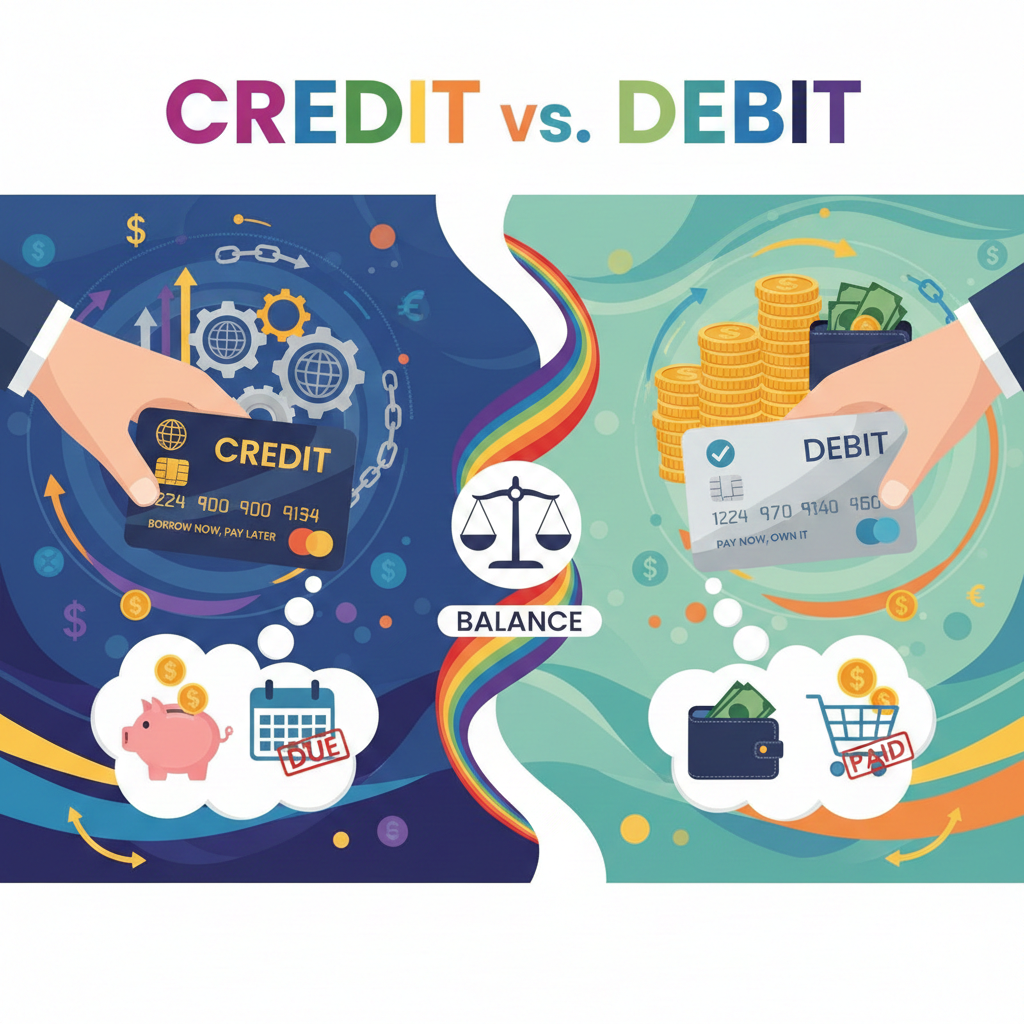
When we talk about everyday payments, two popular methods most of us use are debit cards and credit cards. On the surface, they may look very similar. Both are made of plastic or metal, both have a card number, and both are swiped, tapped, or inserted into a machine while making a payment. Because of these similarities, many people assume that they work the same way. But actually, how money moves behind the scenes is very different. Understanding how debit cards and credit cards function helps you manage your finances more wisely and avoid unnecessary debt.
Let’s explore the differences in a simple, human-readable way.
How debit cards work
A debit card is directly linked to your bank account, usually your savings or checking account. When you make a payment using a debit card, the money goes out of your account instantly or within a very short time. So, if you buy something worth ₹500, that ₹500 is immediately deducted from your bank balance.
This also means you can only spend the money you currently have. If your bank balance is ₹2000, you can only spend up to ₹2000 or less. It automatically keeps you away from overspending because the bank does not allow you to spend more than what is already available unless your bank has given you overdraft facility. Therefore, a debit card is considered a more controlled and safer option for everyday buying, especially if you prefer living within your income and want to avoid debt.
How credit cards work
A credit card works differently. When you pay using a credit card, the bank pays the amount on your behalf at that moment. You are basically borrowing money for a short time. After that, every month, the bank sends you a credit card bill showing how much you owe. There is usually a billing cycle, like 30 days, and you get a due date for paying the bill.
If you pay the entire bill on time, you don’t have to pay interest. But if you pay only the minimum amount or skip the payment, interest will be charged. The interest on credit cards is usually higher compared to normal loans or EMIs. That’s why credit cards should be used wisely, because late payments can become expensive.
However, credit cards also give you a lot of flexibility. You don’t need to have money at the time of purchase. You get some extra time to arrange funds, which is useful especially during emergencies or when big expenses suddenly arise.
Which one helps build credit score
Debit cards do not affect your credit score at all. Whether you use them regularly or not, they don’t help build a credit history.
Credit cards, on the other hand, help you build credit history if used responsibly. Every on-time payment shows lenders that you handle borrowed money carefully, which helps improve your credit score. A good credit score is very useful if you plan to take a home loan, car loan, education loan, or even apply for a mortgage in the future.
So, if someone wants to build or strengthen their credit profile, using a credit card wisely is a good option.
Interest and fees
Debit cards usually do not charge any interest because you are spending your own money. There might be small charges such as ATM fees, annual fees, or international usage fees, but generally, debit cards are low-cost payment tools.
Credit cards may charge interest if the bill is not paid on time. This is an important difference. Purchases made using a credit card become debt until paid back. And if you delay payments frequently, interest can increase rapidly.
The trick here is simple: credit cards are safe as long as you pay your full bill every month.
Spending control
Debit card usage automatically controls your spending because the moment your balance becomes zero, your card stops working. This prevents unnecessary shopping or impulse purchases.
Credit cards, however, let you spend money that you don’t currently have. Sometimes this becomes tempting and leads to overspending. That’s why banks decide a credit limit for each user according to their income, spending behaviour, and credit score.
If used responsibly, credit cards can benefit you. But if used casually, spending beyond income can create debt problems.
Emergency usage
Debit cards are excellent for daily expenses such as groceries, shopping, or fuel, but they limit you to your available money. If there’s a sudden emergency such as medical expense or travel need, a debit card may not be enough unless your bank balance is high.
Credit cards are extremely helpful during emergencies because they allow you to pay first and arrange funds later. This temporary flexibility supports you when life suddenly throws unexpected expenses.
ATM Withdrawals
Most debit cards allow you to withdraw cash from ATMs anytime.
Credit cards also allow ATM withdrawals but usually charge high interest and cash advance fees. Therefore, withdrawing cash from a credit card should only be done during serious emergencies.
Rewards and Cashback
Credit cards usually offer cashback, points, rewards, air miles, lounge access and special discounts.
Debit cards do not offer as many benefits. Some debit cards give small reward points, but the benefits are limited compared to credit cards.
Which card is better?
Both are useful but for different purposes.
Debit card is better when:
- you want to avoid debt
- you prefer spending only what you have
- you don’t like monthly billing
- you want easy ATM access
Credit card is better when:
- you want to build credit history
- you need flexibility to pay later
- you want rewards or cashback
- you want emergency backup support
Final Thoughts
To sum up, debit cards help you stay within your budget since the money comes directly from your bank account. They are safe for everyday spending and don’t lead to debt. Credit cards, on the other hand, give you borrowing power and help build credit history, but they require disciplined repayment and financial responsibility.
Learning how both cards work helps you select the right option for each situation. Many people actually use both: debit cards for daily essentials and credit cards for bigger or planned purchases. The key is understanding how each works so you can control your money instead of letting money control you.
One thought on “Difference Between Credit and Debit Cards”
Comments are closed.