Baroda BNP Paribas ESG Best-in-Class Strategy Fund NFO: A Smart Way to Invest in Sustainable Growth

The Indian mutual fund industry is witnessing a growing shift toward responsible and sustainable investing. Investors today are not only looking for financial returns but also want their money to support ethical business practices and environmental protection. In this context, the newly launched Baroda BNP Paribas ESG Best-in-Class Strategy Fund NFO has attracted significant attention.

Launched by Baroda BNP Paribas Mutual Fund, this new fund combines equity investing with Environmental, Social, and Governance (ESG) principles. It aims to provide long-term capital appreciation by investing in companies that demonstrate strong ESG performance along with sound financial fundamentals.

This article explains everything you need to know about the NFO – its objective, strategy, features, benefits, risks, and whether it suits your investment goals.


What is the Baroda BNP Paribas ESG Best-in-Class Strategy Fund?

The Baroda BNP Paribas ESG Best-in-Class Strategy Fund is an open-ended equity mutual fund with a thematic focus on ESG investing. The fund selects companies that rank high on ESG parameters within their respective sectors and then applies traditional financial analysis to build a diversified portfolio.

Instead of simply avoiding certain industries, this fund follows a “Best-in-Class” approach. That means it invests in the top ESG performers within each industry rather than excluding entire sectors. This approach allows investors to benefit from growth opportunities while maintaining responsible investment standards.


Investment Objective

The primary objective of the fund is:

To generate long-term capital appreciation by investing in equity and equity-related securities of Indian companies that score well on Environmental, Social, and Governance (ESG) parameters.

However, as with all equity funds, there is no guarantee of returns, and performance depends on market conditions and stock selection.


Understanding the “Best-in-Class” ESG Strategy

Unlike exclusion-based ESG funds that simply remove certain sectors like tobacco or gambling, the Best-in-Class strategy works differently:

1. ESG Screening

Companies are evaluated based on:

  • Environmental impact (carbon footprint, resource usage, waste management)
  • Social responsibility (employee welfare, customer safety, community engagement)
  • Governance standards (board structure, transparency, ethics, compliance)

2. Sector Ranking

Each company is compared with peers in the same industry. Only those scoring above the median ESG level are shortlisted.

3. Financial Analysis

After ESG filtering, companies undergo:

  • Fundamental analysis
  • Growth potential assessment
  • Profitability and balance sheet evaluation
  • Management quality review

This dual filter ensures that the fund invests in sustainable and financially strong companies.


What the Fund Avoids

The fund excludes companies involved in:

  • Tobacco and alcohol
  • Gambling and betting
  • Environmentally harmful activities
  • Businesses with poor social or governance records

This makes the fund suitable for investors who want ethical and socially responsible investment options.


Key Features of the NFO

1. NFO Period

The fund is open for subscription for a limited time during the New Fund Offer period.

2. Offer Price

Units are available at an initial price of ₹10 per unit during the NFO.

3. Benchmark Index

The fund is benchmarked against the Nifty 100 ESG Total Return Index, which tracks companies with strong ESG performance.

4. Risk Profile

Since it is an equity-oriented thematic fund, it falls under the Very High Risk category.

5. Minimum Investment

  • Lump sum: ₹1,000
  • SIP: ₹500 per installment

6. Exit Load

  • 1% exit load if more than 10% of units are redeemed within one year
  • No exit load after one year

Why ESG Investing is Gaining Popularity in India

ESG investing is no longer a niche concept. It is becoming mainstream for several reasons:

  1. Climate awareness: Investors want to support companies that protect the environment.
  2. Corporate governance scandals: Strong governance reduces long-term risks.
  3. Regulatory focus: ESG disclosures are becoming mandatory.
  4. Long-term stability: ESG-compliant companies often show better resilience during crises.

Studies globally suggest that ESG-focused portfolios can deliver competitive returns with lower long-term risks.


Portfolio Construction Approach

The fund manager follows a disciplined investment process:

  • Bottom-up stock selection
  • Sector diversification
  • ESG compliance monitoring
  • Periodic portfolio review

The portfolio may include companies from sectors such as:

  • Banking and financial services
  • IT and technology
  • Healthcare
  • Consumer goods
  • Renewable energy and clean technology

This helps maintain balance between growth and sustainability.


Who Should Invest in This Fund?

This NFO is suitable for:

  • Investors with a long-term horizon (5+ years)
  • Those interested in ethical and sustainable investing
  • Investors comfortable with high equity risk
  • SIP investors seeking disciplined exposure to ESG stocks
  • Young professionals and millennials focused on responsible wealth creation

It may not be suitable for:

  • Short-term investors
  • Conservative investors looking for guaranteed returns
  • Those uncomfortable with market volatility

Benefits of Investing in This NFO

1. Dual Advantage: Growth + Responsibility

You get exposure to high-quality companies while supporting sustainability and good governance.

2. Professional ESG Screening

Individual investors may find it difficult to evaluate ESG parameters. The fund does this professionally.

3. Long-Term Wealth Creation

Equity funds focused on quality companies can generate strong returns over time.

4. Diversification

The fund invests across multiple sectors and companies, reducing concentration risk.

5. Alignment with Global Trends

Globally, ESG funds are seeing large inflows, indicating strong future potential.


Risks to Consider

Despite its benefits, investors must be aware of risks:

  • Market risk due to equity exposure
  • Thematic risk since ESG is a focused strategy
  • Performance depends on fund manager’s stock selection
  • ESG scoring methods can vary across agencies

Investors should not treat this as a substitute for diversified core equity funds but rather as a thematic allocation.


Taxation

The fund is taxed like any other equity mutual fund in India:

  • Short-term capital gains (holding less than 1 year): 15%
  • Long-term capital gains (above ₹1 lakh after 1 year): 10%

Dividends are taxable as per the investor’s income slab.


ESG Fund vs Regular Equity Fund

FeatureESG FundRegular Equity Fund
Stock SelectionESG + financial criteriaOnly financial criteria
Ethics FocusHighLow or none
Long-term RiskPotentially lowerDepends on portfolio
SuitabilityResponsible investorsGeneral investors

Final Verdict: Should You Invest?

The Baroda BNP Paribas ESG Best-in-Class Strategy Fund NFO is a good option for investors who want to combine financial growth with responsible investing. It follows a structured ESG-based investment framework and aims to identify high-quality companies within each sector.

However, being a thematic equity fund, it should form only a part of a diversified portfolio. Investors should already have exposure to large-cap, flexi-cap, or index funds before adding ESG funds.

For long-term investors who believe in sustainable development and ethical business practices, this NFO offers an attractive opportunity to align investments with values.


Lenskart Solutions Q3 Results: Net Profit Jumps Nearly 70 Times to ₹131 Crore, Revenue Surges 38% YoY

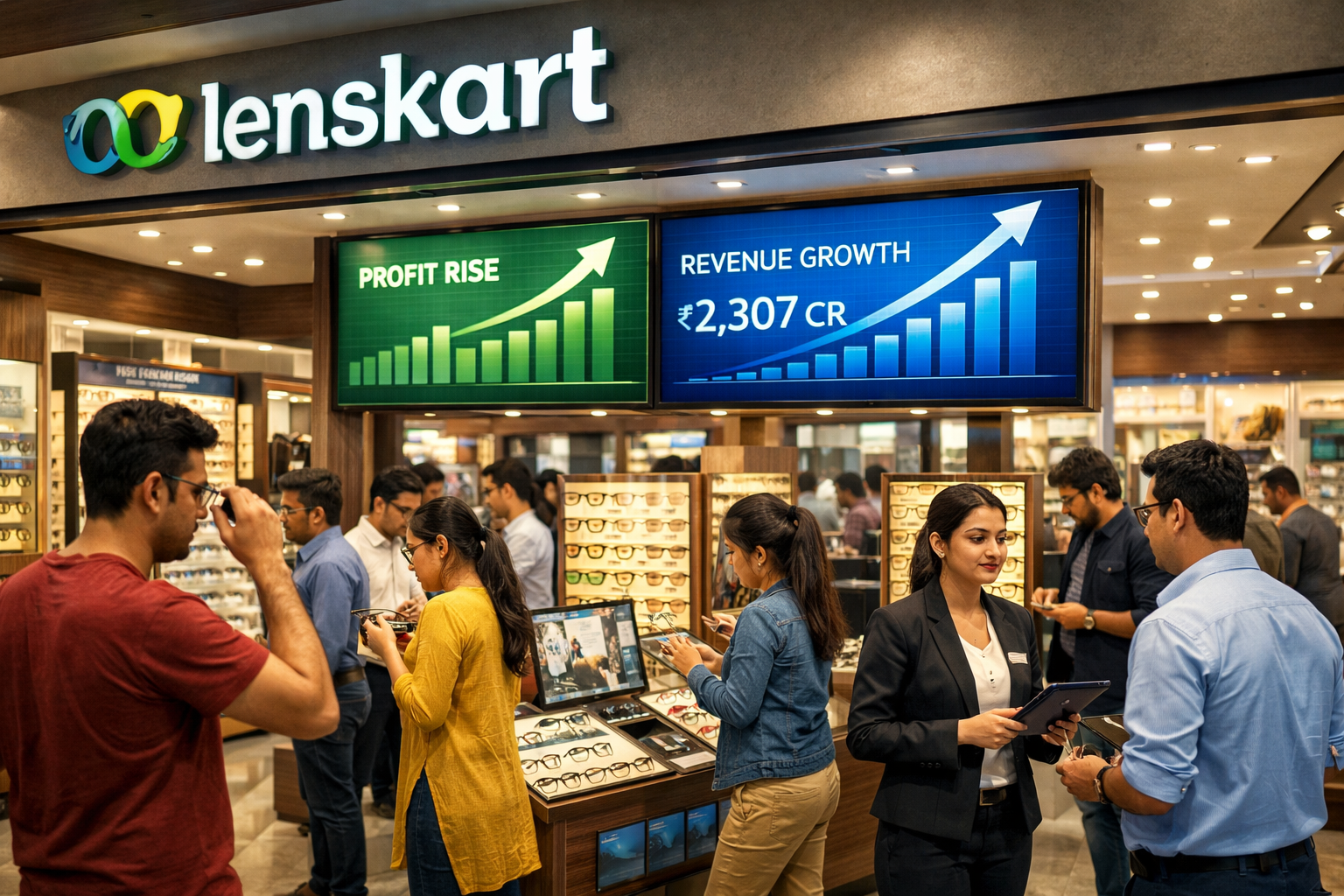
Lenskart Solutions, India’s leading omnichannel eyewear retailer, has delivered an exceptional financial performance in the third quarter of FY26, reporting a massive surge in both profit and revenue. The company’s consolidated net profit skyrocketed nearly 70 times year-on-year (YoY) to ₹131 crore, compared to just ₹1.85 crore in the same quarter last year.

At the same time, Lenskart’s revenue from operations grew by 38% YoY to ₹2,307.7 crore, highlighting strong demand for its products, improved operational efficiency, and successful execution of its expansion strategy across India and international markets.

The Q3 results underline Lenskart’s transition from a fast-growing startup to a profitable and scalable consumer brand with strong fundamentals.


Strong Profit Growth Reflects Operational Efficiency

One of the biggest highlights of Lenskart’s Q3 performance is the dramatic rise in profitability. The nearly 70x jump in net profit indicates that the company has significantly improved its cost management and operational leverage.

This sharp growth in profit was driven by:

  • Higher sales volumes
  • Better gross margins
  • Improved store-level profitability
  • Reduced losses in international operations
  • Strong performance of private label eyewear brands

The company has been focusing on optimizing supply chain efficiency, reducing wastage, and leveraging technology to streamline eye-testing and order fulfillment processes. These initiatives appear to be paying off.


Revenue Grows 38% on Robust Consumer Demand Lenskart Q3 Results

Lenskart reported revenue of ₹2,307.73 crore in Q3 FY26, up from ₹1,668.84 crore in the same quarter last year. This growth reflects rising consumer awareness about eye health and increasing adoption of branded eyewear products in India.

Key factors supporting revenue growth include:

  • Higher footfall in physical stores
  • Growth in online sales
  • Expansion into Tier-2 and Tier-3 cities
  • Increasing repeat customers
  • Product diversification including premium eyewear

India’s eyewear market continues to grow due to lifestyle changes, longer screen time, and increasing vision problems among young consumers. Lenskart has positioned itself as a trusted brand offering affordable yet stylish eyewear solutions.


EBITDA and Margins Show Healthy Expansion

Along with profit and revenue, Lenskart also reported strong growth in EBITDA (earnings before interest, tax, depreciation, and amortization). Margin expansion reflects improved business efficiency and better cost controls.

The company benefited from:

  • Economies of scale as store network expanded
  • Improved sourcing and manufacturing efficiencies
  • Better inventory management
  • Higher contribution from private labels

Margin improvement indicates that Lenskart is not only growing fast but also growing sustainably, which is crucial for long-term investors and stakeholders.


Store Network Expansion Drives Volume Growth

Lenskart continued to expand its physical retail footprint during the quarter by adding new stores across India and select overseas markets. The company now operates thousands of stores across major and emerging cities.

The strategy of combining online and offline presence (omnichannel model) has proven highly effective. Customers can:

  • Book eye tests online
  • Visit nearby stores
  • Try products physically
  • Place digital orders
  • Get home delivery

This hybrid model has helped Lenskart attract both urban and semi-urban customers while improving customer experience and retention.


Growth in Eye Tests and Units Sold

Operational metrics also showed healthy growth in Q3. The number of eye tests conducted and eyewear units sold increased significantly compared to the previous year.

This growth indicates:

  • Rising awareness of eye care
  • Higher penetration in smaller towns
  • Better conversion from store visits to purchases
  • Strong marketing and brand recall

Lenskart’s focus on affordability, stylish designs, and technology-driven services continues to resonate with younger consumers and working professionals.


International Business Shows Improvement

Lenskart has been steadily expanding its international presence in markets such as Southeast Asia and the Middle East. The company’s overseas operations have started contributing positively to overall revenue growth.

Losses in international business have narrowed as:

  • Store productivity improved
  • Brand acceptance increased
  • Operating costs were rationalized

This suggests that Lenskart’s global strategy is moving in the right direction and could become a major growth driver in the coming years.


Private Labels Strengthen Brand Power

A key contributor to profitability has been the growth of Lenskart’s private label brands. These in-house eyewear brands offer higher margins compared to third-party products and give the company more control over pricing and design.

Private labels also help in:

  • Building customer loyalty
  • Differentiating from competitors
  • Improving overall margin structure
  • Strengthening brand identity

With increasing consumer trust, private labels are likely to remain a core pillar of Lenskart’s growth strategy.


Market Reaction and Investor Sentiment

Despite the strong financial performance, Lenskart’s shares closed slightly lower ahead of the results announcement. This could be due to:

  • Profit booking by investors
  • Broader market volatility
  • High expectations already priced in

However, the long-term outlook remains positive given the company’s growth trajectory, profitability improvement, and expanding consumer base.

Analysts view Lenskart as a key player in India’s organized eyewear market, which still has significant room for expansion compared to developed economies.


Industry Outlook: India’s Eyewear Market on Growth Path

India’s eyewear industry is witnessing steady growth due to:

  • Rising disposable incomes
  • Increased screen exposure
  • Growing health awareness
  • Expansion in smaller cities
  • Shift from unorganized to organized retail

Lenskart’s strong Q3 results highlight the company’s leadership position in this growing market. Its tech-enabled operations and omnichannel strategy give it a competitive advantage over traditional optical retailers.


Future Growth Strategy

Going forward, Lenskart plans to:

  • Add more stores in Tier-2 and Tier-3 cities
  • Strengthen digital platforms
  • Expand international presence
  • Invest in supply chain and manufacturing
  • Introduce new product categories

The company aims to maintain revenue growth while continuing to improve profitability and margins.

With a strong balance sheet and brand recognition, Lenskart appears well-positioned to capitalize on India’s expanding consumer market.


Conclusion

Lenskart Solutions’ Q3 FY26 results mark a major milestone in the company’s growth journey. A nearly 70x jump in net profit to ₹131 crore and a 38% rise in revenue to ₹2,307 crore reflect strong demand, operational efficiency, and* successful business execution.

The company’s focus on omnichannel retail, private labels, store expansion, and cost discipline has helped transform it into a profitable and scalable enterprise. While short-term stock movement may remain volatile, Lenskart’s long-term fundamentals look strong.

As India’s eyewear market continues to grow, Lenskart is well placed to remain a dominant player, delivering value to customers and shareholders alike.


FAQ


Q1. What are Lenskart Q3 results FY26?
Lenskart reported a nearly 70x jump in net profit to ₹131 crore and a 38% increase in revenue in Q3 FY26.

Q2. Why did Lenskart profit rise sharply in Q3?
Due to higher sales, improved margins, cost efficiency, and strong store-level performance.

Q3. How much revenue did Lenskart earn in Q3 FY26?
The company posted revenue of about ₹2,307 crore in the quarter.

Q4. Is Lenskart profitable now?
Yes, Lenskart has shown significant profitability growth compared to last year.

Lenskart Solutions Q3 results

Hindustan Aeronautics Limited (HAL): Growth Story, Order Book Strength and Future Outlook

Hindustan Aeronautics Limited (HAL) is one of India’s most important defense and aerospace companies. Operating under the Ministry of Defence, HAL plays a crucial role in designing, manufacturing, and maintaining aircraft, helicopters, engines, and avionics for the Indian Armed Forces. Over the years, HAL has evolved from a traditional defense PSU into a technologically advanced aerospace powerhouse supporting India’s “Make in India” and “Atmanirbhar Bharat” missions.

HAL’s strong financial performance, massive order book, and expanding export footprint have kept investors and market analysts closely focused on the company.

Strong Order Book Provides Revenue Visibility

One of the biggest strengths of Hindustan Aeronautics Limited is its robust order book. HAL currently has an order book exceeding ₹1.8 lakh crore, which ensures stable revenue for the next several years. These orders mainly come from the Indian Air Force, Indian Army, and Indian Navy.

Key contributors to the order book include:

  • Light Combat Aircraft (LCA) Tejas
  • Advanced Light Helicopter (ALH) Dhruv
  • Light Combat Helicopter (LCH) Prachand
  • Trainer aircraft and transport aircraft
  • Overhaul and maintenance contracts for aircraft engines and systems

This long pipeline of confirmed orders gives HAL strong earnings visibility and reduces business uncertainty compared to private-sector defense manufacturers.

Key Products Driving Growth

HAL’s product portfolio is diversified across multiple aircraft and helicopter platforms:

1. LCA Tejas

The Tejas fighter jet is a flagship indigenous defense project. HAL has received large orders for Tejas Mk1A from the Indian Air Force. These aircraft will replace ageing MiG fighter fleets and strengthen India’s air defense capability.

2. Helicopters

HAL manufactures several helicopter models such as:

  • Dhruv (ALH)
  • Rudra (Weaponized ALH)
  • Prachand (Light Combat Helicopter)

These helicopters are now being inducted in large numbers by the Indian military and are also being explored for export opportunities.

3. Engines and Avionics

HAL also designs and manufactures aircraft engines and avionics systems. The company is setting up new engine test facilities and expanding R&D in aero-engine technology, which is a strategic area for long-term defense independence.

Focus on Exports and Global Markets

Earlier, HAL was largely dependent on domestic defense orders. However, the company is now pushing aggressively into international markets. HAL has already exported helicopters and aircraft to countries in Asia, Africa, and Latin America.

Some recent export developments include:

  • Supply of helicopters to friendly foreign nations
  • Participation in global defense exhibitions
  • Government-to-government defense agreements

Exports not only increase revenue but also improve HAL’s global brand image as a reliable aerospace manufacturer.

Financial Performance and Profitability

HAL has shown strong financial growth over the past few years, supported by:

  • Higher execution of defense orders
  • Improved cost efficiency
  • Better working capital management

The company maintains healthy operating margins and strong cash flows. Being a PSU with strategic importance, HAL enjoys policy support and timely payments from government defense contracts, which improves financial stability.

HAL also pays regular dividends, making it attractive for long-term investors seeking both growth and income.

Recent Market Volatility and Clarifications

HAL shares recently witnessed volatility in the stock market after reports related to project timelines and delivery schedules. However, the company clarified that production targets for Tejas and other platforms remain on track.

Management reiterated that:

  • Manufacturing capacity is being increased
  • Supply chain issues are being addressed
  • New facilities are coming online to meet delivery commitments

Such clarifications helped restore investor confidence in the company’s long-term growth outlook.

Civil Aviation and Diversification Plans

Apart from defense manufacturing, HAL is gradually entering civil aviation and allied services. The company is exploring:

  • Maintenance and repair services for civil aircraft
  • Small aircraft manufacturing
  • Technology partnerships with global aerospace firms

This diversification can reduce HAL’s dependence solely on military contracts and open new revenue streams in the future.

Role in Make in India and Atmanirbhar Bharat

HAL is a pillar of India’s defense self-reliance policy. The company works closely with DRDO and private vendors to localize critical components and technologies.

Government policies such as:

  • Ban on defense imports
  • Preference for domestic manufacturers
  • Long-term procurement plans

have created a favorable business environment for HAL. These policy tailwinds strongly support HAL’s growth trajectory for the next decade.

Future Outlook

The long-term outlook for Hindustan Aeronautics Limited remains positive due to:

  • A strong order book
  • Rising defense budgets
  • Increasing focus on indigenous manufacturing
  • Export opportunities
  • Expansion in R&D and production capacity

Key growth drivers in the coming years include:

  • Tejas Mk1A and future Tejas variants
  • Helicopter exports
  • Aero-engine development programs
  • Maintenance and overhaul services

However, risks such as project delays, dependence on government orders, and global geopolitical changes must be monitored by investors.

Conclusion

Hindustan Aeronautics Limited stands at the center of India’s defense manufacturing revolution. With a massive order book, advanced product portfolio, growing exports, and government support, HAL is well-positioned for sustained long-term growth. While short-term stock price fluctuations may occur due to news or execution concerns, the company’s fundamentals remain strong.

For long-term investors, HAL represents a strategic defense play aligned with India’s national priorities and technological ambitions

Union Budget 2026: Key Highlights, Analysis and Impact on Economy


Introduction

The Union Budget 2026–27, presented by Finance Minister Nirmala Sitharaman, has set a clear direction for India’s economic future. At a time when the global economy is facing uncertainty due to inflation, geopolitical tensions, and slowing growth in many regions, the Indian government has chosen a path that balances fiscal discipline with long-term development goals.

The Union Budget 2026 focuses strongly on infrastructure growth, technology innovation, green energy, MSME support, and social sector spending. This article explains the Union Budget 2026 highlights, its impact on citizens and investors, and how it shapes India’s growth story in a human and easy-to-understand way.


1. Capital Expenditure Boost: Backbone of Growth

One of the biggest Union Budget 2026 highlights is the sharp increase in capital expenditure (capex) to nearly ₹13 lakh crore. Infrastructure development remains the engine of economic expansion.

Key areas receiving major funding include:

  • National highways and expressways
  • Railways modernization and logistics corridors
  • Metro rail projects in major cities
  • Smart cities and digital infrastructure

Higher capex will create large-scale employment and attract private investments. Experts believe this spending will generate a strong multiplier effect across cement, steel, construction, and transport sectors.


2. Fiscal Discipline and Deficit Control

The government has committed to a fiscal deficit target of around 4.5% of GDP, showing seriousness toward macroeconomic stability.

Major goals under fiscal discipline:

  • Reduce excessive borrowing
  • Control inflation
  • Strengthen investor confidence
  • Maintain India’s global economic credibility

This balance between spending and savings makes the Union Budget 2026 more sustainable in the long run.


3. MSMEs and Startup Ecosystem Support

MSMEs form the backbone of India’s economy. The Union Budget 2026 introduces new schemes such as:

  • Expanded credit guarantee programs
  • Simplified compliance rules
  • Low-interest loan access
  • Technology upgradation incentives

Startups will benefit from innovation funding and digital infrastructure support. These measures will help generate jobs and encourage entrepreneurship across urban and rural India.


4. Technology, AI and Innovation Push

A major theme of the Union Budget 2026 is technology-driven growth. Special incentives are provided for:

  • Artificial Intelligence (AI)
  • Robotics and automation
  • Semiconductor manufacturing
  • Advanced research and development

India aims to become a global hub for high-tech manufacturing and digital services. These policies will improve productivity and generate skilled employment.


5. Green Energy and Climate Action

Sustainability stands at the heart of Budget 2026. Increased funds have been allocated to:

  • Solar energy projects
  • Green hydrogen missions
  • Electric vehicle infrastructure
  • Renewable energy storage systems

This supports India’s climate commitments while opening up large investment opportunities in clean energy.


6. Agriculture and Rural Development

Agriculture remains central to the Union Budget 2026 strategy. New initiatives focus on:

  • Digital agriculture platforms
  • Modern irrigation systems
  • Farmer income security
  • Storage and logistics improvements

Rural development schemes aim to improve roads, healthcare access, and education facilities in villages.


7. Tax Proposals and Market Impact

The Union Budget 2026 introduced changes in direct and indirect taxes. The most debated decision was the increase in Securities Transaction Tax (STT) on derivatives trading, which caused short-term market volatility.

Other tax measures include:

  • Rationalisation of tax slabs
  • Simplified tax compliance
  • Improved transparency

Long-term investors are expected to benefit from stable and predictable tax policies.


8. Urban Infrastructure and Housing

Urban India received strong support through:

  • Metro rail expansion
  • Affordable housing schemes
  • Water and sanitation projects
  • Smart city upgrades

These measures aim to improve quality of life and tackle rapid urbanisation challenges.


9. Health, Education and Social Welfare

Higher allocations have been made for:

  • Healthcare infrastructure
  • Digital health services
  • Education reforms
  • Women and child welfare schemes

Investment in human capital ensures inclusive growth.


10. Employment and Skill Development

The Union Budget 2026 focuses strongly on job creation through:

  • Youth skill development programs
  • Apprenticeship schemes
  • Industry-linked education
  • Digital learning platforms

This prepares India’s workforce for future industries.


Investor-Focused Analysis

From an investor’s point of view, the Union Budget 2026 presents opportunities in:

  • Infrastructure and construction companies
  • Renewable energy firms
  • Technology and semiconductor stocks
  • Banking and MSME financing institutions

Although the STT hike affected short-term sentiment, the long-term outlook remains positive due to strong economic fundamentals.


Frequently Asked Questions (FAQ)

Q1. What are the main highlights of Union Budget 2026?
Capital expenditure boost, fiscal discipline, MSME support, green energy push, and technology investment.

Q2. How will Union Budget 2026 affect investors?
Infrastructure, green energy, and technology sectors may benefit the most in the long run.

Q3. What is the fiscal deficit target in Budget 2026?
Around 4.5% of GDP.

Q4. Does Budget 2026 support farmers?
Yes, through digital agriculture, irrigation projects, and income support measures.

Q5. Why did markets fall after Budget 2026?
Mainly due to higher STT on derivatives and cautious investor sentiment.


Hindi Summary (संक्षेप में)

केंद्रीय बजट 2026 में सरकार ने बुनियादी ढांचे, हरित ऊर्जा, तकनीक और रोजगार सृजन पर विशेष ध्यान दिया है। पूंजीगत व्यय बढ़ाकर लगभग 13 लाख करोड़ रुपये किया गया है। कृषि, स्वास्थ्य और शिक्षा क्षेत्रों को भी मजबूत समर्थन दिया गया है। यह बजट भारत की दीर्घकालीन आर्थिक वृद्धि को मजबूत बनाने की दिशा में एक महत्वपूर्ण कदम है।


Marathi Summary (थोडक्यात)

केंद्रीय अर्थसंकल्प 2026 मध्ये पायाभूत सुविधा, हरित ऊर्जा, तंत्रज्ञान आणि रोजगार निर्मितीवर भर देण्यात आला आहे. भांडवली खर्च सुमारे 13 लाख कोटी रुपयांपर्यंत वाढवण्यात आला आहे. शेती, आरोग्य आणि शिक्षण क्षेत्रालाही मोठे प्रोत्साहन देण्यात आले आहे. हा अर्थसंकल्प भारताच्या दीर्घकालीन आर्थिक विकासासाठी महत्त्वाचा ठरेल.


Conclusion

The Union Budget 2026–27 offers a strong vision of growth driven by infrastructure, innovation, and sustainability. While some tax measures created short-term market reactions, the long-term roadmap focuses on economic resilience, job creation, and inclusive development.

Overall, Budget 2026 reflects India’s ambition to become a technology-driven, environmentally responsible, and globally competitive economy

Union Budget 2026
Union Budget 2026

Forex Trading for Beginners: A Complete Roadmap from Zero to First Trade

Forex trading, also known as foreign exchange trading, is the process of buying and selling currencies to make a profit. It is the largest financial market in the world, with trillions of dollars traded every day. While it may sound complicated at first, forex trading can be learned step by step if you follow a proper roadmap and focus on discipline rather than quick profits.

This guide will walk you through a simple and practical roadmap to start your forex trading journey as a beginner.


Step 1: Understand What Forex Trading Really Is

Forex trading means exchanging one currency for another. Currencies are traded in pairs such as EUR/USD, USD/JPY, or GBP/USD.

For example, when you buy EUR/USD, you are expecting the euro to become stronger than the US dollar. When you sell it, you are expecting the euro to weaken.

Unlike stock markets, forex operates 24 hours a day, five days a week. This allows traders to trade at different times depending on their schedule.

Important terms you should know at the beginning:

  • Pip: The smallest price movement in a currency pair
  • Lot: The size of your trade
  • Spread: Difference between buy and sell price
  • Leverage: Borrowed money from broker to trade larger amounts
  • Margin: Money required to open a trade

Learning these basics is the foundation of your forex journey.


Step 2: Learn How the Forex Market Moves

Forex prices move because of economic and political factors. Some of the main reasons include:

  • Interest rate changes by central banks
  • Inflation data
  • Employment reports
  • Political events and global news

For example, if the US economy becomes strong, the US dollar usually strengthens. If inflation rises or uncertainty increases, currencies may fall.

Beginners should follow basic financial news and understand how big events impact currencies. This is called fundamental analysis.

At the same time, you should learn technical analysis, which means reading charts and identifying trends using indicators such as:

  • Moving Averages
  • RSI (Relative Strength Index)
  • Support and Resistance
  • Trendlines

These tools help you decide when to enter and exit a trade.


Step 3: Choose a Reliable Forex Broker

Your broker is your gateway to the forex market. Choosing a safe and reliable broker is very important.

Look for a broker that offers:

  • Regulation and license
  • Low spreads and commissions
  • Demo trading account
  • Easy-to-use trading platform (MT4 or MT5)
  • Good customer support

Never deposit money with an unknown or unregulated broker. Safety of your capital should always come first.


Step 4: Practice with a Demo Account

Before using real money, every beginner must start with a demo account. A demo account allows you to trade with virtual money in real market conditions.

This stage is for:

  • Learning how to place buy and sell orders
  • Understanding charts and indicators
  • Testing trading strategies
  • Building confidence

Spend at least 1–2 months on demo trading. Treat demo trading seriously, as if it were real money. This will prepare you mentally and technically for real trading.


Step 5: Create a Simple Trading Plan

A trading plan is your personal rulebook. Without a plan, trading becomes emotional and risky.

Your trading plan should answer these questions:

  • Which currency pairs will I trade?
  • What time frame will I use (15 min, 1 hour, daily)?
  • Which indicators will I use?
  • How much money will I risk per trade?
  • Where will I put stop-loss and take-profit?

For beginners, a simple plan could be:

  • Trade only EUR/USD
  • Use 1-hour chart
  • Risk only 1–2% of capital per trade
  • Always use stop-loss

This keeps trading disciplined and controlled.


Step 6: Learn Risk Management (Most Important Step)

Risk management is more important than making profits. Many beginners fail because they risk too much money on one trade.

Golden rules of risk management:

  • Never risk more than 1–2% of your capital on one trade
  • Always use a stop-loss
  • Do not overtrade
  • Avoid revenge trading after a loss
  • Keep leverage low

For example, if you have $1,000, risk only $10–$20 per trade. This way, even if you lose several trades, your account will survive.


Step 7: Start with a Small Real Account

Once you are consistent in demo trading, you can open a small real trading account.

Start with money you can afford to lose. Do not borrow money or use savings meant for family needs. Real trading is emotionally different from demo trading, so begin with small amounts and gain experience slowly.

At this stage, focus more on:

  • Following your trading plan
  • Controlling emotions
  • Learning from mistakes

Do not chase profits. Focus on good decisions.


Step 8: Control Your Trading Psychology

Forex trading is 50% skill and 50% mindset. Fear and greed are the biggest enemies of a trader.

Common beginner mistakes:

  • Trading without stop-loss
  • Overconfidence after a few wins
  • Panic after losses
  • Trading based on rumors

Successful traders stay calm, patient, and disciplined. Keep a trading journal to record:

  • Entry reason
  • Exit reason
  • Profit or loss
  • Lesson learned

This helps improve your strategy over time.


Step 9: Keep Learning and Improving

Forex trading is a continuous learning process. Markets change, and traders must adapt.

Ways to improve:

  • Read books and articles
  • Watch educational videos
  • Follow economic calendars
  • Learn new strategies slowly
  • Review past trades

Avoid fake “get rich quick” promises. Forex is not gambling. It is a professional skill that takes time and practice.


Final Roadmap Summary

Here is a simple roadmap for beginners:

  1. Learn forex basics
  2. Understand market movement
  3. Choose a safe broker
  4. Practice with demo account
  5. Build a trading plan
  6. Follow strict risk management
  7. Start small with real money
  8. Control emotions
  9. Keep learning

Conclusion

Forex trading can be a great opportunity if approached with patience, discipline, and education. Beginners should not rush into making money. The real goal should be to become a skilled and consistent trader over time.

Think of forex trading as a marathon, not a sprint. With the right roadmap, proper practice, and strong mindset, anyone can learn forex trading step by step and build a sustainable trading career.

Silver Price Hits New High: Should Indian Investors Buy Now?

Silver prices are once again in the spotlight as global markets witness a strong rally in precious metals. Recently, silver touched record levels near $97 per ounce in international markets, and experts believe it may soon test the psychological $100 mark. This sharp rise has caught the attention of investors worldwide, including in India, where silver is not only a popular investment but also deeply connected to culture, festivals, and industry.

So why is silver price rising again? And more importantly, should Indian investors invest in silver now? Let us understand the reasons behind the rally and what it means for Indian households and investors.


Why Is Silver Price Rising?

1. Global Economic Uncertainty

One of the biggest reasons for the silver price surge is global economic uncertainty. Ongoing geopolitical tensions, concerns about slowing global growth, and fears of inflation have made investors cautious. In such times, people turn towards safe-haven assets like gold and silver to protect their wealth.

Silver benefits from this trend as it is considered both a precious metal and an industrial metal. Whenever fear rises in financial markets, demand for silver increases.


2. Weak US Dollar and Interest Rate Expectations

Another key factor pushing silver prices higher is the weakening US dollar. When the dollar becomes weak, commodities priced in dollars (like silver) become cheaper for foreign investors, increasing demand.

At the same time, expectations that the US Federal Reserve may cut interest rates have boosted silver prices. Lower interest rates reduce returns on bank deposits and bonds, making non-interest assets like gold and silver more attractive.


3. Industrial Demand for Silver

Unlike gold, silver has strong industrial uses. It is widely used in:

  • Solar panels
  • Electric vehicles
  • Electronics and batteries
  • Medical equipment

With the world moving towards renewable energy and electric mobility, demand for silver has increased sharply. Countries like China, the US, and European nations are expanding green energy projects, which requires large quantities of silver.

This combination of investment demand + industrial demand is pushing prices higher.


4. Supply Constraints

Silver mining supply has not increased significantly in recent years. Mining costs are rising and new projects take time to start. This limited supply, along with rising demand, creates a classic situation where prices move upward.


Silver Price Trend in India

In India, silver prices have also surged along with global markets. Silver is used for:

  • Jewellery and ornaments
  • Utensils
  • Investment bars and coins
  • Industrial and electronic components

Indian investors traditionally prefer gold, but silver is now gaining popularity because:

  • It is cheaper than gold
  • Has higher growth potential
  • Useful for long-term diversification

With silver touching record highs globally, Indian silver prices have also crossed important levels in domestic markets.


Will Silver Price Touch $100?

Many market experts believe silver may soon test the $100 per ounce mark if current trends continue. However, this depends on:

  • US interest rate policy
  • Inflation data
  • Geopolitical tensions
  • Strength of the US dollar
  • Global demand for renewable energy

If inflation remains high and interest rates fall, silver prices may continue rising. But investors must remember that silver is volatile and can see sharp ups and downs.


What Should Indian Investors Do Now?

1. Avoid Panic Buying

Silver has already moved up sharply. Entering the market blindly at high levels can be risky. Investors should avoid emotional buying and instead plan carefully.


2. Invest in Small Portions

Experts suggest investing in silver gradually rather than in one lump sum. This strategy, called systematic buying, helps average the cost and reduces risk.


3. Choose the Right Investment Option

Indian investors can invest in silver through multiple routes:

  • Physical silver (coins, bars)
  • Silver ETFs
  • Silver mutual funds
  • Digital silver

Among these, Silver ETFs are considered safer and more convenient as they avoid storage and purity issues.


4. Long-Term Perspective Is Key

Silver should be viewed as a long-term investment, not a short-term trading tool. It works best as a hedge against inflation and currency weakness.

Financial advisors recommend keeping silver exposure to around 5–10% of your portfolio, along with gold and equity investments.


Risks of Investing in Silver

While silver has strong upside potential, it also carries risks:
*

  • High volatility compared to gold
  • Prices depend on global economic data
  • Industrial demand can fluctuate
  • Short-term corrections are common

Therefore, silver should not be your only investment. It should be part of a diversified portfolio.

Today Rate for Silver


Silver vs Gold: Which Is Better?

Gold remains the most trusted safe-haven asset in India. However, silver offers:

  • Lower entry cost
  • Higher industrial demand
  • More growth potential during rallies

Both metals have their own role. Many experts suggest holding both gold and silver to balance risk and returns.


Conclusion

The current rally in silver prices is driven by a mix of global uncertainty, weak dollar, interest rate expectations, and rising industrial demand from renewable energy and technology sectors. With silver approaching the $100 mark, investors are showing renewed interest in the precious metal.

For Indian investors, silver can be a smart addition to their portfolio, but it should be done with discipline and long-term vision. Instead of chasing prices, one should invest gradually through ETFs or digital platforms and keep exposure limited to a reasonable percentage.

Silver may shine brighter in the coming months, but smart investing requires patience, diversification, and risk management. As always, investors should assess their financial goals before making any investment decision.

Gold Spot / U.S. Dollar (XAUUSD) daily chart, written purely for study and educational purposes.


1. Chart Overview

The chart represents Gold Spot vs US Dollar (XAUUSD) on the 1-Day timeframe, which is ideal for identifying medium- to long-term trends. The price is currently trading near 4,845, showing strong bullish momentum.

Two key indicators are applied:

  • EMA 50 (Blue line) – ~4,383
  • EMA 200 (Red line) – ~3,810

These moving averages help identify trend direction, momentum strength, and dynamic support/resistance zones.


2. Primary Trend Analysis

Strong Uptrend Structure

Gold is clearly in a strong bullish trend, defined by:

  • Higher highs
  • Higher lows
  • Price consistently trading above EMA 50 and EMA 200

This structure confirms that buyers are in full control on the daily timeframe.

Trend Phases Visible on Chart

  1. Accumulation Phase (September–October)
    Price moved gradually upward with small pullbacks, suggesting institutional accumulation.
  2. Impulse Move (October)
    A sharp bullish rally pushed price above previous resistance, confirming trend continuation.
  3. Corrective Phase (Late October–November)
    Price corrected but held above EMA 50, indicating healthy profit booking rather than trend reversal.
  4. Continuation Phase (December–January)
    Strong bullish candles reappeared, breaking prior highs and accelerating momentum.

Currently, gold is in a trend extension phase, often seen near psychological levels.


3. Role of EMA 50 and EMA 200

EMA 50 – Dynamic Support

  • EMA 50 has acted as a buy-on-dips zone
  • Each pullback towards EMA 50 resulted in fresh buying
  • The steep slope of EMA 50 shows strong momentum

EMA 200 – Long-Term Bullish Confirmation

  • EMA 200 is far below current price
  • This wide gap indicates:
    • Strong long-term bullish sentiment
    • No immediate threat of trend reversal
  • As long as price remains above EMA 200, the primary trend remains bullish

EMA 50 above EMA 200 = Golden Trend Condition


4. Price Action Analysis

Candle Structure

Recent candles show:

  • Large bullish bodies
  • Small or no lower wicks
  • Consecutive green candles

This suggests:

  • Aggressive buying
  • Minimal selling pressure
  • Breakout strength rather than exhaustion

However, extended bullish candles can also signal short-term overextension, which is important for study.


5. Support and Resistance Zones

Key Support Levels (Study Zones)

  1. 4,600 – 4,650
    • Previous consolidation
    • Likely demand zone on pullbacks
  2. 4,380 – 4,400 (EMA 50 area)
    • Strong dynamic support
    • High probability reaction zone
  3. 3,800 – 3,850 (EMA 200 area)
    • Long-term trend support
    • Breakdown below this would signal major trend shift

Resistance Levels

  • 4,850 – 4,900 is a psychological resistance
  • Round numbers often attract profit booking
  • Break and sustain above this zone could open further upside in future

6. Momentum and Strength Assessment

Bullish Strength Indicators

  • Steep EMA slopes
  • Strong breakout candles
  • Lack of deep pullbacks
  • Price far above moving averages

These factors indicate trend strength, but also suggest the market may be temporarily overheated.

Overextension Risk (For Study)

When price moves too far away from EMA 50:

  • Probability of sideways consolidation increases
  • Or shallow correction towards EMA 50 occurs

This does not mean trend reversal, only momentum normalization.


7. Market Psychology Behind the Move

Gold typically rises due to:

  • Global uncertainty
  • Inflation expectations
  • Weakness in the US Dollar
  • Central bank buying
  • Geopolitical tensions

The sharp move suggests risk-off sentiment globally, where investors prefer safe-haven assets.

Institutional participants usually:

  • Buy during pullbacks
  • Push price to new highs during low-liquidity periods
  • Book partial profits near round-number levels

8. Possible Future Scenarios (Educational)

Scenario 1: Bullish Continuation

  • Price consolidates between 4,750–4,850
  • Breaks above 4,900 with volume
  • Trend continues higher

Scenario 2: Healthy Pullback

  • Price corrects towards 4,600–4,500
  • Buyers step in near EMA 50
  • Trend resumes upward

Scenario 3: Sideways Consolidation

  • Price ranges for several sessions
  • EMAs catch up
  • Momentum resets before next move

For study purposes, sideways movement after strong rallies is very common.


9. Risk Management Learning Points

Even in strong trends:

  • Late entries carry higher risk
  • Risk-reward becomes unfavorable near tops
  • Waiting for pullbacks improves probability

Key lesson:

Trend following is safest near support, not after vertical moves.


10. Key Educational Takeaways

  • Gold is in a clear long-term uptrend
  • EMA 50 and EMA 200 confirm bullish bias
  • Price action shows strong institutional participation
  • Current levels indicate strength but also short-term overextension
  • Pullbacks are part of healthy trends, not weakness
  • Always analyze structure + moving averages + psychology together

Final Study Conclusion

This chart is an excellent textbook example of a strong trending market. It demonstrates how price respects moving averages, forms higher highs and higher lows, and accelerates during momentum phases. For learning technical analysis, this chart perfectly illustrates trend identification, dynamic support, and bullish price action behavior.

Davos Summit 2026: Trump’s Return Sparks Global Debate on NATO, Greenland, and Economic Power Shifts

Davos, Switzerland:9
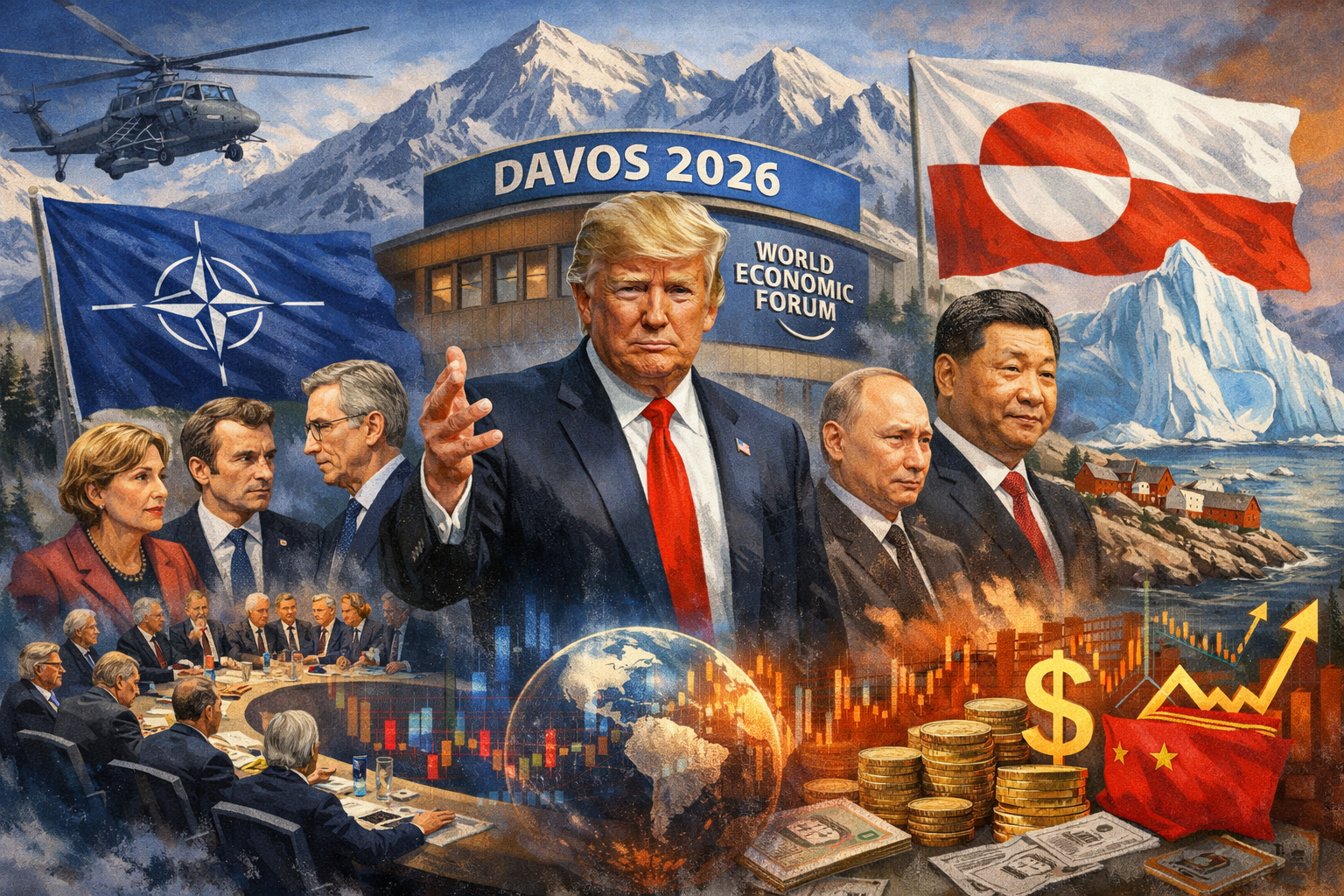
The World Economic Forum (WEF) Annual Meeting Davos Summit 2026 6has kicked off in Davos amid heightened geopolitical tension, economic uncertainty, and renewed debate over global leadership. This year’s summit has drawn extraordinary attention due to the presence of US President Donald Trump, whose participation has dominated headlines even before his keynote address. From controversial remarks on Greenland to questions over NATO unity, Trump’s return to Davos has set the tone for a highly charged global dialogue.

Trump Returns to the Global Stage at Davos Summit 2026

President Trump’s attendance at Davos marks a significant moment, as it is his first appearance at the forum in years. Ahead of his visit, Trump remarked that he was being “very happily awaited” in Europe, a comment that quickly sparked reactions across diplomatic and business circles.

His presence alone has underscored the growing divide between the United States and several European nations on issues ranging from trade policies to military alliances. Trump is expected to use his Davos speech to outline his vision for global trade, security, and America’s strategic priorities, themes that resonate strongly with investors and policymakers alike.

Greenland Controversy Takes Center Stage

One of the most contentious issues surrounding Trump’s Davos visit is his renewed focus on Greenland, an autonomous territory of Denmark. Trump has repeatedly emphasized Greenland’s strategic importance, citing its location, natural resources, and role in global security.

These remarks have triggered sharp responses from Denmark and other European leaders, who have firmly rejected any notion of US control over the territory. The issue has quickly escalated beyond bilateral relations, raising broader concerns about sovereignty, international law, and geopolitical stability.

At Davos, diplomats and analysts are closely watching how this controversy could impact US-EU relations, particularly at a time when global cooperation is already under strain.

NATO and Transatlantic Tensions

Trump’s comments have also revived debates over NATO’s future. European leaders remain uneasy about his long-standing criticism of the alliance, especially his insistence that member nations increase defense spending or risk reduced US support.

At the summit, NATO unity is a recurring topic, with experts warning that fractures within the alliance could weaken collective security at a time of rising global threats. While Trump has not directly announced any policy changes at Davos yet, his rhetoric alone has fueled speculation about potential shifts in US foreign policy.

Economic Agenda and Business Engagements

Beyond geopolitics, the global economy remains a core focus of Davos 2026. Trump is scheduled to meet several top global CEOs, investors, and industry leaders during the summit. Discussions are expected to revolve around trade barriers, tariffs, supply chain resilience, and investment flows.

For global markets, Trump’s stance on tariffs and protectionism remains a key concern. Business leaders are particularly keen to understand whether the US will adopt a more cooperative approach or continue with aggressive trade measures that could disrupt global commerce.

The presence of influential corporate voices at Davos underscores the forum’s role as a bridge between political power and economic decision-making.

India’s Role at Davos 2026

India has also emerged as a prominent participant at the summit. Union IT Minister Ashwini Vaishnaw held discussions with Meta’s leadership, focusing on artificial intelligence, deepfake regulation, and digital safety. These talks reflect India’s growing influence in shaping global tech governance.

Indian business leaders and policymakers are using the Davos platform to promote investment opportunities, innovation, and India’s role as a stable growth engine amid global uncertainty. With technology, manufacturing, and digital infrastructure in focus, India’s presence aligns with the summit’s broader theme of navigating economic transitions.

AI, Technology, and the Future Economy

Artificial intelligence remains a dominant theme at Davos 2026. Policymakers and tech leaders are debating how to balance innovation with regulation, particularly in light of concerns over misinformation, deepfakes, and data privacy.

Trump’s position on AI regulation is being closely watched, especially as the US competes with China and Europe for technological leadership. The conversations at Davos suggest that AI governance will be one of the defining global policy challenges of the coming decade.

A Divided but Necessary Dialogue

Despite the disagreements and controversies, Davos 2026 continues to serve as a rare platform where world leaders, CEOs, and civil society representatives engage in direct dialogue. While critics argue that the forum represents elite interests, supporters believe it remains essential for addressing global crises that no single nation can solve alone.

Trump’s participation has amplified both the influence and the tension surrounding the summit. His outspoken style contrasts sharply with the consensus-driven tone traditionally associated with Davos, making this year’s meeting one of the most closely watched in recent history.

What Lies Ahead

As the summit progresses, attention will remain fixed on Trump’s keynote speech and bilateral meetings. Any concrete announcements on trade, NATO, or territorial issues could have immediate ripple effects across global markets and diplomatic relations.

Davos Summit 2026 is shaping up to be more than just a gathering of global elites—it is becoming a reflection of a world in transition, grappling with shifting power dynamics, economic uncertainty, and the challenge of maintaining cooperation in an increasingly fragmented global order.


96

Wall Street’s Renewed Momentum: Banking on a Busy 2026

Wall Street is entering 2026 with a confidence that’s been missing for years. After navigating through a turbulent period marked by elevated interest rates and market uncertainty, major investment banks are finally seeing the kind of activity they’ve been waiting for. The fourth quarter of 2025 brought a wave of positive earnings reports that signal not just recovery, but genuine momentum heading into the new year.

A Quarter to Remember

The numbers from the final quarter of 2025 tell a compelling story. Citigroup capped off the quarter by announcing record-breaking performance in its M&A advisory business, underscoring that the deal-making environment has fundamentally shifted.

These aren’t isolated success stories. Across the industry, banks are reporting their strongest performance in years. The collective achievement of surpassing $100 billion in global investment banking revenues for 2025 represents more than just a milestone—it marks a turning point after several challenging years when high interest rates and economic uncertainty kept many potential deals on hold.

What’s Driving the Revival

The resurgence in banking activity isn’t happening in a vacuum. Multiple factors are converging to create what industry insiders believe could be one of the most active periods for deal-making in recent memory. Companies that postponed strategic moves during the uncertain economic climate of 2022 and 2023 are now ready to act. CEOs who watched interest rates climb and valuations fluctuate are finding renewed clarity about their strategic options.

The healthcare and industrial sectors are emerging as particular hotspots for activity. These industries, which often drive significant M&A volume, are seeing boards and management teams return to growth strategies that were shelved during more turbulent times. The willingness to pursue transformative deals is back, and banks are positioning themselves to capitalize on this renewed appetite for strategic transactions.

Blockbuster Deals Making Headlines

Some of the transactions currently in motion are genuinely eye-catching in their scale and ambition. Electronic Arts, the gaming giant, is reportedly involved in a proposed take-private deal valued at around $55 billion. If this transaction closes, it would represent potentially the largest leveraged buyout ever completed, a signal that private equity and strategic buyers are willing to write enormous checks for the right assets.

The industrial sector is seeing similarly impressive activity. Union Pacific’s $85 billion bid for Norfolk Southern represents the kind of mega-merger that reshapes entire industries. These railroad giants coming together would create seismic shifts in logistics and transportation, and the fact that such a deal is even being contemplated speaks to the confidence returning to boardrooms across corporate America.

These marquee transactions serve another important function beyond their immediate impact. They create a demonstration effect, showing other companies that large, complex deals can get done in the current environment. When CEOs and boards see peers successfully executing major strategic moves, it often catalyzes their own decision-making processes.

The IPO Window Reopens

Perhaps nowhere is the shift in market sentiment more visible than in the reviving IPO market. After years of companies staying private longer than they historically might have, the window for going public appears to be opening wider. The roster of potential IPOs for 2026 reads like a who’s who of technology and innovation.

OpenAI, the artificial intelligence powerhouse behind ChatGPT, is reportedly exploring a public offering. SpaceX, Elon Musk’s space exploration company, is also said to be considering an IPO. Cerebras, an AI chipmaker that’s positioned itself as a challenger in the competitive semiconductor space, rounds out a list of high-profile technology companies that could test public market appetite in the coming months.

These aren’t small companies looking to raise modest amounts of capital. Each of these potential IPOs could carry valuations in the tens of billions of dollars. Their decisions to explore public markets will likely influence dozens of other private companies currently weighing their options. Investment banks are working overtime to position themselves for these mandates, knowing that landing even one of these deals could define their year.

Private Equity Comes Off the Bench

One of the most significant developments for 2026 may be the return of private equity firms to more active deal-making and exit strategies. These firms, sitting on record amounts of undeployed capital and aging portfolio companies that need liquidity events, have been notably cautious over the past couple of years. Valuations that seemed too high in one environment or too uncertain in another kept many firms from pulling the trigger on major investments or exits.

That calculus appears to be changing. Venture capital firms, which invested heavily during the zero-interest-rate environment of 2020 and 2021, are now seeing portfolio valuations stabilize at levels that make exit strategies more feasible. The companies they backed three to five years ago are maturing, and investors are eager for returns after a period of patience.

For investment banks, this private equity and venture capital activity represents a double opportunity. They can advise on the sale or public offering of portfolio companies while simultaneously helping private equity firms deploy their substantial dry powder into new acquisitions. This cycle of activity, once it gains momentum, tends to be self-reinforcing.

Looking Ahead with Cautious Optimism

The optimism on Wall Street heading into 2026 is palpable, but it’s tempered by the hard lessons learned over the past few years. Bankers know that pipelines can shift quickly based on macroeconomic conditions, regulatory changes, or unexpected market events. The Federal Reserve’s monetary policy decisions, geopolitical developments, and broader economic indicators will all play roles in determining whether this momentum sustains throughout the year.

What’s different now compared to previous periods of enthusiasm is that the activity appears to be built on more solid foundations. Companies aren’t just doing deals because capital is cheap or because everyone else is doing them. The strategic rationale for transactions seems more thoughtful, the due diligence more thorough, and the execution more deliberate.

For the professionals working in investment banking, the shift is welcome after years of managing through uncertainty. The long hours and intense competition that characterize the industry are easier to embrace when deal flow is strong and clients are engaged. As 2026 unfolds, Wall Street is betting that the combination of pent-up demand, improved market conditions, and executive confidence will translate into one of the busiest years for investment banking in recent memory.

The stage is set, the players are positioned, and the early signs suggest that 2026 could indeed deliver on the promise that many on Wall Street have been anticipating. Whether discussing M&A, IPOs, or private equity activity, the common thread is clear: after years of waiting, the deal-making machine is firing on all cylinders again.

SEBI’s Revised Market Categorization Framework: What Investors and Mutual Funds Should Expect

India’s capital markets are on the cusp of an important regulatory change. The Securities and Exchange Board of India (SEBI) is preparing to introduce a revised market categorization framework, a move that could reshape how stocks are classified and how mutual funds structure their portfolios. According to SEBI Whole-Time Member Manoj Kumar, the framework is ready and will be announced soon after incorporating industry feedback.

This development comes at a time when Indian markets are witnessing unprecedented retail participation and record mutual fund inflows. Against this backdrop, SEBI’s proposed changes aim to balance capital formation with long-term investor protection.

What Is SEBI’s Market Categorization Framework?

Market categorization refers to how listed companies are grouped into large-cap, mid-cap, and small-cap segments, typically based on market capitalization. These classifications play a crucial role in determining:

  • Mutual fund investment mandates
  • Index construction
  • Risk profiling for retail investors
  • Regulatory oversight

SEBI last introduced a standardized framework in 2017 to bring uniformity across the industry. However, the market has evolved significantly since then, necessitating a fresh review.

Revised Framework Ready, Final Announcement Soon

SEBI’s Manoj Kumar has confirmed that the revised market categorization framework is ready, but its notification was briefly delayed to factor in feedback from various stakeholders, including mutual fund houses, market participants, and industry bodies.

This consultative approach highlights SEBI’s intent to avoid disruption while ensuring that the new framework reflects current market realities. Once finalized, the framework will be formally notified, making it binding for all market participants.

Why SEBI Is Revisiting Market Categorization Now

The timing of this revision is critical. Indian equity markets have seen:

  • Sharp growth in the number of listed companies
  • Massive inflows into equity mutual funds
  • Increased retail participation, especially in mid- and small-cap stocks

SEBI has acknowledged that the surge in investor interest, particularly in riskier segments, requires tighter and more refined categorization to prevent mis-selling and excessive risk exposure.

According to regulators, the challenge lies in ensuring that capital formation is not stifled, while also protecting investors from volatility and valuation excesses.

Possible Introduction of a Micro-Cap Category

One of the most discussed aspects of the revised framework is the potential introduction of a micro-cap category. Currently, stocks beyond the top 250 by market capitalization fall under the small-cap universe, which has become increasingly broad and diverse.

A micro-cap category could:

  • Separate ultra-small companies with limited liquidity
  • Improve transparency in fund risk profiles
  • Help investors better understand volatility and downside risks

Such a move would also allow mutual funds to more clearly define investment strategies, particularly for schemes focused on high-growth but high-risk companies.

Impact on Mutual Funds and Investors

Any change in market categorization will have a direct impact on mutual fund portfolios, especially schemes mandated to invest a fixed percentage in specific market-cap segments.

Fund managers may be required to rebalance portfolios to comply with revised definitions. While this could lead to short-term adjustments, SEBI believes the long-term benefits outweigh transitional challenges.

For investors, clearer categorization means:

  • Better alignment between risk appetite and investment choices
  • Greater transparency in scheme objectives
  • Reduced confusion around mid-cap and small-cap exposure

Industry Resistance Expected, but Stability Is the Goal

SEBI has openly acknowledged that regulatory changes are rarely welcomed immediately. Industry participants may express concerns over compliance costs, portfolio churn, or performance impact.

However, Manoj Kumar emphasized that SEBI’s priority remains long-term market stability and investor confidence, even if that involves short-term discomfort. The regulator believes that consistent, well-defined categories will ultimately make Indian markets more resilient.

What Should Investors Do Now?

While the final framework is yet to be notified, investors should:

  • Avoid chasing returns purely based on market-cap labels
  • Review mutual fund portfolios for actual risk exposure
  • Focus on long-term goals rather than short-term volatility

Once the revised framework is announced, fund houses will communicate changes, if any, to scheme mandates and portfolios.

Conclusion

SEBI’s upcoming revised market categorization framework marks a significant step in aligning India’s equity markets with evolving realities. By refining classifications and possibly introducing a micro-cap category, the regulator aims to enhance transparency, protect investors, and ensure sustainable market growth.

While industry adjustments are inevitable, the move underscores SEBI’s commitment to creating a more structured, resilient, and investor-friendly capital market ecosystem.


SEO Focus Keywords Used:

  • SEBI market categorization framework
  • Revised market categorization
  • Large-cap mid-cap small-cap classification
  • SEBI regulatory changes
  • Mutual fund market categorization