Lenskart IPO Receives 2X plus Subscription; Retail Bidders Shine Bright

The Lenskart IPO received an impressive response from investors, with an overall subscription of 2.02 times on the final bidding day. The issue saw strong demand from all categories, especially retail investors, who subscribed 3.35 times, applying for over 6.05 crore shares against 1.80 crore offered.

Qualified Institutional Buyers (QIBs) subscribed 1.64 times, while Non-Institutional Investors (NIIs) subscribed 1.89 times, showing solid interest from both large and small HNIs. The employee quota also saw healthy participation at 2.62 times, reflecting confidence from within the company.

Overall, Lenskart’s strong brand, omnichannel presence, and growing market share helped attract wide investor attention. Market experts expect a positive listing on the NSE and BSE, given the robust subscription figures and investor sentiment.

CategorySubscription (times)Shares OfferedShares Bid For
QIB (Ex Anchor)1.645,41,87,7248,87,41,318
NII1.892,70,98,0275,11,29,523
– bNII (Above ₹10L)1.641,80,65,3522,96,67,895
– sNII (Below ₹10L)2.3890,32,6762,14,61,628
Retail3.351,80,65,3526,05,15,387
Employee2.623,91,64510,27,860
Total2.029,97,42,74820,14,14,088

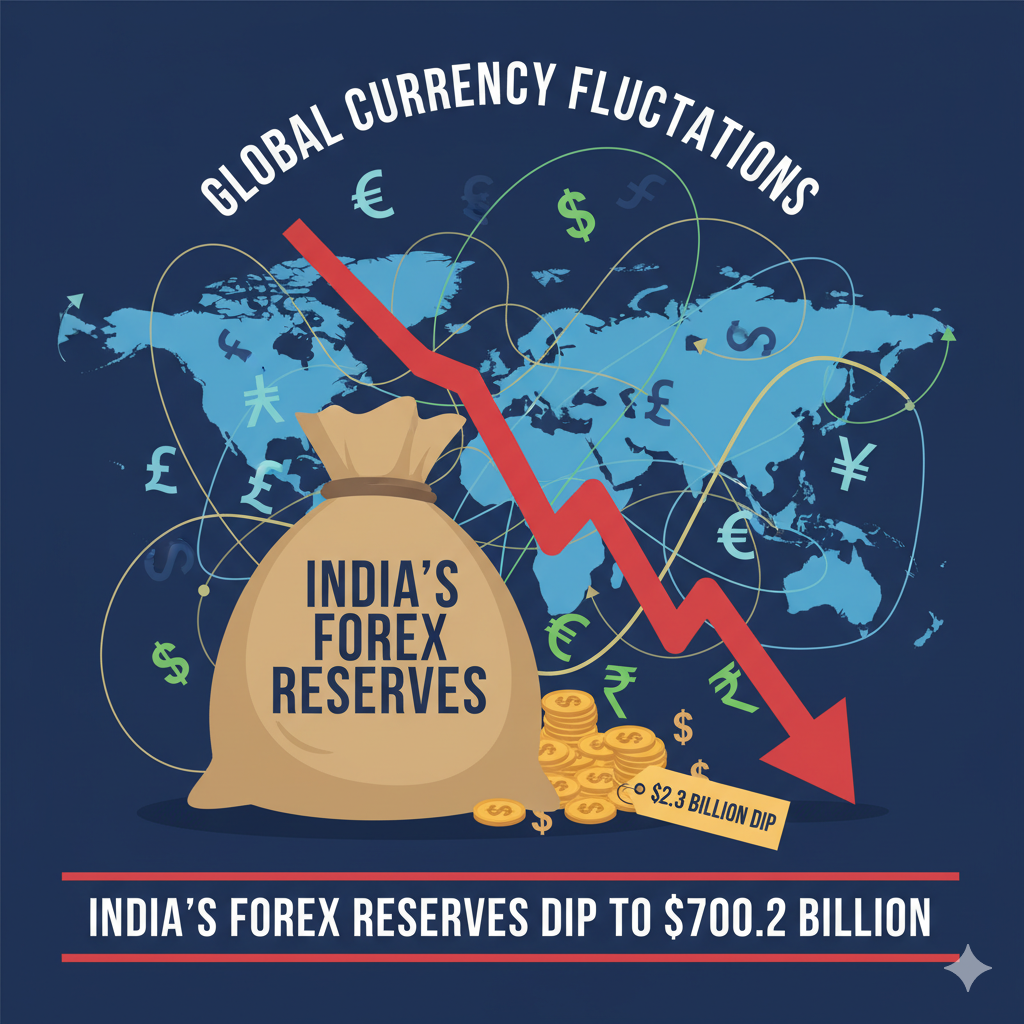
India’s Forex Reserves Dip by $2.3 Billion to $700.2 Billion Amid Global Currency Fluctuations

India’s foreign exchange reserves, often seen as the financial backbone of the country’s economic stability, witnessed a moderate decline for the week ending September 26, 2025. According to the Reserve Bank of India (RBI), the reserves dropped by $2.334 billion, bringing the total down to $700.236 billion. This fall comes after a smaller dip of about $396 million recorded in the previous week.

Despite the decline, experts note that India’s reserves remain robust and resilient, capable of covering more than 11 months of imports, offering a strong cushion against external shocks such as oil price volatility, global interest rate changes, and currency market turbulence.


A Closer Look at the Decline

The decline in India’s forex reserves is primarily driven by a sharp fall in foreign currency assets (FCA), which form the largest component of the total reserves. The FCA decreased by $4.393 billion, taking the total to $581.757 billion.

Foreign currency assets reflect the country’s holdings in major global currencies such as the US dollar, euro, pound sterling, and yen. When these currencies fluctuate against the US dollar—the benchmark in which India’s reserves are measured—it often results in changes in the valuation of the reserves.

Analysts suggest that the latest dip could be linked to foreign portfolio outflows and dollar appreciation in global markets, leading to a decline in the value of non-dollar holdings. Additionally, periodic interventions by the RBI to stabilize the rupee against volatility may also have contributed to the drawdown.


Gold Shines Bright Amid Currency Pressure

While the foreign currency component saw a notable fall, India’s gold reserves recorded a strong rise of $2.238 billion, taking their total value to $95.017 billion.

The increase in gold reserves can be attributed to the rising global gold prices driven by growing geopolitical uncertainties and sustained central bank demand for the precious metal. As investors sought safety in gold amid concerns over slowing global growth and inflationary pressures in advanced economies, the metal’s price rallied.

For India, this surge provided a partial offset to the overall decline in total forex reserves. Gold continues to play a vital role in India’s reserve composition as a hedge against currency risk and a long-term store of value.


IMF Reserve Position Also Slips Slightly

Another component of India’s reserves, the reserve position with the International Monetary Fund (IMF), saw a marginal decline of $89 million, bringing it down to $4.673 billion.

This position represents the amount India can draw from the IMF’s resources in case of balance-of-payments needs. Although the change is minor, it reflects the ongoing adjustments in India’s international financial commitments and allocations within the IMF framework.


India’s Forex Reserves Still Among the World’s Largest

Despite the recent dip, India continues to maintain one of the largest foreign exchange reserve pools in the world—standing close to $700 billion. These reserves serve multiple critical purposes, including:

  • Maintaining currency stability: The RBI uses reserves to manage volatility in the rupee by buying or selling foreign currencies as needed.
  • Supporting external trade: Reserves act as a financial buffer to pay for imports, particularly essential goods like oil, electronics, and defense equipment.
  • Enhancing investor confidence: A healthy level of reserves reassures foreign investors about India’s ability to withstand external shocks and maintain economic stability.
  • Reducing sovereign risk: Ample reserves lower the likelihood of a balance-of-payments crisis, helping India retain favorable credit ratings.

Currently, India’s reserves are enough to cover over 11 months of imports, well above the comfort level typically recommended by economists. This strong position underscores the RBI’s prudent management of foreign assets and its ability to safeguard against potential global uncertainties.


Rupee Performance and RBI’s Role

In recent months, the Indian rupee has faced moderate pressure due to a combination of global and domestic factors. The strengthening of the US dollar index, rising US Treasury yields, and persistent concerns about energy prices have weighed on emerging market currencies, including the rupee.

To prevent excessive depreciation and maintain orderly movement in the currency market, the RBI actively intervenes by selling dollars from its reserves. While this helps stabilize the rupee in the short term, it also leads to a temporary reduction in overall forex reserves.

According to market experts, such interventions are a necessary trade-off:

“A slightly lower reserve level is a small price to pay for maintaining currency stability in volatile global conditions,” noted an analyst from a leading brokerage firm.


Global Context: Other Economies Also Seeing Reserve Movements

India’s recent decline in forex reserves mirrors trends seen in several other major economies. Many central banks across Asia, including China, South Korea, and Japan, have reported fluctuations in their reserve holdings due to shifting currency valuations and policy interventions.

The strength of the US dollar and uncertain interest rate outlook in the United States have made dollar-denominated assets more attractive, prompting many emerging market central banks to rebalance their portfolios.

In this environment, India’s ability to maintain reserves above the $700 billion mark is a sign of resilience. The RBI’s careful management, supported by steady capital inflows and remittances, continues to ensure external stability.


Outlook: Stable but Cautious

Looking ahead, analysts expect India’s forex reserves to remain stable in the near term, though periodic fluctuations are likely. The direction of global commodity prices, US interest rates, and foreign investor sentiment will play a major role in shaping future reserve trends.

As India continues to attract foreign direct investment (FDI) and portfolio flows, the overall external position remains strong. Additionally, rising service exports—especially from the IT sector—are expected to keep dollar inflows steady.

Economists emphasize that as long as India maintains reserves above the $650 billion threshold, the country will remain well-shielded from external shocks, even in a volatile global environment.


Conclusion

The recent $2.3 billion dip in India’s forex reserves reflects natural adjustments amid global currency market movements rather than any underlying weakness in the economy. With total reserves still comfortably above $700 billion, India’s external position remains solid, allowing the RBI to manage currency stability effectively.

As global markets continue to evolve, India’s focus on balanced growth, disciplined fiscal management, and prudent reserve handling ensures that it stays resilient against external headwinds.

In essence, while the decline may appear significant on paper, the broader picture paints a story of strength, stability, and careful economic stewardship—hallmarks of India’s growing confidence on the global financial stage.

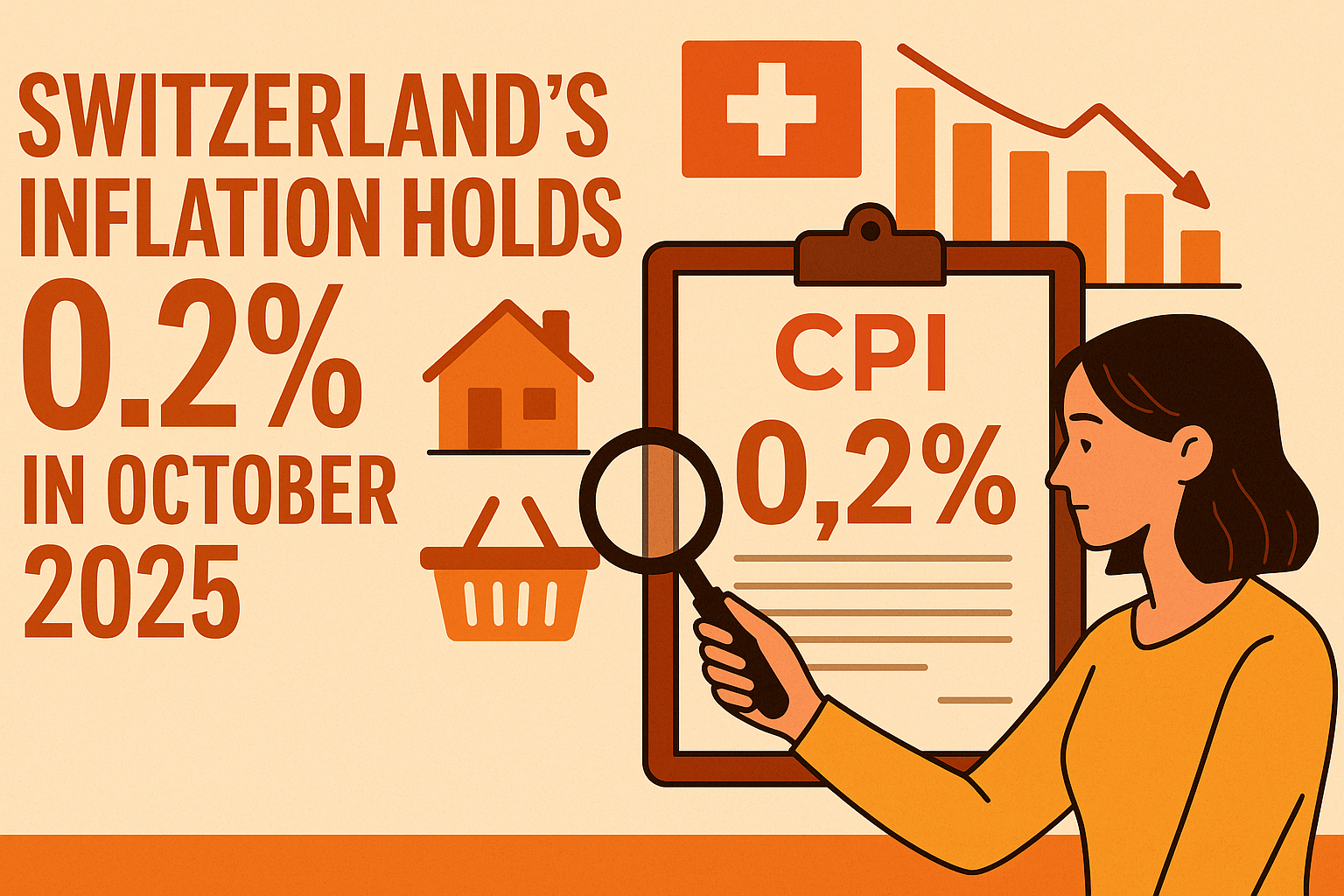
Switzerland’s Inflation Holds at 0.2% in October 2025, Highlighting Stable but Subdued Price Growth

Switzerland’s Inflation Holds

Switzerland’s inflation data for October 2025 paints a clear picture of a nation continuing to grapple with exceptionally low price growth, even as many other advanced economies battle elevated inflation pressures. According to the latest data released by the Swiss Federal Statistical Office (FSO), the country’s Consumer Price Index (CPI) rose just 0.2% year-on-year, underscoring a stable yet subdued inflation environment that has persisted for most of the year.

While this modest increase keeps Switzerland among the countries with the lowest inflation rates globally, it also highlights the challenge the Swiss National Bank (SNB) faces in balancing price stability with growth. The monthly data showed that the CPI actually declined by 0.2% in October, a sharper fall compared to the 0.1% drop in August, suggesting that short-term price pressures remain weak.


Inflation Trends Stay Subdued

For months, Switzerland has stood apart from most Western economies due to its remarkably low inflation. While countries like the U.S. and the Eurozone have seen consumer prices rise at rates between 2% and 3%, Switzerland’s inflation has remained comfortably below 1%. The October figure of 0.2% marks one of the lowest inflation readings among major developed economies.

Several factors explain this stability. The Swiss franc, known as one of the world’s strongest and most stable currencies, has played a major role in keeping import prices low. Because the franc tends to appreciate during times of global uncertainty, imported goods—from energy to consumer electronics—become cheaper in local currency terms. This currency strength acts as a natural shield against inflation.

Additionally, Switzerland’s highly competitive retail environment and efficient supply chains limit price markups. Domestic producers and sellers often absorb minor cost increases instead of passing them on to consumers, helping keep inflation contained.


Breakdown of Price Movements by Sector

The latest data reveals that not all categories behaved uniformly. Some sectors saw small price gains, while others experienced outright declines.

Housing and utilities recorded a modest increase of around 0.7% in October, reflecting higher rental costs and maintenance fees. Real estate remains one of the few areas where inflation is noticeable, driven largely by limited housing supply and ongoing demand in major cities such as Zurich and Geneva. However, even here, price increases remain far less aggressive compared to other European markets.

On the other hand, food and non-alcoholic beverages saw a price decline of roughly 0.8%. Global food prices have moderated over the past few months due to better harvests and improved logistics, and Switzerland’s strong currency has further reduced import costs for food and beverages.

Transportation costs also fell slightly, largely due to lower global fuel prices and reduced vehicle demand. The easing of crude oil prices, combined with energy efficiency trends and the gradual shift toward electric vehicles, has contributed to cheaper transportation-related expenses.

In contrast, healthcare, communication, and recreation sectors saw little to no price movement. The stability across these segments demonstrates Switzerland’s continued economic resilience, with consumer demand remaining steady despite low inflation.


Why Inflation Remains Low in Switzerland

Switzerland’s persistent low inflation is the result of structural and policy-driven factors rather than temporary market trends. Firstly, the country’s strong monetary credibility plays a major role. The Swiss National Bank (SNB) has built a reputation for maintaining tight control over inflation expectations, ensuring that prices rarely surge out of control.

Moreover, the Swiss economy is characterized by high productivity and innovation, especially in sectors like pharmaceuticals, banking, and precision engineering. This allows companies to maintain profit margins without frequent price hikes. The combination of innovation and efficiency helps mitigate inflationary pressures even when global commodity costs rise.

Another important factor is the import-heavy nature of the Swiss economy. Because Switzerland relies heavily on imports for many consumer goods, its inflation rate is directly influenced by exchange rates. The strong franc makes imports cheaper, offsetting potential increases in global raw material or shipping costs.

Lastly, the government’s fiscal discipline and prudent spending policies have kept public debt and inflation expectations in check. Switzerland’s fiscal approach, combined with a conservative central bank stance, has been instrumental in maintaining price stability over time.


Implications for the Swiss National Bank

The SNB has maintained one of the most cautious monetary policies among developed nations. With inflation hovering near zero, the central bank faces little incentive to raise interest rates aggressively. Instead, it continues to focus on currency stability and avoiding excessive franc appreciation, which could hurt exporters.

However, the October inflation data reinforces the delicate balance the SNB must strike. On one hand, low inflation supports consumer purchasing power and keeps borrowing costs low. On the other, it raises concerns about sluggish price dynamics and the risk of deflation—a sustained fall in prices that can harm business confidence and investment.

The SNB may also be watching external factors closely. Global interest rates are beginning to stabilize after several years of hikes, and major central banks such as the U.S. Federal Reserve and the European Central Bank are signaling more neutral stances. This could give the SNB room to maintain or slightly ease its current policy if necessary.


Impact on the Swiss Economy and Consumers

For everyday Swiss consumers, the current inflation rate means that purchasing power remains strong. Prices for essential goods like food, fuel, and healthcare have been stable or even falling slightly, which benefits households. However, businesses, particularly exporters, face challenges as the strong franc continues to make Swiss products more expensive abroad.

This environment also affects wage dynamics. Since inflation is minimal, workers see less upward pressure on wages, leading to slower income growth. While this keeps production costs manageable for employers, it also means domestic demand could remain muted if wages fail to grow meaningfully.


Looking Ahead: A Stable But Cautious Outlook

Looking toward the end of 2025 and into early 2026, most analysts expect Switzerland’s inflation to remain below 1%. The combination of a strong currency, efficient markets, and stable fiscal policy will likely continue to suppress price growth.

However, some moderate price increases could appear in housing, utilities, and services as global economic conditions stabilize. If energy prices rebound or global supply chains tighten again, Switzerland could experience mild inflationary pressure, though still far below international levels.

In conclusion, the October 2025 Swiss CPI report reinforces Switzerland’s status as one of the most stable economies in the world. With inflation at just 0.2% year-on-year and monthly prices dipping slightly, the country’s economic fundamentals remain strong and predictable. While this low-inflation environment poses some challenges for policymakers and exporters, it continues to offer consumers and investors the security of a steady, well-managed economy—an enduring hallmark of the Swiss financial model.

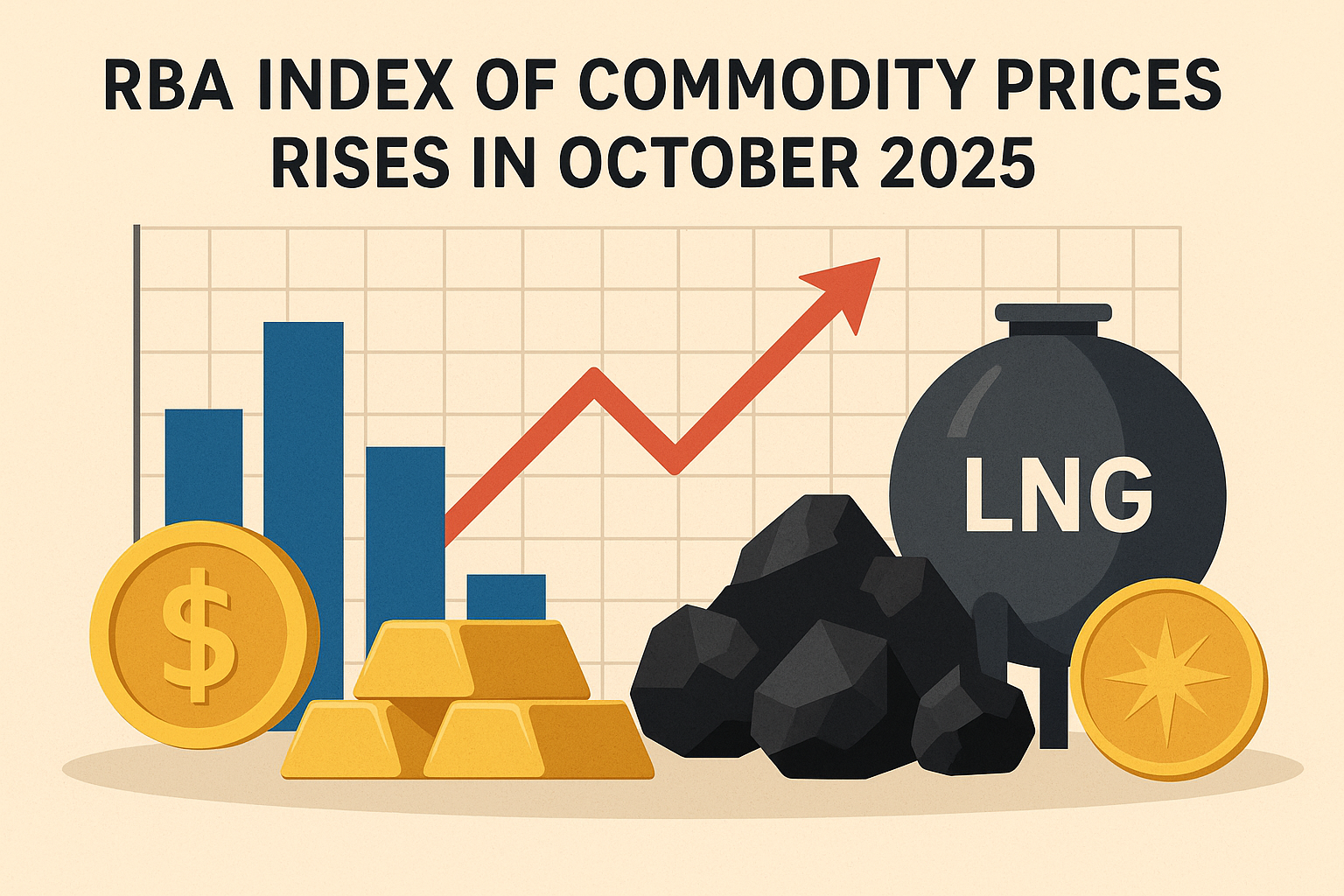
RBA Index of Commodity Prices Rises in October 2025 as Metals Lead Recovery, Energy Slumps

Australia’s economy has long been intertwined with the global commodity market, and the latest update from the Reserve Bank of Australia (RBA) provides a clear snapshot of how the country’s export-driven sectors are performing. The RBA Index of Commodity Prices for October 2025 revealed a modest yet positive trend, showing resilience in certain industries while others continue to face pressure from falling global demand and price corrections.

According to the report, the index rose by 2.3% in October 2025 when measured in Special Drawing Rights (SDR) terms, a global unit used to compare international prices on a common scale. This improvement builds on the 1.9% increase recorded in September, signaling gradual momentum in commodity markets. In Australian dollar terms, the index rose slightly higher, at 2.5%, reflecting both improved commodity valuations and currency movements that favored Australian exporters.

However, when viewed on a year-over-year basis, the index still shows a decline of 1.3% in SDR terms, underlining that overall prices remain weaker than they were in late 2024. This decline is significant because it shows that, while short-term fluctuations are positive, the broader trend still reflects the challenges faced by global producers amid shifting demand patterns, geopolitical uncertainty, and the ongoing energy transition.

Non-Rural and Base Metals Drive the Gains

One of the bright spots in October’s data came from the non-rural and base metals sub-indices, which registered healthy growth. These categories benefited from renewed demand for industrial metals, including iron ore, aluminum, and copper. The pickup in prices indicates a rebound in construction and manufacturing activity, particularly in China and Southeast Asia—regions that remain Australia’s key export destinations.

Iron ore continued to play a leading role in supporting Australia’s export revenue. Prices for the steelmaking material remained firm as steel production in China stayed relatively stable. Global inventories are also lower than in previous years, which has helped keep iron ore prices supported despite a weaker global economic outlook.

Gold also contributed to the overall increase in the index. In October, gold prices were buoyed by a rise in investor demand for safe-haven assets amid volatile global markets and uncertainty surrounding central bank policies. With inflation concerns still lingering and bond yields fluctuating, gold maintained its appeal, offering support to Australia’s mining sector.

Rural Commodities Face Headwinds

While non-rural commodities showed signs of strength, the rural commodities sub-index declined, reflecting ongoing difficulties in agricultural exports. Weather disruptions, particularly in eastern Australia, have impacted crop yields, while global competition and changing trade dynamics have limited price gains for key rural products.

Commodities such as wheat, wool, and sugar have seen mixed performances, with some prices softening due to abundant global supply. Dairy and meat exports have remained relatively steady, but not enough to lift the overall rural index. This contrast highlights the growing divergence within Australia’s commodity landscape—where minerals and metals thrive, but agriculture remains under pressure.

Energy Prices Weigh on the Annual Trend

Despite monthly improvements, the energy segment continues to drag down the broader index. The RBA report noted that prices for thermal coal, coking coal, and liquefied natural gas (LNG) declined, offsetting gains elsewhere.

Thermal coal prices, which surged in the post-pandemic years due to energy shortages, have since normalized as supply chains stabilized and renewable energy adoption accelerated. Similarly, coking coal, used in steelmaking, has seen price corrections amid fluctuating global demand.

LNG prices have also eased, mainly due to weaker consumption in Europe and Asia as countries diversify their energy mix. With renewable energy projects expanding and winter demand projections lower than expected, LNG exports have become less profitable compared to previous years.

This sustained weakness in the energy category has been one of the main reasons why Australia’s commodity index remains below its 2024 levels. The decline not only impacts overall export earnings but also influences government revenues and corporate investment within the resource sector.

Implications for the Australian Economy

The October 2025 report carries important implications for Australia’s broader economy. Commodities make up more than 70% of Australia’s total exports, meaning fluctuations in prices directly affect trade balances, fiscal revenues, and even the strength of the Australian dollar (AUD).

The modest recovery seen in October suggests that global demand for Australian goods remains resilient, particularly in the metals segment. However, the yearly contraction of 1.3% serves as a reminder that the economy remains vulnerable to global slowdowns, policy changes in major trading partners, and the broader push toward decarbonization.

The RBA will likely view these numbers cautiously. While improving commodity prices can help strengthen export earnings and support GDP growth, the central bank must also monitor inflationary pressures that can arise from rising input costs. A balanced approach will be crucial as Australia continues to navigate a complex mix of domestic and global economic forces.

Outlook for Coming Months

Looking ahead, analysts expect commodity prices to remain volatile but relatively stable, depending on geopolitical events and global manufacturing trends. The base metals sector is expected to hold steady, supported by ongoing demand for materials used in clean energy technologies, electric vehicles, and infrastructure projects.

However, energy markets may continue to face downward pressure, especially if global oil and gas demand weakens further. The rural sector, meanwhile, could recover gradually if weather conditions improve and global food demand strengthens.

For policymakers and investors alike, the key takeaway from the RBA’s October update is that Australia’s commodity landscape remains divided but adaptable. The nation’s long-term strength in mining and resources continues to serve as a buffer against global headwinds, but diversification and innovation across sectors will be essential to maintain growth in an era of changing global trade dynamics.

In summary, the RBA Index of Commodity Prices for October 2025 paints a picture of cautious optimism. Monthly gains led by metals and minerals show that Australia’s export engine is still strong, yet persistent weakness in energy and rural commodities highlights the challenges ahead. The coming months will test how well Australia can balance its traditional resource strengths with the emerging realities of a rapidly evolving global economy.

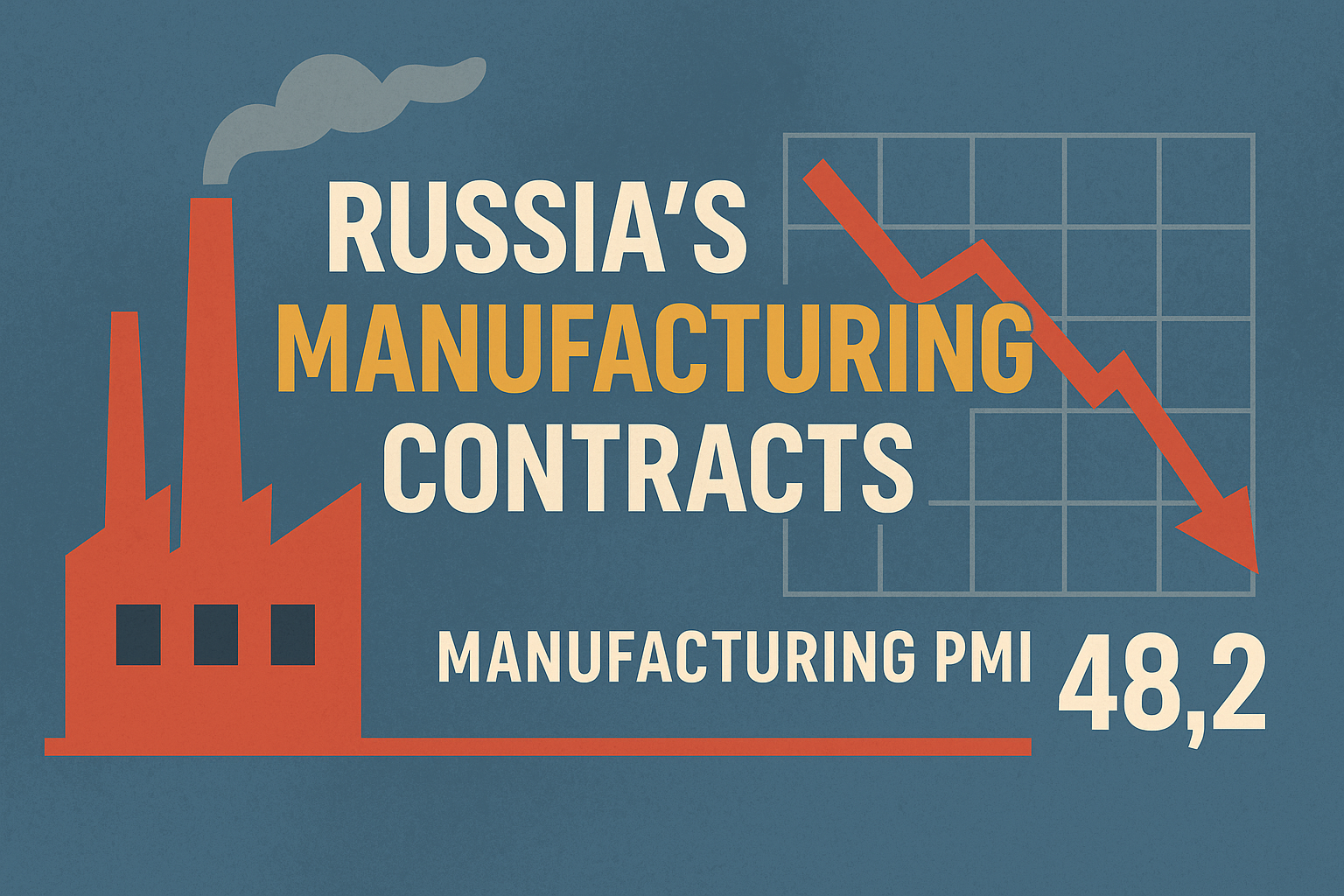
Russia’s Manufacturing Sector Contracts Again as PMI Slips Below 50

Russia’s manufacturing sector showed further signs of weakness in September 2025, as business activity continued to decline for the second consecutive month. The latest data revealed that the Manufacturing Purchasing Managers’ Index (PMI) dropped to 48.2, down from 48.7 in August, signaling another month of contraction.

A PMI reading below 50 indicates that the sector is shrinking, suggesting that factories are experiencing lower output, weaker demand, and fewer new orders. This decline highlights growing challenges for manufacturers amid ongoing economic uncertainty and shifting global trade conditions.


Factories Face Reduced Orders and Slower Output

The fall in the PMI reflects a slowdown in new business, both from domestic customers and international markets. Companies are reporting weaker demand, particularly for export-oriented goods, as global economic activity remains sluggish.

Many manufacturers have also noted a drop in new orders, forcing some to scale back production and reduce workforce numbers. While input costs have eased slightly, profit margins remain tight due to subdued sales and rising logistics expenses.

This contraction comes after a brief period of stabilization earlier in the year, but the recent dip suggests that the manufacturing recovery has lost steam.


Long-Term Trends Offer Historical Context

Since 2011, Russia’s Manufacturing PMI has averaged around 50.37 points, representing a generally flat trend between growth and contraction. However, the current reading is below that long-term average, highlighting weaker industrial conditions compared to previous years.

The highest level recorded was 55.7 in March 2024, when manufacturers benefited from stronger domestic investment and improved export flows. By contrast, the lowest reading came during the global pandemic in April 2020, when the PMI collapsed to 31.3, reflecting severe disruptions in supply chains and demand.

The present downturn is far milder than that crisis period but still reflects a loss of momentum in factory activity.


Analysts Expect Modest Recovery Ahead

Despite the current weakness, analysts remain cautiously optimistic about the medium-term outlook. Forecasts suggest that the PMI could edge back up to around 49.0 points by the end of this quarter, signaling a slower pace of contraction.

Further ahead, projections indicate a gradual improvement, with the index expected to climb toward 51.3 in 2026 and 50.7 in 2027. These forecasts reflect expectations that domestic demand will recover modestly and that supply chains will stabilize further as global trade patterns adjust.

However, economists warn that any recovery will likely be fragile and highly dependent on external demand and internal economic stability.


Weak Demand and Business Confidence Still a Concern

The key challenge facing Russian manufacturers is weak demand — both at home and abroad. Consumer spending remains subdued as inflation pressures persist, and businesses are hesitant to make new investments amid uncertain conditions.

Meanwhile, business confidence across the manufacturing sector remains low. Companies are cautious about expansion plans and continue to manage inventories tightly to avoid overproduction. Reports also indicate that capacity utilisation — the degree to which factories are operating near their full potential — remains below optimal levels.

These factors combined suggest that manufacturers are likely to proceed conservatively through the coming months, focusing on cost control and efficiency rather than aggressive growth.


Broader Economic Implications

The continued contraction in manufacturing could have wider implications for Russia’s overall economy. Manufacturing plays a key role in employment and exports, so prolonged weakness in the sector could weigh on GDP growth in the coming quarters.

While other areas such as mining and energy exports remain more resilient, a sluggish industrial base limits diversification and economic stability. The government may need to consider targeted support measures, such as tax incentives or infrastructure spending, to stimulate industrial activity and boost investor confidence.


Conclusion: A Challenging Period, But Not Without Hope

In summary, Russia’s manufacturing industry is under pressure, with September’s PMI falling to 48.2 signaling ongoing contraction. The data shows reduced orders, slower output, and cautious business sentiment. However, analysts believe that conditions may improve slightly in the months ahead as inflation stabilizes and demand gradually recovers.

While the road to a full recovery remains uncertain, the long-term forecasts suggest that the sector could return to mild growth by 2026. For now, manufacturers are focusing on resilience — managing costs, protecting margins, and waiting for clearer signs of economic stability.

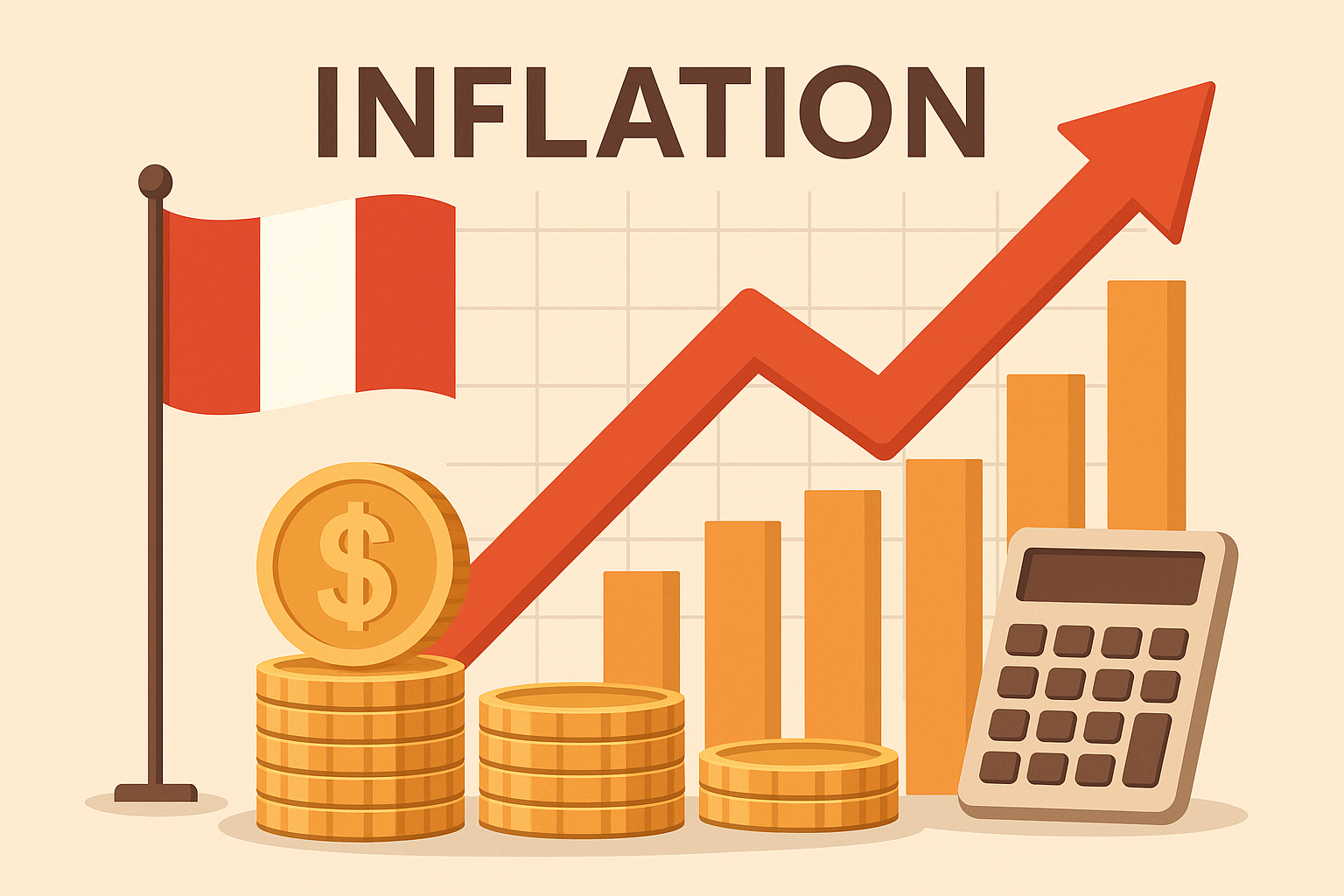
Peru’s Inflation Edges Up Slightly but Remains Under Control

Peru’s inflation rate ticked up modestly in September 2025, signaling mild upward pressure on consumer prices while remaining well within the central bank’s comfort zone. According to the latest data, annual inflation reached 1.36%, up from 1.11% in August. Economists say the increase reflects a slight rebound in consumer demand and a few price adjustments in key sectors, but overall inflation continues to be stable.

Monthly Prices Barely Move

On a month-to-month basis, prices in Peru rose by just 0.01% in September, showing that the broader economy remains largely balanced. The small increase follows a 0.29% decline in August, when falling food and fuel prices helped ease inflationary pressures.

This near-flat reading suggests that consumer prices have stabilized after several months of volatility earlier in the year. For everyday Peruvians, this means household expenses haven’t shifted dramatically, allowing for a relatively steady cost of living.

CPI Records Marginal Increase

The Consumer Price Index (CPI) — a key measure that tracks changes in the prices of goods and services — rose slightly to 115.60 points in September from 115.59 in August. This marginal change underscores the limited price fluctuations across most consumer categories.

Analysts note that such stability in the CPI is a positive sign, particularly in a global environment where many countries are grappling with higher inflation. Peru’s inflation control demonstrates effective monetary management and strong supply-chain adjustments following past global disruptions.

Core Inflation Shows Stability

Core inflation, which excludes the most volatile components like food and energy, stood at 2.09% in September, just a fraction lower than the 2.10% recorded previously.

This measure is closely watched by the Central Reserve Bank of Peru (BCRP) because it gives a clearer picture of long-term price trends. The slight dip in core inflation suggests that underlying price pressures remain subdued, giving policymakers confidence that inflation expectations are well-anchored.

Central Bank Keeps Inflation Within Target Range

The BCRP has long aimed to maintain inflation within a target range of 1% to 3%, and the current figures place Peru comfortably within that goal. Economists expect inflation to hover between 2.0% and 2.8% in the coming months, barring major external shocks such as commodity price spikes or severe weather events.

This controlled inflation environment gives the central bank flexibility. It can continue supporting economic recovery while avoiding the risks of overheating or sharp currency fluctuations. For investors and consumers alike, this balance promotes confidence in Peru’s economic management.

Key Drivers of Price Changes

The main components influencing Peru’s CPI remain consistent. Food and non-alcoholic beverages hold the largest weight in the index — nearly a quarter of total household spending. This category often has the biggest influence on inflation movements, especially when agricultural or transportation costs change.

Restaurants and hotels, which represent around 16% of the index, have also seen steady pricing as tourism and domestic dining activity continue to recover. Meanwhile, transportation costs, roughly 12% of the CPI, have fluctuated with global fuel prices but remain relatively contained compared to previous years.

Housing and utilities, accounting for about 10% of the CPI, showed mild price adjustments linked to electricity and rent costs, but not enough to cause significant inflationary pressure.

Taken together, these categories highlight a balanced pricing environment, where moderate increases in some sectors are offset by stability in others.

Economic Stability in Focus

Peru’s recent inflation performance stands out in the broader Latin American context. Many neighboring economies have struggled with persistently high inflation, but Peru’s disciplined monetary policy and careful fiscal management have kept consumer prices under control.

This is especially notable given that Peru faced a turbulent global environment in recent years, with supply-chain issues, commodity price swings, and political uncertainty. Despite these challenges, the country’s inflation numbers have remained among the most stable in the region.

The data also reflects improving domestic supply conditions. Local production of food and manufactured goods has recovered steadily, helping contain import costs. In addition, stable energy prices and currency resilience have shielded Peru from external price shocks.

Outlook: Stable but Cautious

Looking ahead, economists expect Peru’s inflation rate to stay within the 2% range through the end of the year, though some warn of potential risks. Unpredictable weather patterns linked to El Niño, rising oil prices, or a sudden depreciation of the sol could nudge prices higher.

However, the overall tone remains optimistic. As long as the BCRP maintains its prudent stance and global commodity prices stay manageable, Peru is likely to preserve its reputation for inflation stability.

Conclusion

Peru’s modest inflation rise in September 2025 underscores an economy that’s finding equilibrium after years of global turbulence. The 1.36% annual inflation rate shows prices are rising gently — not too fast to harm purchasing power, yet not too low to threaten growth.

With core inflation steady, monetary policy consistent, and key sectors stable, Peru continues to demonstrate sound economic fundamentals. For businesses, investors, and households alike, this environment of controlled inflation offers a rare sense of predictability in uncertain global times.

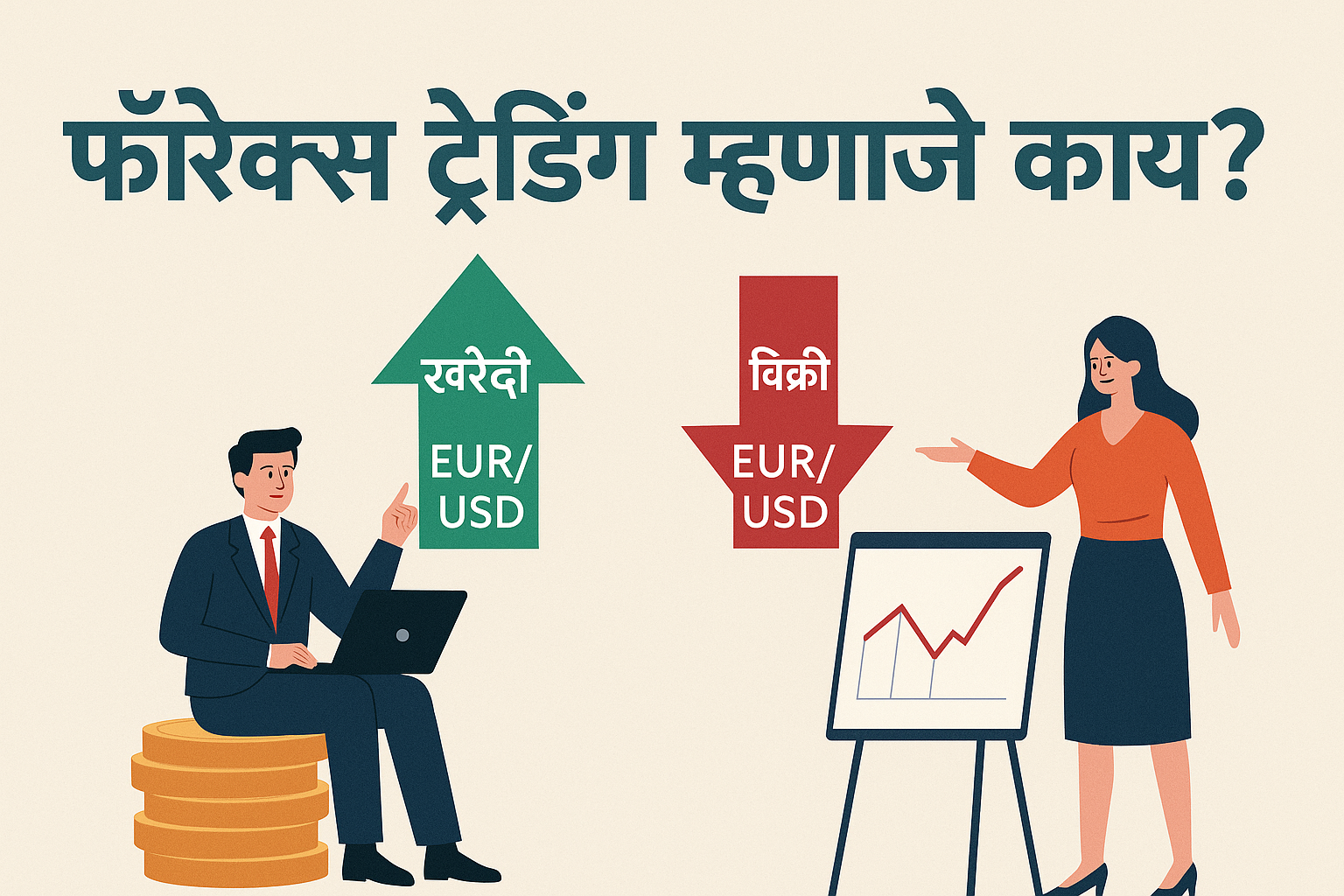
🌍 फॉरेक्स ट्रेडिंग म्हणजे काय? संपूर्ण मार्गदर्शन

जर तुम्ही कधी परदेश प्रवास केला असेल, तर तुम्ही आधीच फॉरेक्स ट्रेडिंग केलं आहे — कदाचित तुम्हाला त्याची जाणीवही नसावी.
जेव्हा तुम्ही भारतीय रुपये (INR) देऊन अमेरिकन डॉलर (USD) किंवा युरो (EUR) घेतले, तेव्हा तुम्ही फॉरेन एक्स्चेंज मार्केटमध्ये (Foreign Exchange Market) सहभागी झाला होता.

परंतु प्रवासी फक्त पैसे बदलतात, तर फॉरेक्स ट्रेडर्स हेच चलन ऑनलाइन खरेदी-विक्री करून नफा मिळवण्याचा प्रयत्न करतात. चला हे टप्प्याटप्प्याने समजून घेऊया.


💱 फॉरेक्स ट्रेडिंग म्हणजे नेमकं काय?

फॉरेक्स ट्रेडिंग म्हणजे परकीय चलनांची देवाणघेवाण (Foreign Exchange) करणे. हे जगातील सर्वात मोठं आर्थिक बाजारपेठेचं केंद्र आहे, जिथे दररोज $7 ट्रिलियनपेक्षा जास्त व्यवहार होतात.

थोडक्यात सांगायचं तर, फॉरेक्स ट्रेडिंग म्हणजे एक चलन खरेदी करताना दुसरं विकणे.
ट्रेडर्स वेगवेगळ्या चलनांच्या दरांमध्ये होणाऱ्या बदलांवर नफा मिळवतात.

उदा. जर तुम्हाला वाटत असेल की युरो (EUR) हा अमेरिकन डॉलर (USD) पेक्षा मजबूत होईल, तर तुम्ही EUR/USD खरेदी करता.
जर युरो कमकुवत होईल असं वाटत असेल, तर तुम्ही ते विकता.


🕓 ही बाजारपेठ कधीही बंद होत नाही

फॉरेक्स मार्केटचं एक आकर्षक वैशिष्ट्य म्हणजे ते आठवड्यातून पाच दिवस, २४ तास खुले असते.
हे जागतिक बाजारपेठ असल्यामुळे वेगवेगळ्या टाइम झोनमध्ये सतत चालू असते — सिडनी, टोकियो, लंडन आणि न्यूयॉर्क या सत्रांमुळे व्यवहार सुरूच राहतात.

यामुळे जगातील कोणत्याही आर्थिक किंवा राजकीय बातमीवर ट्रेडर्स तत्काळ प्रतिक्रिया देऊ शकतात.


⚙️ फॉरेक्स ट्रेडिंग कसं चालतं?

चलनं नेहमी जोड्यांमध्ये (currency pairs) ट्रेड केली जातात. काही उदाहरणं:

  • EUR/USD (युरो विरुद्ध अमेरिकन डॉलर)
  • GBP/INR (ब्रिटिश पौंड विरुद्ध भारतीय रुपया)
  • USD/JPY (अमेरिकन डॉलर विरुद्ध जपानी येन)

इथे पहिलं चलन म्हणजे बेस करन्सी, आणि दुसरं चलन म्हणजे कोट करन्सी.

उदा. जर EUR/USD = 1.1000, म्हणजे 1 युरो = 1.10 अमेरिकन डॉलर.
जर तुम्हाला वाटतं की युरो मजबूत होईल, तर तुम्ही खरेदी करता.
जर दर 1.1050 झाला, तर तुम्हाला नफा मिळतो.

अशा छोट्या दरबदलाला पिप (pip) म्हणतात. हे छोटे बदलसुद्धा मोठा नफा किंवा तोटा देऊ शकतात, विशेषतः लेव्हरेज (leverage) वापरल्यास.


💼 फॉरेक्स मार्केटमध्ये कोण व्यवहार करतात?

फॉरेक्स मार्केट फक्त बँकांसाठी नाही, तर सर्वांसाठी खुलं आहे.
मुख्य सहभागी खालीलप्रमाणे आहेत:

  1. केंद्रीय बँका – चलनाचे दर नियंत्रित करतात.
  2. व्यावसायिक बँका आणि कंपन्या – आंतरराष्ट्रीय व्यवहारांसाठी वापरतात.
  3. हेज फंड्स आणि मोठे गुंतवणूकदार – नफा मिळवण्यासाठी मोठ्या प्रमाणात ट्रेड करतात.
  4. रिटेल ट्रेडर्स (साधे गुंतवणूकदार) – ऑनलाइन ब्रोकर्स आणि प्लॅटफॉर्म्सद्वारे ट्रेड करतात जसे MetaTrader 4 (MT4) किंवा MetaTrader 5 (MT5).

⚖️ लेव्हरेज म्हणजे काय?

लेव्हरेज म्हणजे कमी भांडवलात मोठ्या प्रमाणात ट्रेड करण्याची क्षमता.

उदा. जर 1:100 लेव्हरेज असेल, तर तुम्ही फक्त $100 वापरून $10,000 चे व्यवहार करू शकता.
हे आकर्षक वाटतं, पण धोकादायक आहे — कारण लेव्हरेज नफा वाढवतो, पण तोटाही मोठा करू शकतो.

म्हणूनच जोखीम नियंत्रण (Risk Management) अत्यावश्यक आहे.


📊 लोक फॉरेक्स ट्रेडिंग का करतात?

  1. उच्च तरलता (Liquidity): सहज खरेदी-विक्री करता येते.
  2. कमी खर्च (Low Cost): स्प्रेड्स खूप कमी असतात.
  3. २४ तास बाजार खुला: वेळेचं बंधन नाही.
  4. लहान गुंतवणुकीत सुरुवात: कमी भांडवलात ट्रेड करता येतो.
  5. जागतिक संधी: वेगवेगळ्या देशांच्या चलनांवर व्यापार करता येतो.

⚠️ फॉरेक्स ट्रेडिंगचे धोके

फॉरेक्स ट्रेडिंग झटपट श्रीमंत होण्यासाठीचा मार्ग नाही. अनेक नवशिके नुकसान करतात कारण ते जोखीम समजून घेत नाहीत.

  1. उच्च अस्थिरता (Volatility): दर अचानक बदलतात.
  2. लेव्हरेजचा धोका: तोटा भांडवलापेक्षा जास्त होऊ शकतो.
  3. राजकीय आणि आर्थिक अनिश्चितता: कोणतीही बातमी दरांवर परिणाम करू शकते.
  4. फसवे ब्रोकर्स: नेहमी नियामक संस्थांकडून मान्यताप्राप्त ब्रोकर्स (जसे SEBI, FCA, ASIC) निवडा.

सुरुवातीला डेमो अकाउंट वापरून सराव करणे उत्तम.


📘 उदाहरणाद्वारे समजून घ्या

समजा तुम्ही EUR/USD 1.1000 या दराने खरेदी करता कारण तुम्हाला वाटतं की युरो वाढेल.
नंतर दर 1.1050 झाला — म्हणजे 50 पिप्स वाढ.
जर तुम्ही एक स्टँडर्ड लॉट (100,000 युनिट्स) ट्रेड केला असेल, तर हा बदल सुमारे $500 नफा देईल.
पण जर दर खाली गेला, तर तितकाच तोटा होईल.

म्हणूनच ट्रेडर्स स्टॉप-लॉस ऑर्डर वापरतात, ज्यामुळे तोटा ठराविक मर्यादेपर्यंतच राहतो.


💡 नवशिक्यांसाठी काही टिप्स

  1. शिक्षण घ्या: सुरुवातीला मूलभूत गोष्टी समजून घ्या.
  2. डेमो अकाउंट वापरा: खऱ्या पैशाशिवाय सराव करा.
  3. योजना बनवा: प्रत्येक ट्रेडपूर्वी एंट्री, एग्झिट, आणि स्टॉप-लॉस ठरवा.
  4. भावनांवर नियंत्रण ठेवा: घाईगडबडीत किंवा भीतीने ट्रेड करू नका.
  5. बातम्या पाहत राहा: आर्थिक घडामोडी चलनावर थेट परिणाम करतात.

🌟 अंतिम विचार

फॉरेक्स ट्रेडिंग हे जगातील सर्वात रोमांचक आणि गतिमान गुंतवणूक क्षेत्र आहे.
यातून तुम्ही चलनांच्या दरातील बदलांवरून नफा मिळवू शकता, परंतु जोखीमही तितकीच मोठी असते.

योग्य ज्ञान, शिस्त आणि जोखीम नियंत्रण वापरल्यास, फॉरेक्स ट्रेडिंग एक दीर्घकालीन आर्थिक कौशल्य ठरू शकतं.

लक्षात ठेवा: सुरुवातीला शिका, नंतर कमवा.
प्रत्येक यशस्वी ट्रेडर एकदा नवशिकाच होता, ज्याने संयम आणि सरावाने यश मिळवलं.


Sensex Slips 300 Points, Nifty Below 25,800: FII Selling Among Key Factors Behind Market Decline

The Indian equity market witnessed a sharp downturn on Friday, with the Sensex slipping nearly 300 points and the Nifty falling below the crucial 25,800 mark. Persistent foreign institutional investor (FII) selling, cautious sentiment ahead of key global events, and profit-booking across major sectors contributed to the market weakness.


📉 Market Overview

At the close, the BSE Sensex ended down 298 points at 84,215, while the NSE Nifty 50 settled at 25,775, losing nearly 0.6%. The decline comes after a week of volatile sessions, as traders grapple with mixed global cues, rising US bond yields, and concerns over foreign fund outflows.

Broader markets also mirrored the trend — the BSE Midcap and Smallcap indices shed between 0.4% and 0.7%, indicating selling pressure beyond blue-chip stocks.


💸 FII Selling Remains a Key Drag

One of the central reasons behind the market’s decline is sustained FII selling. According to exchange data, foreign investors sold equities worth over ₹2,500 crore in the last two sessions alone. This marks the continuation of a trend observed over the past month, where global funds have been gradually trimming exposure to Indian equities.

Analysts attribute this to multiple factors — a strengthening US dollar, rising US Treasury yields, and geopolitical uncertainties pushing investors toward safer assets. Additionally, valuations in Indian equities remain elevated compared to other emerging markets, prompting foreign investors to book profits.

In contrast, domestic institutional investors (DIIs) have been net buyers, absorbing part of the FII outflow. However, their support was insufficient to offset the broad-based selling seen today.


🏦 Sectoral Pressure: Banks and IT Lead Decline

Selling was visible across sectors, with Banking, IT, and Metal stocks taking the biggest hit. The Nifty Bank index dropped nearly 0.8%, weighed down by private lenders such as HDFC Bank, ICICI Bank, and Axis Bank.

The IT index also fell sharply amid global risk-off sentiment, with Infosys, TCS, and Wipro witnessing moderate losses. Analysts noted that weak global demand, a firm rupee, and cautious outlooks from US clients could weigh on IT sector performance in the near term.

Meanwhile, metal stocks were impacted by China’s sluggish industrial data, dampening hopes of a quick recovery in global commodity demand.


💹 Defensive Plays Offer Some Cushion

Amid the decline, FMCG and Pharma stocks provided some support, as investors turned defensive. Shares of Hindustan Unilever, ITC, Sun Pharma, and Cipla saw marginal gains, reflecting a typical shift toward low-volatility counters during uncertain market phases.


🌍 Global Cues: US Fed Outlook and Oil Prices Weigh

Globally, markets were subdued as investors awaited fresh signals from the US Federal Reserve regarding interest rates. Hawkish comments from some Fed officials earlier this week have reignited fears that rates could stay higher for longer.

Adding to the pressure, crude oil prices have inched up again, with Brent crude hovering near $91 per barrel, raising concerns over inflation and current account deficits for energy-importing nations like India.

Asian peers also traded mixed, with Japan’s Nikkei slipping 0.7%, while China’s Shanghai Composite ended nearly flat.


🧾 Expert Views: “Healthy Correction, Not Panic”

Market experts believe that the current correction is a healthy pullback after recent record highs rather than a sign of deeper weakness.

“The Sensex and Nifty had rallied strongly in the past few weeks, touching fresh lifetime highs. Some profit-taking at these levels was expected. FIIs turning sellers adds to short-term pressure, but the long-term fundamentals of the Indian economy remain intact,” said Vinod Nair, Head of Research at Geojit Financial Services.

Similarly, Siddhartha Khemka, Head of Retail Research at Motilal Oswal Financial Services, noted that investors should not panic over this decline.

“We expect volatility to continue in the near term due to global macroeconomic factors, but dips like these offer buying opportunities in quality large-cap names,” he said.


📊 Technical View: Nifty Faces Resistance at 25,900

From a technical standpoint, analysts see immediate support for the Nifty around 25,700–25,650 levels, while resistance remains near 25,900–26,000. A breach below current support could trigger further downside toward 25,500.

The Sensex, meanwhile, has a key support zone around 84,000. A sustained break below this could open the door to 83,500 in the short term.


🏁 What Should Investors Do Now?

Experts suggest that traders should remain cautious in the short term but long-term investors can use dips to accumulate fundamentally strong stocks, especially in sectors like banking, capital goods, and consumption.

“Corrections like these are opportunities for disciplined investors. With India’s GDP growth remaining robust and earnings outlook positive, equities continue to be an attractive long-term asset,” said Ajit Mishra, SVP – Research, Religare Broking.

For risk-averse investors, a systematic investment plan (SIP) approach can help average out costs during volatile periods.


📅 The Road Ahead

Going forward, market direction will likely hinge on:

  • Global bond yield movement and Fed commentary
  • Crude oil price trend
  • FII flow momentum
  • Domestic Q2 earnings and macro data such as GDP growth and inflation

Traders will also keep an eye on upcoming US non-farm payroll data and India’s manufacturing PMI, which could provide cues about near-term market direction.


🧭 Conclusion

The Sensex slipping 300 points and Nifty falling below 25,800 highlights the sensitivity of Indian markets to global capital flows and macroeconomic cues. While FII selling has emerged as a key pressure point, domestic investors remain optimistic about India’s long-term story.

Volatility may persist, but the underlying fundamentals — steady GDP growth, corporate earnings momentum, and fiscal stability — continue to support India’s bullish narrative in the global equity landscape.

General Atlantic Backs PhonePe with $600 Million Ahead of Its Mega IPO

As part of its strategic pre-IPO positioning, General Atlantic (GA) has infused a substantial US$600 million into PhonePe, marking a significant milestone ahead of the fintech giant’s highly anticipated public listing in India.

With this transaction, GA’s ownership stake in PhonePe has nearly doubled, rising from around 4.4% to approximately 9%, according to Moneycontrol. This clearly signals the firm’s growing conviction in PhonePe’s long-term growth potential and leadership in India’s digital payments ecosystem.

It’s worth noting that the funding is primarily secondary in nature, meaning General Atlantic acquired shares from existing shareholders rather than injecting fresh capital into the company. This structure indicates strong investor appetite and confidence in PhonePe’s valuation ahead of its IPO.

PhonePe, one of India’s leading fintech innovators, is eyeing a US$1.35 billion (₹12,000 crore) IPO, primarily through an Offer for Sale (OFS) of existing shares. Such a move reflects maturity in the company’s financial structure and readiness for public markets, allowing early investors to partially exit while strengthening institutional participation.

For investors tracking the Indian fintech landscape, this transaction underscores robust foreign institutional interest in high-quality digital platforms. PhonePe’s upcoming IPO could be one of the most closely watched listings in India’s tech sector, signaling a pivotal moment for both the company and the broader digital payments industry.

🎯 Why this matters

A significant vote of confidence: GA increasing its stake shows it believes in PhonePe’s growth potential and the digital payments/fintech opportunity in India.

Employee incentive management: The infusion is also to help PhonePe employees meet tax obligations arising from exercising employee stock options (ESOPs) ahead of the listing.

Stronger valuation positioning: The move comes as PhonePe strengthens its financials — for example, reported ~40 % year-on-year revenue growth (to ~₹7,115 crore) in FY25 and free-cash-flow positive (~₹1,202 crore) in that year.

For investors and the market: It adds momentum to PhonePe’s IPO story, which may impact pricing, market sentiment, and competitive dynamics in the Indian fintech space.

🧮 Implications & things to watch

  • Dilution vs. shareholding: Since this is largely a secondary transaction, it may not materially dilute existing shareholders — but when the IPO happens, any new primary issue could.
  • IPO timing & valuation: With this backing, PhonePe may push for strong valuation. But market conditions, regulatory environment (in India and globally), and fintech competition will play a role.
  • Post-IPO expectations: Being free cash flow positive and having growth in adjacent verticals (beyond payments, into lending/wealth/insurance) boosts the case. PhonePe’s ability to deliver on these will matter.
  • ESOP tax burden: The fact that this funding partly addresses ESOP tax means employee retention/motivation is being managed — a good sign for internal operations.
  • Competition: Other fintech players in India will watch closely; PhonePe’s strengthened finances may intensify competition.

💡 Lenskart Solutions IPO: A Clear Vision for Investors in 2025


Lenskart Solutions IPO

India’s eyewear retail market is about to witness one of its biggest public issues yet — the Lenskart Solutions IPO. Known for revolutionizing how Indians buy glasses online and offline, Lenskart has now stepped into the capital market with an ambitious ₹7,278 crore IPO. For investors looking at the next consumer growth story, this public issue deserves a closer look.


📅 IPO Overview

ParticularsDetails
IPO Opening Date31 October 2025
IPO Closing Date4 November 2025
Price Band₹382 – ₹402 per share
Face Value₹2 per share
Issue Size₹7,278.02 crore
Fresh Issue₹2,150 crore
Offer for Sale (OFS)₹5,128 crore
Lot Size37 shares
Minimum Investment (Retail)₹14,874 (at upper band)
Listing Date (Tentative)10 November 2025
ExchangesNSE and BSE

🏢 About Lenskart Solutions Ltd

Founded by Peyush Bansal (popularly known from Shark Tank India), Lenskart Solutions Ltd has become India’s largest omnichannel eyewear retailer. From humble beginnings as an online eyewear platform, the company now operates over 2,800 stores worldwide, including more than 2,100 stores across India.

Lenskart has successfully merged online convenience with offline reach. Its mobile app, virtual try-on technology, and affordable frame pricing have made it a go-to brand for millions of Indians seeking stylish eyewear without breaking the bank.

The brand’s consistent focus on quality, affordability, and technology-driven personalization has helped it maintain strong brand recall in a highly competitive market.


📈 Financial Performance: From Vision to Profit

In recent years, Lenskart has transitioned from an aggressive growth stage to a more balanced, profitable business model. Here’s a snapshot of its recent performance:

Financial YearRevenue (₹ Crore)Net Profit (₹ Crore)
FY235,428-63 (Loss)
FY246,652297 (Profit)

Revenue growth: The company recorded a solid 22% increase in revenue in FY25 compared to FY24, demonstrating strong sales momentum.
Profit turnaround: After years of expansion-related losses, Lenskart turned profitable with a PAT of ₹297 crore, driven by improved operational efficiency and higher in-store productivity.


🎯 Objectives of the IPO

Lenskart is raising fresh capital to strengthen its retail network and digital capabilities. The breakdown of fund utilization is as follows:

  1. Store Expansion:
    Around ₹272.62 crore will be used for setting up new Company-Owned Company-Operated (CoCo) stores across India.
  2. Store Leasing & Infrastructure:
    ₹591.44 crore will be allocated for rental and license costs for upcoming stores.
  3. Technology & Cloud Infrastructure:
    ₹213.38 crore is set aside for upgrading technology platforms, logistics, and backend systems to improve user experience and scalability.
  4. Marketing & Brand Building:
    ₹320.06 crore will go toward brand awareness, advertising, and global promotion.
  5. Strategic Acquisitions & General Purposes:
    Remaining proceeds will be reserved for acquisitions and working capital requirements.

These objectives underline Lenskart’s intent to expand aggressively while fortifying its technological backbone — a key differentiator in the retail eyewear sector.


🌍 Market Potential: India’s Eyewear Boom

The Indian eyewear market is valued at over ₹80,000 crore and growing at an annual rate of 8–10%, fueled by rising digital screen exposure and increasing awareness about eye health.

Lenskart enjoys a market share of nearly 35% in the organized retail eyewear space, giving it a significant competitive edge. Its vertically integrated business model — controlling everything from design and manufacturing to retail and after-sales service — allows it to maintain strong margins.

Moreover, its global expansion across Southeast Asia and the Middle East opens doors to new revenue streams, diversifying its growth base beyond India.


⚖️ Strengths of Lenskart Solutions

Omnichannel Presence:
A seamless blend of online and offline channels ensures maximum customer reach.

Strong Brand Recognition:
Consistent advertising, celebrity endorsements, and a strong social media presence have made Lenskart a household name.

In-House Manufacturing:
Lenskart owns its own lens manufacturing and assembly units, giving it better control over cost and quality.

Technological Leadership:
From AI-driven recommendations to virtual try-ons, Lenskart leads the digital eyewear revolution.

Backed by Global Investors:
Strong institutional backing from SoftBank, KKR, and Temasek signals high investor confidence.


⚠️ Key Risks to Consider

Despite its strong growth story, investors should be aware of the following risks:

  1. High Valuation:
    The IPO is priced at a premium compared to traditional retail peers. Post-listing valuation may appear stretched.
  2. Rising Costs:
    Rental and marketing expenses may remain elevated as the company continues expanding into new markets.
  3. Dependence on Consumer Sentiment:
    Eyewear, though essential, still has a discretionary spending component — a slowdown in consumption could affect sales.
  4. Competition:
    Rivals like Titan Eye+, Coolwinks, and Specsavers (internationally) could impact market share if price wars intensify.
  5. Global Exposure Risks:
    Expansion in foreign markets brings exposure to currency fluctuations and regulatory complexities.

💬 Expert Verdict: Should You Apply?

The Lenskart Solutions IPO represents an opportunity to invest in a well-known consumer brand operating in a fast-growing market with a proven omnichannel business model. Its profitable turnaround, robust market share, and brand loyalty make it an attractive long-term growth story.

However, the valuation premium suggests it’s more suitable for investors with a medium to long-term horizon (2–3 years) rather than short-term listing gains.

Analyst View:

  • Ideal for investors seeking exposure to India’s retail consumption story.
  • Recommended as a “Subscribe for Long-Term” opportunity.

🧭 Final Takeaway

The Lenskart Solutions IPO is more than just a listing event — it’s a landmark for India’s consumer tech retail ecosystem. With strong fundamentals, a visionary leadership team, and a scalable business model, Lenskart appears ready to take its next big leap from private dominance to public market success.

If you believe in the future of organized eyewear retail and the power of digital transformation in consumer goods, Lenskart’s IPO could indeed offer a crystal-clear opportunity.