🏢 Veedol Corporation Ltd: A Global Lubricant Leader

🏢 Veedol Corporation Ltd

Veedol Corporation Limited, which recently rebranded from Tide Water Oil Co. (India) Ltd., stands as a major international force in lubricant manufacturing.

The company is the proud owner of the historic Veedol brand, which traces its origins back to 1913. Leveraging this strong heritage, Veedol Corporation now manufactures a comprehensive range of automotive and industrial oils.

Globally headquartered in Kolkata, India, the company maintains worldwide operations. Its strategic activities include a significant joint venture with Japan’s Eneos and key acquisitions, such as that of a firm in the United Kingdom, strengthening its international presence and product portfolio. Veedol Corporation is a recognized publicly listed company on the Indian stock exchanges.Veedol Corporation Limited, which recently rebranded from Tide Water Oil Co. (India) Ltd., stands as a major international force in lubricant manufacturing.

The company is the proud owner of the historic Veedol brand, which traces its origins back to 1913. Leveraging this strong heritage, Veedol Corporation now manufactures a comprehensive range of automotive and industrial oils.

Globally headquartered in Kolkata, India, the company maintains worldwide operations. Its strategic activities include a significant joint venture with Japan’s Eneos and key acquisitions, such as that of a firm in the United Kingdom, strengthening its international presence and product portfolio. Veedol Corporation is a recognized publicly listed company on the Indian stock exchanges.

Financial Highlights for a Dividend Investor

For investors prioritizing a dividend-focused portfolio, Veedol Corporation Ltd. presents compelling financial characteristics centered on safety, yield, and profitability. Below are five key data points supporting its appeal as a dividend stock:


1. Superior Dividend Yield and Payout Commitment

Veedol’s Dividend Yield of 3.14% is significantly higher than the median yield of its industry peers (1.45%), making it an attractive source of passive income. This is reinforced by a healthy Dividend Payout Ratio of approximately 59.5%, which confirms management’s sustained commitment to distributing a large portion of earnings directly to shareholders.

2. High and Consistent Profitability

The company demonstrates excellent operational efficiency, crucial for sustaining dividends. Its Return on Equity (ROE) has consistently been high, averaging 18% over 10 years and recently hitting 20%. Similarly, the Return on Capital Employed (ROCE) stands at 23.7%, indicating the business is highly effective at generating profits from its capital base.

3. Financial Stability and Minimal Debt Risk

A cornerstone of dividend safety is a low debt profile. Veedol is noted as being “almost debt-free.” This minimizes financial risk, ensuring that corporate profits and cash flows are dedicated to growth and dividends, rather than servicing external debt obligations.

4. Robust Profit Growth Trajectory

The ability to increase future dividends relies on growing profits. Veedol has delivered a solid 3-year Compounded Profit Growth of 12% (with Trailing Twelve Months (TTM) profit growth at an even higher 31%). This growth trajectory is the fundamental driver that enables the company to consistently announce higher dividends over time.

5. Increasing Management Confidence

Promoter holding—the stake held by the company’s founders and core management—has steadily increased, reaching 64.58% as of September 2025. This rising stake is a strong vote of confidence from the individuals with the most intimate knowledge of Veedol’s long-term value and stability.


Summary of Key Metrics for Dividend Investment

MetricValueInvestment Implication
Dividend Yield3.14%Above industry median, providing attractive income.
Dividend Payout Ratio59.5%Commitment to distributing earnings.
Return on Equity (ROE)20% (Latest Year)High efficiency in generating profit from shareholder capital.
Debt to Equity RatioNear ZeroMinimal financial risk; “almost debt-free.”
3-Year Profit CAGR12%Sustained profit growth to fuel future dividend increases.

U.S. and Switzerland Edge Closer to Tariff Deal as Trade Talks Gain Momentum

The United States and Switzerland are reportedly moving closer to a landmark trade agreement aimed at lowering tariffs on Swiss exports to the U.S., marking a potential breakthrough in a long-standing trade friction. Sources familiar with the discussions suggest that negotiations have intensified in recent weeks, with both governments expressing cautious optimism about finding common ground on one of their most contentious trade issues.

At the heart of the talks is the U.S. tariff rate—currently around 39%—imposed on several Swiss exports, including high-end machinery, pharmaceuticals, and luxury goods. This elevated tariff level has placed Swiss exporters at a significant disadvantage compared to their European Union counterparts, who face only around 15% tariffs on similar goods. The Swiss government, under pressure from its export sector, has been lobbying for a reduction to bring its treatment in line with that of EU members.


Background: A Trade Relationship Under Strain

The U.S. and Switzerland have enjoyed a long-standing and mutually beneficial trade relationship, underpinned by high-value goods and advanced manufacturing. However, tensions have been simmering since Washington imposed high tariffs on Swiss goods several years ago, citing trade imbalances and concerns about market access.

According to analysts, the U.S. trade deficit with Switzerland has been a recurring concern for American policymakers. In 2024, the U.S. imported more than $40 billion worth of Swiss goods—mainly in pharmaceuticals, precision instruments, and luxury products—while exporting significantly less in return. This imbalance has led Washington to justify the tariff regime as a corrective measure to “level the playing field.”

However, critics argue that the tariffs have done little to address structural trade imbalances and have instead strained economic ties with one of Europe’s most stable partners. For Switzerland, the 39% tariff has been particularly painful, eroding the competitiveness of its exports in the U.S. market and prompting companies to reassess their American operations.


Negotiation Goals and Proposed Adjustments

The ongoing talks focus on reducing the current tariff rate from 39% to around 15%, matching the rate applied to European Union exports. Such a reduction would be a significant win for Swiss exporters, particularly for industries like watchmaking, medical equipment, and high-precision manufacturing, which rely heavily on the U.S. consumer base.

Sources close to the discussions indicate that Switzerland is seeking a phased reduction, ensuring a stable and predictable adjustment period for both sides. Meanwhile, U.S. negotiators are reportedly looking for concessions in other areas, possibly including greater market access for American agricultural products or financial services.

While neither side has confirmed the exact terms, the tone of the discussions appears more cooperative than in previous years. Both Washington and Bern recognize the mutual economic benefits of easing trade barriers and restoring balance to their commercial ties.


Economic and Political Motivations

The timing of the renewed talks is significant. For the U.S., the move comes as part of a broader effort to recalibrate trade relationships amid shifting global dynamics. Washington has been re-evaluating its trade policies with key partners as part of its strategy to strengthen supply chains and secure critical inputs.

For Switzerland, the push for tariff relief is driven by mounting pressure from domestic businesses, many of which have seen declining sales and profit margins in their U.S. operations. The Swiss economy, known for its export orientation, has weathered several external shocks in recent years, including currency volatility and slowing global demand. A reduction in U.S. tariffs could provide a much-needed boost to its manufacturing and export sectors.

Politically, both governments also stand to gain. A successful deal would allow Washington to showcase progress in its efforts to rebuild alliances with trusted economic partners. For Bern, it would signal an important diplomatic and economic victory, especially ahead of domestic political debates on trade and industrial competitiveness.


Implications for Key Industries

If implemented, the proposed tariff reduction could have far-reaching implications for several sectors. Switzerland’s luxury goods industry, home to globally recognized watch brands and precision manufacturers, would likely benefit the most. Lower tariffs would make Swiss products more price-competitive in the U.S. market, potentially spurring sales and investment.

Pharmaceutical and biotechnology companies could also see advantages. Switzerland is one of the world’s top exporters of medical and pharmaceutical products, and reduced tariffs could lower costs for U.S. healthcare companies that depend on Swiss innovation. In turn, this could strengthen bilateral collaboration in healthcare research and development.

Additionally, the agreement could bolster investor confidence in both countries. Reduced trade friction tends to create a more predictable business environment, encouraging cross-border investment and joint ventures.


Challenges and Uncertainties Ahead

Despite growing optimism, the road to a finalized deal remains uncertain. Trade negotiations often involve complex give-and-take, and both sides must navigate domestic political pressures. In the U.S., any tariff reduction could face scrutiny from lawmakers concerned about maintaining leverage in trade talks with Europe.

Similarly, Swiss officials may be cautious about making concessions that could affect sensitive industries or regulatory standards. Switzerland, known for its strict quality and environmental regulations, will likely seek assurances that any expanded U.S. market access does not compromise domestic norms.

Analysts also caution that even if a deal is reached in principle, implementation could take time. Bureaucratic procedures, ratification processes, and industry consultations may delay tangible outcomes until mid-2026 or later.


Global Context and Market Reaction

The potential deal comes at a time when global trade patterns are shifting rapidly. With ongoing geopolitical tensions, inflationary pressures, and evolving supply chain dynamics, countries are rethinking how they engage economically. The U.S. has been particularly active in forging new trade arrangements that align with its strategic priorities, such as onshoring critical production and securing access to rare resources.

Financial markets have responded positively to news of the U.S.–Swiss talks. The Swiss franc gained modestly against the dollar, reflecting investor optimism that improved trade relations could support Switzerland’s export-driven economy. Stock prices of Swiss industrial firms also showed slight gains, underscoring the market’s anticipation of lower tariff burdens.

For gold and currency traders, the development adds another layer of complexity. Switzerland’s central role in global finance means any easing of trade tensions could influence capital flows and foreign exchange movements, particularly if the Swiss franc strengthens further on improved sentiment.


A Step Toward Fairer Trade Relations

If the agreement is finalized, it could mark a turning point in U.S.–Swiss trade relations. The move would not only boost economic cooperation but also set a precedent for how the U.S. manages trade ties with smaller but high-value economies.

For businesses and investors, a reduction in tariffs represents more than just lower costs—it signals a renewed commitment to open and mutually beneficial trade. In an era where protectionism and trade disputes have become increasingly common, this potential deal stands out as a pragmatic and forward-looking initiative.

While challenges remain, both nations appear motivated to bridge differences and restore a fair, rules-based framework for trade. As one analyst noted, “This is not just about tariffs; it’s about rebuilding trust.”

If successful, the U.S.–Switzerland agreement could serve as a model for future trade partnerships—balanced, transparent, and built on shared economic interests.

Gold Bulls Gain Momentum, Though New Highs Seem a Stretch

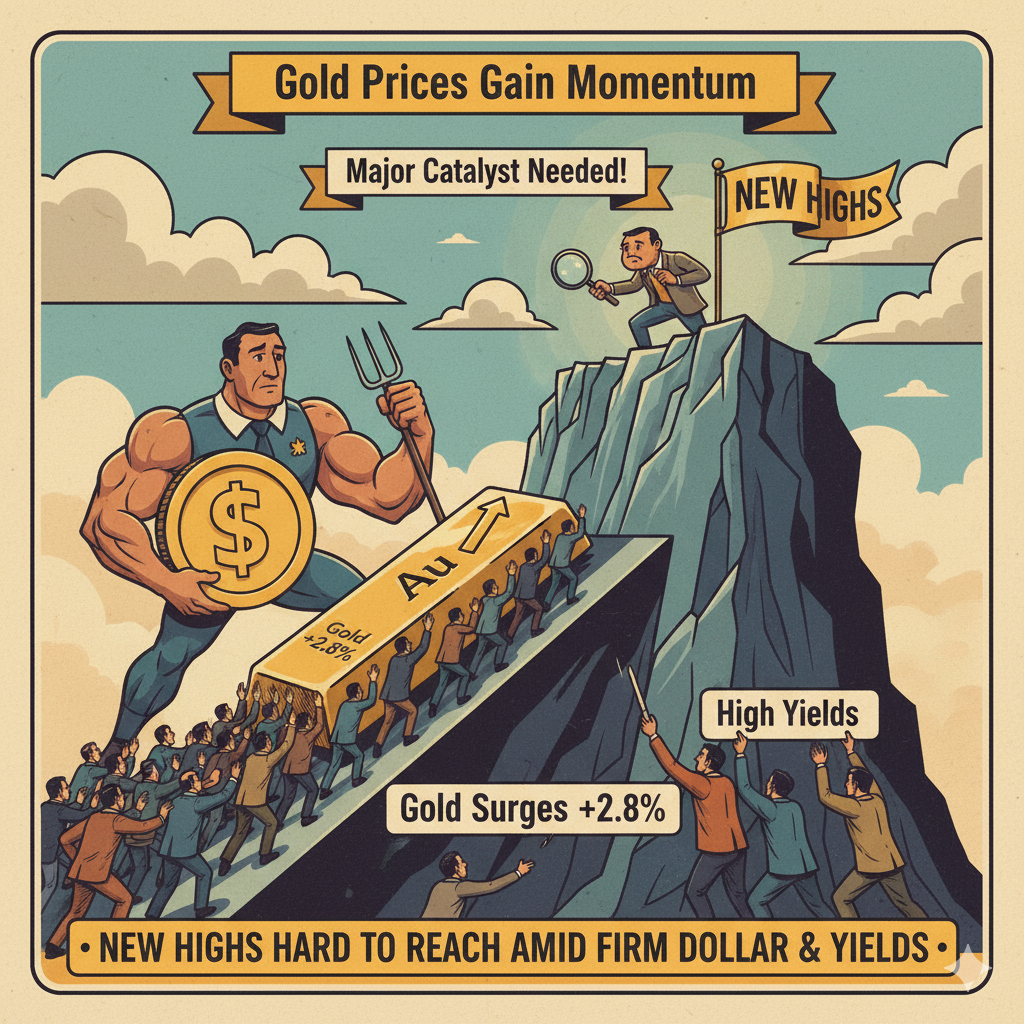
Gold prices started the week on a strong note, surging nearly 3% to deliver their best single-day performance in three weeks. The move came as investors sought safety amid ongoing global uncertainty, while expectations for a softening U.S. economy offered some support to the yellow metal. However, analysts caution that while gold’s bullish momentum is impressive, expectations for new record highs might be too optimistic without a major catalyst to fuel further gains.

A Strong Start for Gold

Gold futures climbed around 2.8% early in the week, signaling renewed buying interest after a period of consolidation. The rally reflected a combination of technical and fundamental factors. On the technical front, gold broke through short-term resistance levels, triggering momentum-based buying. Fundamentally, lingering concerns about global growth, geopolitical tensions, and fluctuating expectations for U.S. interest rates all added to gold’s appeal as a hedge.

Investors have been quick to seize opportunities in gold whenever risk sentiment weakens. Despite periods of volatility in equities and commodities, gold’s long-term narrative as a safe-haven asset remains intact. The recent rally suggests that traders still view it as a stable store of value amid shifting market dynamics.

Bullish Momentum Meets Market Reality

While the recent rally has lifted spirits among gold bulls, most analysts agree that new all-time highs remain unlikely in the immediate future. The metal’s previous record highs, achieved earlier in 2025, were driven by a unique combination of conditions: rapidly falling bond yields, aggressive central bank buying, and heightened geopolitical risk.

At present, those tailwinds appear to be fading. Inflation, though still above central bank targets, has moderated across major economies. Bond yields remain elevated, and the U.S. dollar has shown renewed strength—factors that tend to limit gold’s upside potential.

Market experts caution that while gold’s short-term trend looks constructive, investors should not expect a seamless climb toward new peaks. Instead, the metal is more likely to consolidate within a range, building a stronger foundation before any potential breakout.

Crowded Positioning Signals Caution

Another factor tempering enthusiasm is the positioning in the options and futures markets. Data suggests that many traders are already heavily positioned for gold gains, leaving little room for additional bullish momentum without fresh triggers.

When too many investors are on the same side of a trade, it can create a situation where even good news fails to push prices significantly higher. This dynamic appears to be unfolding in gold now. The options market shows a skew toward calls—contracts betting on higher prices—indicating that optimism is already priced in.

Such crowded sentiment often leads to slower progress or short-term pullbacks as some traders take profits. As one market strategist put it, “When everyone’s already bullish, there’s no one left to buy.”

That doesn’t mean gold’s rally is over—it simply suggests that the pace of gains could slow unless a new fundamental catalyst emerges.

Resilience Amid Dollar and Yield Strength

One of the most remarkable aspects of gold’s performance has been its ability to hold firm even as the U.S. dollar remains strong and Treasury yields stay elevated. Typically, a firmer dollar makes gold more expensive for holders of other currencies, while higher yields reduce the appeal of non-interest-bearing assets like gold.

Yet, in recent weeks, gold has shrugged off both headwinds. This resilience points to solid underlying demand—particularly from central banks and long-term institutional investors who view gold as a strategic reserve asset.

In addition, concerns about global geopolitical risks, from Middle East tensions to political uncertainty in Europe, have encouraged safe-haven flows. While these risks alone may not be enough to send gold to new highs, they are helping support prices at elevated levels.

What Could Drive the Next Big Move

For gold to stage a meaningful breakout beyond its recent highs, analysts say a major catalyst is needed. Possible triggers include a sharp drop in the U.S. dollar, a weaker-than-expected U.S. inflation report, or renewed concerns about economic stability in major economies.

Another potential driver could be a dovish shift by the Federal Reserve. Markets have speculated that the Fed could begin cutting interest rates in 2026 if economic growth slows and inflation continues to cool. A lower-rate environment would reduce the opportunity cost of holding gold and could renew investor enthusiasm for precious metals.

However, until such a development occurs, the path higher may remain gradual. Many traders expect gold to consolidate in a broad range, with support near $3,850 and resistance around $4,000 to $4,050 per ounce. Breaking above those levels sustainably will likely require a macroeconomic shock or a shift in monetary policy expectations.

Investor Sentiment and Strategy

For traders, the current environment presents both opportunity and risk. Momentum indicators show short-term strength, but long-term investors are advised to remain cautious. Buying gold aggressively after a strong rally often carries the risk of short-term corrections, especially when sentiment is already bullish.

Experts recommend that investors adopt a measured approach—accumulating positions gradually rather than chasing the market higher. Maintaining exposure through a diversified portfolio that includes both physical gold and related assets such as mining stocks or exchange-traded funds (ETFs) can also help balance risk.

At the same time, traders may find tactical opportunities in shorter-term pullbacks. If gold consolidates or corrects modestly, it could offer better entry points for those looking to build longer-term positions.

A Broader Perspective: Central Bank Demand and Inflation Hedging

Beyond speculative trading, structural demand for gold continues to underpin its value. Central banks around the world have been steady buyers, using gold to diversify reserves away from traditional currencies. This long-term demand provides a solid base for the market, even when short-term sentiment fluctuates.

Additionally, investors continue to view gold as a hedge against inflation and currency depreciation. Although inflation has moderated, many remain wary of potential price shocks linked to energy markets or supply chain disruptions. In such scenarios, gold often acts as a stabilizing force within portfolios.

Technical Landscape and Market Outlook

From a technical standpoint, gold’s chart setup suggests cautious optimism. The recent rally pushed the metal back above key moving averages, indicating a positive trend in the short term. Momentum indicators like the Relative Strength Index (RSI) are rising but not yet in overbought territory, implying that some room remains for further gains.

However, resistance near the psychological $4,000 level remains significant. Analysts note that each attempt to break above this zone has been met with profit-taking. Sustained movement beyond that threshold would likely require a shift in macroeconomic sentiment or a dovish signal from the Federal Reserve.

Conclusion: Bullish but Bounded

Gold’s recent surge has reminded markets of its enduring appeal, but investors should temper expectations for another record-breaking rally in the near term. The metal’s underlying strength, driven by safe-haven demand and steady institutional buying, remains intact—but momentum alone may not be enough to push prices into uncharted territory.

Without a major catalyst—be it a weakening U.S. dollar, lower yields, or heightened geopolitical tension—gold is likely to trade within a range as the market digests recent gains.

For now, the message is clear: gold bulls have regained momentum, but the climb from here will be more measured than meteoric. Investors who stay patient, disciplined, and diversified are best positioned to benefit from whatever the next leg of this golden journey brings.

CBA Drags the ASX 200 Lower as Financials Buckle Under Pressure

Australia’s stock market ended on a weaker note on Tuesday as heavy losses in the financial sector, led by the Commonwealth Bank of Australia (CBA), pulled the benchmark ASX 200 index into negative territory. Despite strength in energy and utilities, the slide in CBA’s share price following its earnings report weighed heavily on investor sentiment and set the tone for a cautious trading session.

CBA’s Sharp Drop Leads Market Lower

CBA shares fell sharply—around 6%—after the country’s largest lender released quarterly results that disappointed investors. The report revealed margin pressure and a softer growth outlook, triggering a wave of selling across the financials sector.

As one of the ASX 200’s biggest components, CBA’s move alone accounted for much of the day’s decline in the broader index. Other major banks, including Westpac and National Australia Bank, also traded lower as investors worried that the profit slowdown could extend beyond one institution.

Market analysts noted that while CBA remains profitable, its shrinking net interest margin—squeezed by rising funding costs and slower lending activity—has raised concerns about the sustainability of the sector’s earnings growth in a higher-rate environment.

Financials Sector Under Pressure

The broader financials sector was the clear laggard of the day. Investors are increasingly cautious about how rising global yields, tighter lending standards, and softening housing demand could weigh on bank profitability in the months ahead.

CBA’s weak earnings report underscored a growing theme: Australian banks are entering a period of margin compression after enjoying record profits during the post-pandemic recovery. As borrowing slows and competition for deposits intensifies, lenders may find it harder to maintain the strong returns that investors have come to expect.

In addition, concerns are mounting that credit quality could deteriorate if economic growth continues to cool. While default rates remain low, analysts warn that higher mortgage stress and softer labor conditions could gradually erode household balance sheets.

Mixed Performance Across Other Sectors

While financials dragged the ASX 200 lower, other areas of the market fared better. Energy, utilities, and materials stocks posted gains, helping to offset some of the banking sector’s drag.

Energy shares benefited from firm oil prices, which held steady amid supply concerns and geopolitical risks in the Middle East. Utilities also advanced, as investors rotated into defensive sectors that tend to perform well during periods of market volatility.

Mining companies showed relative strength as well. Iron ore and gold producers saw moderate buying interest, supported by a stable commodities backdrop and a weaker Australian dollar. The gains in these sectors, however, were not enough to lift the overall index into positive territory.

CBA Earnings Signal Profit Pressure

CBA’s earnings announcement was the focal point of the trading day. The bank reported slower revenue growth and narrowing margins, highlighting how the combination of high funding costs and intense competition for deposits is squeezing profitability.

The result also showed that loan growth has slowed across both retail and business segments. Analysts attributed this to a more cautious borrowing environment, with households cutting back on discretionary spending and businesses delaying expansion plans amid economic uncertainty.

CBA’s management expressed confidence in the bank’s long-term fundamentals but acknowledged near-term challenges. The outlook section of the report noted that while bad debts remain low, ongoing pressure from inflation and higher interest rates could test borrowers’ resilience.

Investors reacted swiftly, sending CBA shares down sharply. The sell-off reflected not only disappointment with the quarterly numbers but also broader fears that the rest of the banking sector might experience similar earnings headwinds in coming quarters.

Sector Rotation Evident in the Market

One of the most notable trends from Tuesday’s session was the clear sector rotation taking place across the ASX. Investors appeared to be shifting funds away from banks and toward commodity-driven sectors like energy and resources.

This rotation reflects a growing belief that the earnings outlook for miners and energy producers could be more stable than for financial institutions in the current environment. Commodity prices have held relatively firm thanks to steady global demand and limited supply disruptions.

By contrast, banks face the dual challenge of slowing credit demand and margin pressure. For portfolio managers seeking relative performance, the rotation toward resources and away from financials is a logical defensive move.

Global Influences Weigh on Sentiment

Australian markets also tracked a cautious tone from global peers. Overnight, US equities were mixed as investors digested a range of earnings results and economic data suggesting a modest cooling in growth. Bond yields in major economies remain elevated, keeping pressure on rate-sensitive sectors like banking and real estate.

At the same time, uncertainty about China’s economic recovery continues to cast a shadow over regional markets. While recent Chinese trade data showed signs of stabilization, investors remain wary about the sustainability of demand for Australian exports such as iron ore and coal.

This global backdrop, combined with domestic earnings disappointments, has led many investors to adopt a more conservative approach—favoring defensive stocks and sectors with predictable cash flows.

Economic and Policy Outlook

Looking ahead, traders are closely monitoring Australia’s upcoming economic data releases, particularly figures on employment, inflation, and consumer confidence. These indicators will help shape expectations for the Reserve Bank of Australia’s (RBA) next moves on interest rates.

For now, the RBA appears to be maintaining a cautious stance, signaling that while inflation is easing, it remains above target. Any signs of economic weakness or further moderation in price pressures could strengthen the case for holding rates steady in the coming months.

This uncertain policy environment adds another layer of complexity for investors in the financial sector. If the RBA keeps rates high for longer, banks may benefit from improved interest margins—but at the risk of slower credit growth and rising defaults. Conversely, if rates are cut too soon, margins could shrink even further.

Investor Takeaways

The ASX 200’s decline serves as a reminder of how concentrated the Australian stock market is in financials. When one of the major banks stumbles, the ripple effects are felt across the entire index. CBA’s disappointing results not only hurt sentiment but also prompted a reassessment of the broader sector’s earnings outlook.

Still, the day’s mixed sector performance suggests that investors are not abandoning equities altogether. Instead, they are becoming more selective—favoring companies with strong balance sheets, exposure to commodities, or reliable dividend streams.

Market strategists advise investors to maintain a diversified approach and avoid overexposure to any single sector. With uncertainty surrounding global interest-rate trends, inflation, and corporate earnings, short-term volatility is likely to remain a feature of the Australian market.

Conclusion

Tuesday’s trading session highlighted a shift in the market’s tone. The Commonwealth Bank’s sharp share-price drop dragged the ASX 200 lower and underscored the vulnerability of financial stocks amid a challenging earnings environment.

Yet, the resilience shown by energy, utilities, and materials sectors offered some comfort, demonstrating that opportunities still exist even in a cautious market.

For now, much will depend on how the broader economy evolves and whether policymakers can strike the right balance between controlling inflation and supporting growth. Until there’s greater clarity on those fronts, investors are likely to tread carefully—balancing defensive positions with selective exposure to growth-oriented sectors.

Pound Sterling Declines After UK Jobs Report as Markets Turn Focus to US Economic Data

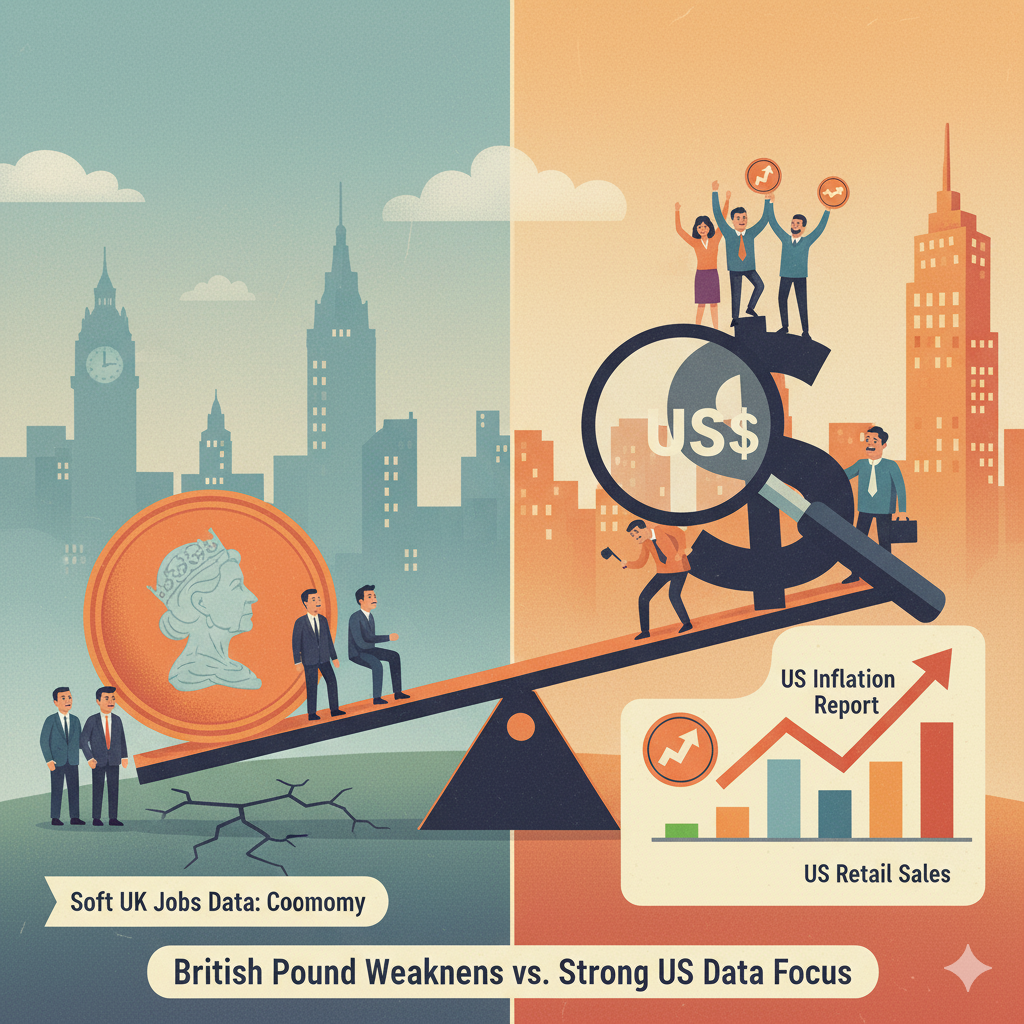
The British pound faced renewed pressure on Tuesday as traders reacted to a softer-than-expected UK labor market report, raising concerns about the health of the economy and the Bank of England’s (BoE) next policy move. At the same time, the US dollar strengthened ahead of critical inflation and retail sales data expected later this week, which could set the tone for global markets.

UK Labor Market Shows Signs of Cooling

The latest data from the Office for National Statistics (ONS) revealed a slowdown in Britain’s job market. Employment levels fell modestly, while wage growth, a key indicator the BoE monitors closely, also cooled. Average earnings excluding bonuses grew at a slower pace than in previous months, suggesting that inflationary pressures from the labor market are easing.

This softening in wage data comes at a time when policymakers are already facing a delicate balancing act—keeping inflation under control without stifling growth. The figures indicate that the period of tight labor conditions, which had been supporting robust wage growth, may be coming to an end.

The unemployment rate edged higher, reinforcing the view that the UK economy is gradually losing steam. For many analysts, this data signals that the BoE may soon have to pivot toward a more accommodative monetary stance, especially as headline inflation trends closer to the central bank’s 2% target.

Market Interprets Report as Dovish for the BoE

Currency traders reacted swiftly to the data. The British pound dropped against both the US dollar and the euro as expectations for a potential BoE rate cut early next year strengthened. The futures market now shows increased pricing for a rate reduction in the first half of 2026.

Investors see the BoE’s monetary tightening cycle as nearing its end. After a prolonged battle with inflation, the latest labor data gives the central bank room to consider easing rates sooner than previously expected. A cooling job market and weaker wage pressures reduce the risk of inflation rebounding, which is precisely the signal policymakers have been waiting for.

Sterling’s decline reflects these shifting expectations. The pound slipped below key technical levels against the dollar, with analysts noting that unless upcoming inflation data from the UK shows renewed price pressures, the currency could remain under downward pressure in the near term.

Dollar Strengthens Ahead of US Economic Releases

While the pound stumbled, the US dollar gained traction as investors turned their attention to upcoming economic data from the United States. The dollar index (DXY) rose modestly, supported by cautious optimism that the American economy continues to show resilience despite tighter financial conditions.

Two key data releases—October’s Consumer Price Index (CPI) and retail sales figures—are on traders’ radar this week. These numbers will play a crucial role in shaping expectations about the Federal Reserve’s next policy steps.

If US inflation remains sticky, it could prompt the Fed to delay rate cuts that markets have been anticipating for early 2026. Conversely, any sign of cooling inflation may strengthen the argument for a more accommodative stance, which could cap further dollar gains. For now, however, traders appear to be favoring the dollar’s safe-haven appeal amid uncertainty in Europe and the UK.

Diverging Central Bank Paths Shape Currency Moves

The diverging economic trajectories of the US and the UK are driving current forex dynamics. While the BoE faces increasing pressure to support a slowing economy, the Federal Reserve is still emphasizing data dependency. Recent US labor market indicators have shown steady job creation and moderate wage gains—enough to keep inflation from falling too quickly but not alarming enough to justify immediate tightening.

This contrast between a weakening UK labor market and a resilient US economy gives the dollar a natural advantage. Analysts at several financial institutions suggest that GBP/USD could face continued headwinds, especially if upcoming US data exceeds expectations.

Mixed Sentiment in Global Markets

Beyond currency markets, global investors are showing signs of cautious positioning. European and Asian stock markets traded mixed on Tuesday, reflecting uncertainty over the broader economic outlook. While solid corporate earnings provided some support, worries about slowing global growth and the future of central bank policy weighed on risk appetite.

The euro traded mostly flat against the dollar, hovering near recent lows as traders awaited fresh catalysts. In Asia, the Japanese yen remained stable, with little change following comments from Bank of Japan officials indicating no immediate policy shifts.

The market mood remains fragile. Investors are navigating a complex environment marked by moderating inflation, uneven growth, and shifting monetary expectations. As one analyst put it, “Markets are looking for clarity, but the data keeps sending mixed signals.”

Commodities Hold Steady as Traders Await US Data

Commodities markets mirrored the cautious sentiment seen in currencies and equities. Oil prices remained relatively steady after recent swings caused by concerns over global demand and geopolitical risks. Brent crude hovered around recent levels, supported by speculation that OPEC+ may adjust production targets to stabilize prices.

Gold, meanwhile, held firm near the $4,000 mark. The precious metal continues to benefit from its role as a safe-haven asset amid uncertainty in both currency and bond markets. With inflation data on the horizon, traders are reluctant to take large positions in either direction, preferring to wait for clarity on how the Fed might react.

What’s Next for the Pound and Global Markets

Looking ahead, the pound’s trajectory will depend heavily on both domestic and international factors. UK inflation data, retail spending figures, and future BoE commentary will be critical in shaping the narrative for the British economy. If upcoming data confirms that inflation is under control and economic momentum continues to soften, pressure will mount on the BoE to begin discussing rate cuts sooner rather than later.

In contrast, stronger-than-expected US economic data could further strengthen the dollar’s position, pushing GBP/USD lower. Investors are also monitoring broader global risk sentiment, as shifts in appetite for riskier assets often spill over into currency markets.

For now, the consensus view is that sterling could remain under pressure in the short term. The cooling labor market and growing expectations of a dovish BoE stance are creating a challenging environment for the pound, especially against a backdrop of relative US economic strength.

Final Thoughts

Tuesday’s market action highlights how quickly investor sentiment can change in response to shifting data. The UK’s weaker jobs report has significantly altered rate expectations, giving traders reason to reassess their outlook for sterling. Meanwhile, the dollar remains supported by anticipation of crucial US data releases that could either reinforce or challenge the Fed’s “higher-for-longer” stance.

In essence, the coming days will be a test of both economies’ resilience. If the UK continues to show signs of slowing while the US remains firm, the dollar’s dominance may persist. Conversely, any surprise softness in US data could offer the pound a temporary reprieve.

Until then, traders are likely to stay cautious—balancing short-term moves with the longer-term question of when global central banks will finally shift from fighting inflation to supporting growth.

UK Labour Market Cools in November 2025 as Employment Growth Slows and Business Caution Rises

UK Labour Market Overview – November 2025: Signs of a Cooling Employment Landscape

The UK labour market, long considered a resilient pillar amid global uncertainty, is now showing clearer signs of cooling. The latest data from the Office for National Statistics (ONS), published in November 2025, paints a nuanced picture — one of slowing job creation, marginal drops in payroll numbers, and caution among employers as economic headwinds persist. While the numbers do not yet point to a deep employment crisis, they do signal that the post-pandemic hiring boom has firmly plateaued, and the nation’s labour dynamics are entering a more measured, possibly fragile, phase.

Gradual Decline in Payrolled Employees

One of the most striking takeaways from the November 2025 report is the continued fall in payrolled employees across the United Kingdom. The total number of employees on company payrolls fell by 117,000 between September 2024 and September 2025, marking a 0.4% annual decline. The same trend was observed on a month-to-month basis, with a reduction of 32,000 workers (0.1%) between August and September 2025.

Though modest, this consistent fall suggests that employers are increasingly cautious about expanding their workforce. The decline is particularly notable when compared with the robust job growth observed between 2021 and 2023, a period marked by post-lockdown recovery and aggressive recruitment. The current slowdown, therefore, reflects a rebalancing act — one in which companies are reassessing labour needs amid shifting demand, rising costs, and ongoing inflationary pressures.

A Softer Quarter Reflecting Broader Economic Tensions

The quarterly comparison between July and September 2025 reinforces this trend. During this three-month period, payrolled employees fell by 109,000 (-0.4%) on the year and by 26,000 (-0.1%) on the quarter. Such figures highlight that the weakening is not isolated to a single month but rather part of a broader slowdown spreading across multiple sectors.

Economists attribute this softening to several overlapping factors. A combination of higher borrowing costs, persistent inflation, and subdued consumer spending has dampened business confidence. The Bank of England’s relatively tight monetary policy, aimed at keeping inflation under control, has made it more expensive for firms to invest or hire aggressively. Additionally, some industries — particularly retail, manufacturing, and construction — are feeling the squeeze from weaker demand and rising input costs.

While some employers are holding on to staff to avoid skill shortages later, others are implementing “soft freezes” on hiring or not replacing roles vacated through attrition. This cautious sentiment suggests that businesses are waiting for clearer economic signals before making long-term employment commitments.

Early October Estimates Point to Further Easing

The early, provisional data for October 2025 adds another layer to the picture. The ONS estimates that the number of payrolled employees stood at around 30.3 million, representing a drop of 180,000 (-0.6%) year-on-year and 32,000 (-0.1%) month-on-month. This continuation of downward momentum indicates that the slowdown seen through the summer likely persisted into the autumn.

Analysts view this as an early warning sign of potential stagnation in the job market if the trend continues through winter. Seasonal employment, particularly in retail and hospitality, could provide temporary relief, but structural issues remain. The ONS report doesn’t specify sectoral breakdowns in this overview, but anecdotal data from previous months suggest that small and medium-sized enterprises (SMEs) have been disproportionately affected by reduced hiring and higher operating costs.

Data Methodology Updates: A Note of Caution

An important aspect of the November 2025 labour market bulletin is the emphasis on methodological changes in how the ONS collects and interprets data. The estimates from January–March 2025 onward incorporate improvements in the Labour Force Survey (LFS) — particularly in data collection techniques and sampling approaches introduced from early 2024.

These refinements were designed to improve accuracy following concerns about low response rates in earlier surveys. However, the ONS itself has cautioned that these transitions may temporarily distort comparisons with older datasets. As a result, short-term fluctuations should be interpreted carefully, as part of the observed change could be statistical rather than purely economic.

This reminder is crucial for policymakers and investors who rely heavily on ONS data to guide decisions. The labour market has been one of the most closely watched indicators of the UK’s economic health, and understanding how these revisions affect long-term trends is vital. The updated LFS is expected to provide more reliable insights over time, but for now, comparisons between pre-2024 and post-2025 figures should be made with caution.

Increased Volatility and Survey Challenges

Another challenge highlighted by the ONS is greater volatility in Labour Force Survey data, largely due to ongoing adjustments and lower household response rates. Since 2023, survey participation has declined, making it harder to capture a fully representative snapshot of the workforce. To compensate, the ONS has applied weighting and modelling adjustments, but this introduces more variability into monthly estimates.

Such volatility complicates policy discussions. A single month’s data may not accurately reflect the underlying trend, meaning analysts must look at longer-term averages or alternative indicators such as payroll data from HMRC, vacancy rates, and unemployment benefit claims.

This uncertainty underlines a broader issue: as traditional survey-based labour data becomes harder to collect, statistical agencies worldwide are shifting toward administrative and digital sources for a more complete view. The UK’s ONS is at the forefront of this transition, but the process will take time to stabilize.

Broader Implications for the UK Economy

The overall message from the November 2025 UK labour market overview is that the economy remains under mild but persistent pressure. While the unemployment rate has not spiked dramatically, the steady erosion in payrolled employment suggests reduced momentum in hiring and possibly a softening demand for labour.

This shift could have mixed effects. On one hand, slower job growth may help ease wage inflation, which has been a concern for the Bank of England in its efforts to control overall price rises. On the other hand, weaker labour market conditions can dampen consumer spending, further slowing economic growth. A delicate balance now exists between maintaining employment stability and curbing inflationary risk.

The ONS data also reinforce the importance of productivity improvements. As businesses hesitate to expand their workforce, future economic gains may depend more on automation, digital transformation, and efficiency gains rather than raw employment growth. For policymakers, the key will be supporting investment in skills and technology to ensure that productivity rises even as job growth slows.

A Turning Point in Labour Dynamics

Taken together, these findings signal a turning point in the UK’s labour dynamics. The remarkable resilience of the job market through 2023 and early 2024 has given way to a period of moderation. Recruitment activity has cooled, vacancy postings have fallen, and the balance between labour supply and demand is gradually normalizing.

For workers, this means slightly less bargaining power in wage negotiations, especially in sectors where hiring has slowed. For employers, it may offer a chance to stabilize costs after years of upward wage pressure. And for policymakers, it underscores the need for data-driven flexibility — ensuring that fiscal and monetary measures align with real-world employment conditions.

Outlook Ahead

Looking forward, analysts expect employment growth to remain subdued through early 2026, particularly if economic activity stays weak and borrowing costs remain elevated. However, the picture is far from uniformly negative. The UK’s service sector continues to show resilience, and the technology and healthcare industries still report skill shortages that could cushion the labour market from deeper declines.

If inflation continues to fall and interest rates begin to ease in mid-2026, hiring could rebound gradually. Much will depend on consumer confidence, global trade stability, and the pace of recovery in business investment.


In summary, the UK Labour Market Overview for November 2025 reflects a period of adjustment rather than crisis. Employment levels are edging lower, but the foundations of the labour market remain intact. The data tell a story of cooling momentum — one shaped by cautious employers, evolving data methodologies, and a broader economy seeking equilibrium after years of turbulence.

It is, in essence, a reminder that even in a slowing market, stability can coexist with change — and that understanding the nuances behind each figure is key to interpreting the health of the nation’s workforce.

Dow Jones Climbs as Optimism Grows Over U.S. Government Restart

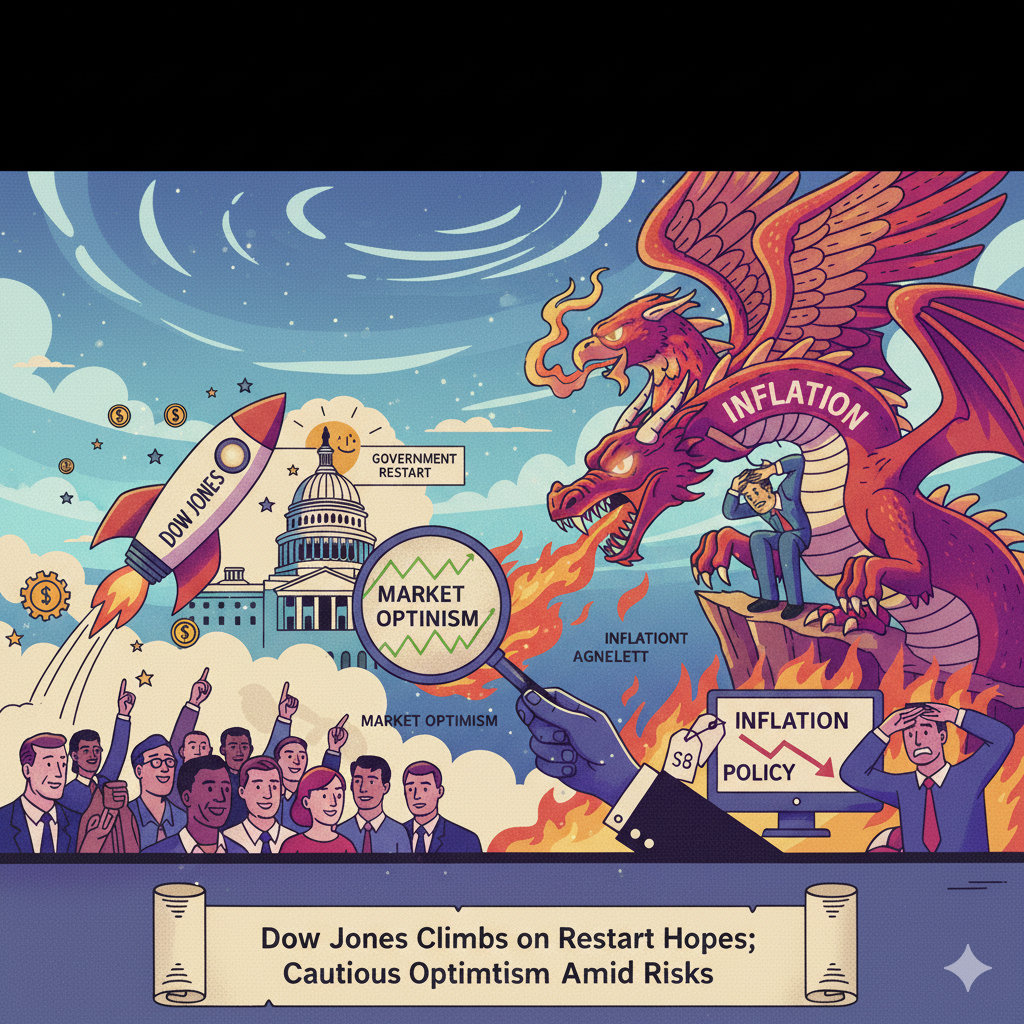
The U.S. stock market regained its footing at the start of the week, with the Dow Jones Industrial Average (DJIA) holding near the 47,000 level as investors expressed cautious optimism over the likely restart of government operations. After weeks of uncertainty triggered by the longest funding halt in U.S. history, sentiment across Wall Street has begun to shift toward relief and renewed confidence.

For traders, the end of the shutdown is not just a political resolution—it’s a crucial turning point for financial visibility. With key economic data releases such as jobs numbers, inflation figures, and GDP updates on hold during the closure, investors and policymakers have been operating in an environment of limited information. The potential restart of government activity brings a much-needed return to transparency, stability, and predictability.


Relief Rally as Shutdown Nears End

Throughout the past several weeks, U.S. markets have been caught in a tug of war between optimism over economic resilience and anxiety about Washington gridlock. The prolonged government funding lapse—the longest in U.S. history—had a chilling effect on investor confidence. Economic reports were suspended, policy decisions were delayed, and uncertainty clouded the market outlook.

However, the latest developments in Congress have offered some breathing room. Lawmakers appear to be closing in on a short-term agreement to reopen the government and resume essential operations. This has sparked a mild relief rally across major U.S. indices, led by the Dow Jones. The index’s upward move reflects investors’ willingness to take on risk again, driven by hopes that the worst of the shutdown is over.

The S&P 500 and Nasdaq Composite also saw modest gains, supported by improved risk appetite and expectations that the data drought would soon end. For traders, the reopening means more clarity on key economic indicators that guide investment decisions and monetary policy expectations.


Data Flow: A Lifeline for Markets

One of the most significant consequences of the government shutdown has been the disruption of official data releases. Reports from key agencies such as the Bureau of Labor Statistics (BLS), the Bureau of Economic Analysis (BEA), and the Census Bureau were halted, leaving investors and analysts with little to rely on except private-sector surveys and unofficial estimates.

Without government data, even the Federal Reserve found itself in a difficult position. Policymakers depend heavily on accurate information to assess the state of the economy, inflation trends, and employment dynamics. The data blackout forced them to adopt a more cautious stance, waiting for a fuller picture before considering any significant policy adjustments.

Now, with the government expected to restart soon, the flow of official data should resume—restoring transparency to the markets. This will not only help traders reassess economic momentum but also allow the Fed to make more informed decisions in the months ahead.

In short, the resumption of data releases is more than a bureaucratic formality—it’s the lifeblood of financial decision-making. Reliable information allows investors to price risk accurately and gives policymakers the confidence to act decisively.


Federal Reserve: Flying Blind No More

For much of the shutdown period, the Federal Reserve has been operating in what many economists call “data darkness.” Chair Jerome Powell and other members of the Federal Open Market Committee (FOMC) have publicly expressed concerns about making policy decisions without a complete economic picture.

In recent weeks, Powell noted that the Fed’s job has been complicated by the lack of timely data. While inflation appears to be gradually easing and the labor market remains solid, the absence of official figures made it difficult to determine how sustainable these trends were. As a result, the central bank opted for patience—holding off on any major policy shifts until more clarity emerged.

With the likely reopening of the government, the Fed will soon regain access to the comprehensive data it needs to calibrate interest rate policy. This will be particularly important ahead of the next FOMC meeting, as markets continue to debate whether the Fed will maintain its current stance, raise rates again, or pivot toward easing sometime in 2025.

For now, Powell’s tone remains cautious. The Fed is keenly aware that while inflation has cooled from its peaks, it still sits above the central bank’s 2% target. That makes the incoming data critical in shaping the next phase of monetary strategy.


Temporary Fix, Long-Term Questions

While the restart of government operations has boosted investor confidence, the solution being discussed in Washington is temporary. The new funding agreement is expected to last only until January 2025, setting the stage for another round of political negotiations early next year.

This short-term nature of the deal means that while markets may experience a short-term bounce, the underlying risk of another shutdown remains on the horizon. Investors are already wary of the potential for renewed political brinkmanship in a few months’ time.

Moreover, the repeated pattern of stopgap measures has implications for economic planning and business sentiment. Each shutdown and funding delay creates disruptions in federal operations, delays data reporting, and dents confidence in fiscal governance. For financial markets, that translates to recurring bouts of volatility and uncertainty.


Corporate and Investor Sentiment Steadies

The government’s restart discussions also come at a crucial moment for corporate America. Earnings season has shown mixed results, with many companies citing higher borrowing costs, labor shortages, and geopolitical risks as headwinds. Yet, the resilience of consumer demand and the ongoing strength of the labor market have helped cushion the impact.

A functioning government is vital for maintaining business confidence, especially for sectors tied closely to federal contracts, infrastructure spending, and regulatory approvals. Defense, healthcare, and technology companies—some of the largest components of the Dow Jones—have been particularly sensitive to shutdown-related delays.

With operations poised to resume, analysts expect a modest pickup in corporate activity. More importantly, the restart could ease some of the uncertainty that has been clouding capital markets since the start of the funding impasse.


Cautious Optimism Prevails

Despite the improved tone in financial markets, caution remains the underlying theme. The Dow Jones may be trending upward, but investors are not letting their guard down. Key risks still loom on the horizon—from inflation volatility and Fed policy uncertainty to potential political disruptions in early 2025.

However, the immediate mood is more constructive. The prospect of a government restart has injected a sense of normalcy back into the markets. With official economic data returning soon and policymakers regaining full visibility, investors are regaining confidence that the economy’s underlying strength can continue to support growth.

The Dow Jones Industrial Average, symbolizing U.S. economic resilience, reflects this cautious optimism. While volatility is likely to persist in the short term, the combination of solid corporate earnings, stable employment, and renewed government functionality gives the market a more stable foundation heading into the new year.


Looking Ahead: Data, Policy, and Stability

As the gears of government begin to turn again, all eyes will shift to the incoming data. Inflation figures, job reports, and GDP updates will be closely scrutinized for signs of momentum—or weakness—in the economy. For the Federal Reserve, these numbers will guide whether it maintains its “higher-for-longer” interest rate approach or begins to prepare for a gradual pivot.

For investors, the focus will likely remain on earnings, data reliability, and political stability. While the temporary funding deal provides short-term relief, markets will need lasting reassurance that Washington can deliver a more permanent solution to avoid recurring shutdown risks.

In essence, the latest uptick in the Dow Jones Industrial Average isn’t just about numbers—it reflects renewed faith in the system’s ability to self-correct. The return of data transparency, coupled with the Fed’s cautious but steady hand, suggests that U.S. markets may be entering a more stable, though still watchful, phase.

Fed’s Musalem Sees a Resilient U.S. Economy, But Warns of Inflation Risks Ahead

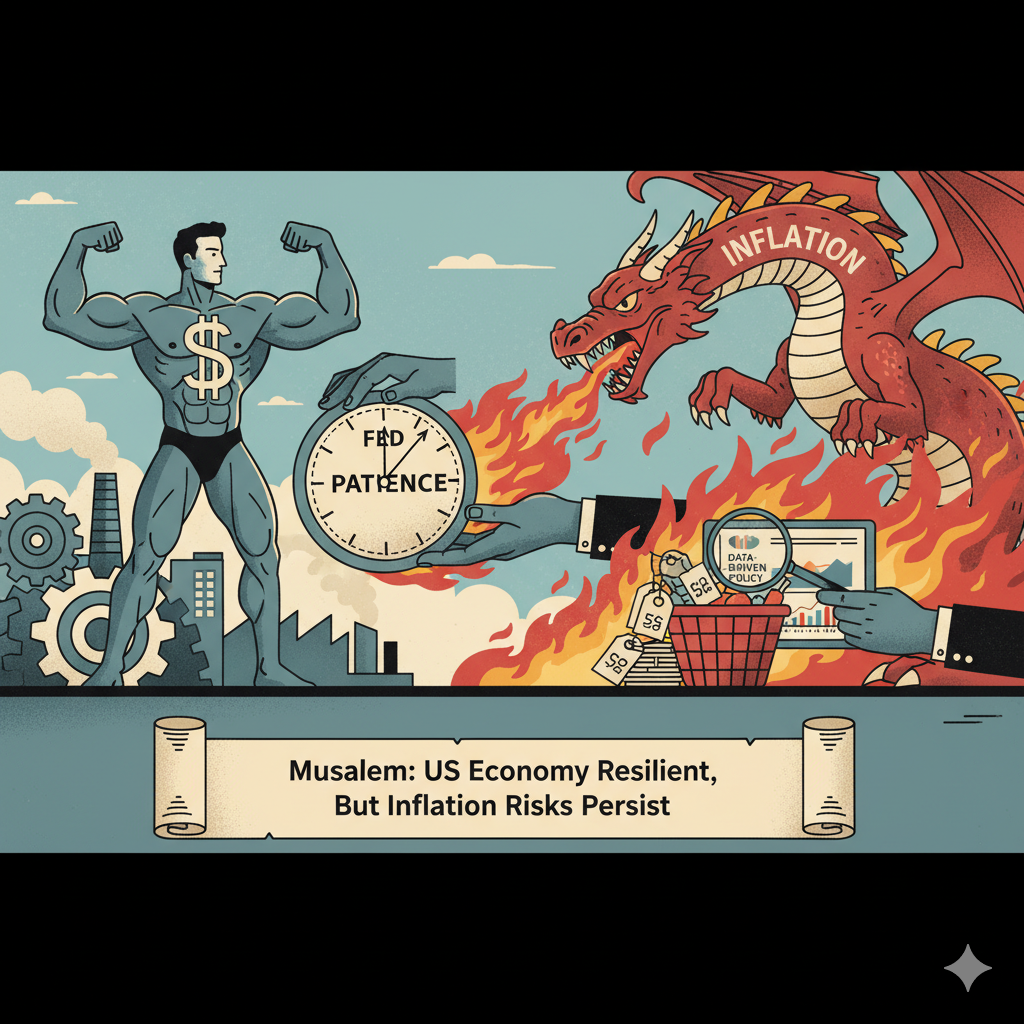
The U.S. economy, long known for its ability to recover from shocks, continues to demonstrate resilience even as inflation challenges linger. Recently shared a measured yet optimistic outlook on the nation’s economic landscape. Speaking about the Federal Reserve’s current policy stance, he highlighted that while growth has slowed, the economy remains fundamentally strong, underpinned by a robust labor market and solid financial foundations.

In his latest remarks, Musalem’s tone struck a balance between caution and confidence—acknowledging the progress made in cooling inflation while warning that the journey back to the 2% target remains incomplete. His comments come at a time when investors, economists, and businesses are trying to gauge whether the Federal Reserve is nearing the end of its tightening cycle or preparing to hold interest rates higher for longer.

Economic Strength Amid Slower Growth

Musalem began his assessment by acknowledging that the U.S. economy continues to perform relatively well despite facing multiple headwinds over the past few years—from the pandemic and supply chain disruptions to geopolitical tensions and shifting trade policies. He described the economy as “pretty resilient,” pointing to ongoing strength in the labor market as a major factor supporting consumption and overall stability.

However, he also noted that the pace of growth has started to moderate. Consumer spending, which has been the backbone of U.S. economic expansion, is showing early signs of cooling. Similarly, the housing market remains under pressure due to higher mortgage rates, which have significantly raised borrowing costs for buyers. These signs of softening suggest that the Federal Reserve’s restrictive policy stance is beginning to have its intended effect—slowing demand without triggering a full-scale recession.

Despite this moderation, Musalem’s view was that the underlying fundamentals of the economy remain sound. Businesses are still investing, job creation continues at a decent pace, and unemployment remains historically low. Such resilience, he argued, provides policymakers with room to carefully calibrate their next moves without rushing into premature easing.

Inflation Progress But Challenges Persist

Inflation remains one of the most persistent challenges for the Federal Reserve. Although price pressures have eased from their peaks in 2022, inflation still runs above the Fed’s 2% target. Musalem emphasized that the central bank must remain vigilant, as the “last mile” of disinflation is often the hardest to achieve.

He highlighted several factors contributing to ongoing inflationary pressures. Service sector prices—particularly in areas such as healthcare, housing, and travel—continue to rise faster than goods prices. Moreover, recent policy shifts, including higher tariffs and trade restrictions, could create new supply-side bottlenecks that make imported goods more expensive.

Musalem warned that if such cost-driven inflation persists, it could re-anchor inflation expectations higher. In simpler terms, if consumers and businesses begin to expect higher prices as the new normal, it becomes much harder for the Fed to bring inflation back down sustainably. This underscores the importance of maintaining credibility and ensuring that monetary policy signals remain consistent and data-dependent.

A “Modestly Restrictive” Policy Stance

When discussing the current monetary policy stance, Musalem described it as “modestly restrictive to neutral.” This means the Federal Reserve’s benchmark interest rates are high enough to help curb inflation but not so high as to severely damage the economy.

He explained that this balance allows the Fed to continue cooling price pressures while still supporting the job market. The approach is consistent with what many economists call a “soft landing” scenario—where inflation returns to target without pushing the economy into recession.

However, Musalem cautioned that the central bank must remain flexible. If inflation proves more stubborn than expected, the Fed may need to keep rates elevated for longer. Conversely, if growth slows too much or the labor market weakens sharply, policymakers could consider easing sooner. The key, he stressed, is to respond to incoming data rather than commit to a predetermined path.

Labor Market and Inflation Risks

One of the most notable aspects of Musalem’s remarks was his focus on the labor market. He observed that while job creation remains strong, there are early signs of cooling. Wage growth has moderated slightly, and job openings have come down from their record highs. This gradual rebalancing is seen as healthy, as it helps reduce inflationary pressures stemming from tight labor supply.

Still, Musalem acknowledged that the situation could shift quickly. If wage growth picks up again or productivity fails to improve, inflation could remain sticky. On the other hand, if the labor market slows more abruptly, consumer spending—the main driver of the U.S. economy—could weaken faster than expected.

He also discussed potential risks from global developments. Tariffs, energy price volatility, and geopolitical uncertainty could all influence both inflation and growth. For instance, higher oil prices could raise transportation and production costs, while new trade barriers might push up import prices. Such external shocks could complicate the Fed’s efforts to maintain price stability.

The Case for Patience and Data Dependence

Throughout his remarks, Musalem reiterated the importance of patience and data dependence in monetary policy. He stressed that the Federal Reserve should wait for clear evidence of inflation returning to its target before making major policy shifts. Premature rate cuts, he warned, could risk reigniting price pressures, undoing much of the progress achieved so far.

This cautious approach reflects the broader consensus among Federal Reserve officials that while inflation is moving in the right direction, the job is not yet done. Musalem’s comments align with those of other policymakers who have emphasized that decisions in the coming months will hinge on incoming data related to inflation, employment, and overall economic activity.

He also underscored the need for effective communication with the public and markets. In his view, transparent messaging about the Fed’s goals and reasoning is vital to maintaining trust and preventing misinterpretations that could lead to unnecessary market volatility.

म्युच्युअल फंडांची ‘७० लाख कोटी’ची गगनभरारी: लहान शहरे ठरतायेत यशाचे खरे सारथी!

भारतीय गुंतवणूक क्षेत्रात नुकताच एक मोठा आणि ऐतिहासिक टप्पा गाठला गेला आहे. म्युच्युअल फंड उद्योगाने ७० लाख कोटी (७० ट्रिलियन) रुपयांच्या ॲसेट्स अंडर मॅनेजमेंट’ (AUM) चा विक्रमी आकडा पार केला आहे. ही केवळ आकडेवारी नाही, तर देशातील कोट्यवधी सामान्य नागरिकांचा वाढलेला आर्थिक आत्मविश्वास आणि शिस्तबद्ध गुंतवणुकीची साक्ष आहे.

या गगनभरारीचे सर्वात महत्त्वाचे आणि प्रेरणादायी वैशिष्ट्य म्हणजे, या वाढीचे नेतृत्व आता केवळ मुंबई, दिल्लीसारख्या महानगरांनी केलेले नाही. आज, भारतातील लहान शहरे आणि गावांमध्ये राहणारे नवीन गुंतवणूकदार या प्रगतीचे खरे सारथी ठरले आहेत.

गुंतवणुकीचा नकाशा बदलला!

पूर्वी म्युच्युअल फंड हे केवळ मोठ्या शहरांतील उच्चभ्रू लोकांसाठी होते, ही धारणा आता पूर्णपणे बदलली आहे.

  • छोटी शहरे, मोठा वाटा: ‘टॉप-३०’ (T30) शहरांव्यतिरिक्तच्या लहान शहरांतून (ज्यांना ‘B30 शहरे’ म्हणतात) येणारा गुंतवणुकीचा ओघ सातत्याने वाढत आहे.
  • प्रवाहात सामील व्हा: याचा स्पष्ट अर्थ आहे की, अर्थव्यवस्थेच्या प्रगतीचे फायदे आता गाव-खेड्यांपर्यंत पोहोचत आहेत आणि लोक सक्रियपणे या संधीचा लाभ घेत आहेत. आता तुम्ही महानगराबाहेर राहत असलात तरीही, ही तुमच्यासाठी राष्ट्रीय वाढीचा हिस्सा बनण्याची संधी आहे.

SIP आहे यशाची गुरुकिल्ली!

या प्रचंड गुंतवणुकीच्या प्रवासाचा आधारस्तंभ आहे—सिस्टिमॅटिक इन्व्हेस्टमेंट प्लॅन (SIP).

SIP मुळे तुम्ही अगदी ₹५०० च्या लहान रकमेपासून सुरुवात करू शकता. हा एक शिस्तबद्ध आणि सोपा मार्ग आहे, ज्यामुळे तुम्ही बाजाराच्या चढ-उतारांवर लक्ष न देता, नियमितपणे गुंतवणूक करत राहता. आज महिन्याला होणारी SIP द्वारे येणारी रक्कम विक्रमी पातळीवर पोहोचली आहे, जी हेच दर्शवते की, भारतातील रिटेल (सामान्य) गुंतवणूकदार शिस्त आणि संयमाने बाजारात उतरत आहेत.

आत्मविश्वास वाढवा, कारण आकडे सांगतात…

तुम्ही अजूनही म्युच्युअल फंडात गुंतवणूक करण्यास कचरत असाल, तर खालील आकडेवारी तुम्हाला आत्मविश्वास देईल:

  1. उत्तुंग वाढ: गेल्या अवघ्या दहा वर्षांत, भारतीय म्युच्युअल फंड उद्योगाची एकूण मालमत्ता सहा पटीने वाढली आहे. ही वाढ दाखवते की, म्युच्युअल फंड हा आता एक विश्वासार्ह आणि अत्यंत वेगवान गतीने वाढणारा गुंतवणूक पर्याय आहे.
  2. रिटेलचा आधार: आज म्युच्युअल फंडांच्या बहुतेक मालमत्तेचे प्रमुख मालक सामान्य रिटेल गुंतवणूकदार आहेत. मोठ्या संस्थांपेक्षा सामान्य नागरिकांचा सहभाग जास्त असणे हे बाजाराला एक मजबूत आणि स्थिर आधार देते.

तुमच्यासाठी आवाहन:

तुम्ही जर नोकरदार असाल, छोटे व्यावसायिक असाल, किंवा विद्यार्थी असाल—तुमच्या बचतीला योग्य दिशा देण्याची हीच योग्य वेळ आहे. केवळ बँक खात्यात पैसे ठेवून, तुम्ही महागाईला हरवू शकत नाही.

म्युच्युअल फंडात गुंतवणूक करून, तुम्ही केवळ तुमचे भविष्य सुरक्षित करत नाही, तर भारताच्या आर्थिक विकासामध्ये थेट योगदान देत आहात.

लहान सुरुवात करा, पण आजच करा. SIP च्या माध्यमातून दर महिन्याला एक छोटी रक्कम बाजूला काढा आणि तुमच्यासाठीच एक सुरक्षित आणि समृद्ध भविष्य निर्माण करा.

टीप: कोणतीही गुंतवणूक करण्यापूर्वी आपल्या आर्थिक सल्लागाराचा (Financial Advisor) सल्ला नक्की घ्या.

SAGAR BALKRISHNA YELAVE
AMFI REGISTERED MUTUAL FUND DISTRIBUTOR
Email : sbyelave@sbyelavegmail-com
contact no: 787-553-0108

Mary Daly — Policymaking Amid Change: Balancing Growth, Inflation, and Uncertainty

In the ever-shifting world of economics, the role of central bankers has never been more complex. Mary Daly, President of the Federal Reserve Bank of San Francisco, recently addressed this reality with striking clarity. Her remarks, delivered in a thoughtful and measured tone, outlined how U.S. monetary policy must evolve in a world marked by inflationary persistence, shifting labor market dynamics, and growing uncertainty. Daly’s speech, titled “Policymaking Amid Change,” offers deep insight into how the Federal Reserve views the path ahead — one defined by balance, flexibility, and an unwavering commitment to stability.


A Balancing Act in an Uncertain Economy

Daly began by acknowledging the resilience of the U.S. economy. Despite multiple headwinds — global instability, supply chain challenges, and high borrowing costs — growth has held up better than expected. The labor market, too, remains robust, even as it shows subtle signs of cooling. However, she was quick to point out that this balance is fragile. Inflation, though lower than its 2022 peak, continues to hover above the Fed’s 2% target, keeping policymakers on alert.

According to Daly, this situation places the Federal Reserve in a “delicate position.” On one hand, overly restrictive policies could slow down economic momentum and risk a downturn. On the other, premature easing could reignite inflationary pressures, undermining the progress made so far. The challenge, as Daly sees it, lies in maintaining this equilibrium — a task that requires both patience and precision.

She explained that while data continues to show broad resilience, the signs of moderation in the job market and consumer spending indicate that policy tightening is having its intended effect. Yet, these outcomes are uneven across sectors and demographics, underscoring the need for a nuanced approach rather than a one-size-fits-all policy.


Inflation: The Persistent Challenge

At the heart of Daly’s message was the Federal Reserve’s ongoing battle against inflation. While consumer price growth has slowed from the extremes of 2022, progress has been uneven. Daly emphasized that inflation remains “stubbornly above target,” particularly in services, where wage and price pressures continue to linger.

She noted that while energy prices have stabilized, underlying core inflation — which excludes volatile components like food and energy — continues to show resistance. This stickiness suggests that the road to price stability will be gradual, not linear. “Inflation does not move in a straight line,” Daly remarked, adding that temporary setbacks should not distract policymakers from their long-term objectives.

Her message was clear: the Federal Reserve must remain vigilant. Even as markets speculate about future rate cuts, Daly argued that it is too early to declare victory. The central bank, she said, will continue to rely on a wide range of indicators to ensure that inflation expectations remain anchored and that real progress toward the 2% target is sustainable.


Navigating Data Gaps and Uncertainty

One of the more practical challenges Daly addressed was the potential for government shutdowns or data disruptions — events that could limit access to key economic indicators. In such situations, she explained, the Federal Reserve can turn to alternative data sources. Private sector surveys, financial market readings, and real-time analytics can offer timely insights even when official reports are delayed.

This adaptability reflects a broader theme in Daly’s speech — that policymaking in today’s environment requires flexibility. The economy, she said, is no longer governed by predictable cycles. Structural changes, including technological innovation, demographic shifts, and evolving global trade patterns, have altered the traditional playbook. As such, policymakers must remain alert and ready to adjust course as new information emerges.

Daly compared this approach to “driving through fog.” When visibility is limited, the prudent move isn’t to stop but to slow down and stay attentive to every sign along the road. This analogy captures the essence of the Federal Reserve’s current stance — cautious, data-driven, and mindful of both risks and opportunities.


Interest Rates: No Rush to Cut

Perhaps the most closely watched topic in Daly’s remarks was the question of future interest rate moves. With inflation gradually easing, investors have been eager for clues about potential rate cuts. However, Daly maintained a cautious tone. She reiterated that any shift toward easing monetary policy must be grounded in clear and consistent evidence that inflation is moving sustainably toward the target.

In her view, current policy remains appropriately restrictive. This restraint, she argued, is not punitive but necessary to restore long-term stability. Daly also suggested that the so-called “neutral rate” — the interest rate that neither stimulates nor slows the economy — may be higher than previously thought. If true, this would mean that even as inflation moderates, rates could remain elevated for longer than markets anticipate.

She was careful not to give a timeline for policy adjustments but stressed that the Fed’s decisions will be based on outcomes, not expectations. “We must let the data lead,” she emphasized. In an environment where both inflation and growth data can surprise, patience and discipline are vital.


Labor Market Dynamics and Broader Economic Health

Another central theme of Daly’s address was the evolving nature of the labor market. The post-pandemic era, she noted, has reshaped work in profound ways. Labor participation has improved, but hiring patterns are shifting, and certain industries continue to face worker shortages. Wages are rising, albeit at a slower pace than in 2022, suggesting that inflationary pressures from the labor market are easing gradually.

However, Daly cautioned against complacency. She pointed out that even as overall employment numbers look healthy, many households continue to feel the strain of higher prices and borrowing costs. Policymakers, she said, must remember that aggregate data can mask uneven impacts across communities. Economic policy should therefore aim not only for national stability but also for broad-based inclusivity.

This human-centered perspective — acknowledging both macroeconomic data and lived experiences — is a hallmark of Daly’s leadership style. She believes that successful policymaking requires empathy and understanding of how decisions affect everyday lives.


Flexibility: The Key to Modern Policymaking

Throughout her speech, Daly returned to the theme of adaptability. The economic landscape, she argued, has entered a new era where traditional assumptions about growth, inflation, and interest rates no longer apply. In such a setting, rigid adherence to old frameworks could prove counterproductive.

Instead, she advocated for a pragmatic, flexible approach that combines rigorous analysis with openness to new ideas. “We must be willing to adjust,” she said, “not because we lack conviction, but because the world is changing.”

This philosophy, she added, does not mean abandoning caution. Rather, it means embracing uncertainty as a constant and building policies that can withstand it. Daly’s vision is one where central banks operate less as rule-followers and more as adaptive problem solvers — capable of navigating complexity with both intellect and intuition.


A Call for Patience and Perspective

In closing, Daly called for patience — both from policymakers and the public. Restoring price stability, she said, is not a sprint but a marathon. The progress made so far is meaningful, but the final mile may be the toughest. What matters most now is staying the course, resisting the temptation to overreact to short-term fluctuations, and maintaining confidence in the process.

Her message resonated with both humility and resolve. Daly’s view of “policymaking amid change” acknowledges that uncertainty is unavoidable but not unmanageable. Through steady hands, flexible thinking, and commitment to the greater good, she believes the Federal Reserve can guide the economy toward lasting stability.


In essence, Mary Daly’s speech offers a masterclass in modern central banking — one that blends data, judgment, and empathy. It reminds us that economic policymaking, at its best, is not just about numbers and models but about understanding people, adapting to change, and leading with both caution and courage.