Bitcoin Crash 2026: Best Buy Levels with Technical Analysis & Support Zones


Bitcoin Crash Price

Bitcoin has once again entered a volatile phase after failing to sustain near its recent highs. The sudden correction has created fear among retail investors, while experienced traders see this as a healthy pullback within a broader market cycle. Historically, Bitcoin has gone through multiple sharp corrections before resuming long-term upward trends.

This raises the most important question for investors today:
At what price levels should one buy Bitcoin, based on proper technical analysis?

In this article, we analyze Bitcoin’s current price action using technical tools such as support and resistance, moving averages, Fibonacci retracement, and market structure. We also explain the best accumulation zones with logical reasons behind each level.


Why Technical Levels Matter in Bitcoin Investing

Bitcoin is highly driven by sentiment and liquidity. However, price still respects technical zones where buyers and sellers repeatedly react. These zones are known as:

  • Support levels – Areas where buying pressure is strong
  • Resistance levels – Areas where selling pressure dominates

Professional traders never buy randomly. They wait for price to approach strong support zones and then look for confirmation such as volume expansion, RSI reversal, or bullish candles.

By identifying these zones, investors can reduce risk and improve reward potential.


Current Bitcoin Market Structure

Bitcoin recently faced rejection from its upper resistance range after a strong rally. Profit booking by large institutional players, combined with global market uncertainty and high interest rates, pushed Bitcoin lower.

From a technical perspective:

  • The price broke short-term support
  • Stop-loss orders were triggered
  • Momentum shifted from bullish to neutral/bearish

However, this does not mean the bull cycle is over. It simply means Bitcoin is in a correction phase, and corrections offer better buying opportunities for long-term investors.


Major Technical Buy Zones for Bitcoin

Based on chart structure and historical data, three major buying zones stand out.


1. $60,000 – $63,000: Primary Support Zone

This is the first important technical buy area.

Technical Reasons:

  • This zone has acted as support multiple times in recent months
  • It aligns with a psychological round number ($60,000)
  • High trading volume was seen earlier in this range
  • Short-term moving averages converge here

Whenever Bitcoin approaches this area, buyers tend to step in quickly. A bounce from this zone indicates that bulls are still defending the trend.

Strategy:

This is suitable for light accumulation. Investors can start buying in small quantities rather than committing all capital at once.

Risk remains moderate because a breakdown below this level may trigger further downside.


2. $58,000 – $61,800: Strong Demand Zone

This is considered the most important accumulation zone in the current structure.

Technical Reasons:

  • Previous consolidation happened here
  • Acts as a pivot between bullish and bearish territory
  • Coincides with long-term moving averages such as the 200-day MA
  • Strong historical demand observed

When price revisits this area, it often stabilizes before choosing direction. Long-term investors consider this zone ideal because risk-to-reward becomes attractive.

Strategy:

This zone is best for medium to heavy buying, especially if:

  • RSI shows oversold conditions
  • Price forms reversal candles
  • Volume increases on bounce

This area is suitable for investors with patience and a long-term outlook.


3. $53,000 – $56,000: Long-Term Bull Market Floor

This is the deepest support zone within a healthy bull market correction.

Technical Reasons:

  • Fibonacci retracement aligns near this region
  • Previous major breakout occurred here
  • Institutional accumulation seen earlier
  • Long-term trend line support exists

If Bitcoin reaches this level, it would represent a 25–35% correction, which is historically common in bull cycles.

This zone is considered a high-probability long-term buying opportunity provided global conditions do not worsen drastically.

Strategy:

This is ideal for investors with long-term conviction. Risk is higher in the short term, but reward potential is significant if the trend resumes upward.


Resistance Levels to Avoid Buying

Understanding resistance is equally important to avoid emotional buying.

Key Resistance Zones:

  • $72,000 – $78,000: Strong selling pressure area
  • $80,000 – $85,000: Psychological and technical barrier
  • Above $90,000: Requires strong breakout volume to sustain

Buying near resistance increases risk and reduces upside potential.


Smart Buying Strategy: Layered Accumulation

Instead of buying all at one price, professionals use a staggered buying strategy:

Price ZoneAllocation
$64,000 – $62,00020% capital
$61,800 – $58,00040% capital
$56,000 – $53,00040% capital

This reduces timing risk and improves average cost.


Technical Indicators to Watch Before Buying

Before entering at any support zone, traders look for confirmation signals:

1. RSI (Relative Strength Index)

  • RSI below 30 indicates oversold conditions
  • RSI turning upward signals momentum shift

2. Volume

  • Rising volume during bounce = strong buying interest
  • Weak volume = fake bounce

3. Candlestick Patterns

Bullish patterns include:

  • Hammer
  • Engulfing candle
  • Morning star

These patterns near support zones strengthen buy confidence.


Is This a Temporary Crash or Start of Bear Market?

Historically, Bitcoin experiences several corrections of 20–40% even during bull runs. Unless Bitcoin breaks below long-term structure and stays there, this move appears to be a normal correction, not a trend reversal.

Macro factors such as interest rates, ETF flows, and global liquidity will determine the next phase.

If price holds above the $53,000–$56,000 zone, the long-term bullish structure remains intact.


Risk Management Is Essential

Bitcoin is volatile and unpredictable. Therefore:

  • Never invest money you cannot afford to lose
  • Use staggered entries
  • Avoid leverage during high volatility
  • Maintain long-term perspective

Technical analysis improves probability, not certainty.


Conclusion

Bitcoin Crash

Bitcoin’s recent fall has created fear, but also opportunity. Technical analysis clearly shows three important buying zones:

  1. $60,000 – $63,000: First support for light buying
  2. $58,000 – $61,800: Strong accumulation zone
  3. $53,000 – $56,000: Long-term bull market floor

These levels are backed by historical price action, moving averages, Fibonacci retracement, and volume behavior.

Rather than panic selling, disciplined investors should focus on structured accumulation and confirmation signals. Bitcoin has survived multiple crashes in the past and continues to remain the strongest cryptocurrency asset globally.

As always, patience and risk management are key in crypto investing.
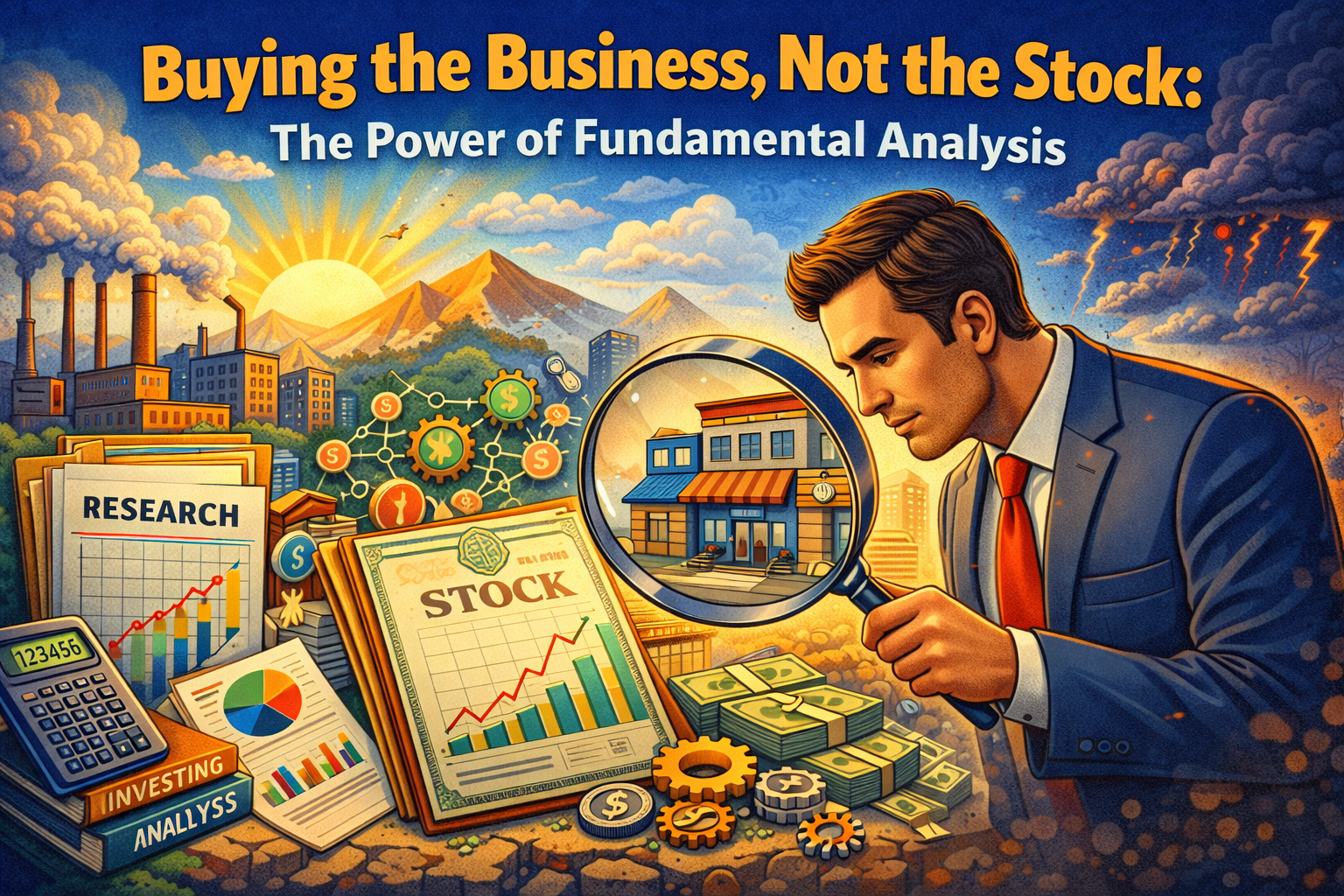

Buying the Business, Not the Stock: The Power of Fundamental Analysis

When we talk about investing, there is a fundamental divide between those who treat the stock market like a gambling den and those who treat it like a business partnership. The latter group almost exclusively relies on a method called Fundamental Analysis. If you want to move beyond “playing the market” and start building a portfolio that can weather decades of economic shifts, understanding the bedrock of fundamental analysis isn’t just an option—it’s a necessity.

At its core, fundamental analysis is the art and science of measuring a security’s intrinsic value. It is the process of stripping away the noise of daily price fluctuations, social media hype, and market panic to look at the “bones” of a business. It asks one simple, yet incredibly complex question: How much is this company actually worth?

The Concept of Intrinsic Value

The central premise of fundamental analysis is that a stock’s market price does not always equal its true value. Imagine you are buying a house. The “market price” is what the seller is asking for today based on current trends. The “intrinsic value,” however, is determined by the quality of the foundation, the neighborhood’s growth potential, and the rental income it can generate.

Fundamental analysts believe that while the market might be “wrong” about a stock’s price in the short term—perhaps due to a temporary scandal or a general economic downturn—it will eventually “correct” itself. By calculating the intrinsic value, an investor can identify opportunities where they are buying a dollar for seventy-five cents.

1. The Quantitative Pillar: The Hard Numbers

The first step in fundamental analysis involves diving into the “quantifiable” data. This is the information you can find in a company’s financial filings, specifically the 10-K (annual report) and 10-Q (quarterly report). There are three primary documents every fundamental investor must master:

  • The Balance Sheet: This is a snapshot of what the company owns (assets) and what it owes (liabilities) at a specific point in time. A healthy balance sheet shows a company that isn’t drowning in debt and has enough “liquidity” (cash and easily sellable assets) to survive a rainy day.
  • The Income Statement: This shows the company’s performance over a period. It tracks revenue (the top line) and subtracts expenses to arrive at the net income (the bottom line). Investors look for “quality earnings”—growth that comes from selling more products rather than just cutting costs or accounting tricks.
  • The Cash Flow Statement: Perhaps the most important document, this tracks the actual cash moving in and out of the business. Profit on paper is one thing, but “Cash is King.” If a company is reporting profits but isn’t actually seeing cash in the bank, it’s a major red flag.

2. The Qualitative Pillar: The Human Element

Numbers only tell half the story. You can have a company with great financials that is being run into the ground by a toxic management team or a failing business model. This is where qualitative analysis comes in.

  • Management Quality: Who is steering the ship? Do they have a track record of success? Are they transparent with shareholders, or do they hide behind jargon? A company is only as good as the people making the big decisions.
  • Is it a simple, repeatable process, or is it overly reliant on one specific technology that could be obsolete in two years?
  • Competitive Advantage (The “Moat”): Coined by Warren Buffett, an economic moat is what protects a company from its rivals. Without a moat, competitors will eventually eat away at a company’s profits.

3. The “Top-Down” vs. “Bottom-Up” Strategy

Investors generally approach fundamental analysis from two different directions.

Top-Down Analysis starts with the big picture. You look at the global economy, then the national economy, then specific industries that are poised to grow. For example, if you believe the world is shifting toward green energy, you look at the solar and wind sectors. Only then do you look for the best individual companies within those sectors.

Bottom-Up Analysis ignores the “macro” noise. These investors believe that a great company can thrive even in a mediocre economy. They hunt for individual businesses with stellar fundamentals, regardless of what the broader industry or GDP is doing. Their philosophy is: “Buy a great business at a fair price, and the rest will take care of itself.”

4. Decoding the Ratios

To make sense of all this data, analysts use financial ratios to compare apples to apples. If a tech company’s stock is $200 and a retail company’s stock is $50, the tech company isn’t necessarily “more expensive.” You have to look at the ratios:

  • P/E Ratio (Price-to-Earnings): This tells you how much investors are willing to pay for every dollar of profit. A very high P/E might mean the stock is overvalued, or it might mean investors expect massive growth in the future.
  • P/B Ratio (Price-to-Book): This compares the market value to the “book value” (what would be left if the company closed today and sold everything).
  • Debt-to-Equity: This measures how much the company is relying on borrowed money. High debt can act as an anchor during an economic recession.

5. The Long-Term Horizon

Perhaps the most significant difference between fundamental analysis and other forms of trading is the time horizon. Fundamental analysis is not for those looking to “get rich quick.” Because you are waiting for the market to realize a stock’s true value, it can take months or even years for your “thesis” to play out.

This requires a high level of conviction. When the market is crashing and everyone is selling, a fundamental analyst looks at their research. If the company’s “fundamentals”—its management, its cash flow, its moat—are still strong, the analyst doesn’t panic. In fact, they might see the price drop as a “sale” and buy more.

6. The Limitations of the Method

No strategy is perfect. The main drawback of fundamental analysis is that it is incredibly time-consuming. It requires reading hundreds of pages of reports and staying updated on industry news. Furthermore, there is always the risk of “garbage in, garbage out.” If a company’s management is committing fraud or cooking the books, your analysis will be based on false data.

Additionally, the “market” can stay irrational for longer than an investor can stay solvent. Just because you know a stock is worth $100 doesn’t mean it won’t drop to $40 and stay there for three years before finally rising.

Conclusion: Becoming a Business Owner

Fundamental analysis changes your perspective. You stop seeing stocks as ticker symbols or gambling chips and start seeing them as ownership stakes in real-world businesses. It gives you a framework to filter out the noise of the “talking heads” on financial news and focus on what truly drives wealth: productivity, innovation, and profitability.

By combining the cold, hard logic of quantitative ratios with the intuitive, investigative work of qualitative research, you build a shield against the emotional volatility of the market. You don’t just invest; you understand. And in the world of finance, understanding is the most valuable asset you can own.

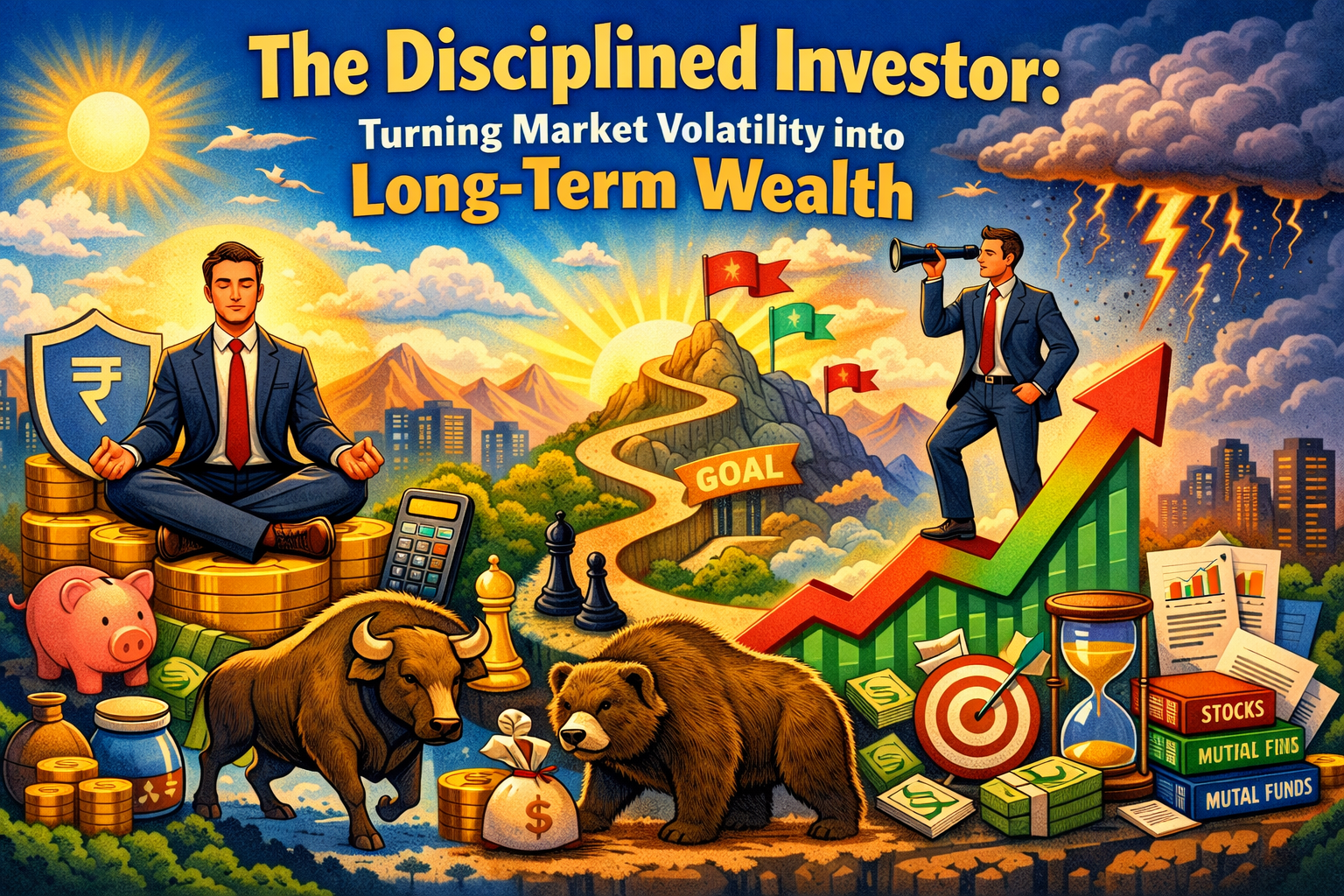
The Disciplined Investor: Turning Market Volatility into Long-Term Wealth

Investing in the share market is often portrayed as a fast-paced, high-stakes game of chance—a digital casino where fortunes are made or lost in the blink of an eye. However, the reality of successful investing is far more grounded. It is a disciplined craft that combines financial literacy, psychological fortitude, and a long-term vision. If you’ve ever looked at the flickering green and red numbers on a trading terminal and wondered how to turn that chaos into a wealth-building machine, you are not alone.

Starting your investment journey is less about “playing the market” and more about participating in the growth of the economy. To do this effectively, you need a roadmap. Based on the fundamental principles of modern equity investment, here is an in-depth guide on how to navigate the share market, from the technical requirements to the psychological traps you must avoid.

1. Understanding the Ecosystem: Primary vs. Secondary Markets

Before you spend a single rupee, you must understand where the shares come from. The stock market is divided into two main segments: the Primary and the Secondary market.

The Primary Market is where a company “goes public.” When a private company wants to expand—perhaps to build new factories or develop new technology—it needs capital. Instead of taking a massive loan, it sells a portion of its ownership to the public through an Initial Public Offering (IPO). When you buy shares in an IPO, your money goes directly to the company.

The Secondary Market is what most people refer to as “the stock market.” This is where investors trade shares that have already been issued. If you buy shares of a company like Reliance or Apple today, you aren’t buying them from the company itself; you are buying them from another investor who wants to sell. The stock exchange (like the NSE or BSE) acts as the regulated marketplace that facilitates this handoff.

2. The Technical Trio: Bank, Demat, and Trading Accounts

In the old days, owning a stock meant holding a physical paper certificate. Today, everything is digital. To enter the market, you need a specific infrastructure consisting of three interconnected accounts.

  • The Bank Account: This is the source of your funds. It is where your investment capital sits before you buy and where your profits go when you sell.
  • The Trading Account: Think of this as your “interface” with the stock exchange. It is the software or platform provided by your broker that allows you to place “Buy” or “Sell” orders.
  • The Demat Account: Short for “dematerialized,” this is like a digital locker for your shares. When you buy a stock, it doesn’t stay in your trading account; it is moved to your Demat account for safekeeping.

Understanding this flow is vital. When you buy a stock, money moves from your Bank Account to the exchange via your Trading Account, and the shares are then deposited into your Demat Account.

3. The Art of Research: Fundamental and Technical Analysis

One of the biggest mistakes beginners make is “tip-hunting”—buying a stock because a friend or a social media influencer recommended it. Successful investors, however, rely on two main types of research.

Fundamental Analysis is the study of a company’s “health.” You look at its balance sheet, its profit and loss statements, and its debt levels. You ask questions like: Is this company making more money than it did last year? Does it have a unique product that competitors can’t easily copy? Is the management team honest and capable? Fundamental analysis is the bedrock of long-term investing; it helps you find “Value.”

Technical Analysis is the study of price movement and patterns. Technicians believe that all known information is already reflected in the stock price, so they look at charts to predict future trends. While fundamental analysis tells you what to buy, technical analysis often helps you decide when to buy it.

4. Defining Your “Why”: Goals and Risk Tolerance

Are you investing to buy a house in five years? Is it for your child’s education in fifteen years? Or are you building a retirement nest egg for thirty years down the line?

Your goal determines your Risk Tolerance. If you need your money in two years, you cannot afford to take high risks because a market crash could wipe out your savings just when you need them. However, if you are 25 years old and investing for retirement, you can afford to weather the market’s volatility because you have decades for the market to recover.

Knowing your risk appetite is about more than just numbers; it’s about “the sleep test.” If your portfolio drops by 10% in a week and you lose sleep over it, you are likely taking more risk than your temperament allows.

5. The Golden Rule: Diversification

You’ve likely heard the phrase, “Don’t put all your eggs in one basket.” In the share market, this is known as diversification, and it is the only “free lunch” in finance.

If you invest all your money in a single tech company and that sector faces new government regulations, your entire portfolio suffers. However, if you spread your investments across technology, healthcare, banking, and consumer goods, a dip in one sector is often offset by stability or growth in another. Diversification doesn’t just mean buying different stocks; it means buying stocks that aren’t correlated—meaning they don’t all move in the same direction for the same reasons.

6. The Psychological Battle: Discipline over Emotion

The greatest enemy of an investor isn’t the market; it is the mirror. Humans are biologically wired for two emotions that are toxic to investing: Greed and Fear.

When the market is booming, greed takes over. People start “chasing” stocks that have already doubled in price, hoping to get rich quick. This is usually when bubbles form. Conversely, when the market dips, fear takes over. People panic-sell their high-quality stocks at a loss, exactly when they should be looking for buying opportunities.

To succeed, you must replace emotion with a Systematic Investment Plan (SIP) or a disciplined strategy. This means investing a fixed amount regularly, regardless of whether the market is up or down. This approach, known as rupee-cost averaging, ensures that you buy more shares when prices are low and fewer when prices are high.

7. Monitoring and Rebalancing

Investing is not a “set it and forget it” activity. While you shouldn’t obsess over daily price ticks, you do need to conduct periodic reviews. Sometimes, a stock you bought because the company was a leader might lose its edge. Or, because one of your stocks performed so well, it now makes up 50% of your portfolio, making you undiversified.

Rebalancing is the process of bringing your portfolio back to its original target. If your plan was to have 60% in stocks and 40% in safer gold or bonds, and a stock market surge makes your portfolio 80% stocks, you should sell some stocks and buy more bonds to maintain your risk level.

Conclusion

Investing in the share market is a journey of continuous learning. It requires the patience of a gardener and the curiosity of a student. There will be seasons of growth and seasons of drought. By setting up the right accounts, conducting your own research, diversifying your holdings, and—most importantly—keeping your emotions in check, you transform the stock market from a place of uncertainty into a powerful tool for financial freedom.

The best time to start was yesterday; the second best time is today. Start small, stay consistent, and let the power of compounding do the heavy lifting for you.

The Dividend Orchard: Planting the Seeds of Perpetual Wealth

In the high-octane world of stock market investing, where “moon shots” and overnight crypto-millionaires dominate social media headlines, there is a quieter, more time-tested path to financial independence: dividend investing. If growth investing is about catching a lightning bolt in a bottle, dividend investing is about planting an orchard. It requires patience, a bit of manual labor at the start, and the discipline to let nature—or in this case, compounding—take its course.

As outlined in the classic Investopedia framework, building a dividend portfolio isn’t just about collecting checks; it’s a sophisticated strategy to combat the twin enemies of every investor: inflation and market volatility. Here is a deep dive into how to master the “Art of the Due Diligence” specifically for a dividend-focused strategy.


1. The Great Inflation Hedge: Why Dividends Matter

Most people view risk through the lens of a stock price crashing. However, there is a silent, more insidious risk that destroys wealth over decades: inflation. Imagine you have a million-dollar bond portfolio paying a fixed 5% interest. On paper, $50,000 a year sounds great. But if inflation runs at 3% or 4%, your “real” purchasing power shrinks every single year.

This is where the dividend portfolio shines. Unlike a fixed bond, a healthy company can raise its prices as inflation rises, which often leads to higher earnings and, subsequently, higher dividend payouts. By choosing companies that grow their dividends by 5% to 10% annually, you aren’t just earning income—you are giving yourself a yearly raise that outpaces the rising cost of living. This is the ultimate “human” reason to invest in dividends: it provides a lifestyle that actually gets better, rather than harder, as you age.

2. Industry Diversification: Don’t Put All Your Eggs in One Basket

One of the most common mistakes beginners make is “yield chasing” within a single sector. You might find five different oil companies or three different REITs (Real Estate Investment Trusts) that all pay 7% dividends. It is tempting to put all your money there to maximize your monthly check.

However, professional due diligence requires you to spread your risk across five to seven distinct industries. Why? Because economic cycles hit sectors differently. If interest rates spike, your utilities and real estate stocks might take a hit. If oil prices crash, your energy stocks will suffer. By diversifying into consumer staples, healthcare, technology, and financials, you ensure that if one part of the economy catches a cold, your entire portfolio doesn’t end up in the ICU. Diversification is your insurance policy against the unpredictable.

3. Financial Stability: The “Bulletproof” Balance Sheet

When researching a dividend stock, you have to shift your mindset from a “speculator” to a “business owner.” A speculator cares about the chart; a business owner cares about the bank account. You want to look for companies with “bulletproof” balance sheets.

The gold standard for this is a company’s credit rating. In the world of dividend investing, stability is far more valuable than explosive growth. You are looking for companies that have the financial “wherewithal” to keep paying you even if the economy goes into a recession for two years. This means looking at debt-to-equity ratios and ensuring the company isn’t over-leveraged. If a company is drowning in debt, the dividend is usually the first thing they will cut when times get tough.

4. The Payout Ratio: The “Wiggle Room” Metric

If there is one number that every dividend researcher must memorize, it is the Payout Ratio. This is the percentage of a company’s earnings that it pays out as dividends.

A “human” way to think about this is like a personal budget. If you earn $5,000 a month and your rent is $4,500, you have very little “wiggle room” if your car breaks down. Similarly, if a company earns $1.00 per share and pays out $0.95 in dividends (a 95% payout ratio), any slight dip in business will force them to cut the dividend.

The Investopedia guide suggests looking for a payout ratio of 60% or less. This ensures the company is keeping enough cash to reinvest in its own growth, pay down debt, and—most importantly—maintain your dividend check even during a bad quarter.

5. Identifying the “Aristocrats” and Avoiding the “Traps”

In the stock market, history often repeats itself. Companies that have raised their dividends every year for 25 years or more are known as “Dividend Aristocrats.” These are the blue-chip legends like Johnson & Johnson or Procter & Gamble. Researching these companies gives you a statistical advantage; a company that has survived the 2008 financial crisis and the 2020 pandemic without cutting its dividend is a company with a resilient culture.

Conversely, you must learn to spot the “Yield Trap.” This is a stock that looks incredibly attractive because it has a 12% or 15% yield. Often, a yield is that high because the stock price has crashed in anticipation of a dividend cut. If the yield looks too good to be true, it almost always is. High yields are often a “distress signal” rather than an opportunity.

6. The Magic of Reinvestment: Compounding in Action

The final pillar of dividend research isn’t about the stock you buy, but what you do with the money they send you. For the long-term investor, DRIP (Dividend Reinvestment Plan) is the most powerful tool in the shed.

When you reinvest your dividends, you are using the company’s profits to buy more shares, which in turn generate more dividends, which buy even more shares. Over 10, 20, or 30 years, this “snowball effect” can turn a modest initial investment into a fortune. It shifts your focus away from the daily “noise” of the market and toward a singular goal: increasing your total share count. When the market is down, your reinvested dividends actually buy more shares, turning a market crash into a long-term benefit for your orchard.

Conclusion: The Quiet Confidence of the Income Investor

Researching a dividend portfolio requires a different psychological makeup than day trading. It’s not about the adrenaline of the “big win”; it’s about the quiet confidence of knowing that every quarter, regardless of what the talking heads on TV are saying, a group of the world’s most successful companies is going to deposit cash into your account.

By combining rigorous financial analysis (payout ratios and balance sheets) with qualitative wisdom (moats and management quality), you move from being a victim of the market’s whims to being a master of your own financial destiny. The “Art of Due Diligence” in dividends is ultimately about buying back your time, one share at a time.

A Comprehensive Guide to Mastering Stock Research

In the modern world, the stock market is often portrayed as a fast-paced arena of flashing lights, high-stakes gambles, and overnight millionaires. This cinematic version of Wall Street suggests that success is a matter of being in the right place at the right time. However, for the seasoned investor, the reality is far more grounded. The bridge between “gambling” and “true wealth creation” is built entirely out of research.

For many beginners, looking at a stock portfolio can feel like staring at a chaotic sea of green and red tickers. It’s easy to feel overwhelmed by the jargon and the constant noise of the 24-hour financial news cycle. But as the most successful investors like Warren Buffett and Peter Lynch have proven, investing is not about luck—it is a systematic process of due diligence. If you want to move beyond hearsay and “hot tips,” you need a framework.

Here is a deep dive into the essential pillars of stock research, designed to help you master the art of both fundamental and qualitative analysis.


1. Harnessing the Power of Expert Insights

The journey into researching a stock often begins with leverage. You don’t have to reinvent the wheel or act as a lone wolf in the wilderness. Financial institutions and brokerage firms employ armies of equity analysts whose entire job is to perform deep dives into specific companies.

These analyst reports are professional-grade resources that provide a “macro-to-micro” view of a company. An analyst doesn’t just look at the stock price; they examine the broader industry landscape, the regulatory environment, and the company’s competitive “moat.” They offer projections on revenue and provide ratings like “Buy,” “Hold,” or “Sell.”

However, a savvy investor uses these reports as a tool, not a rulebook. The “human” way to read an analyst report is to look past the final rating and focus on the reasoning. What are the assumptions they are making about the future? What risks are they highlighting? By comparing reports from different firms, you can begin to see where the consensus lies and where there might be a “blind spot” in the market’s current valuation.

2. The Bedrock: Mastering the Three Financial Statements

Numbers are the native language of business. A company’s marketing team might produce a glossy presentation about “disrupting the industry,” but if their bank account is empty, the story doesn’t match the reality. To truly research a stock, you must become comfortable with the “Big Three” financial documents.

  • It lists what the company owns (assets) versus what it owes (liabilities). A crucial tip for the individual researcher is to look closely at the debt. Even a company with a revolutionary product can be crushed if its debt obligations are too heavy to carry during an economic downturn.
  • The Income Statement: This document tells the story of performance over a period of time. Is the revenue growing year-over-year? Are the costs of goods sold staying under control? Most importantly, is there a net profit? Sustained growth in “bottom-line” profit is usually the most reliable driver of a stock price over the long term.
  • The Cash Flow Statement: This is perhaps the most honest document of the three. Profit on paper (accrual accounting) is very different from cold, hard cash in the bank. The cash flow statement shows if the company is actually generating the liquidity it needs to pay its bills, reinvest in new technology, and return money to shareholders through dividends or buybacks.

3. Decoding the “Vitals” via Financial Ratios

Raw numbers are important, but they need context to be useful. Ratios allow you to compare a massive conglomerate like Apple to a smaller, hungry competitor on an even playing field.

  • P/E (Price-to-Earnings) Ratio: This tells you how much the market is willing to pay for every dollar of profit. A high P/E might suggest a stock is overvalued, or it might mean investors expect massive growth.
  • PEG Ratio: This is the P/E ratio divided by the growth rate. It is an incredibly helpful metric because it asks: “Am I paying too much for this level of growth?”
  • ROE (Return on Equity): This measures how effectively management is using the shareholders’ money to generate profit. It is a direct reflection of management’s efficiency and their ability to turn capital into more capital.

The key is not to look at these ratios in isolation. A low P/E is only “good” if the company isn’t in a terminal decline. Research is about finding the “why” behind these numbers.

4. Understanding the Business Model

Peter Lynch famously said, “Never invest in any idea you can’t illustrate with a crayon.” This is where qualitative research begins. You need to understand how the company actually makes money on a day-to-day basis.

Ask yourself the following questions:

  • What is their “moat”? Does the company have a brand so strong (like Coca-Cola) or a patent so unique that competitors can’t easily steal their market share?
  • Who are their customers? Are they loyal, or will they switch to a cheaper alternative the moment one appears?
  • Is the industry growing? A company might have great financials today, but if they are selling a “DVD product in a streaming world,” the numbers won’t stay good for long.

True research involves looking at the world around you and seeing if the company’s product has the “stickiness” required to last a decade or more.

5. Leveraging Modern Tools and the News Cycle

We live in an era of information overload. To research effectively, you need to filter the noise from the signal. Digital platforms and interactive charts are not just for “day traders.” For a fundamental investor, a chart tells the story of market sentiment.

If a stock’s price is crashing while its earnings are consistently rising, that “divergence” might be your biggest buying opportunity. Furthermore, keeping an eye on the news is vital. A sudden change in government policy, a trade war, or a breakthrough in Artificial Intelligence can change a company’s prospects overnight. The goal is to be informed enough to know when a news headline is a “temporary dip” or a “permanent disaster.”

6. Assessing Management and External Risks

A company is only as good as the people running it. Human-led research involves looking at the CEO and the board of directors. Do they have “skin in the game” (meaning, do they own a significant amount of the stock themselves)? Have they successfully navigated previous crises? Management with a history of over-promising and under-delivering is a massive red flag.

Finally, you must look outward. No company exists in a vacuum. You have to account for macro-economic factors like:

  • Interest Rates: When rates go up, the cost of borrowing increases, which often hits growth stocks the hardest.
  • Inflation: Can the company pass on higher costs to its customers, or will its profit margins be squeezed?
  • Geopolitics: Does a conflict or a trade dispute halfway across the world threaten their supply chain?

Conclusion: The Investor’s Mindset

Researching a stock is not a one-time event; it is an ongoing relationship with a business. By combining the hard data of financial statements with the “soft” data of management quality and business ethics, you create a 360-degree view of your investment.

The most important part of investing is discipline. The research gives you the conviction to stay invested when the market gets panicky, and the wisdom to sell when a business’s fundamentals have truly soured. Don’t just buy a ticker symbol; buy a business you understand, led by people you trust, at a price that makes sense. That is the essence of smart stock research.


Would you like me to help you analyze a specific company using this framework, or should we look into how to build a diversified portfolio?

₹600 Crore Teaching Trading, ₹6 Crore Lost Doing It: The Curious Case of Avadhut Sathe

The Indian stock market has seen a massive rise in retail participation over the last decade. Along with this boom came a new breed of market educators and social media influencers, commonly known as finfluencers. One such prominent name is Avadhut Sathe, founder of the Avadhut Sathe Trading Academy (ASTA).

Sathe built a powerful personal brand promising to turn ordinary retail investors into successful traders. However, a recent SEBI interim order, highlighted in an NDTV report, has brought his business model under intense scrutiny. The findings reveal a sharp contrast between the massive money earned by teaching trading and the actual trading performance of the academy itself.


Rise of Avadhut Sathe and ASTA

Avadhut Sathe started his trading academy in 2015 with the stated goal of providing structured trading education to retail investors. Over the years, ASTA grew rapidly, leveraging YouTube, Instagram, seminars, and motivational storytelling to attract aspiring traders.

Sathe projected himself as a disciplined trader and mentor, often showcasing success stories of students who claimed to have earned lakhs and even crores from trading. His social media presence grew exponentially, with hundreds of thousands of followers across platforms.

ASTA’s stated mission was ambitious: to help one lakh Indians become professional traders and build multi-crore portfolios by 2031. This vision helped the academy attract massive trust and financial commitment from retail participants.


₹600+ Crore Collected Through Trading Courses

According to SEBI’s findings quoted by NDTV, Avadhut Sathe Trading Academy collected around ₹601 crore from approximately 4.1 lakh individuals over the years.

The money came from various paid offerings, including:

  • Basic trading courses
  • Advanced strategy programs
  • High-ticket mentorship plans

Some of these premium mentorship programs reportedly cost up to ₹6.75 lakh per participant, making ASTA one of the most expensive trading education businesses in India.

SEBI observed that the scale of revenue was unusually large for a purely “educational” setup, raising questions about the true nature of services being provided.


The Shocking Trading Reality: ₹6 Crore Loss

One of the most striking revelations in the NDTV report is that Sathe and ASTA themselves incurred trading losses of over ₹6 crore during recent financial years, particularly FY 2024–25.

This finding sharply contradicts the public image of consistent trading success projected through marketing material, testimonials, and promotional videos.

In simple terms:

  • ₹600+ crore was earned by teaching trading
  • ₹6+ crore was lost while actually trading

This gap became a central point in SEBI’s investigation, as it questioned whether the academy’s claims truly reflected market realities.


SEBI’s Key Findings Against ASTA

SEBI concluded that ASTA’s activities went far beyond basic financial education. The regulator found evidence suggesting that the academy was engaged in unregistered investment advisory services, which is a violation of securities regulations.

1. Real-Time Trade Recommendations

SEBI cited recordings and communication material where specific stocks were discussed with clear entry prices, targets, and stop-loss levels. Such actionable guidance qualifies as investment advice, not general education.

2. Misleading Success Stories

The regulator found that several success stories showcased by ASTA were misrepresented or exaggerated.
For example, a participant claimed to have earned ₹1 crore through trading, while SEBI’s verification showed actual profits of only ₹4.17 lakh.

3. Majority of Students Lost Money

SEBI analyzed trading data of 186 participants over six months and found:

  • 65% of them incurred losses
  • Total losses among these participants stood at ₹1.93 crore

This contradicted the academy’s marketing narrative that implied widespread profitability among students.


SEBI’s Interim Action

Based on its findings, SEBI issued an ex-parte interim order against Avadhut Sathe and ASTA. The key actions included:

  • Impounding ₹546.16 crore, which SEBI termed as “unlawful gains”
  • Barring Sathe and ASTA from accessing the securities market
  • Freezing bank and demat accounts linked to the alleged violations
  • Ordering removal of promotional material related to unregistered advisory activities

This action is among the largest crackdowns on a finfluencer-led trading education business in India.


ASTA’s Defense

Avadhut Sathe Trading Academy has denied all allegations. The academy claims that:

  • It operates solely as an educational institution
  • It does not provide personalized investment advice
  • There is no clear regulatory framework governing trading education businesses in India

ASTA has stated its intention to challenge SEBI’s order legally, and the matter is expected to see further developments.


What This Case Means for Retail Investors

The Avadhut Sathe case serves as a powerful reminder for retail investors and aspiring traders.

Key lessons:

  • Trading education does not guarantee trading profits
  • High fees do not automatically mean high-quality or compliant services
  • Always check whether a market educator is SEBI-registered if they provide stock-specific advice
  • Be cautious of marketing that highlights only success stories while ignoring losses

A Turning Point for Finfluencer Regulation

This case marks a significant shift in how Indian regulators view the rapidly growing finfluencer ecosystem. SEBI has sent a clear message:
“Education cannot be a cover for unregistered investment advice.”

As retail participation continues to rise, stricter oversight may help protect investors from misleading claims and unrealistic expectations.


Final Thoughts

The story of ₹600 crore earned teaching trading and ₹6 crore lost doing it captures the risks of blindly trusting market influencers. While education is essential, transparency, regulation, and realistic expectations are equally important.

For investors, the safest strategy remains simple:
learn patiently, verify credentials, manage risk, and never confuse marketing with market reality.


A Beginner’s Complete Guide to Understanding the Stock Market and How It Really Works

Many people hear about the stock market when a major index rises sharply, or during a financial downturn, or whenever experts predict that “the markets are nervous.” But what exactly is the stock market? Why does it play such a large role in business, investing, and even everyday life? Although the term sounds complex, the basic idea behind the stock market is surprisingly understandable once it’s broken down into simple concepts.

The stock market is essentially a marketplace where the ownership of companies is exchanged between investors. When companies need money for expansion, innovation, or new projects, they can offer a portion of their ownership to the public in the form of shares. In return, they may benefit from rising share prices, potential profits, and sometimes dividend payments.

Even though many think of financial experts, brokers, or Wall Street traders when picturing the market, anyone with a basic understanding of investing can take part in stock trading today through online platforms. That accessibility is part of the reason the stock market is considered one of the most common ways for individuals to build long-term wealth.


A marketplace made of multiple exchanges

One of the biggest misunderstandings about the stock market is the idea that it’s a single location. Instead, the stock market is made up of several stock exchanges and electronic trading networks spread across different countries. For example, in the United States, the two most well-known exchanges are the New York Stock Exchange and the Nasdaq. Similar exchanges exist in India, Europe, Asia, and almost every major economy.

Each exchange lists different publicly traded companies and provides a regulated environment where buyers and sellers meet. Modern stock exchanges operate mostly through digital trading systems, which means transactions happen in a fraction of a second rather than through traditional shouting or hand signals, as was common in earlier decades.


The primary market and why companies go public

Before a company’s shares become available for public trading, the business must first offer them for sale on what is known as the primary market. This usually happens through something called an initial public offering, or IPO. During an IPO, investors purchase shares directly from the company, and the money raised helps the business expand.

Going public allows a company to access a large amount of capital that might be difficult to get through traditional loans. In exchange, the company gives up a portion of its ownership to investors who now share in its success (or failure). From a business growth perspective, this system fuels innovation, helps new industries emerge, and keeps the global economy moving forward.


The secondary market – where most investing really happens

Once shares are listed, they become available for everyday trading. This is what people usually refer to as “the stock market.” In the secondary market, investors buy and sell shares among themselves. The company whose shares are being traded does not receive money from these transactions; instead, one investor sells ownership to another investor.

Prices fluctuate constantly during trading hours as investors react to news, earnings results, economic projections, and future expectations. When buyers are more interested in owning a company than sellers are in giving up their shares, the stock price tends to rise. When more sellers want to sell and fewer buyers are interested, the price falls.


What does buying a stock really mean?

When someone buys a stock, they are purchasing a share in the company’s ownership. That ownership generally comes with the possibility of receiving dividends, which are a portion of company profits shared with investors. Not all companies pay dividends, but many established firms do.

Shareholders also benefit when the value of the company increases. If the business grows and becomes more profitable, the market price of its shares often rises. Investors can then sell their shares at a higher price than they paid and make a profit.

Some shares provide voting rights, allowing investors to vote on company matters like leadership changes or major decisions. While individual investors usually hold only a tiny portion of voting power, institutional investors may influence corporate policies significantly.


The stock market provides liquidity and confidence

A major advantage of the stock market is liquidity. That means shares can usually be bought or sold easily, at fair prices, and without waiting months like one might for large assets such as real estate. Liquidity gives investors confidence that they can convert their investments into cash whenever necessary.

This constant availability of buyers and sellers is what keeps prices efficient and markets functioning smoothly. Without liquidity, investing would become slow, risky, and less appealing.


How the stock market benefits the economy

The stock market has a crucial job in the global financial system. It helps capital flow from investors toward businesses that need funding. When companies have access to money through stock sales, they can increase production, expand into new markets, invest in technology, and hire more workers. In this way, stock markets indirectly support job creation, innovation, and economic growth.

Additionally, the market helps distribute financial resources more efficiently. Investors evaluate companies based on their potential, and businesses that appear promising are rewarded with more investment. That means capital moves toward ideas and industries that have the greatest ability to grow and contribute to the economy’s future.


Market indexes show overall performance

To understand how well the stock market is performing, investors look at stock market indexes, which represent a collection of major companies. These indexes act like scorecards that show whether markets are rising or falling.

If indexes go up, it generally indicates optimism, strong business activity, and improving economic conditions. If they fall, it may suggest that investors are worried about slow growth, financial uncertainty, or global risks.


Emotions and expectations drive market behavior

One important aspect of the stock market is that prices are not based only on what companies earn today. Investors constantly think ahead and try to predict future results. This means stock prices often move according to expectations, confidence levels, or concerns about the future.

Because of this, markets sometimes rise even when economic news is average, or fall despite strong earnings. Human emotions such as fear and excitement can influence buying and selling patterns, contributing to short-term volatility.


Why understanding the market matters

Even people who never buy a single stock are influenced by the stock market. Pension funds, retirement accounts, insurance companies, and mutual funds rely heavily on stock investments. A rising market often benefits savings and retirement plans, while market downturns can affect long-term financial security for millions of people.

Understanding the fundamentals of the stock market doesn’t require advanced knowledge—it only requires knowing how ownership works, how company performance relates to share prices, and why demand and supply shape the market every day.

A Comprehensive Guide to the NSE Forex and Commodities Training Program

The financial markets today offer countless opportunities for individuals who are willing to learn, adapt, and build skill-based knowledge. Among them, the forex and commodity markets stand out due to their global relevance, high liquidity, and potential for consistent returns when handled with discipline. Understanding how these markets work, how instruments are priced, and what factors drive price movements can give traders and investors a major edge.

To help learners gain this expertise, the National Stock Exchange (NSE) offers a structured and practical Forex and Commodities Training Program. Designed as a beginner-friendly yet detailed learning experience, the course focuses on the fundamentals, trading mechanisms, and risk management principles that govern currency and commodity markets. This article explains the course in a human-friendly, comprehensive way, covering its structure, content, objectives, and benefits.


A Flexible Course Designed for Modern Learners

One of the strongest features of this program is its flexibility. Unlike traditional classroom-based courses, the NSE training is entirely online and self-paced. This means learners can access the content anytime, progress at their own speed, and revisit concepts whenever needed.

The course is around ten hours long, which is ideal for individuals who want focused, high-quality learning without committing to lengthy schedules. Another highlight is that the certification awarded at the end of the course comes with lifetime validity. There is no expiry, no renewal requirement, and no additional steps needed to maintain the certificate. For working professionals, students, and market enthusiasts, this format removes time pressure and makes learning both convenient and stress-free.


Understanding the Purpose of the Program

The core aim of the NSE Forex and Commodities Training Program is to simplify the functioning of two dynamic markets—forex and commodities—while also showing how they are interconnected. Many traders look at these markets separately, not realizing that global commodity prices can influence currency values and vice versa. For example, oil prices often impact the currencies of oil-exporting and oil-importing nations.

Through structured modules, the course teaches participants how to interpret these relationships and use them in real-world trading scenarios. It also provides a foundation for identifying new trading opportunities, managing risk in volatile environments, and making informed financial decisions instead of impulsive or emotional ones.


Detailed Coverage of Futures and Options

A major portion of the program covers futures and options—two of the most widely used derivative instruments across global markets. Beginners often find these instruments intimidating, mainly because of terms like strike price, premium, payoffs, hedging, and arbitrage. The course breaks these concepts down into simple explanations and real-world examples.

Learners explore how futures contracts are created, how prices are determined, and how traders can use these instruments to protect their portfolios. For instance, a business that imports goods can use currency futures to hedge against exchange rate fluctuations. Similarly, commodity futures can help traders lock in prices to avoid losses during volatile market phases.

Options, being more flexible than futures, also get dedicated attention. The course explains the difference between call and put options, how premiums work, and how options can be used not just for speculation but also for controlled-risk strategies. These insights help participants develop a solid base for understanding more advanced strategies later on.


Deep Dive into the Commodity Market Structure

The commodity market is one of the oldest financial markets in the world, dealing with raw materials like metals, energy products, and agricultural goods. However, many new traders lack clarity on how commodity pricing works, what instruments are available, or how trades are settled. The course addresses all these gaps.

It covers capital requirements for trading commodities, explains trading instruments available on exchanges, and walks learners through the entire lifecycle of a commodity futures contract—from order placement to clearing, margin requirements, daily settlements, and final expiry.

Risk management in commodities is treated with high importance because commodity prices can fluctuate sharply due to global events, supply shortages, geopolitical tensions, or weather patterns. By understanding how risk is measured and controlled, participants become better equipped to handle market volatility.


Essential Concepts of the Forex Market

The forex market is the largest and most liquid financial market globally, operating 24 hours a day across different time zones. Yet, most beginners know only the basics—currency pairs and exchange rates. The program goes much deeper.

It explains how currencies are quoted (for example, USD/INR), what determines exchange rate movements, and how global macroeconomic developments such as interest rate changes, inflation data, or geopolitical events influence currency strength.

Learners are introduced to different exchange rate systems such as fixed, floating, and managed floating systems. The course also clarifies the difference between spot markets and forward markets and explains how currency forwards are used by businesses and traders to plan for future obligations.

These lessons help participants interpret currency charts more confidently and understand the reasons behind daily moves in major currency pairs.


Trading Infrastructure and Regulatory Framework

Trading in financial markets involves more than simply placing buy and sell orders. It requires a deep understanding of how exchanges operate, how trades are cleared and settled, and what risk management systems protect traders.

The program thoroughly explains the trading infrastructure that powers both forex and commodity markets. This includes margining systems, mark-to-market settlements, clearing corporations, and risk control mechanisms.

The course also touches on the regulatory environment that governs these markets. Commodity and currency trading is supervised by specific authorities, and understanding their rules helps traders operate within legal boundaries and avoid compliance issues. Even taxation elements related to commodity trading are discussed to ensure learners have a complete picture of the financial ecosystem.


Who Can Benefit From This Program?

One of the strengths of the NSE training program is its inclusiveness. It does not require participants to have prior financial knowledge or market experience. The course is suitable for:

  • Aspiring traders and investors
  • Working professionals in finance, IT, BPO, and banking
  • Brokers and sub-brokers
  • Students exploring financial markets
  • Anyone curious about forex or commodities

Because the program breaks down complex topics into easy-to-understand lessons, it serves both beginners and those who want to refresh their trading fundamentals.


Building Practical, Market-Ready Skills

By the end of the course, learners develop the ability to analyze price movements, understand fundamental and derivative concepts, and identify trading opportunities in both commodities and currency markets.

The focus is not just on theory but also on practical market understanding—how prices behave, how risks develop, and how traders can position themselves smartly. With trading becoming more accessible today, this kind of structured learning helps individuals avoid costly mistakes and build disciplined trading habits.

⭐ What Is a Stock? A Simple, Easy-to-Understand Guide

What Is a Stock If you’re new to the stock market, the first and most important thing to understand is this: What exactly is a stock?
Many beginners imagine it as something complicated, but the concept is surprisingly simple.

A stock is just a tiny piece of a company. When you buy a stock, you are buying a share of that company — which means you become a part-owner, even if the ownership is very small.

Think of a company like a big pizza.
If you cut the pizza into slices, each slice becomes a share. When you buy one slice, you own a part of that pizza.
Similarly, companies divide themselves into many shares and sell them to the public. The people who buy these shares are called shareholders.


⭐ Why Do Companies Sell Stocks?

Companies need money to grow. They may want to:

  • Launch new products
  • Expand into new cities
  • Improve technology
  • Pay off loans

Instead of taking money only from banks, companies raise funds by selling shares to the public.

This process, where a company sells its shares for the first time, is called an IPO (Initial Public Offering).
Once the IPO is completed, the company’s shares start trading every day on stock exchanges like NSE and BSE.


⭐ Why Do People Buy Stocks?

Most people invest in stocks for two key reasons:

1. To Grow Their Wealth

As a company becomes more successful, its stock price usually increases.
If you buy a stock at ₹100 and later it goes up to ₹150, you earn ₹50 profit. This increase is called capital appreciation.

2. To Earn Dividends

Some companies share their profits with shareholders.
This share of profit is known as a dividend.
It’s like getting a small reward just for holding the stock.


⭐ How Do You Make Money from Stocks?

There are two simple ways:

🔹 1. Capital Appreciation

You buy a stock at a lower price and sell it at a higher price.
Example:
Buy at ₹1,000 → Sell at ₹1,300 → Profit = ₹300

🔹 2. Dividend Income

Some companies pay dividends regularly.
Example:
Dividend = ₹5 per share
Your holding = 100 shares
Your dividend income = ₹500


⭐ A Real-Life Example

Suppose you buy 10 shares of Reliance at ₹2,000 each.

  • Your total investment = ₹20,000
  • After a year, if the stock rises to ₹2,400
  • Your total value becomes = ₹24,000
  • Profit = ₹4,000

Plus, if the company announces a dividend, you earn extra without selling your shares.

This is how wealth grows slowly and steadily in the stock market.


⭐ Types of Stocks

To make things easier, stocks are usually grouped into three major categories:

🟩 Large Cap Stocks

Big, trustworthy companies like TCS, Reliance, HDFC Bank.
They are stable and less risky.

🟨 Mid Cap Stocks

Medium-sized companies with good growth potential.
They offer better returns but a bit more risk.

🟥 Small Cap Stocks

Small companies that can grow very fast.
They offer high returns but also come with high risk.


⭐ Is the Stock Market Risky?

Yes, there’s risk — because stock prices keep moving up and down.
But the stock market is not gambling.
Risk reduces when you:

  • Invest in quality companies
  • Stay invested for the long term
  • Diversify your portfolio
  • Study basic fundamentals

With knowledge and patience, the stock market becomes one of the best ways to create long-term wealth.


⭐ Final Thoughts

A stock is simply a share of a company — a way for you to become a part-owner. When the company grows, you grow with it.
You can earn through price appreciation and dividends, making stocks a powerful tool for building wealth over time.

Take it slow, learn step by step, and invest wisely. That’s the real secret to success in the stock market.

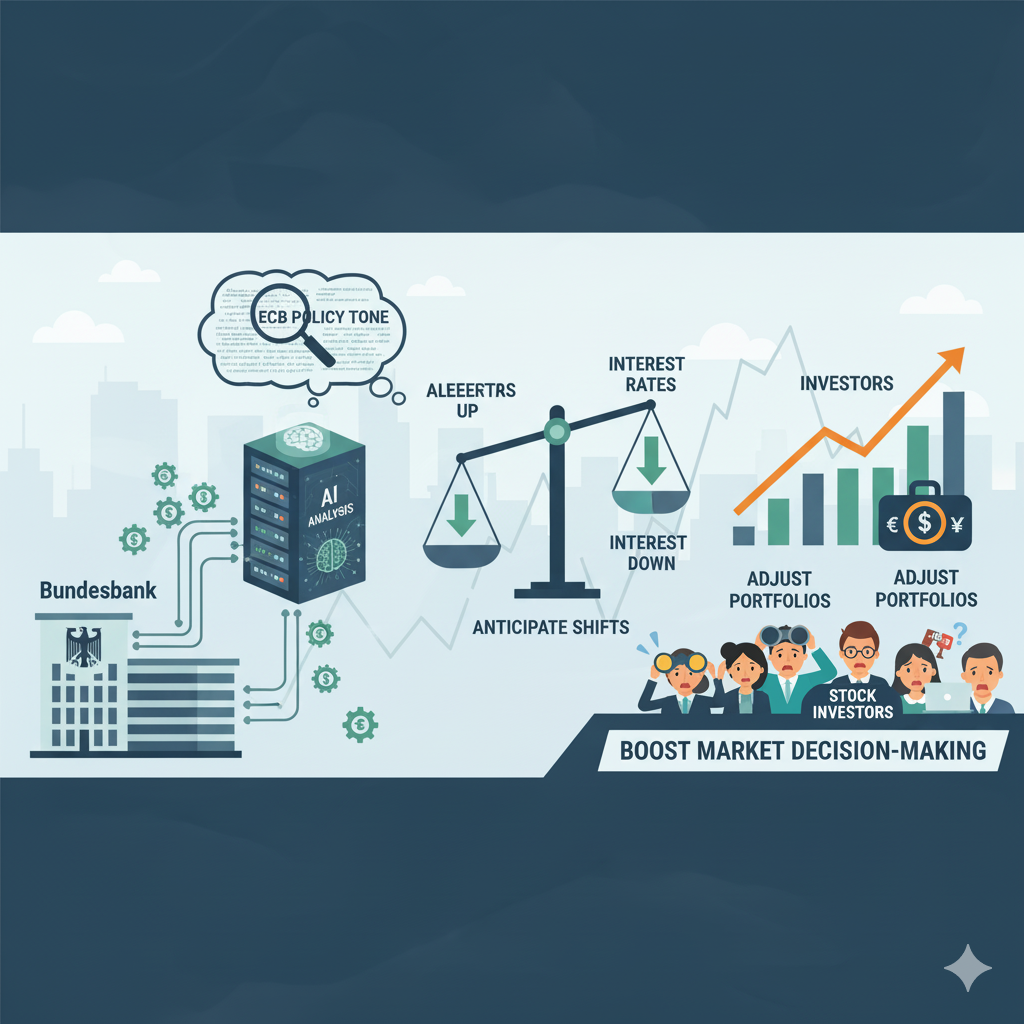
AI in Central Banking: How the Bundesbank’s Use of AI to Track Policy Tone Impacts the Stock Market

In the evolving world of finance, technology continues to make waves. One of the most recent and intriguing developments comes from Germany’s central bank, the Bundesbank, which has adopted Artificial Intelligence (AI) to track the tone of statements made by policymakers in relation to monetary policy. While this may seem like a small shift, it could have far-reaching implications, particularly for stock market investors who rely on accurate forecasts and insights into central bank actions. This shift marks a fascinating convergence between traditional monetary policy analysis and cutting-edge technology, offering investors an invaluable new tool to predict future policy shifts.

AI and the Dovish-Hawkish Debate

The primary purpose behind the Bundesbank’s move is to use AI to assess whether policymakers are leaning more towards a dovish or hawkish stance. For those unfamiliar with these terms, a dovish approach refers to a monetary policy that favors lower interest rates and stimulative measures to foster economic growth. On the other hand, a hawkish stance typically involves advocating for higher interest rates to combat inflation, even at the risk of slowing down economic activity.

In central banking, these opposing views often create a fine balance, particularly within the European Central Bank (ECB), where policymakers must navigate the needs of 19 different economies within the Eurozone. The problem is that verbal cues about policy direction can be quite subtle, and interpreting the tone of statements made by central bankers can often be subjective. One official might phrase their comments cautiously, while another might be more direct or assertive. This is where AI comes into play.

Using advanced AI algorithms, the Bundesbank’s new tool is designed to scan and assess the language used by ECB officials. By quantifying the tone of their remarks—whether optimistic, cautious, or hawkish—the AI tool provides an objective, data-driven analysis of the overall sentiment within the ECB. This allows the Bundesbank to gain a clearer picture of the ECB’s intended direction in its monetary policy.

Why Does This Matter for Investors?

For stock market investors, understanding the monetary policy stance of the ECB is crucial. The European Central Bank controls one of the most influential levers in the global economy—interest rates. Interest rates directly affect corporate profitability, consumer spending, and investment strategies. The higher the rates, the more expensive it becomes to borrow money, which can slow economic activity. Conversely, lower rates tend to encourage borrowing and investment, stimulating growth.

Thus, stock market investors, especially those in European markets, closely watch the ECB’s policy decisions. However, interpreting the signals from the central bank is not always easy. Official policy changes are typically made in press releases or at scheduled meetings, but the comments made by officials between these announcements often provide key clues. A subtle shift in tone—such as a slight change in language or rhetoric—could indicate a change in policy direction. For instance, if an ECB official begins using more hawkish language, it could signal an interest rate hike, which may cause stocks to fall.

The new AI tool from the Bundesbank can now help investors interpret these clues more objectively, improving their ability to anticipate moves by the ECB. By analyzing how policymakers’ statements are framed—whether they’re leaning towards tighter or looser monetary conditions—the AI tool helps investors gain insights into future rate hikes or cuts, inflation concerns, and the overall health of the Eurozone economy.

The Market Implications of AI-Powered Policy Insights

So, how will this AI-driven analysis impact the stock market? Let’s break it down:

1. Better Anticipation of Policy Shifts

As the Bundesbank uses this AI tool to assess the policy tone of ECB officials, stock market participants can gain more clarity on the likely direction of monetary policy. If the tool consistently detects a shift towards a more dovish stance, it could signal that the ECB is likely to keep interest rates low for longer. Conversely, if the AI detects a hawkish tilt in statements, markets may begin pricing in the possibility of rate hikes. For investors, early access to this type of information could provide a significant advantage in adjusting their portfolios in response to evolving policy expectations.

2. Enhanced Decision-Making

Stock investors—especially those focused on European equities—will be able to make better-informed decisions based on a more accurate reading of central bank sentiment. Investors who are able to accurately predict the ECB’s monetary policy actions may be able to position themselves in sectors that are more likely to benefit from certain policy shifts. For example, a dovish stance (i.e., low interest rates) would likely benefit growth stocks, particularly in sectors such as technology, which rely on easy access to capital. On the other hand, hawkish rhetoric might drive investors to favor value stocks or those in defensive sectors like utilities.

3. Improved Risk Management

A central tenet of investing is managing risk, and one of the most effective ways to mitigate risk is by anticipating potential shifts in the macroeconomic environment. With the AI tool providing clearer insights into ECB policy tone, investors can adjust their portfolios to manage risk better. For example, if the AI signals a shift towards tightening monetary policy, investors might reduce their exposure to highly leveraged stocks, as these companies are more sensitive to interest rate increases. Similarly, they may allocate more funds to companies that can benefit from a higher rate environment, such as banks, which typically perform better when interest rates rise.

4. Global Spillover Effects

While the Bundesbank’s AI tool focuses on ECB policy, its influence goes beyond just Germany or the Eurozone. The European Central Bank has a significant impact on global markets. Interest rate changes or shifts in sentiment at the ECB often have repercussions in global markets, particularly in the currency markets, commodities, and emerging markets. A hawkish shift in ECB policy could strengthen the euro, leading to a more challenging environment for companies that export goods to the Eurozone. Conversely, a dovish stance could weaken the euro, benefiting European exporters. The AI tool, by providing clearer signals about ECB policy shifts, allows investors to anticipate these global spillovers, thus refining their strategies in international markets.

5. Transparency and Trust in Central Bank Communications

This AI-powered tool also brings an element of transparency to central bank communications. Historically, interpreting the language of central bankers has been both an art and a science—where financial analysts often had to rely on subjective interpretations of tone. With AI, investors have access to a more consistent, systematic analysis of these statements, which could lead to greater confidence in market predictions. For those with an interest in European markets, this increased transparency can help build trust in the decision-making processes of central banks, providing more stability for long-term investors.

The Future of AI in Central Banking

While the Bundesbank’s AI tool is a pioneering step in the use of technology to track monetary policy sentiment, this could just be the beginning. Central banks around the world could begin adopting similar AI-driven tools to analyze and forecast policy shifts. The increased reliance on data-driven insights could enhance the transparency and effectiveness of central banking, ultimately benefiting financial markets by providing more accurate predictions of monetary policy moves.

In the future, we may also see the integration of AI into other aspects of monetary policy, such as forecasting inflation, GDP growth, or employment trends. AI could help central banks more effectively navigate the complexities of the global economy and respond to crises with greater agility.

Conclusion

The Bundesbank’s decision to use AI to monitor the tone of ECB statements is a game-changer for investors. By providing clearer, more objective insights into central bank sentiment, this tool will help investors make more informed decisions, manage risk better, and improve their understanding of the broader economic landscape. As the financial world continues to evolve, the role of AI in monetary policy analysis will only grow, offering new opportunities for investors who are able to adapt and leverage these technological advancements.

In a world where information is power, the ability to predict shifts in central bank policy with greater precision could provide a significant edge to those in the stock market. As always, the key for investors will be to stay ahead of the curve, using the latest tools and technologies to guide their investment decisions.


This article explores the use of AI in monetary policy analysis and how it could impact stock market investing. Would you like to dive deeper into any specific aspect of this development or discuss its broader implications?