
Maximize Your Tax Savings in 2026: Smart Strategies for Financial Success

How to Maximize Tax Savings in 2026: A Comprehensive Guide

Tax season can be stressful, but with the right strategies, you can reduce your tax liability and save more money. The government’s 2026 budget proposals have introduced new provisions for taxpayers to take advantage of. In this article, we will explore the most effective tax-saving strategies, key deductions, and exemptions that you can utilize to lower your tax burden. Whether you’re a salaried professional, a small business owner, or someone planning for retirement, there are a variety of tax-saving options available for you in 2026.


1. Maximize Tax Deductions and Exemptions

Every year, the government offers tax deductions and exemptions on specific expenses, and the 2026 budget brings some fresh opportunities. One of the simplest ways to reduce your taxable income is by claiming these tax-saving deductions.

Deductions for Medical Expenses

Medical expenses can be a significant burden, but fortunately, you can claim deductions under Section 80D and Section 80E of the Income Tax Act. In 2026, the tax proposals may expand the coverage of medical deductions. If you’ve paid medical premiums for yourself, your family, or your parents, you can claim a tax deduction on those amounts. Be sure to keep track of any health-related expenditures, especially with the increasing costs of healthcare.

Education-Related Deductions

The government also offers tax benefits for educational expenses. If you’re paying for tuition fees, whether it’s for your child’s education or your own, you can take advantage of Section 80C. The 2026 proposals may provide additional tax-saving opportunities for individuals pursuing higher education or funding specialized programs.


2. Contribute More to Retirement Plans

One of the best ways to lower your taxable income while planning for your future is by contributing to retirement plans. The government offers various tax-saving instruments that are specifically designed to help you save for retirement. In 2026, contributions to retirement savings accounts will continue to be a powerful tax-saving strategy.

Employee Provident Fund (EPF)

Employees who contribute to the EPF (Employee Provident Fund) are eligible to receive a tax deduction under Section 80C. The EPF contribution limits and interest on the funds are exempt from tax. As long as the funds are used for retirement, the interest remains tax-free.

National Pension System (NPS)

The National Pension System offers an additional benefit for those who contribute to it. In 2026, the NPS is expected to have new provisions under Section 80CCD (1B) that provide tax benefits on contributions up to ₹50,000, beyond the standard ₹1.5 lakh limit in Section 80C. So, increasing your NPS contributions can further reduce your taxable income.

401(k) and IRAs (For International Taxpayers)

For those living abroad or working in countries like the United States, contributing to retirement accounts like a 401(k) or an IRA is another smart tax-saving strategy. These accounts allow you to contribute pre-tax income, reducing your taxable income for the year.


3. Leverage Health Savings Accounts (HSAs)

Health Savings Accounts (HSAs) are an underutilized tool for reducing taxable income. If you are eligible for an HSA, 2026 could bring even more benefits as the budget proposals may offer expanded coverage. HSAs are designed to help you save for medical expenses, and contributions to these accounts are tax-deductible. Additionally, the growth of investments in the HSA is tax-free, and withdrawals used for medical expenses are also tax-exempt.

For those of you with high-deductible health plans, contributing to an HSA can significantly reduce your taxable income while also giving you a way to cover future medical costs.


4. Invest in Tax-Saving Instruments

Investing in certain government-approved tax-saving instruments can lower your tax liability while helping you grow your wealth. Several options are available under Section 80C and other sections of the Income Tax Act. These options are perfect for individuals who want to maximize their savings and reduce their tax burden in 2026.

Public Provident Fund (PPF)

The Public Provident Fund remains one of the most popular and secure tax-saving instruments. With an interest rate that is higher than most savings accounts and tax-free returns, PPF continues to be a favorite for many. Contributions to PPF are eligible for tax deductions up to ₹1.5 lakh per year. The government may continue to make adjustments to PPF policies in the 2026 budget, making it even more beneficial for taxpayers looking for long-term, secure investments.

National Savings Certificates (NSC)

NSC is another tax-saving investment that offers returns at a fixed rate. Like PPF, the interest earned from NSC is tax-free, making it an excellent choice for people looking to reduce their tax exposure. Additionally, investments in NSC are eligible for tax deductions under Section 80C, up to the prescribed limit.

Tax-Free Bonds

Tax-free bonds are debt instruments issued by government agencies or public sector undertakings (PSUs). The interest earned from these bonds is exempt from income tax, making them an attractive investment for tax-conscious investors. These bonds may receive more favorable terms in the 2026 budget, providing greater opportunities for tax savings.


5. Take Advantage of Home Loan Deductions

For many taxpayers, home loans are a significant part of their financial portfolio. The 2026 budget may provide further relief for homeowners, expanding the deductions available for home loan interest and principal repayment.

Home Loan Interest Deduction

Section 24 of the Income Tax Act allows homeowners to claim a deduction on the interest paid on home loans. For self-occupied properties, you can claim up to ₹2 lakh per year. In 2026, the government may enhance this limit or introduce new schemes that offer greater tax relief for homeowners.

Principal Repayment Deduction

Under Section 80C, taxpayers can also claim a deduction for the principal repayment of home loans. This deduction is part of the overall ₹1.5 lakh limit, so it is crucial to maximize this section with other eligible tax-saving investments.

House Rent Allowance (HRA)

If you’re living in a rented property, you can claim a deduction on your HRA under Section 10. The 2026 budget might introduce enhanced exemptions for HRA, making it more beneficial for those paying rent.


6. Plan for Capital Gains Taxes

Capital gains taxes are imposed on the sale of assets such as stocks, bonds, or real estate. Depending on the holding period, the tax rate can vary. In 2026, the government may tweak capital gains tax rules, so it’s important to plan accordingly.

Short-Term vs. Long-Term Capital Gains

Short-term capital gains (STCG) are typically taxed at higher rates than long-term capital gains (LTCG). By holding investments for a longer period, you can reduce your tax burden. For example, stocks held for more than one year may qualify for a lower LTCG tax rate.

Tax-Efficient Investment Strategies

Tax-efficient investing strategies, such as investing in tax-deferred or tax-exempt accounts, can help minimize your capital gains tax exposure. In 2026, the budget may provide new options for tax-efficient investing, so stay informed about any changes.


Conclusion: Strategic Tax Planning for 2026

Maximizing your tax savings in 2026 requires a proactive approach. With new tax-saving instruments, deductions, and exemptions on the table, you have a range of strategies at your disposal. From contributing to retirement accounts and leveraging tax-free bonds to optimizing home loan deductions and using Health Savings Accounts, there are several avenues for reducing your taxable income. Keep an eye on the latest budget changes to ensure you’re taking full advantage of the available tax-saving opportunities.

By planning ahead and making the right financial moves, you can significantly reduce your tax liability and make the most of your income in 2026.
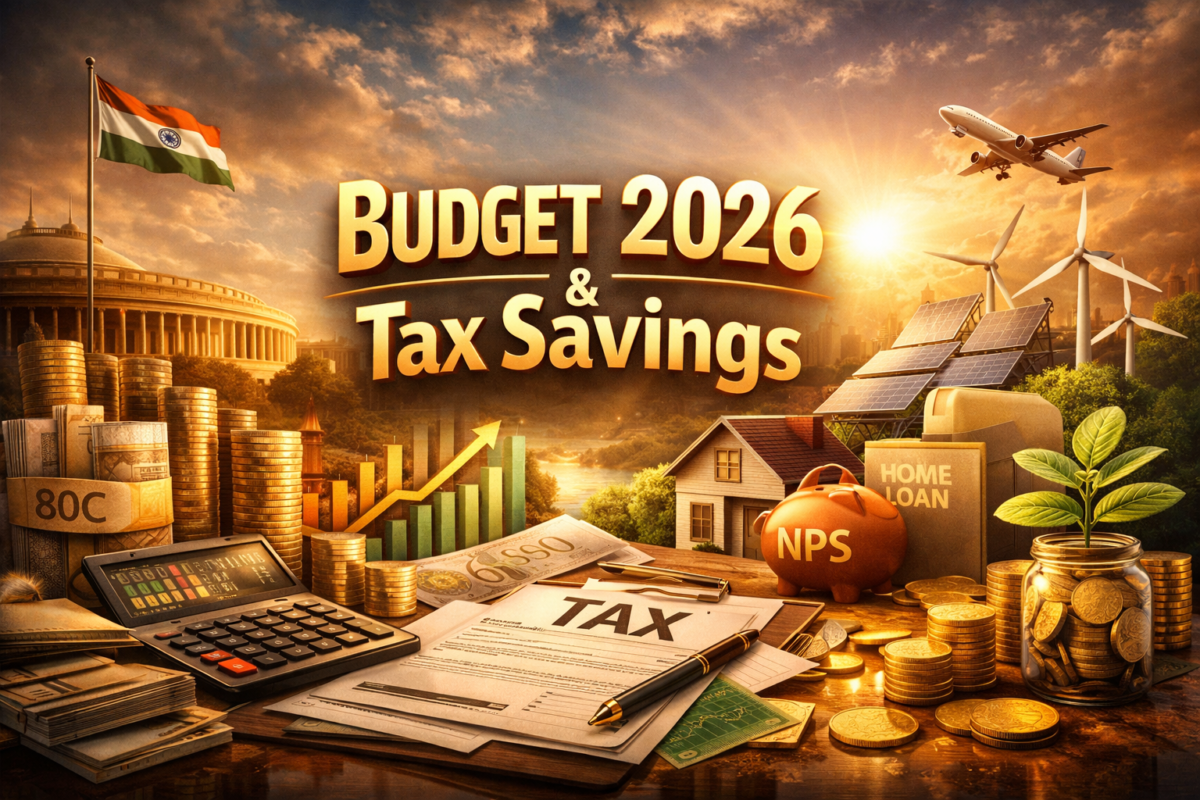
“New Tax Breaks in Budget 2026: A Golden Opportunity for Taxpayers”

1. Changes in Income Tax Slabs and Rates

The Budget 2026 is expected to focus on relieving the tax burden on middle-class and lower-income taxpayers. A possible revision in the income tax slabs could offer immediate benefits, potentially lowering the overall tax liability for individuals in specific brackets.

  • Impact on Taxpayers: If the tax rates are reduced or the income thresholds for the various slabs are raised, taxpayers could pay less in taxes, resulting in higher disposable income. For example, the budget could increase the basic exemption limit or introduce a revised tax slab structure that favors middle-class taxpayers.
  • Tax-saving Strategy: With a lower overall tax liability, taxpayers might have the flexibility to invest more in tax-saving instruments like ELSS (Equity Linked Savings Scheme), PPF (Public Provident Fund), and NPS (National Pension Scheme). With the additional disposable income, people can maximize their contributions to these tax-saving schemes, ensuring reduced taxable income.

2. Revised Deductions under Section 80C

Section 80C is one of the most widely used sections for tax-saving in India, covering a variety of popular investment tools. The Budget 2026 might bring in increased limits or introduce new instruments under Section 80C, making it even more beneficial for taxpayers.

  • Impact on Common Investments: If the limits are increased, or new investments like Sukanya Samriddhi Yojana (SSY) or Tax-saving Fixed Deposits are added to the list, it could encourage more individuals to invest to save taxes. If there are changes in interest rates for PPF or NSC, the returns could become more attractive, making these investments more lucrative.
  • Tax-saving Strategy: Individuals could plan their financial year more strategically, allocating the maximum allowable amount to tax-saving instruments. By doing so, they not only reduce their taxable income but also take advantage of higher returns, especially if the limits increase or interest rates become more favorable.

3. Tax Benefits for Green and Sustainable Investments

In line with global trends towards sustainability, the Budget 2026 could incentivize green investments like Green Bonds, Renewable Energy Funds, or environmental-focused mutual funds. This would reflect India’s growing focus on climate change and clean energy investments.

  • Impact on Green Bonds: The government might announce tax exemptions or deductions for investments in green bonds, which could attract more investors looking for eco-friendly and tax-efficient ways to diversify their portfolios. These types of bonds are expected to not only provide a good return but also contribute to a sustainable future.
  • Tax-saving Strategy: Investors seeking tax savings could shift their portfolios to sustainable assets. Green bonds might come with tax-free interest, which could lower the effective tax on earnings from these investments. It would encourage more long-term investors to focus on socially responsible investments while benefiting from tax incentives.

4. Tax Relief for Small and Medium Enterprises (SMEs)

The SME sector is a major engine of India’s economy, and the Budget 2026 could provide further tax relief for SMEs. These companies could see new deductions, exemptions, or credits related to business expansion, technological investment, or new employment generation.

  • Impact on Business Taxation: This may include tax exemptions on capital expenditures, deductions for R&D activities, or special tax rates for small businesses. The introduction of tax holidays or rebates for businesses adopting green technologies or digital innovations is also a possibility.
  • Tax-saving Strategy: Entrepreneurs and small businesses can take advantage of these tax-saving opportunities by investing in the right technologies or hiring new staff. They can also deduct business-related expenses more efficiently, saving on taxes while growing their business.

5. Incentives for Retirement Planning (NPS & PPF)

The National Pension Scheme (NPS) and Public Provident Fund (PPF) are integral to long-term retirement planning and are favored for their tax-saving benefits under Section 80C and Section 80CCD.

  • Impact on Retirement Savings: The Budget 2026 could introduce higher tax deductions for contributions to the NPS, or PPF interest might become more tax-efficient. A special focus on retirement savings could encourage individuals to contribute more toward pension plans, ensuring a comfortable retirement while reducing their current tax burden.
  • Tax-saving Strategy: Individuals planning for retirement should take full advantage of the NPS‘s tax benefits. The tax-deferred nature of NPS contributions would allow individuals to accumulate wealth while paying minimal taxes in the current financial year. By contributing to these schemes, individuals not only save taxes but also set up a secure future.

6. Simplification of Tax Filing and Compliance

A critical area of focus in the Budget could be the simplification of tax filing processes. This could include a streamlined process for salaried employees, allowing them to easily claim deductions and exemptions without complex paperwork.

  • Impact on Taxpayers: The Tax Department may introduce a simplified online portal for filing taxes and claiming tax-saving investments. This would make it easier for people to track their deductions, claim exemptions like HRA (House Rent Allowance), and ensure they’re not missing out on any tax-saving opportunities.
  • Tax-saving Strategy: A simplified filing system would lead to higher compliance rates and ensure taxpayers fully utilize their eligible tax-saving investments and exemptions. A user-friendly interface could encourage more people to actively participate in tax-saving schemes, thereby reducing their overall tax burden.

Conclusion

The Budget 2026 is likely to bring significant changes that can influence tax-saving strategies for individuals and businesses alike. With the introduction of revised tax slabs, enhanced deductions, incentives for green investments, and retirement planning, taxpayers should prepare to optimize their tax savings by strategically investing in the right instruments. As tax compliance becomes easier, people will also be encouraged to claim their eligible deductions and exemptions more efficiently.

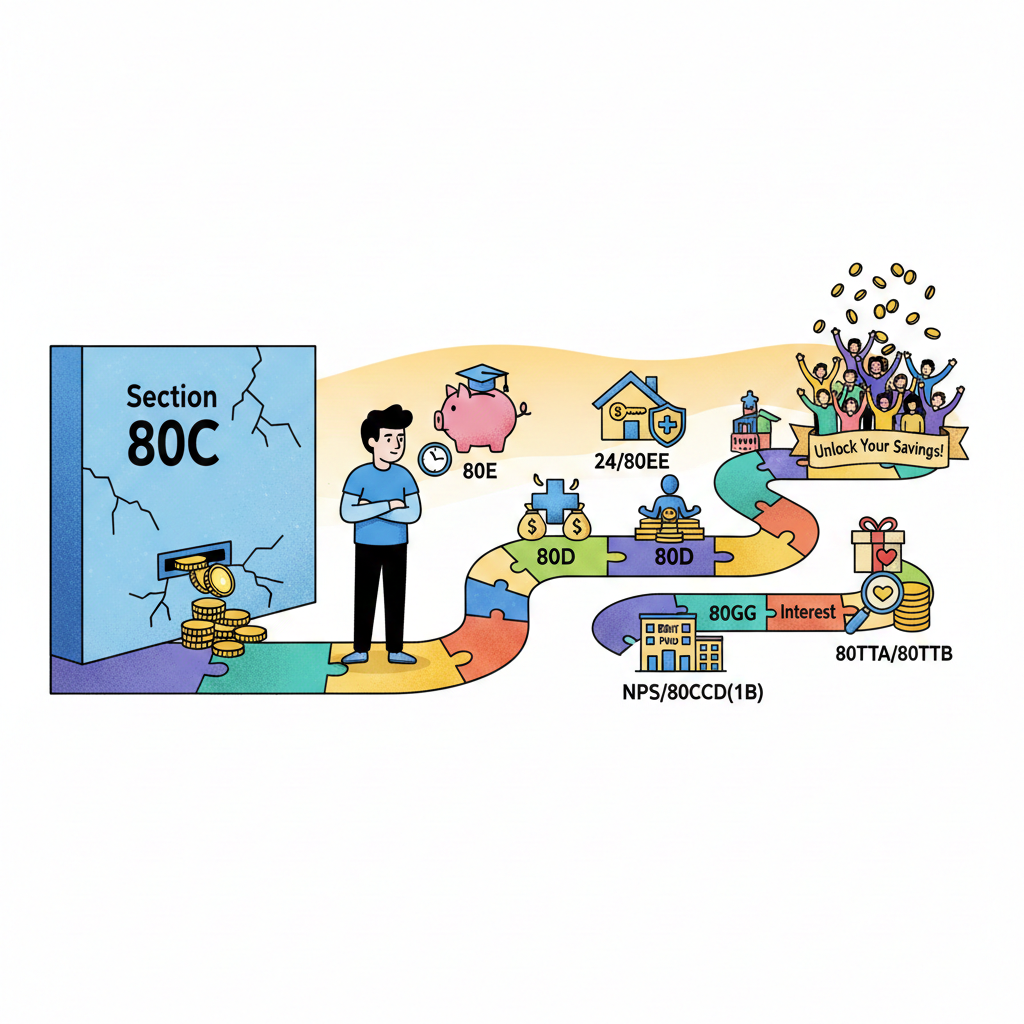
Tax-Free: The 10 Best Strategies Beyond 80C

In the complex world of Indian personal finance, the mere mention of “March 31st” is enough to trigger a minor panic. For most salaried employees, tax planning usually begins and ends with Section 80C. We scramble to dump money into ELSS funds, Public Provident Funds (PPF), or life insurance premiums, all to hit that magic ₹1.5 lakh ceiling. But here is the reality: for many middle-to-high-income earners, that ₹1.5 lakh limit is exhausted almost instantly by mandatory Employee Provident Fund (EPF) contributions and children’s school fees.

If you stop there, you are essentially leaving money on the table. The Indian Income Tax Act is often criticized for its complexity, but within that complexity lies a treasure trove of legitimate “tax escapes” that go far beyond the exhausted boundaries of 80C.

To truly optimize your take-home pay, you need to look at the “hidden” sections—the ones that reward you for taking care of your health, investing in your retirement, and even paying for your home. Based on the insights from the recent Livemint analysis, let’s dive deep into the 10 most effective ways to slash your taxable income using the “forgotten” sections of the tax code.

1. The NPS Power Move: Section 80CCD(1B)

While the National Pension System (NPS) is often grouped with 80C, it has a secret weapon. Under Section 80CCD(1B), the government allows an exclusive additional deduction of ₹50,000.

If you are in the 30% tax bracket, utilizing this section alone can save you an extra ₹15,000 in taxes every year. Beyond the tax savings, the NPS is one of the most cost-effective retirement tools available, allowing you exposure to equity markets with professional management at a fraction of the cost of a mutual fund. It’s a win-win: you build a sunset fund while keeping the taxman at bay today.

2. The Health Shield: Section 80D

Many people view health insurance as an expense; savvy taxpayers view it as a strategic deduction. Section 80D is remarkably generous.

However, the real benefit kicks in when you pay for your parents. If your parents are senior citizens (over 60), you can claim an additional ₹50,000. Combined, a taxpayer could potentially deduct ₹75,000 from their taxable income. Even if you don’t have insurance for senior citizen parents, you can claim deductions for their medical expenses under this section. Furthermore, don’t forget the ₹5,000 sub-limit for “preventive health check-ups”—it’s a small but easy way to round off your deductions.

3. Investing in the Mind: Section 80E

Student debt is a global crisis, but the Indian tax code offers a significant silver lining. Under Section 80E, the entire interest component of an education loan is deductible. There is no upper monetary limit. Whether you are paying off your own MBA loan or a loan for your child’s engineering degree, every rupee of interest paid can be subtracted from your taxable income.

4. The Homeowner’s Advantage: Section 24(b)

While Section 80C covers the principal repayment of a home loan, Section 24(b) focuses on the interest. For a self-occupied property, you can deduct up to ₹2 lakh in interest payments annually.

In the early years of a home loan, the interest component is usually much higher than the principal, making this section the “heavy lifter” of tax planning. If you own a second home that is rented out, the news is even better: there is currently no maximum ceiling on the interest deduction for let-out properties, though losses under the head “Income from House Property” can only be offset against other income up to ₹2 lakh per year.

5. First-Time Buyers: Section 80EE

If you are a first-time homebuyer, the government wants to reward your milestone. Section 80EE allows an additional deduction of ₹50,000 on home loan interest. This is independent of the ₹2 lakh limit under Section 24. To qualify, the loan must have been sanctioned within specific windows (usually related to the property value and loan amount), but for those who qualify, it brings the total interest deduction potential to a whopping ₹2.5 lakh.

6. The “No HRA” Relief: Section 80GG

A common misconception is that you can only save on rent if your employer provides House Rent Allowance (HRA). What if you are a freelancer, a consultant, or work for a small startup that doesn’t offer HRA?

Section 80GG is your safety net. It allows you to claim a deduction for rent paid even if you don’t receive HRA. While the limit is capped at ₹5,000 per month (₹60,000 per year), it provides essential relief to those in the informal or gig economy who are otherwise overlooked by standard corporate tax structures.

7. Savings Account Perks: Section 80TTA & 80TTB

Most of us keep a “parking fund” in a savings account. The interest earned on these balances is taxable, but Section 80TTA provides a buffer. You can earn up to ₹10,000 in savings interest tax-free.

For senior citizens, the benefit is even more robust under Section 80TTB, which raises the limit to ₹50,000 and includes interest from Fixed Deposits (FDs) and Recurring Deposits (RDs). For retirees living on interest income, this is a vital provision that protects their purchasing power.

8. Supporting Dependents with Disabilities: Section 80DD

Tax law isn’t just about math; it’s about social equity. Section 80DD allows taxpayers to claim a deduction for the medical treatment, training, or rehabilitation of a disabled dependent.

The beauty of this section is that it is a flat deduction. You don’t necessarily need to show every single medical receipt. If the dependent has a disability of 40% or more, you get a flat deduction of ₹75,000. If the disability is severe (80% or more), the deduction jumps to ₹1,25,000. It is a compassionate provision designed to lower the financial burden on families providing specialized care.

9. Treating Specified Diseases: Section 80DDB

The cost of treating critical illnesses like cancer, chronic renal failure, or certain neurological diseases can be ruinous. Section 80DDB provides a deduction for expenses incurred for the treatment of such specified ailments for yourself or your dependents.

The limit is ₹40,000 for individuals, but for senior citizens, it increases to ₹1 lakh. While no one wants to find themselves in a position to need this deduction, it serves as a critical financial cushion during a family’s darkest hours.

10. Donations and Charity: Section 80G

Finally, doing good can also be good for your taxes. Contributions to certain approved charitable funds or institutions are eligible for deductions under Section 80G. Depending on the institution, you can claim either 50% or 100% of the donated amount. However, be cautious: to claim this, you must ensure the charity has a valid 80G registration, and donations above ₹2,000 must be made via digital modes or cheques (not cash) to qualify.

The Strategy: How to Approach Your Taxes

Tax planning should not be a “hide and seek” game played with the authorities. Instead, it should be a structured review of your life’s expenditures.

The mistake most people make is looking for “investments” to save tax. In reality, the most efficient tax planning often comes from expenditures you are already making. Are you paying for your parents’ medicines? (Section 80D). Are you paying rent? (Section 80GG). Are you paying off a degree? (Section 80E).

By shifting your focus away from the crowded 80C corridor and exploring these ten avenues, you can build a tax strategy that is both more effective and more reflective of your actual financial life. Remember, every rupee saved in tax is a rupee earned for your future. Don’t let the simplicity of 80C blind you to the thousands of rupees waiting to be saved elsewhere in the rulebook.