The Future of Digital Insurance: Key Trends Revolutionizing the Market

The Future of Digital Insurance: Trends in the Market

The insurance industry has traditionally been one that is slow to innovate, heavily reliant on outdated systems, and often complex for consumers to navigate. However, the past decade has seen significant shifts, primarily driven by digital transformation. As technology continues to evolve at a rapid pace, the insurance sector is embracing new tools, methodologies, and customer-centric solutions to adapt to the demands of today’s market. This article will explore the key trends shaping the future of digital insurance and how these innovations are driving changes in the way policies are bought, managed, and claimed.

1. The Rise of InsurTech: Revolutionizing the Insurance Landscape

At the forefront of the digital insurance revolution is InsurTech, a term used to describe technology-driven startups and innovations within the insurance industry. InsurTech companies are bringing fresh perspectives and ideas to the table by integrating new technologies into the traditional insurance model.

In recent years, we’ve seen the rapid rise of InsurTech companies that are challenging established insurance firms by offering more agile and user-friendly alternatives. These startups are reshaping the way consumers interact with insurers, from acquiring policies to managing claims. Through the use of technology, InsurTech firms are able to reduce overhead costs, offer faster services, and create more transparent products. For example, the use of digital platforms allows consumers to purchase and manage policies entirely online, eliminating the need for face-to-face interactions or complex paperwork.

Moreover, InsurTech companies have been successful in reaching younger, tech-savvy consumers who prefer digital-first experiences. Traditional insurers are also adapting by either investing in these new technologies or forming partnerships with InsurTech firms. This growing fusion of innovation and established practice is driving a significant shift towards more efficient and consumer-friendly insurance services.

2. Artificial Intelligence (AI) and Automation: Enhancing Efficiency and Accuracy

Artificial Intelligence (AI) and automation are arguably the most powerful tools in the digital insurance space today. These technologies have transformed many aspects of the insurance industry, especially in areas like underwriting, claims processing, and customer service.

AI-powered tools are improving the underwriting process by analyzing vast amounts of data more quickly and accurately than a human could. Insurers are now able to assess risk factors in real-time, offering more competitive pricing and more tailored policies to customers. For example, machine learning algorithms can analyze customer data to better understand risk profiles, allowing insurers to create highly personalized policies that reflect the individual’s needs and circumstances.

Similarly, AI has revolutionized claims processing. Traditionally, claims were handled manually, which could take days or even weeks. Today, AI can automate much of the process, allowing for quicker and more accurate claims decisions. For instance, AI systems can analyze photos or videos of damaged property and determine the extent of the damage, providing faster resolutions to claims.

Another area where AI is making a big impact is in chatbots and virtual assistants. Insurers are using AI-driven chatbots to handle customer inquiries, providing instant support and freeing up human agents to focus on more complex issues. This not only improves customer satisfaction but also reduces operating costs for insurers. As AI technology becomes more advanced, we can expect even greater automation and increased accuracy in all aspects of the insurance process.

3. Personalized Insurance Products: Data-Driven Customization

The shift towards more personalized insurance products is one of the most exciting trends in digital insurance. Thanks to advancements in data analytics and AI, insurers are now able to offer highly personalized policies tailored to the unique needs of individual customers.

In the past, insurance policies were often one-size-fits-all, with little flexibility for customization. However, with the wealth of data available today, insurers can create policies that reflect an individual’s behavior, preferences, and lifestyle. For example, instead of offering a generic home insurance policy, insurers can analyze data about the customer’s home, location, and even their social habits to offer a more personalized plan.

This personalization is particularly evident in health insurance and life insurance markets, where insurers are using customer data from wearables and other sources to create usage-based policies. For example, some life insurers now offer policies with premiums that adjust based on a customer’s health metrics, such as fitness levels or the number of steps walked in a day. These personalized policies not only benefit customers by offering more tailored solutions but also benefit insurers by allowing them to better assess risk and offer more competitive pricing.

Overall, the future of insurance is one where policies are created based on the individual, rather than a generalized group. As data analytics continue to improve, this trend is only expected to grow.

4. Blockchain: Providing Transparency and Security

One of the most exciting technological developments in the insurance industry is the use of blockchain. Blockchain is a decentralized, distributed ledger technology that allows for the secure, transparent, and immutable tracking of data. In the context of insurance, blockchain can enhance security, reduce fraud, and improve the overall efficiency of the industry.

Blockchain offers a significant advantage when it comes to managing policy records and claims. Since all transactions on a blockchain are time-stamped and irreversible, the technology offers an unprecedented level of transparency. This makes it much harder for fraudulent activities, such as falsified claims, to go undetected. In addition, blockchain can be used to streamline administrative processes by ensuring that all parties (e.g., insurers, brokers, and customers) have access to the same real-time data, reducing the potential for errors and misunderstandings.

Furthermore, smart contracts powered by blockchain are set to revolutionize how policies are enforced. For example, an insurance policy could be automatically executed based on predefined conditions, such as the occurrence of a specific event, like a natural disaster. This level of automation will further reduce the need for manual intervention and speed up the claims process.

As blockchain technology matures, its role in the insurance industry will continue to expand, offering both greater transparency and security for consumers and insurers alike.

5. Telematics and Usage-Based Insurance: Changing the Way Premiums Are Set

Another key trend driving digital transformation in insurance is the use of telematics and usage-based insurance (UBI). This is particularly noticeable in the auto insurance sector, where telematics devices are used to track driving behavior and set premiums based on actual usage rather than general risk assessments.

Telematics devices, which are often installed in vehicles, track data such as speed, braking habits, and mileage. This data is then used by insurers to offer policies that more accurately reflect the driver’s behavior. For example, a safe driver who avoids speeding or harsh braking could receive a lower premium, while a more reckless driver may face higher rates.

In addition to auto insurance, the rise of health telematics (such as fitness trackers or smartwatches) is allowing insurers to offer usage-based health insurance. Customers who maintain a healthy lifestyle, track their workouts, or take part in wellness programs may receive discounts or rewards. This trend aligns with the growing emphasis on personal responsibility for health and wellness.

The key benefit of telematics-based insurance is that it allows insurers to offer more dynamic pricing. Rather than relying on traditional factors like age or location, insurers can price premiums based on real-time behavior, offering customers the chance to lower their costs through better decision-making. This represents a major shift towards customer-centric models that reward positive behaviors.

6. Digital-First Customer Experience: Meeting Consumer Expectations

Finally, one of the most significant trends in digital insurance is the growing emphasis on creating a digital-first customer experience. Today’s consumers expect to be able to manage their insurance policies seamlessly from their mobile devices, whether they’re buying a policy, managing claims, or making changes to their coverage.

As customer expectations shift towards convenience and accessibility, insurers are investing heavily in creating digital platforms, mobile apps, and other digital tools that allow consumers to interact with their insurance providers 24/7. These platforms provide a range of features, such as the ability to file claims instantly, track the status of claims in real time, and access policy documents anytime, anywhere.

In addition to digital tools, insurers are increasingly using AI-powered chatbots to provide customer support. These chatbots are available around the clock and can answer a wide range of customer inquiries, from policy details to claim status updates, without the need for human agents. This not only improves the customer experience but also reduces costs for insurers.

As the industry continues to shift toward digital-first experiences, insurers will need to prioritize user-friendly, intuitive platforms that cater to the needs of tech-savvy consumers.

Conclusion

The future of digital insurance is one of increased innovation, personalization, and efficiency. With technologies such as InsurTech, AI, blockchain, telematics, and advanced data analytics, the insurance industry is evolving rapidly, providing consumers with more tailored, accessible, and transparent solutions. As these trends continue to gain momentum, the role of digital insurance will become more critical in meeting the changing expectations of modern consumers. The insurance industry, traditionally slow to embrace change, is now at the forefront of the digital revolution, and this shift will only accelerate in the coming years.
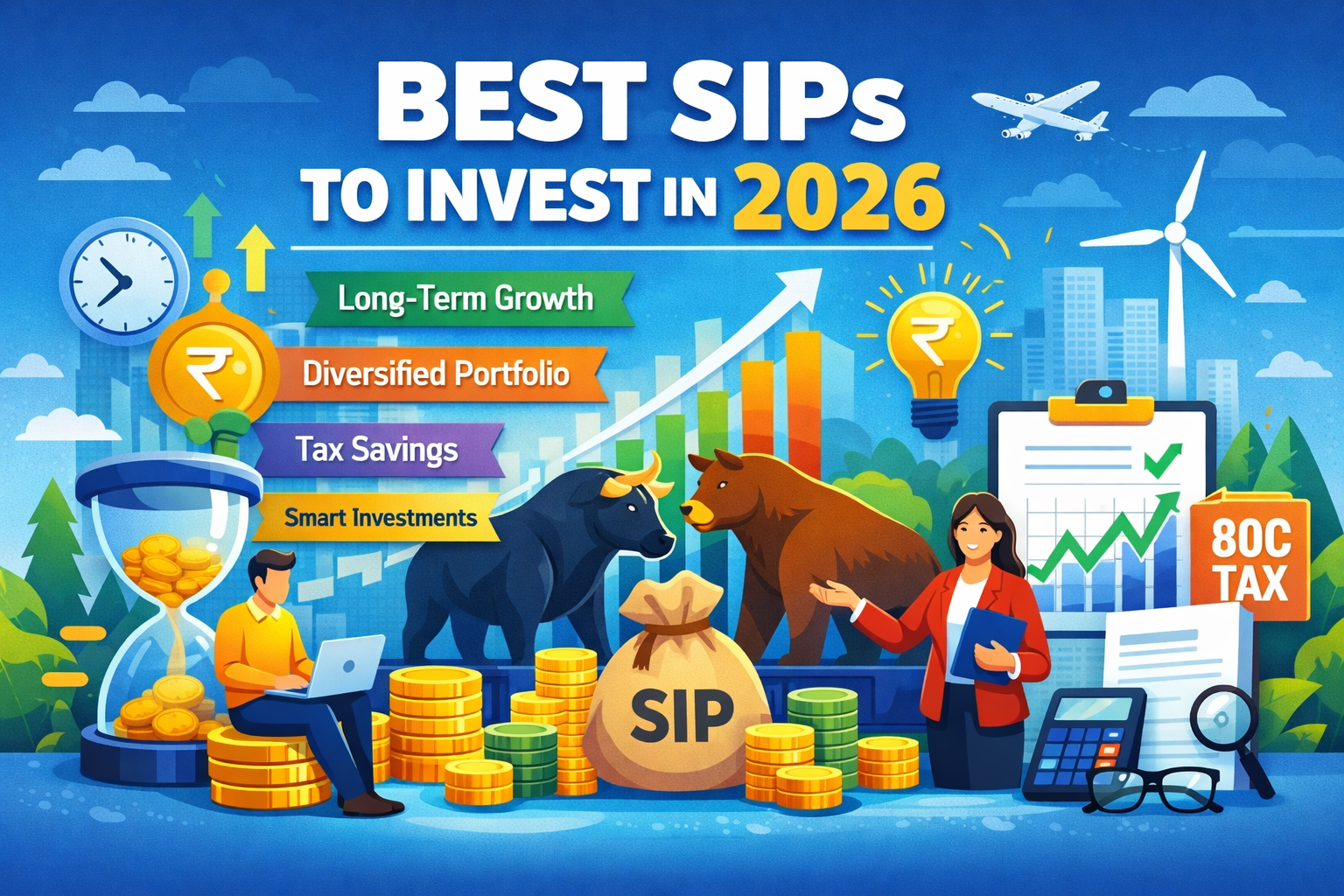

Top SIP Investment Options for 2026: Maximize Your Wealth with Smart Strategies

Top SIP Investment Options for 2026: Investing through Systematic Investment Plans (SIPs) is a popular method for building wealth over time, and it remains one of the most reliable ways to create long-term financial growth. The flexibility of SIPs allows individuals to invest small amounts regularly, which can eventually lead to substantial returns due to the power of compounding. As we look toward 2026, many investors are trying to figure out which SIPs will offer the best returns, while also mitigating risk. Below, we explore some important factors to consider when selecting the best SIPs to invest in for the upcoming year.

1. Long-Term Wealth Creation: The Core Benefit of SIPs

One of the most significant advantages of SIP investing is its long-term focus. While there are various types of investment instruments that promise short-term gains, SIPs are most effective when used for long-term financial goals like retirement planning, funding children’s education, or simply accumulating wealth. The reason SIPs are effective in this context is due to the power of compounding.

When you invest in an SIP, you essentially put in a fixed amount of money at regular intervals, say monthly. The money then gets invested in a mutual fund (typically an equity fund for long-term growth). Over time, the returns on your investments get reinvested, which leads to the compounding effect. For instance, even if you start with a small amount, over a span of 10, 15, or 20 years, that initial investment grows exponentially. So, the longer you stay invested, the greater your returns are likely to be, making SIPs particularly suitable for those planning for future goals.

As we approach 2026, you can take advantage of the expected market recovery, the growth of sectors like technology, renewable energy, and consumer goods, and the continued compounding benefits of SIPs.

2. Diversification: Mitigating Risk by Spreading Investments

Another important consideration when choosing the best SIP for 2026 is diversification. A diversified portfolio reduces risk because it spreads investments across various asset classes. For instance, if you invest solely in a particular sector or type of fund (like large-cap equity funds), you could expose yourself to high volatility. On the other hand, spreading your investment across various sectors and types of funds can help stabilize returns.

A well-diversified SIP portfolio may include a mix of:

  • Large-cap funds: These invest in well-established companies that are stable and have a consistent track record of growth. Large-cap funds are less volatile, making them a good choice for investors who are risk-averse but still want to participate in equity markets.
  • Mid-cap funds: These invest in medium-sized companies that have strong growth potential. Although they are riskier than large-cap funds, they can provide higher returns over time.
  • Small-cap funds: These funds focus on smaller companies with high growth potential. While these are riskier and more volatile, they offer the opportunity for substantial returns. However, small-cap funds should be used carefully and only as a part of a well-balanced portfolio.
  • Debt funds: For those who want a more stable option, debt funds are a good addition. These funds invest in bonds and other fixed-income securities, providing steady but lower returns compared to equities.

By mixing funds from these categories, you can ensure that your SIP portfolio remains balanced and has the potential to weather market fluctuations. A well-diversified SIP not only aims for better returns but also reduces the impact of market volatility on your investments.

3. Tax Saving Benefits: Maximize Returns While Minimizing Tax Liabilities

As an investor, tax planning is an essential component of your financial strategy. SIPs can also help reduce your taxable income, especially if you choose tax-saving funds. Equity Linked Savings Schemes (ELSS) are a specific type of SIP that offers both potential growth and tax benefits.

Under Section 80C of the Income Tax Act, investments in ELSS funds qualify for tax deductions up to ₹1.5 lakh. These tax-saving SIPs have a lock-in period of three years, which is relatively short compared to other tax-saving options like Public Provident Funds (PPFs) or National Savings Certificates (NSCs), which have longer lock-in periods.

Apart from tax savings, ELSS funds also have the potential to provide high returns due to their focus on equity markets. While they come with market risks, they are an excellent choice for investors looking to reduce their tax burden while benefiting from long-term wealth creation.

4. Market Timing: SIPs Remove the Need for Perfect Timing

One of the biggest challenges for investors is trying to time the market. Stock prices fluctuate, and predicting the best time to buy or sell can be tricky. This is where SIPs excel. Since you are investing a fixed amount at regular intervals, you are effectively averaging out your purchase price over time. This strategy, known as rupee cost averaging, helps mitigate the risks associated with market timing.

For example, if the market is experiencing a downturn, you’ll be purchasing more units of the fund at lower prices, which can benefit you in the long run once the market recovers. Conversely, if the market is on an upward trajectory, you will still be buying at higher prices, but since you have been investing consistently, the overall cost of your investment remains averaged out.

By using SIPs, you don’t need to worry about catching the market at its lowest or highest point. This helps you stay invested and ride out market volatility, which can ultimately lead to better returns in the long run.

5. Choosing the Right Fund Manager: Performance History Matters

When selecting an SIP, it’s important to choose funds that are managed by experienced and successful fund managers. A good fund manager has a deep understanding of the market and is adept at making informed decisions about where to allocate assets.

The performance history of a fund manager is one of the most important indicators of success. Look for managers who have consistently delivered good returns over the years, even during market downturns. A fund manager with a good track record can navigate market volatility, which is crucial in ensuring your SIP continues to perform well.

It’s also important to research the mutual fund house’s reputation and the consistency of its returns. Some mutual funds have consistently outperformed their peers, and these are the funds you should consider for your SIP investments in 2026.

6. Expense Ratio: Minimize Fees for Maximum Returns

Every mutual fund charges an expense ratio, which is the fee for managing the fund. This fee can vary from one fund to another, and while it might seem like a small percentage, over the long term, it can have a significant impact on your overall returns.

For example, an expense ratio of 1.5% might seem negligible at first glance, but over 10, 20, or 30 years, it can add up to a considerable sum. Funds with lower expense ratios tend to deliver better net returns to investors. Therefore, when choosing an SIP, make sure to compare the expense ratios of different funds.

For long-term investors, the difference in expense ratios can make a big difference in the final corpus. It’s often advisable to go for funds with lower expense ratios, especially if you are looking to keep costs down and maximize your returns.

Conclusion

Investing in SIPs is a wise decision for anyone looking to build wealth for the long term, and 2026 is a great time to start or enhance your SIP portfolio. By considering the factors outlined above, such as focusing on long-term wealth creation, diversifying your portfolio, taking advantage of tax-saving opportunities, removing the need for market timing, and carefully selecting the right fund manager with competitive fees, you can ensure that your SIP investment will grow and benefit you over time.

As always, remember to conduct thorough research and consider consulting with a financial advisor to tailor your SIP portfolio according to your specific financial goals and risk tolerance. Investing in SIPs might require patience, but the rewards, especially over the next several years, can be truly worth it.

Bitcoin Crash 2026: Best Buy Levels with Technical Analysis & Support Zones


Bitcoin Crash Price

Bitcoin has once again entered a volatile phase after failing to sustain near its recent highs. The sudden correction has created fear among retail investors, while experienced traders see this as a healthy pullback within a broader market cycle. Historically, Bitcoin has gone through multiple sharp corrections before resuming long-term upward trends.

This raises the most important question for investors today:
At what price levels should one buy Bitcoin, based on proper technical analysis?

In this article, we analyze Bitcoin’s current price action using technical tools such as support and resistance, moving averages, Fibonacci retracement, and market structure. We also explain the best accumulation zones with logical reasons behind each level.


Why Technical Levels Matter in Bitcoin Investing

Bitcoin is highly driven by sentiment and liquidity. However, price still respects technical zones where buyers and sellers repeatedly react. These zones are known as:

  • Support levels – Areas where buying pressure is strong
  • Resistance levels – Areas where selling pressure dominates

Professional traders never buy randomly. They wait for price to approach strong support zones and then look for confirmation such as volume expansion, RSI reversal, or bullish candles.

By identifying these zones, investors can reduce risk and improve reward potential.


Current Bitcoin Market Structure

Bitcoin recently faced rejection from its upper resistance range after a strong rally. Profit booking by large institutional players, combined with global market uncertainty and high interest rates, pushed Bitcoin lower.

From a technical perspective:

  • The price broke short-term support
  • Stop-loss orders were triggered
  • Momentum shifted from bullish to neutral/bearish

However, this does not mean the bull cycle is over. It simply means Bitcoin is in a correction phase, and corrections offer better buying opportunities for long-term investors.


Major Technical Buy Zones for Bitcoin

Based on chart structure and historical data, three major buying zones stand out.


1. $60,000 – $63,000: Primary Support Zone

This is the first important technical buy area.

Technical Reasons:

  • This zone has acted as support multiple times in recent months
  • It aligns with a psychological round number ($60,000)
  • High trading volume was seen earlier in this range
  • Short-term moving averages converge here

Whenever Bitcoin approaches this area, buyers tend to step in quickly. A bounce from this zone indicates that bulls are still defending the trend.

Strategy:

This is suitable for light accumulation. Investors can start buying in small quantities rather than committing all capital at once.

Risk remains moderate because a breakdown below this level may trigger further downside.


2. $58,000 – $61,800: Strong Demand Zone

This is considered the most important accumulation zone in the current structure.

Technical Reasons:

  • Previous consolidation happened here
  • Acts as a pivot between bullish and bearish territory
  • Coincides with long-term moving averages such as the 200-day MA
  • Strong historical demand observed

When price revisits this area, it often stabilizes before choosing direction. Long-term investors consider this zone ideal because risk-to-reward becomes attractive.

Strategy:

This zone is best for medium to heavy buying, especially if:

  • RSI shows oversold conditions
  • Price forms reversal candles
  • Volume increases on bounce

This area is suitable for investors with patience and a long-term outlook.


3. $53,000 – $56,000: Long-Term Bull Market Floor

This is the deepest support zone within a healthy bull market correction.

Technical Reasons:

  • Fibonacci retracement aligns near this region
  • Previous major breakout occurred here
  • Institutional accumulation seen earlier
  • Long-term trend line support exists

If Bitcoin reaches this level, it would represent a 25–35% correction, which is historically common in bull cycles.

This zone is considered a high-probability long-term buying opportunity provided global conditions do not worsen drastically.

Strategy:

This is ideal for investors with long-term conviction. Risk is higher in the short term, but reward potential is significant if the trend resumes upward.


Resistance Levels to Avoid Buying

Understanding resistance is equally important to avoid emotional buying.

Key Resistance Zones:

  • $72,000 – $78,000: Strong selling pressure area
  • $80,000 – $85,000: Psychological and technical barrier
  • Above $90,000: Requires strong breakout volume to sustain

Buying near resistance increases risk and reduces upside potential.


Smart Buying Strategy: Layered Accumulation

Instead of buying all at one price, professionals use a staggered buying strategy:

Price ZoneAllocation
$64,000 – $62,00020% capital
$61,800 – $58,00040% capital
$56,000 – $53,00040% capital

This reduces timing risk and improves average cost.


Technical Indicators to Watch Before Buying

Before entering at any support zone, traders look for confirmation signals:

1. RSI (Relative Strength Index)

  • RSI below 30 indicates oversold conditions
  • RSI turning upward signals momentum shift

2. Volume

  • Rising volume during bounce = strong buying interest
  • Weak volume = fake bounce

3. Candlestick Patterns

Bullish patterns include:

  • Hammer
  • Engulfing candle
  • Morning star

These patterns near support zones strengthen buy confidence.


Is This a Temporary Crash or Start of Bear Market?

Historically, Bitcoin experiences several corrections of 20–40% even during bull runs. Unless Bitcoin breaks below long-term structure and stays there, this move appears to be a normal correction, not a trend reversal.

Macro factors such as interest rates, ETF flows, and global liquidity will determine the next phase.

If price holds above the $53,000–$56,000 zone, the long-term bullish structure remains intact.


Risk Management Is Essential

Bitcoin is volatile and unpredictable. Therefore:

  • Never invest money you cannot afford to lose
  • Use staggered entries
  • Avoid leverage during high volatility
  • Maintain long-term perspective

Technical analysis improves probability, not certainty.


Conclusion

Bitcoin Crash

Bitcoin’s recent fall has created fear, but also opportunity. Technical analysis clearly shows three important buying zones:

  1. $60,000 – $63,000: First support for light buying
  2. $58,000 – $61,800: Strong accumulation zone
  3. $53,000 – $56,000: Long-term bull market floor

These levels are backed by historical price action, moving averages, Fibonacci retracement, and volume behavior.

Rather than panic selling, disciplined investors should focus on structured accumulation and confirmation signals. Bitcoin has survived multiple crashes in the past and continues to remain the strongest cryptocurrency asset globally.

As always, patience and risk management are key in crypto investing.


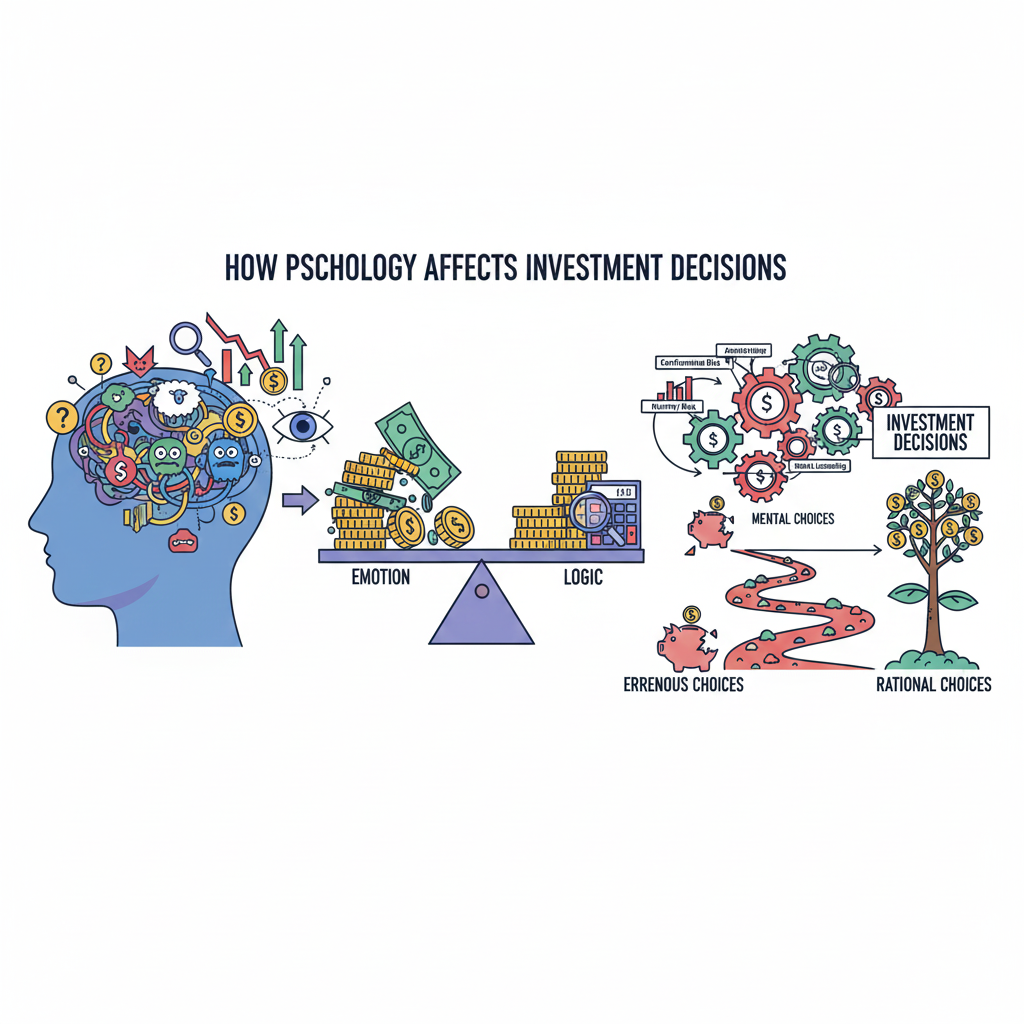
How Psychology Affects Investment Decisions

How Psychology Affects Investment Decisions. Behavioral finance is a field of study that explains how human psychology, emotions, and behavior influence financial decisions. Traditional finance theories assume that investors are rational, always make logical choices, and carefully analyze all available information before investing. However, real-life experience shows that investors often act emotionally and make decisions based on fear, greed, overconfidence, or social influence. Behavioral finance helps explain why people sometimes make irrational financial decisions and why markets do not always behave as expected.

At the core of behavioral finance is the idea that humans are not perfect decision-makers. Instead of carefully evaluating risks and returns, people often rely on mental shortcuts or past experiences when making financial choices. These shortcuts may save time, but they can also lead to mistakes. For example, an investor might buy a stock simply because it has performed well in the past, without properly analyzing whether it is still a good investment. Behavioral finance studies such patterns to understand how psychological factors affect financial behavior.

One of the most important aspects of behavioral finance is the role of emotions in decision-making. Emotions such as fear and greed strongly influence investor behavior. Fear can cause investors to sell their investments during market downturns, even when holding them might be the better long-term decision. On the other hand, greed can push investors to take excessive risks during market booms, leading them to invest in overpriced assets. These emotional reactions often result in poor timing decisions, such as buying at market highs and selling at market lows.

Behavioral finance also focuses on cognitive biases, which are systematic errors in thinking that affect judgment and decision-making. One common bias is loss aversion. Loss aversion refers to the tendency of people to feel the pain of losses more strongly than the pleasure of gains. Because of this, investors may hold on to losing investments for too long, hoping they will recover, rather than accepting a loss and moving on to better opportunities. This behavior can negatively impact long-term investment performance.

Another important bias studied in behavioral finance is overconfidence. Overconfident investors believe they have superior knowledge or skills compared to others. This can lead them to trade too frequently, underestimate risks, or invest heavily in a small number of assets. Overconfidence often results in higher transaction costs and increased exposure to risk, which can reduce overall returns. Many investors fail to realize that markets are unpredictable and that even experts can make mistakes.

Anchoring is another psychological bias that affects financial decisions. Anchoring occurs when investors rely too heavily on the first piece of information they receive, such as the original purchase price of a stock. For example, an investor may refuse to sell a stock below the price they paid for it, even if the company’s future prospects have weakened. This attachment to a reference point can prevent investors from making objective decisions based on current information.

Herd behavior is also a key concept in behavioral finance. Herd behavior occurs when individuals follow the actions of a larger group, often without conducting their own analysis. In financial markets, this behavior can be seen during market bubbles and crashes. When many investors buy an asset simply because others are buying it, prices can rise far above their true value. Similarly, panic selling during market downturns can cause sharp declines. Herd behavior explains why markets sometimes move in extreme and irrational ways.

The collective impact of these psychological biases and behaviors can lead to market inefficiencies. Traditional finance theories suggest that markets are efficient and reflect all available information. Behavioral finance challenges this idea by showing that investor behavior can cause prices to deviate from their true value. Market bubbles, sudden crashes, and prolonged periods of mispricing are often the result of emotional decision-making and widespread behavioral biases.

Behavioral finance also highlights the limitations of purely mathematical and theoretical models in finance. While traditional models are useful, they often fail to account for human behavior. Behavioral finance adds a more realistic perspective by recognizing that investors are influenced by emotions, social factors, and personal experiences. This makes behavioral finance an important tool for understanding real-world market behavior.

Understanding behavioral finance is valuable not only for economists and financial professionals but also for individual investors. By becoming aware of common biases and emotional traps, investors can improve their decision-making process. For example, recognizing the tendency to panic during market declines can help investors stay calm and stick to their long-term investment plans. Awareness of overconfidence can encourage investors to diversify their portfolios and manage risk more effectively.

Behavioral finance also plays an important role in financial planning and advisory services. Financial advisors use insights from behavioral finance to help clients make better decisions. By understanding a client’s emotional responses to risk and loss, advisors can design investment strategies that align with both financial goals and psychological comfort levels. This personalized approach can lead to better investment outcomes and greater client satisfaction.

In conclusion, behavioral finance provides a deeper understanding of how psychological factors influence financial decisions and market behavior. It explains why investors do not always act rationally and why markets sometimes behave unpredictably. By studying emotions, biases, and human behavior, behavioral finance offers valuable insights that complement traditional financial theories. For investors, understanding behavioral finance can lead to better decision-making, improved discipline, and long-term financial success.

Why Compounding is Called the Eighth Wonder of the World

Most people know that investing money is important, but only a few truly understand why investing early and staying invested can completely change the result in the long run. The secret behind this difference is a concept called the power of compounding. Compounding may sound technical, but in reality, it is one of the simplest ideas in finance, and also one of the most powerful ones. It works quietly in the background and keeps increasing the value of your investment as time passes, if you allow it to work patiently and consistently.

What exactly is compounding?

Compounding means earning returns not only on the original money you invested, but also on the returns that your money has already earned. In simple words, the return keeps generating more return for you. Your money keeps creating its own income, and that income again starts earning more income. Over a long period, this multiplication becomes large enough to create a huge difference in wealth.

For example, if you invest money and earn some profit on it, the next year you earn a return not only on your original investment but also on the profit you made earlier. Over time, this cycle keeps repeating and your investment multiplies gradually. This is how a small amount can turn into a large amount if given enough time.

Why compounding grows money faster than simple interest

Many people confuse compounding with simple interest. They both increase your money, but the method is very different. Simple interest pays you interest only on the original principal amount, while compounding pays interest on principal plus accumulated interest.

This is why compounding creates exponential growth. In the beginning the growth looks slow, but gradually the curve starts rising faster and faster. The longer your investment continues, the bigger the growth becomes. Most long-term investors depend on this principle to build retirement savings or achieve future goals.

Starting early makes a huge difference

One of the most important ideas in compounding is time. Time is not just a number in investing. Time is a powerful factor that determines how large your investment can become. When you start early, your money gets more time to multiply, even if you are investing small amounts.

Imagine two people investing the same monthly amount for retirement. One begins investing at the age of 25 and the other starts at 40. Even though both invest the same total amount, the one who started early will end up with a much larger amount at retirement. The reason is simple: the early investor allowed compounding more years to work quietly in the background.

That is why financial advisors always say, “Do not wait to invest. 1 .The earlier you start, the better your results will be.”

Compounding works best with consistency

There is another important element along with time, and that is consistency. Many investors think investing requires a huge initial amount. But the truth is, regular investments, even if small, multiply significantly because of compounding.

This is where disciplined investing methods such as SIPs come in. A Systematic Investment Plan lets you invest small fixed amounts each month. These small contributions keep adding up and the returns get reinvested automatically. Because the process continues for years, the total value grows much faster than most people expect.

Consistency also protects you from changing your investment decisions emotionally. When you invest monthly, you follow a routine, and this routine helps you build wealth gradually.

Patience is the most powerful ingredient

Often people underestimate the importance of patience. When investing, what matters is not just how much money you put in, but how long you allow your money to grow. Many investors panic if the market falls, or withdraw money too early for short-term needs, and by doing this, they break the compounding cycle.

Compounding needs time and needs calm behaviour. If you interrupt the process by frequently withdrawing your investment, you lose a large part of its future potential. The longer the duration remains uninterrupted, the more surprising the final outcome becomes.

Why compounding helps beat inflation

Inflation slowly reduces the value of your money. So even if your money grows, if it grows slower than inflation, your actual purchasing power may reduce. Compounding helps your investment grow faster than inflation in the long run, especially if the investment is done in market-linked instruments such as mutual funds.

When returns are reinvested and allowed to grow over long periods, the overall growth rate often stays ahead of inflation. This means the value of your future wealth remains meaningful.

Compounding is ideal for long-term financial goals

Compounding is not something that shows major effects in one or two years. But when the goal is long-term, such as retirement, children’s education or building wealth for the future, compounding works extremely well.

Long-term mutual fund investing is based on exactly this idea. Most investors who see large results after 15 or 20 years are really benefiting from compounding rather than just their own contributions.

How to make compounding work for you

There are a few simple rules that make compounding effective:

Start investing early rather than waiting.

Keep investing regularly, even in small amounts.

Avoid unnecessary withdrawals from your investment.

Stay invested for a long duration.

Increase your contribution whenever possible.

Be patient and ignore short-term fluctuations.

If these principles are followed, compounding almost automatically takes care of wealth creation.

Small money becomes meaningful money

The biggest beauty of compounding is that you do not need a huge income to begin. Even a student or a young working professional can begin with the smallest amount. Over years, those small steps become a big financial advantage.

Many successful investors started with very little money, but they allowed compounding to do the heavy lifting. The money grew quietly with time because they did not stop the process.
.