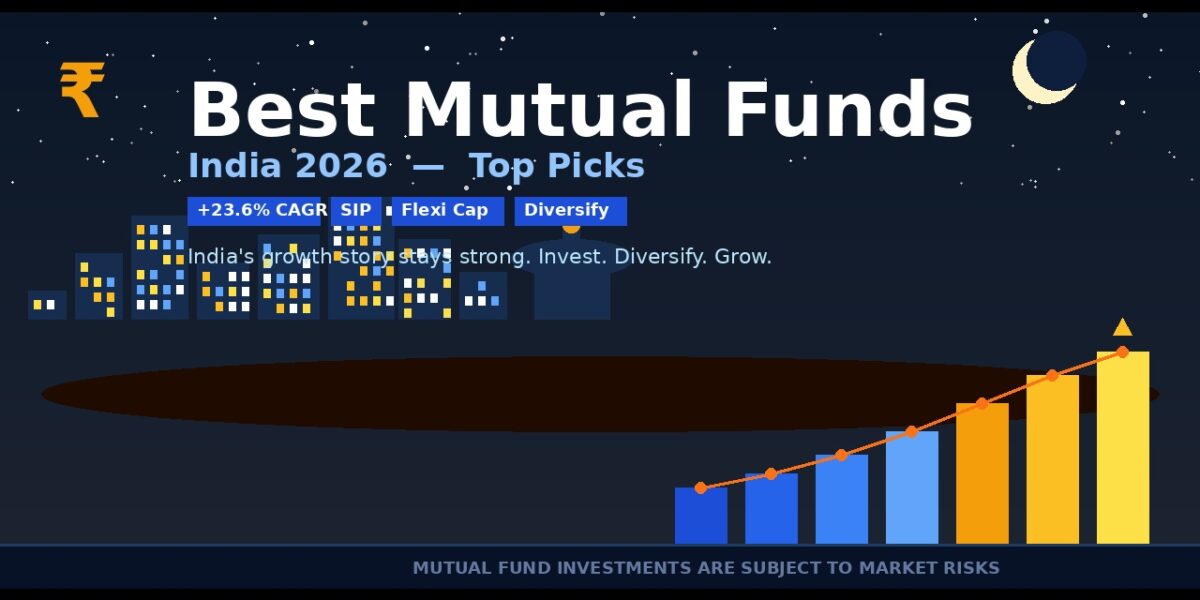
Investing in mutual funds has always been one of the smartest ways to grow wealth in India, and 2026 is no different. In fact, if anything, this year brings even more compelling reasons to consider mutual funds as a core part of your financial plan. With markets moving through phases of volatility and global uncertainties still lingering, many investors are wondering — where should I put my money this year? The good news is that India’s fundamental growth story remains very much alive, and mutual funds continue to be one of the most reliable vehicles to participate in that growth.
India’s Economic Backdrop Looks Encouraging
Before picking any fund, it helps to understand the environment you are investing in. In 2026, India continues to benefit from rising household incomes, relatively stable inflation, and consistent policy support from the government. These are not small things. They form the foundation on which corporate earnings grow, markets expand, and long-term investors profit.
Yes, there are global headwinds — currency fluctuations, geopolitical tensions, and uncertain monetary policies in developed markets. But India’s domestic consumption story is strong enough to weather much of that turbulence. For a patient investor with a horizon of five years or more, this remains one of the best times to be invested in Indian equities through mutual funds.
Top Fund You Should Know About — Parag Parikh Flexi Cap Fund
When it comes to consistent performers that have stood the test of time, the Parag Parikh Flexi Cap Fund is hard to ignore. With an AUM (Assets Under Management) of over ₹48,000 crore and a 3-year CAGR of approximately 23.65%, this fund has earned its reputation the hard way — through disciplined investing and not chasing short-term trends.
What makes this fund special is its flexible mandate. It invests across large-cap, mid-cap, and even international stocks, giving the fund manager the freedom to go where the value is. This kind of flexibility is a significant advantage in uncertain markets. Rather than being locked into one segment, the fund can rotate its holdings based on where the best risk-adjusted opportunities lie.
The expense ratio of 0.74% is also reasonable for the kind of diversified, actively managed exposure you are getting. If you are building a core long-term portfolio, this is the kind of fund that deserves serious consideration — not because it is flashy, but because it is dependable.
Why Multi-Asset Funds Make Sense in 2026
One of the most interesting themes in 2026 is the growing appeal of multi-asset funds. These funds do not just invest in stocks. They spread their allocation across equities, debt, and gold — and they do so dynamically, adjusting based on market conditions.
Gold, in particular, has emerged as an important piece of the puzzle. When equity markets get volatile, gold tends to hold its value or even appreciate. When inflation rises or currencies weaken, gold once again provides a cushion. Multi-asset funds with dynamic gold allocation are designed to capture this relationship and use it to protect your portfolio during difficult periods.
For investors who are nervous about putting everything into equity — especially after the strong run markets have had — multi-asset funds offer a more balanced and smoother ride. They may not deliver the highest returns in a roaring bull market, but they tend to protect capital far better when markets turn choppy. In 2026, with valuations stretched in some segments, that kind of downside protection has real value.
It Is Essential
Here is something that many investors get wrong. They look at last year’s top-performing category, pour all their money into it, and then wonder why their portfolio struggles when the tide turns. In 2026, this approach is particularly risky because valuations in the mid-cap and small-cap space have run up significantly.
Smart investing this year means spreading your portfolio across different fund categories. A well-constructed portfolio might include a large-cap or index fund for stability, a flexi-cap fund for flexibility, a mid-cap fund for growth, and perhaps a hybrid or multi-asset fund for balance. This is not about hedging your bets out of fear — it is about building a portfolio that can perform across different market cycles.
Large-cap funds invest in the top 100 companies in India — the most established, most stable businesses in the country. They won’t give you the explosive returns of a small-cap fund, but they won’t give you the heart-stopping volatility either. For conservative investors or those just starting out, large-cap funds are a solid anchor.
Flexi-cap funds sit in the middle — they can go anywhere, giving fund managers the freedom to identify the best opportunities regardless of company size. Mid-cap and small-cap funds carry higher risk but also higher return potential over the long term. The key is to match these categories to your risk appetite and time horizon, not just pick whatever is trending.
SIPs — The Most Sensible Way to Invest
If there is one investment habit that financial advisors across India agree on, it is this — invest through a Systematic Investment Plan (SIP). Rather than trying to time the market and making one large lump sum investment, a SIP allows you to invest a fixed amount every month regardless of market conditions.
The beauty of this approach lies in something called rupee cost averaging. When markets are down, your fixed monthly amount buys more units. When markets are up, you buy fewer. Over time, this averages out your cost of purchase and reduces the impact of short-term volatility on your overall returns. Combined with the power of compounding — where your returns generate their own returns — a disciplined SIP over five to ten years can build substantial wealth.
You can start a SIP with as little as ₹500 per month. There is no excuse to wait. The earlier you start, the more time your money has to grow.
What to Look for Before You Invest
With thousands of mutual fund schemes available in India, choosing the right one can feel overwhelming. Here are the things that actually matter when evaluating a fund.
First, look at performance consistency over at least three to five years — not just the last six months. A fund that has delivered steady returns across bull and bear markets is far more trustworthy than one that had one great year and has been average since.
Second, pay attention to the fund manager. The person managing your money matters enormously. Look at their track record, their investment philosophy, and how long they have been managing the fund. Stability in fund management is a positive sign.
Third, check the expense ratio. A lower expense ratio means more of your returns stay in your pocket. Over a long investment horizon, even a 0.5% difference in expense ratio can add up to a significant sum.
Finally, always align your fund selection with your own financial goals and time horizon. A fund that is perfect for someone saving for retirement in twenty years may be completely wrong for someone who needs money in three years.
A Final Word
Mutual funds remain one of the most accessible, regulated, and effective investment tools available to Indian investors. In 2026, the opportunity is real — but so is the need for thoughtfulness. Do not chase last year’s winners. Build a diversified portfolio, invest consistently through SIPs, and give your investments time to work.
⚠️ Mutual fund investments are subject to market risks. This article is for informational purposes only. Please consult a SEBI-registered financial advisor before making any investment decisions.