DSP Nifty500 Flexicap Quality 30 Index Fund – India’s First Passive Flexicap Fund for Smarter Wealth Creation


DSP Nifty500 Flexicap Quality 30 Index Fund

In today’s fast-changing markets, investors are constantly seeking a strategy that not only captures the upside but also protects them when markets turn volatile. Many chase short-term trends, jump between funds, and often end up losing more than they gain. Others stay in one category for too long and miss opportunities when market leadership changes.


Why the Traditional Approach Fails Many Investors

The Indian equity market moves in cycles. There are years when mid and small caps outperform dramatically, and years when large caps take the lead.

  • In bull phases, small and mid-caps often generate higher-than-average returns.
  • In corrections, they can fall much more sharply than large caps.

Most traditional diversified equity schemes stick to a fixed allocation range, missing the opportunity to tilt in favor of whichever segment is performing well. Even flexicap schemes, despite having the freedom to shift, often don’t change their allocations enough.

For an investor, this creates three key challenges:

  1. Selection Problem – Which large, mid, and small-cap schemes should you pick?
  2. Allocation Problem – How much to put in each category?
  3. Timing Problem – When to switch between them?

Add to that volatility risk, higher costs, and tax incidence from frequent rebalancing, and the result is often subpar returns.


Meet DSP Nifty500 Flexicap Quality 30 Index Fund

The DSP Nifty500 Flexicap Quality 30 Index Fund solves these problems by following a rule-based index strategy that:

  • Tracks the Nifty500 Flexicap Quality 30 Index
  • Dynamically adjusts allocations between large, mid, and small caps
  • Selects only high-quality companies based on earnings stability, return ratios, and balance sheet strength

This is India’s first passive flexicap fund, combining the discipline of an index with the flexibility of dynamic allocation.


How the Strategy Works

The fund tracks the Nifty500 Flexicap Quality 30 Index, which includes:

  • 10 large-cap stocks from Nifty100 Quality 30 Index
  • 10 mid-cap stocks from Nifty Midcap150 Quality 50 Index
  • 10 small-cap stocks from Nifty Smallcap250 Quality 50 Index

Dynamic Allocation Rules

The allocation between large, mid, and small caps changes quarterly based on relative momentum:

  • If mid & small caps outperform large caps67% weight to mid & small caps (SMID), 33% to large caps
  • If mid & small caps underperform → 33% to SMID, 67% to large caps

This rule-based approach ensures the portfolio rides the winners while avoiding overexposure when a segment is weak.


Performance Highlights – Outperforming Across Market Cycles

The index this fund tracks has delivered strong long-term performance since its inception on 1 Oct 2009.

CAGR Since Inception (01-Oct-09 to 30-Jun-25)

  • Nifty500 Flexicap Quality 30 TRI: 18.1% CAGR
  • Nifty 500 TRI: 13.0% CAGR
  • Outperformance: +5.1% per year

Key Drivers of Outperformance

  • Relative Momentum (Allocation Effect): +2.4%
  • Quality Stock Selection Effect: +2.3%
  • Concentration in Top Quality Stocks: +0.5%

Calendar Year Outperformance Examples

  • 2010: +31% vs Nifty 500
  • 2014: +2% (major bull phase)
  • 2021: +23% in a strong recovery year
  • 2023: +14% despite volatile markets

Protecting the Downside

One of the biggest investor fears is large portfolio drawdowns during crashes.
This fund’s quality focus has historically helped reduce losses during tough years:

  • 2011: -19.1% vs Nifty 500’s -27.9%
  • 2018: -13.3% vs -15.6%
  • 2020 (COVID crash): -36.2% vs -38.1%

While it still participates in market declines, the fall is generally less severe, helping investors recover faster.


The Investor Story – Rajesh’s Journey to Wealth Growth

Let’s meet Rajesh Sharma, a 38-year-old IT professional from Pune. Like many investors, Rajesh started his equity journey with a mix of large-cap and small-cap funds.

  • In bull markets, his portfolio soared.
  • But in corrections, the losses hurt, forcing him to exit at the wrong time.

In 2020, after the market crash, Rajesh discovered DSP Nifty500 Flexicap Quality 30 Index Fund. He liked its transparent rules and low-cost structure. Instead of timing the market, he decided to start a ₹10,000 monthly SIP.

Fast forward to mid-2025:

  • His SIP averaged an annualized return of ~20%, beating his earlier portfolio.
  • The dynamic allocation kept him in the winning segments more often.
  • He didn’t have to worry about switching between funds.

Rajesh now calls it his “set-and-forget growth engine”, planning to continue for the next 15 years to fund his children’s education and his retirement.


4 Reasons to Invest in DSP Nifty500 Flexicap Quality 30 Index Fund

  1. True-to-Label Flexicap Strategy
    • Shifts dynamically between large, mid, and small caps based on relative momentum.
  2. Ride the Winners
    • Captures the upside in whichever market segment is performing well.
  3. Quality Focus
    • Selects fundamentally strong companies with consistent earnings and high RoE.
  4. Low-Cost, Tax-Efficient
    • Passive structure means lower expense ratio (up to 0.3% for direct plan).
    • No tax or exit load while reallocating between market caps.

Risk Factors & DSP’s Approach

Like any equity investment, this fund carries market risk. Key risks include:

  • Short-Term Trend Reversals – May briefly hold underperforming segments before quarterly rebalancing.
  • High Churn – Frequent allocation changes can increase turnover.
  • Concentration Risk – Only 30 stocks in the portfolio.

DSP’s mitigation approach:

  • Quarterly rebalancing reduces overexposure.
  • Strict quality filters protect against poor fundamentals.
  • Passive execution reduces human bias.

Who Should Invest in This Fund?

This fund is ideal for:

  • Long-term investors seeking dynamic exposure to all market segments
  • SIP/STP investors wanting hands-off investing
  • Investors who believe in quality stocks and disciplined allocation
  • Those aiming for wealth creation over 7+ years

How to Invest

  • Minimum investment: ₹100
  • Modes: SIP, STP, or lump sum
  • Plans: Regular & Direct (Direct plan has lower cost)

DSP recommends systematic investments to average out valuations and benefit from compounding.


Why Now Is the Right Time

Interestingly, the Nifty500 Flexicap Quality 30 Index has underperformed the Nifty 500 in the last 3 years — the biggest underperformance since inception.
Historically, such phases have been followed by strong comebacks as quality and concentration styles return to favor.

For long-term investors, this could be a strategic entry point.


Final Thoughts – A Smarter Way to Invest

The DSP Nifty500 Flexicap Quality 30 Index Fund offers:

  • Dynamic allocation across market caps
  • Quality-driven stock selection
  • Proven track record of outperformance
  • Lower volatility than many equity strategies

If you’re looking for a growth-oriented, low-maintenance, and tax-efficient equity fund, this could be your perfect long-term companion. Like Rajesh, you can set it, forget it, and let the power of disciplined investing work for you.

Download PDF

Direct Mutual Fund vs MFD: Which is Better for You? A Complete Guide with Example


Direct Mutual Fund vs MFD

When it comes to investing in mutual funds, you often face two options: Direct Plan or Regular Plan through a Mutual Fund Distributor (MFD).
Both have their advantages — but the right choice depends on your knowledge, time, and comfort level with financial decisions.

In this guide, we’ll explore the key differences, provide real-world examples, and share an imaginary success story to inspire you to make the right choice.


1. Understanding the Basics

Before diving into the comparison, let’s define the two types:

  • Direct Mutual Fund Plan
    You invest directly with the Asset Management Company (AMC) without intermediaries. This means no distributor commission, resulting in a slightly lower expense ratio.
  • MFD / Regular Mutual Fund Plan
    You invest through a Mutual Fund Distributor who provides guidance, research, and after-investment services. The expense ratio is slightly higher as it includes distributor commission.

2. Key Differences Between Direct and MFD Plans

AspectDirect PlanMFD / Regular Plan
How You InvestDirectly through AMC websites or apps.Through an MFD, advisor, or broker.
Expense RatioLower (no commission).Slightly higher (includes commission).
ReturnsHigher by 0.5%–1% annually in the long term.Slightly lower returns due to commission costs.
GuidanceNo personal guidance — you decide yourself.Expert advice, portfolio review, and rebalancing support.
ConvenienceYou handle all paperwork, KYC, and tracking.MFD manages all documentation, reminders, and monitoring.
Best ForExperienced investors who can track markets.Beginners or busy professionals needing assistance.

3. Why Many Investors Choose MFD Over Direct Plans

While Direct Plans seem attractive due to low costs, they require constant market tracking, research skills, and disciplined decision-making.
On the other hand, MFDs offer peace of mind — they guide you, help you avoid mistakes, and ensure you stay on track to meet your goals.


4. Motivational Example – The Story of Rohan and Meera

Let’s imagine two friends: Rohan and Meera.

Rohan – The Direct Plan Investor

Rohan decided to invest ₹10,000 per month directly in mutual funds.
In the first year, everything went well. He checked NAVs, read financial blogs, and felt confident.
But in the third year, the market went down. Panicked, he stopped investing for six months. Later, he restarted but missed the compounding benefits during that period.

Meera – The MFD Guided Investor

Meera also invested ₹10,000 per month — but through an MFD.
When the market fell, her distributor explained that market downturns are temporary and that continuing SIPs during a fall actually benefits investors.
She stayed invested, and after 10 years, her portfolio grew faster than Rohan’s — not just because of fund selection, but because she stayed disciplined.


5. How an MFD Adds Value Beyond Returns

  • Personalized Advice – Tailored investment strategies based on your age, goals, and risk profile.
  • Portfolio Review – Periodic reviews to ensure you are on track.
  • Behavioral Coaching – Prevents panic selling and helps you stay invested in tough times.
  • Convenience – Handles paperwork, transactions, and tax statements.

6. Final Verdict – Which Should You Choose?

  • If you are experienced, disciplined, and have time to research, Direct Plans might work for you.
  • If you are new to investing, busy with work, or want expert guidance, MFDs are the better choice — because small mistakes in mutual fund investing can cost you more than the commission you save.

7. Take Action Now

If you want to grow your wealth without the stress of constant monitoring, find a trusted Mutual Fund Distributor today.
Remember, in investing, discipline matters more than just cost savings — and having an expert by your side can make all the difference.


SEO Keywords Used: Direct mutual fund plan, MFD mutual fund, regular mutual fund plan, direct vs regular mutual fund, benefits of mutual fund distributor, how to invest in mutual funds.


If you want, I can also make a short WhatsApp/Email version of this article so you can share it with potential clients as part of your investment pitch.
Do you want me to prepare that next?

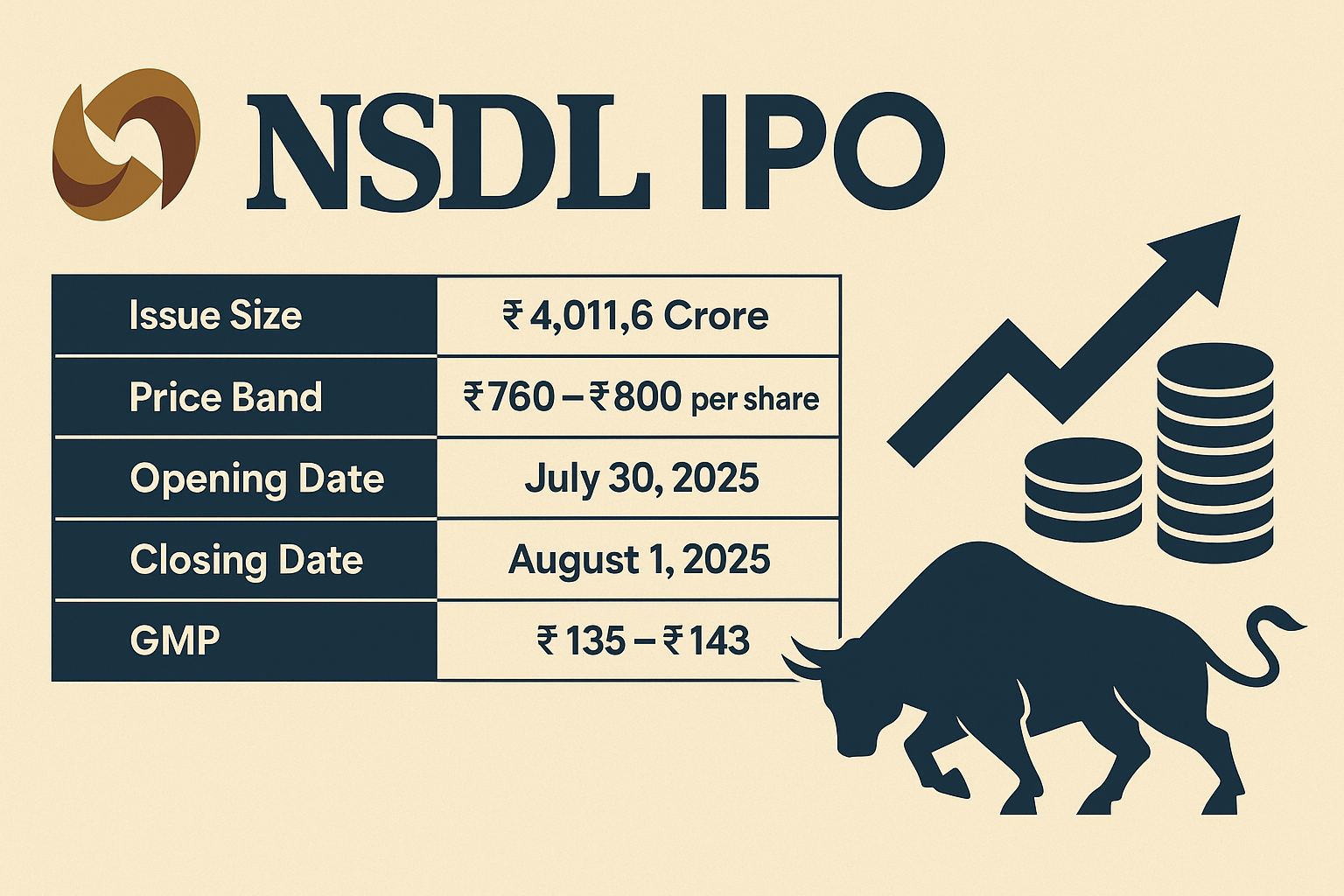
NSDL IPO: Key Details & Investment Insights


NSDL IPO: Complete Guide to India’s Leading Depository Public Issue

The National Securities Depository Limited (NSDL IPO) has become one of the most anticipated public issues in 2025. Known as India’s first and largest depository, NSDL holds a dominant position in the country’s capital market infrastructure. Investors are eager to participate in this IPO due to the company’s monopoly-like business, stable revenue streams, and high entry barriers.

This SEO-optimized guide provides every detail about the NSDL IPO, including issue size, price band, GMP, subscription status, financial performance, expert reviews, and listing expectations.


1. NSDL IPO Overview

Established in 1996, NSDL pioneered dematerialized securities in India, enabling investors to hold shares and bonds electronically. Today, NSDL serves over 3.94 crore active demat accounts, covering 99% of India’s PIN codes and extending services to 194 countries.

The NSDL IPO is a pure Offer for Sale (OFS), meaning no new shares will be issued, and proceeds will go to selling shareholders like NSE, IDBI Bank, and other institutional investors.

Here’s a quick snapshot of the NSDL IPO:

ParticularsDetails
Company NameNational Securities Depository Limited
IPO TypeOffer for Sale (OFS)
Issue Size₹4,011.6 Crore
Price Band₹760 – ₹800 per share
Lot Size18 Shares (~₹13,680)
IPO Opening DateJuly 30, 2025
IPO Closing DateAugust 1, 2025
Allotment DateAugust 4, 2025
Listing DateAugust 6, 2025 (BSE & NSE)
Post-Issue P/E Ratio~47x FY25 Earnings

This NSDL IPO table provides the core details that potential investors search for, helping the article rank for transactional SEO keywords like NSDL IPO price band and NSDL IPO lot size.


2. NSDL IPO GMP & Subscription Status

The NSDL IPO GMP (Grey Market Premium) is a vital indicator of market sentiment and potential listing gains.

  • Day 1 Subscription (July 30, 2025): 1.78× overall
  • Day 2 Subscription (July 31, 2025): 5.03× overall

Breakdown by category:

CategorySubscription (Day 2)
Qualified Institutional Buyers (QIBs)1.96×
Non-Institutional Investors (NII)11.08×
Retail Individual Investors (RII)4.17×
Employees7.69×

The NSDL IPO GMP is hovering around ₹135–₹143 per share, which translates to a 17–18% premium over the upper price band. This implies a potential listing price of ₹935–₹945, creating buzz among short-term investors.

By using terms like “NSDL IPO GMP today” and “NSDL IPO subscription status”, this section improves the search visibility for trending IPO queries.


3. Why NSDL IPO Attracts Investors

The NSDL IPO is generating strong interest because of:

  1. Market Leadership:
    NSDL commands 86% market share in the depository segment, ahead of its only competitor CDSL.
  2. Stable Revenue Streams:
    • Depository services (~67% of revenue)
    • Issuer services (~11%)
    • Subsidiary income (~21%)
  3. Growth Potential:
    With the financialization of household savings, increasing retail participation, and expanding mutual fund SIPs, depository services are expected to grow steadily.
  4. Attractive Valuation vs. Peers:
    At ~47x P/E, the NSDL IPO is available at a discount compared to CDSL’s ~65x P/E, giving investors long-term upside potential.

4. NSDL Financial Performance

The financial health of NSDL makes its IPO appealing to both retail and institutional investors.

Financial YearRevenue (₹ Cr)Net Profit (₹ Cr)
FY231,268.2312.5
FY241,342.8328.6
FY251,420.1343.1

Key Takeaway:
The company has shown consistent revenue growth and healthy margins, which is essential for SEO keywords like NSDL IPO review and NSDL IPO financials.


5. Expert Reviews on NSDL IPO

Leading brokerages and market experts have given the NSDL IPO a “Subscribe” rating, primarily for long-term investment.

  • Angel One: Bullish due to monopoly, recurring revenues.
  • Ventura Securities: Highlights undervaluation vs. CDSL.
  • Anand Rathi: Suggests holding for steady compounding returns.

These expert views strengthen SEO authority for keywords like NSDL IPO expert review and NSDL IPO recommendation.


6. Risks to Consider in NSDL IPO

Despite the positive outlook, the NSDL IPO carries some risks:

  • Pure OFS: No funds raised for expansion.
  • Regulatory Dependence: Heavily influenced by SEBI norms.
  • Market Volatility: Revenue tied to market activity and trading volumes.
  • Competition: CDSL is gaining traction among retail investors.
  • Tech Risks: Cybersecurity breaches could impact credibility.

Including risk analysis boosts content depth and helps rank for long-tail SEO queries like Is NSDL IPO safe to invest?.


7. Final Verdict on NSDL IPO

The NSDL IPO represents a rare opportunity to invest in India’s market infrastructure. Its strong market share, consistent financials, and high GMP signal both listing gains and long-term stability.

  • Short-term view: Likely listing gains of 15–18% based on current GMP.
  • Long-term view: NSDL remains a monopoly business with stable annuity income, making it a low-risk wealth compounder.

SEO Recommendation:
Investors searching for NSDL IPO apply or not, NSDL IPO GMP today, NSDL IPO listing price, and NSDL IPO review will find this guide complete and actionable.


Key NSDL IPO Highlights Table

AspectDetails
Market Share86%
Demat Accounts3.94 Crore+
IPO TypeOFS Only
GMP₹135–₹143
Subscription5.03× (Day 2)
Analyst VerdictSubscribe

In summary:
The NSDL IPO is a must-watch public issue of 2025. Backed by strong fundamentals, high GMP, and positive analyst ratings, this IPO is ideal for both listing gains and long-term wealth creation.


MORE IPO

🏦 What is a Mutual Fund? A Complete Guide for First-Time Investors

Introduction

Are you thinking of investing but confused by complex terms like stocks, bonds, or NAV? You’re not alone. Many first-time investors feel overwhelmed when they hear about financial markets. That’s where mutual funds step in — offering a simple, flexible, and expert-managed path to grow your money.

In this complete guide, we’ll break down the basics of mutual funds, explain how they work, answer common questions, and even share a story to inspire your investment journey.


What is a Mutual Fund?

A mutual fund is a pool of money collected from many investors, which is then invested in a diversified portfolio of assets like stocks, bonds, or other securities. This pool is managed by professional fund managers with the goal of generating returns for all investors.

🧠 Simple Analogy:

Think of a mutual fund like a tiffin service. Everyone pays a little money and gets a complete, nutritious meal — cooked by expert chefs. You don’t need to know how to cook (or invest), but you still enjoy the benefits.


🔍 How Does a Mutual Fund Work?

Here’s a simple breakdown of how mutual funds function:

StepWhat Happens
1. Investors ContributeYou and others invest money in a mutual fund scheme
2. Fund is CreatedThe pooled money is managed by a professional fund house (AMC)
3. Fund Manager InvestsThe fund manager invests in assets (stocks, bonds, etc.) based on strategy
4. Returns are EarnedGains or losses from those investments are shared proportionally among investors
5. NAV is UpdatedNAV (Net Asset Value) changes daily based on the market value of investments

📦 Types of Mutual Funds (Based on Asset Class)

TypeDescriptionBest For
Equity FundInvests mainly in stocks; high returns, high riskLong-term growth
Debt FundInvests in bonds, govt. securities; safer but lower returnsRegular income, low risk
Hybrid FundMix of equity & debt; balances risk and returnBalanced investors
ELSSTax-saving equity fund under Section 80CTax-saving with growth
Index FundPassively tracks a market index (like Nifty 50)Low-cost, steady growth

📈 What is NAV in Mutual Funds?

NAV (Net Asset Value) is the price of one unit of a mutual fund.
It is calculated as:

NAV = (Total Assets – Liabilities) / Total Units Outstanding

Example:

If a fund’s assets are ₹100 crore and it has 10 crore units,
NAV = ₹10 per unit

Your investment value = NAV × number of units you hold


🧮 How Do You Earn Returns?

You can earn returns in 3 main ways:

  1. Capital Appreciation – Increase in NAV over time.
  2. Dividends – Some funds pay out profits regularly.
  3. Interest Income – From debt instruments in debt/hybrid funds.

✅ Benefits of Investing in Mutual Funds

BenefitWhy It Matters
DiversificationYour risk is spread across multiple assets
Expert ManagementProfessional fund managers make informed investment decisions
LiquidityEasy to buy/sell mutual fund units (except for lock-in funds like ELSS)
Low Entry BarrierStart SIPs with as little as ₹100–500 per month
Tax EfficiencyELSS funds offer tax deduction under Section 80C

📖 Real-Life Story: How Neha Made Her First Lakh

Neha, a 25-year-old software engineer in Pune, wanted to start investing but didn’t have time to learn about stock markets. Her colleague suggested mutual funds. Neha started a SIP of ₹2000/month in a balanced mutual fund.
She stayed invested for 5 years, never skipping a month.

Here’s what happened:

YearTotal SIP InvestmentApprox. Value (Assuming 12% CAGR)
1₹24,000₹25,510
2₹48,000₹53,990
3₹72,000₹87,470
4₹96,000₹1,26,320
5₹1,20,000₹1,71,830

Neha’s ₹1.2 lakh investment grew to nearly ₹1.7 lakh — without checking the market daily.

✅ Lesson: Start early. Stay consistent. Let compounding do the magic.


❓ Common Questions Answered

1. Is mutual fund safe?

While mutual funds carry some risk (especially equity funds), they’re considered safer than directly investing in individual stocks due to diversification.

2. Can I lose money in mutual funds?

Yes, short-term market volatility can cause losses. However, staying invested long-term reduces this risk significantly.

3. How much should I invest in mutual funds?

Start with any amount you’re comfortable with — even ₹500/month via SIP. Increase it as your income grows.

4. What documents are needed?

You need PAN, Aadhaar, and KYC-compliant bank details. Many platforms now offer paperless online onboarding.

5. When should I withdraw?

Ideally after 5+ years or once your financial goal is met. Avoid panic-selling during market dips.


💡 Expert Tips for First-Time Mutual Fund Investors

  1. Start Early, Even Small – Time is more powerful than money.
  2. Use SIPs – Automate investing to build discipline.
  3. Set Clear Goals – Invest with purpose: retirement, education, emergency.
  4. Don’t Time the Market – Stay invested during ups and downs.
  5. Review Annually – Check if your fund still meets your goals.

📊 Mutual Fund vs Fixed Deposit (FD)

FeatureMutual FundFixed Deposit (FD)
Return Potential8–15% (equity), 5–7% (debt)5–7%
RiskModerate to High (depending on fund type)Low
LiquidityHigh (except ELSS)Medium (penalty on early withdrawal)
Tax BenefitsELSS under Sec 80C5-year tax-saving FD only
Inflation-Beating✅ Yes (Equity Funds)❌ No

✨ The Power of Compounding: Why You Shouldn’t Wait

“Compound interest is the 8th wonder of the world.” – Albert Einstein

Let’s say you invest ₹3000/month for 20 years in a mutual fund that gives 12% annual return.

YearsTotal InvestmentMaturity Value
10₹3.6 lakh₹6.9 lakh
15₹5.4 lakh₹13.5 lakh
20₹7.2 lakh₹23.3 lakh

You invest ₹7.2 lakh over 20 years but earn ₹16 lakh extra. That’s the power of patience + mutual funds.


🚀 How to Get Started With Mutual Funds?

  1. Choose a trusted platform – Zerodha Coin, Groww, Paytm Money, Kuvera
  2. Complete KYC – Aadhaar, PAN, and selfie verification online
  3. Start SIP or Lumpsum – Begin with ₹100–500/month
  4. Track & Review – Use apps to monitor your portfolio easily

🛡️ Words of Caution

  • Read scheme documents carefully.
  • Don’t chase last year’s top-performing fund.
  • Avoid excessive portfolio churning.
  • Stick with your goals, not market noise.

🏁 Conclusion

Mutual funds are the simplest gateway to wealth-building for first-time investors. With low investment requirements, expert management, and powerful long-term growth potential, they offer a smart alternative to FDs, RDs, or sitting on idle cash.

💬 Start where you are. Use what you have. Begin now.

Still unsure where to begin? Choose a good balanced fund, start a SIP, and let compounding take care of the rest. Your future self will thank you.

Bajaj Finserv Small Cap Fund NFO 2025: Key Details & Investment Guide

Bajaj Finserv Small Cap Fund NFO 2025 – Complete Guide

Bajaj Finserv Small Cap Fund NFO – A Smart Investment Opportunity in 2025

The Bajaj Finserv Small Cap Fund is an exciting new offering in the Indian mutual fund space. Launched under Bajaj Finserv Asset Management Ltd., this New Fund Offer (NFO) aims to capitalize on the potential of small-cap companies with strong fundamentals, good governance, and long-term growth prospects.

NFO Timeline

Start Date: 27th June 2025
End Date: 11th July 2025

Fund Type & Objective

This is an open-ended equity scheme primarily investing in small-cap companies. The objective is to generate long-term capital appreciation by investing in fundamentally sound businesses that fall within the small-cap universe.

Investment Strategy

The Bajaj Small Cap Fund follows a ‘3-in-1’ investment philosophy: Quality, Growth, and Value.
  • Quality: Focuses on good governance and sustainability.
  • Growth: Targets companies with consistent and scalable earnings.
  • Value: Looks for businesses trading below their intrinsic value.

Asset Allocation

Asset Type Allocation (%)
Small-cap equities 65% – 100%
Other equities (large/mid cap, foreign) 0% – 35%
Debt & Money Market Instruments 0% – 35%
REITs / InvITs 0% – 10%

Offer Details

Issue Price: ₹10 per unit
Minimum Investment (Lumpsum): ₹500
SIP Option: ₹500 (minimum 6 instalments)

Load Structure

  • Entry Load: Nil
  • Exit Load: 1% if redeemed within 6 months, Nil thereafter

Plan Options

The fund is available under:

  • Direct Plan (low-cost, for DIY investors)
  • Regular Plan (via distributor)
  • Growth & IDCW options (Reinvestment / Payout / Transfer)

Fund Managers

  • Nimesh Chandan – CIO (Equity)
  • Sorbh Gupta – Senior Fund Manager (Equity)
  • Siddharth Chaudhary – Senior Fund Manager (Debt)

Risk Profile & Benchmark

Risk Level: Very High
Benchmark: BSE 250 SmallCap TRI

Why Invest in Bajaj Finserv Small Cap Fund?

  • Strong research-driven approach with forensic analysis
  • Opportunity to invest in high-growth early-stage companies
  • Backed by trusted Bajaj brand and experienced fund managers

Call to Action

If you’re a long-term investor seeking growth and can handle high risk, this NFO may be worth considering. Don’t miss out on this opportunity to get in at the ground floor price of ₹10 per unit.

Invest Now

Trust Mutual Fund – Fixed Income Options for Conservative Investors

Trust Mutual Fund Overview

Trust Mutual Fund – Fixed Income Options for Conservative Investors

Presented by: SEBI-Registered Mutual Fund Distributor

AMC Overview

ParticularDetails
AMC NameTrust Asset Management Pvt. Ltd.
Launch Date7 October 2019
Incorporation Date12 December 2017
SponsorTrust Investment Advisors Pvt. Ltd.
Trustee CompanyTrust AMC Trustee Pvt. Ltd.
MD & CEOMr. Sandeep Bagla
Compliance OfficerMs. Puja Trivedi
Investor Service OfficerMr. Nilesh Bhurke

Investment Philosophy

Trust Mutual Fund uses a Limited Active Strategy, aiming to balance passive discipline with targeted active research.

  • Focus on credit quality, liquidity, low volatility
  • Backed by data-driven, rule-based methodology
  • Cost-effective and process-oriented
Note: Mutual Fund investments are subject to market risks. Read scheme-related documents carefully before investing.

Available Schemes (As of June 2025)

Fund Name Risk Level Type AUM (₹ Cr) 1-Year Return* Min Investment
Banking & PSU Debt Fund Low to Moderate Debt 110 ~9.2% ₹1,000
Short Duration Fund Moderate Debt 112 ~9.5% ₹1,000
Liquid Fund Low to Moderate Debt 764 ~7.2% ₹1,000
Overnight Fund Low Debt 78 ~6.4% ₹1,000
*Past performance is not indicative of future returns.

Fund Management

ParticularDetails
Lead Fund ManagerMr. Anand Nevatia
ExperienceOver 19 years in capital markets
SpecialisationFixed Income Portfolio Management

How to Invest

ModeProcess
OfflineSubmit application form, KYC, cheque, and photograph
OnlineUse AMC website or platforms like Groww, Paytm, complete eKYC

Final Note

Trust MF is ideal for conservative investors seeking low-risk debt exposure. Let’s schedule a consultation to explore options tailored to your goals.

Book Your Free Consultation

How You Can Start Mutual Fund Investment with Just ₹500 – A Personal Guide for My Clients

Dear Investor, Let’s Make Your First Step Easy

How You Can Start Mutual Fund Investment

If you’re reading this, you’re probably curious about How You Can Start Mutual Fund Investment —maybe even a little overwhelmed by the choices. As your trusted mutual fund distributor, I’m here to guide you personally.

You don’t need lakhs to begin your investment journey. In fact, you can start building wealth with just ₹500 per month using a Systematic Investment Plan (SIP).

In this guide, I’ll explain how you can start investing step-by-step, suggest the best SIP under ₹500, and share handpicked advice—specially tailored for beginners like you.


Why I Recommend Mutual Funds to My First-Time Clients

When someone approaches me asking how to start investing, I always recommend mutual funds as the first step. Why?

  • Low Minimum Investment: Start with as little as ₹100–₹500.
  • Professional Fund Management: Experts manage your money.
  • Diversification: Your investment is spread across sectors, reducing risk.
  • SIP Discipline: Encourages monthly savings without pressure.
  • Regulated by SEBI: Safe and transparent.

💡 As a mutual fund distributor, I always say—SIP is not a cost, it’s a habit that builds wealth.


What is SIP, and Why You Should Start with One

A Systematic Investment Plan (SIP) is simply a way to invest a fixed amount every month into a mutual fund of your choice. Think of it like a monthly EMI—but for your future.

Benefits You’ll Love:

  • No need to time the market
  • Builds consistent investing habits
  • Helps manage market ups and downs
  • You can start with just ₹500/month

🎯 If you’ve ever Googled “mutual fund for beginners” or “how to start investing,” SIPs are the answer.


Step-by-Step: How You Can Start Investing with My Help

As your investment partner, I’ll make this simple and quick. Here’s how we get started:

Step 1: Let’s Talk About Your Goal

Together, we’ll figure out what you’re investing for—be it saving for travel, building an emergency fund, retirement, or your child’s education.

Step 2: Complete Your e-KYC

All mutual fund investments require KYC. I’ll assist you with this:

  • PAN Card
  • Aadhaar Card
  • Mobile-linked OTP

Takes just a few minutes.

Step 3: Choose the Right Platform

I’ll register you on a secure, SEBI-registered platform like:

  • Groww
  • Paytm Money
  • Zerodha Coin

These platforms support SIP under ₹500 and offer direct plans (zero commission).

Step 4: Select the Right Mutual Fund for You

Based on your goals and risk appetite, I will shortlist the best options. No guesswork needed.

Step 5: Set Up Your Monthly SIP

You can pick the date and amount (start with ₹500). Funds will auto-debit each month from your account.

And that’s it—you’re now officially an investor 🎉


Top Mutual Fund SIPs Under ₹500 I Recommend to My Clients

These are my personal recommendations for beginners, backed by research and experience:

Fund NameTypeRisk Level3-Year ReturnMin SIP Amt
Axis Bluechip FundLarge CapModerate~15%₹100
Parag Parikh Flexi CapFlexi CapModerate~17%₹500
Mirae Asset Emerging BluechipMid CapHigh~20%₹500
HDFC Hybrid Equity FundHybridModerate~12%₹500
Quant Active FundFlexi CapHigh~25%₹500

Note: I’ll help you pick the fund that matches your exact profile and risk level.


What Kind of Fund Should You Choose as a Beginner?

As your investment advisor, I suggest starting with moderate-risk funds. Here’s a breakdown:

Large Cap Funds

  • Invest in top 100 companies
  • Less volatile
  • Ideal for beginners with a 3–5 year horizon

Hybrid Funds

  • Combo of equity + debt
  • Balanced risk & returns
  • Great for cautious investors

ELSS (Tax-Saving Funds)

  • 3-year lock-in
  • Save tax under Section 80C
  • Suitable for salaried clients

Mistakes Many First-Time Investors Make (And How I Help You Avoid Them)

Here’s how I protect you from common traps:

❌ Stopping SIPs when the market is down

I’ll help you understand that volatility is normal, and staying invested is the smart move.

❌ Investing without a goal

We’ll define a clear purpose, like travel, marriage, or retirement.

❌ Chasing past returns blindly

I look at consistency, fund manager history, and long-term performance.

❌ Not reviewing performance

As your advisor, I’ll help you review your portfolio yearly.


Why You Should Start Early: ₹500 Today Can Be Lakhs Tomorrow

Here’s how small investments can grow big over time:

Monthly SIPInvested YearsExpected Return (12%)Future Value
₹50010₹1.2 Lakhs₹1.15 Lakhs
₹50020₹3 Lakhs₹5 Lakhs
₹50030₹4.5 Lakhs₹15.2 Lakhs

📈 This is the magic of compounding. The earlier you begin, the less you have to invest later.


How Mutual Funds Compare to Fixed Deposit & RD

FeatureMutual FundsFixed DepositRecurring Deposit
Returns10–15% avg6–7%5–6%
RiskModerateVery LowVery Low
Tax SavingYes (ELSS)PartialNo
LiquidityHighMediumMedium
Start Amount₹500₹1000₹500

As your advisor, I can help you mix both stable and high-growth options in your portfolio.


Frequently Asked Questions I Get From New Clients

1. Is ₹500 really enough to start investing?

Yes. SIPs make it possible to start small and grow big. It’s not about how much you start with—it’s about when you start.

2. Will I lose my money in mutual funds?

Market risk is there, but I’ll guide you to lower-risk funds. With a long-term view, returns are historically strong.

3. What if I need to stop my SIP later?

No worries—you can pause, stop, or change your SIP anytime without penalties.

4. Do I need a demat account?

No demat account needed. Just your KYC and a bank account.


How I Support My Clients Throughout the Journey

As your mutual fund distributor, I offer:

✅ Personalized fund selection
✅ Regular portfolio check-ins
✅ Risk profiling
✅ Tax-saving strategies
✅ End-to-end SIP setup & support

You’re not just downloading an app—you’re getting a real person to guide you.


Conclusion: Let’s Start Your ₹500 Investment Today

I always tell my clients: Don’t wait for the perfect time to invest—just start small and stay consistent.

Mutual fund investments are subject to market risks, read all scheme related documents carefully. 

Whether you’re a student, a new working professional, or simply someone trying to build better money habits, SIPs under ₹500 are the easiest and smartest way to begin.

So, let’s not delay anymore.

📞 Message me today or 📧 drop your contact to schedule your free 15-minute investment consultation.
Let me personally help you start investing smartly and safely.

Jio BlackRock Unleashes Aladdin Tech in India 2025

JioBlackRock Launches Aladdin Platform in India: A Game-Changer in Investment Management (2025)

JioBlackRock Asset Management Private Limited, a 50:50 joint venture between Jio Financial Services Limited (JFSL) and global asset management giant BlackRock, has officially received approval from the Securities and Exchange Board of India (SEBI) to begin operations in India. This green light marks a major step toward revolutionizing the Indian mutual fund industry.

With the debut of BlackRock’s Aladdin platform in India, JioBlackRock is positioned to transform the country’s investment landscape through digital innovation and data-driven decision-making.


Aladdin

What is Aladdin?

Aladdin stands for Asset, Liability, Debt, and Derivative Investment Network. It is a cutting-edge investment management platform developed by BlackRock, used by some of the world’s largest institutional investors. The platform integrates:

Core Features of AladdinDetails
Unified PlatformCombines portfolio management, risk analytics, trading, and operations.
Real-time Risk AnalyticsProvides dynamic risk assessment across asset classes.
Data IntegrationSeamlessly connects internal and external data sources.
Performance MonitoringTracks real-time performance metrics.
Scalable InfrastructureCapable of supporting diverse asset classes and volumes.

By bringing Aladdin to India, JioBlackRock enables both retail and institutional investors to leverage the same advanced tools trusted by top-tier global institutions.


Regulatory Milestone

On May 27, 2025, SEBI officially approved JioBlackRock’s mutual fund business. This allows the joint venture to launch and operate mutual fund schemes tailored to the Indian investor base.

MilestoneDateDetails
SEBI ApprovalMay 27, 2025Approval granted to commence mutual fund operations.
Public AnnouncementMay 27, 2025JioBlackRock announces SEBI clearance and upcoming fund launches.

Strategic Partnership: Jio Meets BlackRock

The collaboration between Jio Financial Services and BlackRock represents a fusion of two major strengths:

  • Jio Financial Services: Robust digital infrastructure and deep understanding of Indian retail markets.
  • BlackRock: Global asset management expertise and technological innovation via Aladdin.

This synergy aims to offer investment products that are:

  • Digital-first and mobile-centric.
  • Data-driven with advanced risk analysis.
  • Transparent, inclusive, and scalable.

Key Differentiators of JioBlackRock

JioBlackRock is not just another mutual fund company. It’s a digital-first investment platform built for India’s tech-savvy, mobile-first generation.

FeatureAdvantage
Digital-First InterfaceSimplified onboarding, paperless KYC, and app-based transactions.
Seamless Aladdin IntegrationReal-time portfolio insights, risk analysis, and performance tracking.
Transparent PricingCompetitive fee structure for greater affordability.
Tailored OfferingsProducts designed for Indian investors with global quality standards.

Impact on Indian Retail Investors

JioBlackRock’s Aladdin-powered platform will democratize access to sophisticated investment tools, previously available only to institutional investors.

Benefits for Retail Investors:

  1. Ease of Access: Invest via mobile apps with seamless UI/UX.
  2. Personalized Insights: Aladdin’s algorithms help align portfolios with individual financial goals.
  3. Risk Visualization: Tools to assess and understand portfolio risk exposure in real-time.
  4. Goal-Based Planning: Features to help investors achieve specific milestones such as home buying, retirement, or child education.

Aladdin’s Technological Edge

Technological FeatureFunctionality
Risk ModelingVisualize potential portfolio risks across asset classes.
Trade ExecutionSupports intelligent trade workflows and compliance.
Regulatory ComplianceAutomated tracking for local and global financial regulations.
Workflow AutomationReduces manual errors and operational costs.

With these tools, JioBlackRock seeks to provide Indian investors with institutional-grade investing capabilities at their fingertips.


Focus on Financial Inclusion

Isha Ambani, Non-Executive Director of JFSL, emphasized that the goal is to make investing simple, accessible, and inclusive for every Indian, regardless of income level. The Aladdin-powered platform aligns with India’s rapidly growing digital economy and is especially geared toward:

  • First-time investors
  • Young professionals
  • Tech-savvy urban populations
  • Underserved rural segments

JioBlackRock’s Vision

The venture aims to:

  • Deepen mutual fund penetration in India.
  • Provide institutional-grade insights to retail investors.
  • Disrupt the traditional asset management model with digital-first solutions.
  • Launch products that reflect both global trends and local financial behaviors.

Market Impact & Stock Performance

Following SEBI’s regulatory nod on May 27, Jio Financial Services Ltd’s stock jumped 3.5%, reaching ₹291.4 per share, making it one of the top gainers on the Nifty index for the day. This surge reflects the investor confidence in the disruptive potential of the JioBlackRock collaboration.

Stock MovementImpact
+3.5%Boosted by SEBI approval announcement
₹291.4Trading price on May 27, 2025
Top Nifty GainerInvestor optimism on Aladdin launch

What to Expect Next

With regulatory frameworks in place, JioBlackRock is preparing to launch a diverse suite of mutual fund products. These offerings will focus on:

  • Index funds and ETFs
  • Thematic funds (AI, sustainability, global tech)
  • Debt and hybrid funds
  • Goal-oriented portfolios

These investment vehicles will be aligned with Aladdin’s analytics engine and Jio’s digital ecosystem, making the investor experience seamless and data-intelligent.


Conclusion: Redefining India’s Investment Future

JioBlackRock is not just launching mutual funds; it’s launching a new era of intelligent, inclusive, and digitally-empowered investing in India. By bringing Aladdin to Indian shores, the venture sets a new standard for innovation, transparency, and investor education.

This move is expected to challenge legacy players and uplift India’s mutual fund industry to global best practices—a shift welcomed by both investors and regulators alike.

HOME

Should You Invest in ArisInfra Solutions Limited IPO ? Full Breakdown Inside

ArisInfra Solutions IPO 2025: Full Analysis, Dates, Price Band, Lot Size & Financials

ArisInfra Solutions Limited , a fast-growing, tech-enabled B2B construction materials platform, is set to debut on the Indian stock exchanges with an IPO worth ₹499.60 crore. With strong fundamentals, a scalable business model, and an established footprint in the infrastructure procurement space, ArisInfra Solutions Limited IPO has caught the attention of both retail and institutional investors. This comprehensive guide provides all the critical details about the IPO, including dates, price band, company background, competitive strengths, and investment strategy.

Arisinfra Solutions Limited  IPO

📊 IPO Highlights at a Glance

ParticularsDetails
IPO NameArisInfra Solutions Limited IPO
IPO Size₹499.60 crore
Issue TypeBook Built Issue IPO
Fresh Issue2.25 crore shares
Price Band₹210 to ₹222 per share
Lot Size (Retail)67 shares
Minimum Retail Investment₹14,070
Suggested Cutoff Investment₹14,874
IPO Open DateJune 18, 2025
IPO Close DateJune 20, 2025
Allotment DateJune 23, 2025
Listing Date (Tentative)June 25, 2025
ExchangesBSE, NSE

💼 Investment Categories

Investor CategoryMinimum ApplicationInvestment Amount (₹)
Retail Investors1 Lot (67 shares)14,070 – 14,874
Small NII (sNII)14 Lots (938 shares)2,08,236
Big NII (bNII)68 Lots (4,556 shares)10,11,432

🏠 About ArisInfra Solutions Limited

Incorporated in 2021, ArisInfra Solutions Limited is a next-generation platform tailored for the construction and infrastructure sector. The company digitizes the entire procurement chain, offering an end-to-end technology-driven solution to acquire construction materials efficiently.

Operating as a B2B platform, ArisInfra simplifies material sourcing and financial management for clients such as infrastructure developers, builders, and contractors. The firm leverages AI-based tools and a strong vendor ecosystem to deliver speed, accuracy, and savings.


⚖️ Product Portfolio

The company’s offerings include a wide range of essential construction materials such as:

  • GI Pipes (Steel)
  • MS Wires (Steel)
  • MS TMT Bars
  • OPC Bulk Cement
  • Aggregates
  • Ready-Mix Concrete (RMC)
  • Construction Chemicals
  • Walling Solutions

👥 Clientele & Market Reach

Between April 1, 2021, and March 31, 2024, ArisInfra:

  • Delivered 10.35 million metric tonnes of construction materials
  • Partnered with 1,458 vendors
  • Served 2,133 customers
  • Covered 963 pin codes across cities like Mumbai, Bengaluru, and Chennai

Key Clients Include:

  • Capacit’e Infraprojects Limited
  • J Kumar Infraprojects Limited
  • Afcons Infrastructure Limited
  • EMS Limited
  • S P Singla Constructions Pvt. Ltd.

Its subsidiary, ArisUnitern Re Solutions Pvt. Ltd., extends advisory, marketing, consultancy, and sales support services to real estate developers, providing a complete ecosystem.


📊 Financial Performance Snapshot

ArisInfra has shown promising financial trends:

Fiscal YearRevenue (₹ Cr)Net Profit/Loss (₹ Cr)
FY 2023702.00-17.00
FY 2024557.80+6.50

The company has reversed its losses in FY2024, achieving profitability with prudent operational strategies and cost efficiencies.


🌟 Competitive Strengths

  1. Technology-Driven Platform:
    • AI-enabled credit risk tools and operational automation streamline procurement.
  2. Wide Product Basket:
    • From steel to cement, ArisInfra offers a one-stop-shop for construction needs.
  3. Vendor & Client Ecosystem:
    • Strong relationships with both suppliers and buyers ensure reliable demand and supply.
  4. Pan-India Presence:
    • Service coverage across 900+ pin codes ensures scalability.
  5. Experienced Management:
    • Backed by professionals with deep industry expertise and startup experience.

🔄 Use of IPO Proceeds

The IPO funds will be allocated as follows:

  • Repayment and/or prepayment of existing borrowings
  • Working capital augmentation
  • Strategic investment into subsidiaries
  • General corporate purposes

📊 Grey Market Premium (GMP) & Market Sentiment

As of June 18, the GMP stands around ₹24-25 per share, indicating a potential listing gain of 10-12%. While the first day saw retail category fully subscribed, QIBs and NIIs are expected to boost demand by Day 3.


✅ Should You Subscribe?

Pros:

  • Positive financial turnaround
  • Strong market demand in construction sector
  • Digital-first approach in a traditional supply chain
  • Impressive clientele and vendor base

Cons:

  • Early-stage business with high scalability expectations
  • Thin profit margins and dependency on working capital

Expert Verdict:
For long-term investors, ArisInfra offers a compelling growth opportunity in India’s infrastructure revolution. Retail investors may consider subscribing at the cutoff price to maximize allocation chances.


📆 Key Dates Recap

EventDate
IPO Opening DateJune 18, 2025
IPO Closing DateJune 20, 2025
Allotment FinalizationJune 23, 2025
Refund InitiationJune 24, 2025
Shares Credited in DematJune 24, 2025
Listing Date (Tentative)June 25, 2025

Final Words:

ArisInfra Solutions Limited is bringing a tech edge to a traditionally offline, unorganized market. With a diversified product line, experienced leadership, and a digitally integrated supply chain, the IPO stands out among mid-cap offerings. While risks remain due to its recent profitability and reliance on large working capital, the long-term vision and market potential offer promising rewards.

Patil IPO information you can check

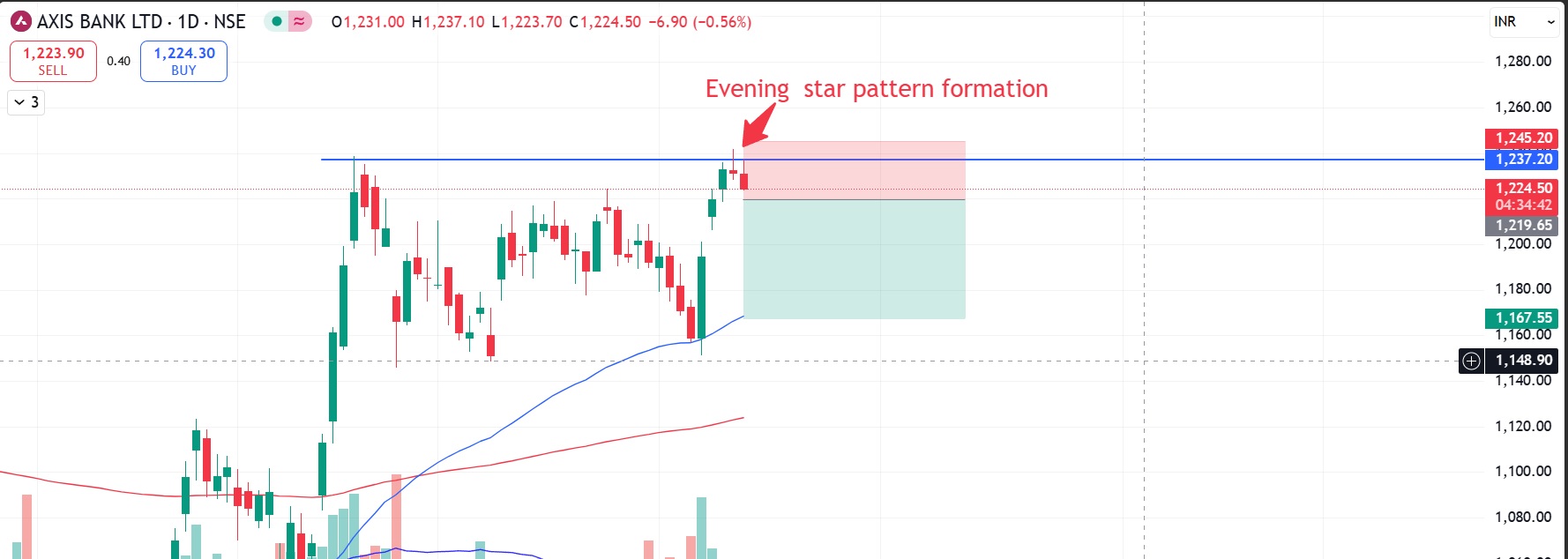
Axis Bank’s fundamentals

Here’s a concise summary of Axis Bank’s fundamentals as of the most recent available data (FY 2023-24). Please note that values might have slightly changed depending on the latest quarterly results.


🏦 Axis Bank – Company Overview

  • Founded: 1993
  • Headquarters: Mumbai, Maharashtra
  • Type: Private Sector Bank
  • CEO & MD: Amitabh Chaudhry
  • Market Cap: Approx. ₹3.5–4 lakh crore (varies with market)
  • NSE/BSE Code: AXISBANK

💰 Key Financials (FY 2023–24)

MetricValue
Net Interest Income (NII)₹51,569 crore
Net Profit₹23,344 crore
Total Assets₹14.86 lakh crore
Net Interest Margin (NIM)~4.05%
Gross NPA1.43%
Net NPA0.36%
Provision Coverage Ratio81%
Return on Equity (ROE)17.51%
Return on Assets (ROA)1.84%
Capital Adequacy Ratio17.63% (well above regulatory norms)
CASA Ratio~44%

📈 Stock Performance (1-Year)

  • 52 Week High/Low: ₹1,180 / ₹905
  • Current Price (as of June 2025): ₹1,120 approx
  • P/E Ratio: ~14.5
  • Price to Book (P/B): ~2.2

🧾 Recent Developments

  • Strong Q4 FY24 results with significant profit jump YoY.
  • Continuous reduction in NPAs – healthy asset quality.
  • Focus on digital banking and expanding retail loan book.
  • Acquired Citibank India’s consumer banking business (completed in 2023), boosting its credit card and wealth management operations.

📊 Strengths

  • Strong brand and wide retail presence
  • Good digital infrastructure and tech adoption
  • Healthy growth in retail and SME loans
  • Robust risk management and improving asset quality

⚠️ Risks & Weaknesses

  • Sensitive to RBI’s rate changes (impacts NIM)
  • Exposure to corporate loans (can add volatility)
  • Competitive private banking space (HDFC Bank, ICICI Bank, Kotak, etc.)

Would you like:

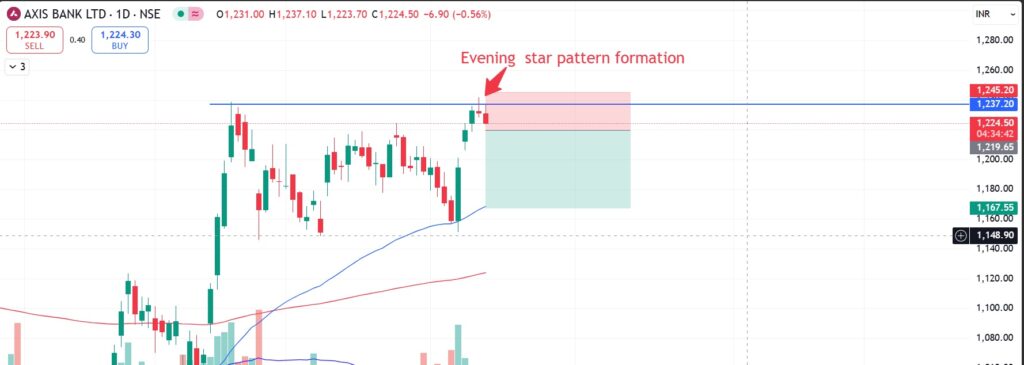
evening star