Understanding New Fund Offers (NFOs)

When it comes to mutual fund investing, most people are familiar with buying units of funds that have existed in the market for years. These funds have a track record, established portfolios, and enough data for investors to evaluate before investing. But from time to time, fund houses launch something new—a fresh scheme that hasn’t yet built a portfolio or history. This is known as a New Fund Offer, commonly called an NFO. If you’ve ever wondered what makes NFOs different, how they work, and whether they’re worth considering, this detailed guide will walk you through everything in a simple and human-friendly way.


What Exactly Is an NFO?

A New Fund Offer is the very first opportunity for investors to buy units of a new mutual fund or exchange-traded fund (ETF) being introduced by an Asset Management Company (AMC). It’s similar to how a company launches an IPO to offer shares for the first time, but instead of buying ownership in a company, you are buying units of a brand-new fund.

During an NFO, the fund typically offers units at a fixed introductory price. In many regions, especially in India, the price is usually around ₹10 per unit. After the subscription window closes and the fund becomes active, its Net Asset Value (NAV) starts changing based on market performance.


Types of Funds Launched Through NFOs

Not all NFOs are the same. Fund houses might launch different kinds of schemes, and each type works differently.

1. Open-End Funds

These funds allow buying and selling on any business day once the NFO period ends. After the initial offer, transactions happen at the prevailing NAV. Most NFOs fall under this category.

2. Closed-End Funds

These funds can be purchased only during the NFO period. After that, units cannot be bought or redeemed directly from the fund house for a fixed duration. Some closed-end funds may get listed on the stock exchange, where units can be traded.

3. Exchange-Traded Funds (ETFs)

ETFs launched through NFOs begin with the initial unit creation and later trade on the stock exchange just like regular stocks. Their pricing is influenced by both underlying assets and market demand.

Knowing which type of fund the NFO belongs to helps investors understand liquidity, exit options, and investment flexibility.


Why Do Fund Houses Launch NFOs?

There are several reasons why AMCs come up with new fund offers:

  • To introduce new ideas, sectors, or themes in the market
  • To tap into rising investment trends such as technology, ESG, healthcare, or global equity
  • To offer strategies not already available within their fund lineup
  • To capitalize on new government regulations or economic opportunities
  • To capture investor attention during bullish or favorable market cycles

For investors, an NFO may feel attractive because it represents something fresh and innovative. But before rushing in, it’s important to understand the actual benefits and risks.


Potential Advantages of Investing in an NFO

1. Chance to Invest Early in a New Theme

NFOs often introduce unique or newer concepts that are not yet available through existing funds. Whether it’s a sector that’s becoming popular or a strategy gaining global traction, investors get the opportunity to tap into it early.

2. Lower Initial Price

Many investors feel encouraged by the low initial offer price, usually ₹10 per unit. While the price itself doesn’t determine returns, the psychological appeal of buying at a lower NAV is real.

3. Portfolio Diversification

If an NFO targets an area not present in your current portfolio, it may help diversify risk and improve long-term balance. For example, an investor heavily invested in domestic equities may consider an NFO focused on international markets.

4. Potential for Growth

When market conditions support the fund’s theme, and the fund manager executes the strategy well, early investors could benefit from significant gains over time.


Risks and Challenges Associated With NFOs

Despite the appeal, NFOs come with a fair amount of uncertainties. Investors need to be aware of the following risk factors:

1. No Performance History

Unlike established funds that showcase years of returns, volatility charts, and expense ratios, an NFO has no past data to rely on. You’re investing in a future promise rather than proven performance.

2. Unknown Portfolio Composition

At the time of the NFO, the fund manager hasn’t yet built the portfolio. You only know the investment objective and strategy. The actual holdings and execution quality become clear only months later.

3. Higher Costs in Some Cases

Some NFOs may have higher expense ratios, especially if they involve active fund management, international exposure, or specialized strategies.

4. Market Timing Risk

Funds launched during market highs may struggle if the market corrects soon after. Investors might end up entering at the wrong time without realizing it.

5. Liquidity Issues

Closed-end NFOs limit investors’ ability to exit early. Even those listed on exchanges may not have enough liquidity, leading to low trading volumes and difficulty selling units.


How to Evaluate an NFO Before Investing

Since NFOs lack performance data, your decision must rely on qualitative evaluation. Here are the key things to focus on:

1. Fund Objective

Understand the primary strategy.
Is the theme relevant? Does it align with your financial goals?

2. Reputation of the AMC

A strong and dependable fund house increases the chances of professional management and stable long-term execution.

3. Fund Manager’s Track Record

Check how the fund manager has handled other funds. Someone with consistent performance reduces risk.

4. Expense Ratio

Higher costs require even better performance to justify them.

5. Theme and Market Conditions

Does the theme have long-term potential, or is it just a temporary trend?
Investors must avoid getting carried away by hype.

6. Existing Alternatives

Always compare the NFO with similar existing funds. Usually, established funds with proven returns are safer choices.


Should You Invest in an NFO?

There is no single correct answer. Investing in an NFO is neither good nor bad by default—it depends entirely on the fund’s theme, your financial goals, and risk appetite.

An NFO might make sense if:

  • You want exposure to a new theme not available elsewhere
  • You believe in the long-term potential of the strategy
  • You understand the risks involved

On the other hand, if you prefer stability, existing mutual funds with long track records may be better.


Final Thoughts

NFOs can be exciting because they bring fresh investment opportunities to the market. They allow investors to jump into new ideas, diversify portfolios, and potentially gain early-stage benefits. However, because these funds lack historical performance and real-time portfolios, investors must evaluate them carefully rather than investing purely based on marketing appeal or introductory prices.

Approach NFOs with a balanced mindset. Don’t ignore them completely, but don’t invest blindly either. By understanding both their advantages and risks, you can make a smart and well-informed decision about whether a particular NFO fits into your investment strategy.
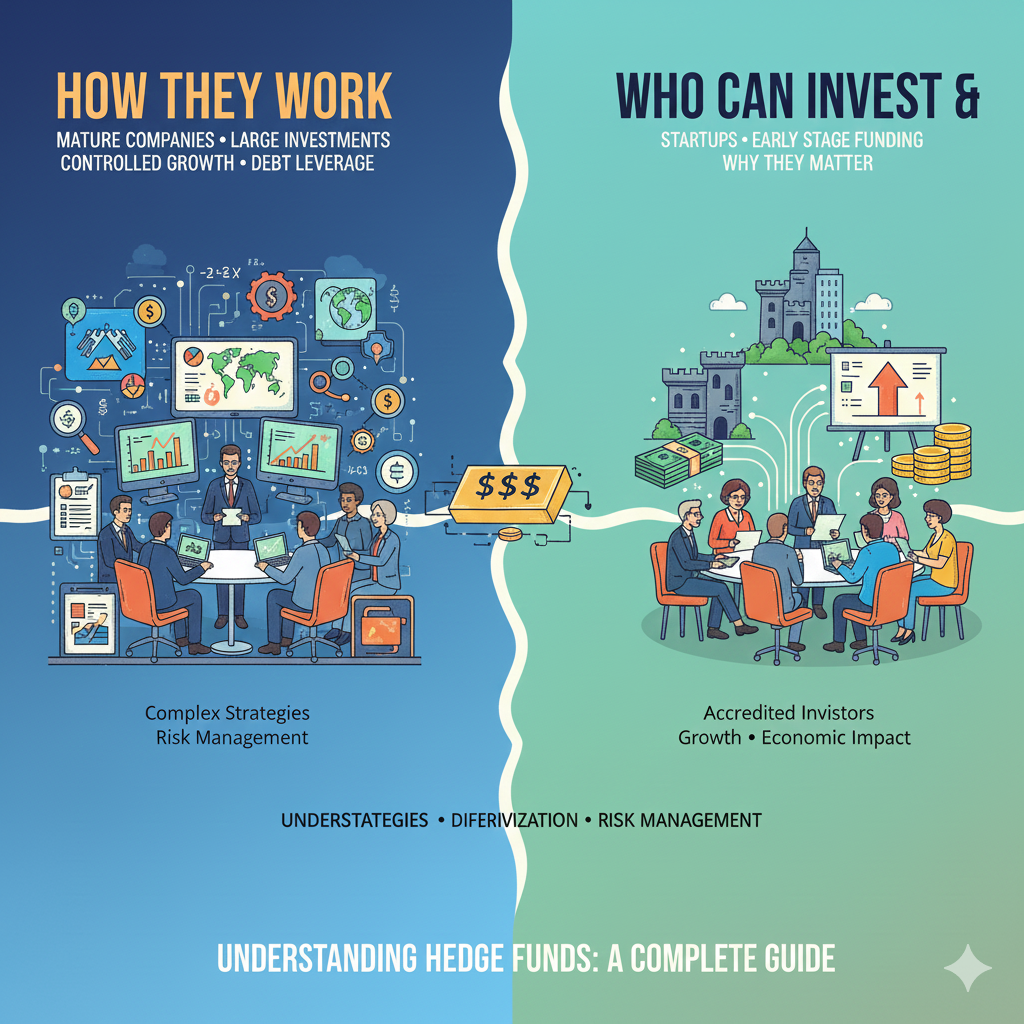

Understanding Hedge Funds: A Complete Guide to How They Work, Who Can Invest, and Why They Matter

In the world of investing, you may often hear the term “hedge fund” mentioned in discussions about high-risk, high-reward strategies or elite financial markets. Hedge funds have a reputation for being sophisticated, exclusive, and sometimes mysterious. They are often associated with wealthy investors, large institutions, and fund managers who use complex strategies to generate exceptional returns. While this image carries some truth, the core idea behind a hedge fund is actually straightforward: it is a professionally managed investment pool that uses advanced techniques to maximise returns, often with fewer regulatory restrictions than conventional funds.

To better understand hedge funds, it is useful to break down what they are, how they function, who can invest in them, and why they are considered both potentially profitable and risky. This article aims to provide a clear, human-friendly explanation of hedge funds so you can easily grasp the concept without any prior financial knowledge.

What Exactly Is a Hedge Fund?

A hedge fund is essentially a pooled investment vehicle, similar in structure to a mutual fund, but different in its approach to investing. Hedge funds collect money from a group of investors and invest that pooled capital across various asset classes. The main goal is to generate higher-than-average returns using innovative, aggressive, and sometimes unconventional strategies.

The term “hedge” originally referred to strategies used by early fund managers to protect or “hedge” their investments from market risk. Over time, hedge funds evolved, and today they focus more on achieving high performance than simply hedging risks. They may invest in stocks, bonds, currencies, commodities, derivative instruments, real estate, and even private companies.

One defining feature of hedge funds is the flexibility they enjoy. Compared to traditional mutual funds, hedge funds face far fewer restrictions, allowing managers to use leverage (borrowed money), short selling, arbitrage, and other advanced methods to pursue strong returns.

Who Can Invest in Hedge Funds?

Hedge funds are not open to the general public. They are designed exclusively for “accredited” or high-net-worth investors who meet certain income or asset thresholds.

There are several reasons for this exclusivity:

Hedge funds carry higher risks, and regulators want to ensure investors have the financial capacity to absorb potential losses.

The minimum investment amounts are usually high, often starting from tens of lakhs to several crores.

Sophisticated strategies require informed investors, meaning hedge funds assume their clients understand the nature of risks involved.

In short, hedge funds are not designed for everyday retail investors. They cater to individuals and institutions capable of making large investments and accepting higher volatility in pursuit of greater returns.

How Hedge Funds Invest: Strategies and Approaches

What sets hedge funds apart from mutual funds is their freedom to use a wide variety of investment strategies. While mutual funds typically follow a long-only approach (buying assets and holding them for long-term growth), hedge funds can bet on both rising and falling markets.

Here are some of the most common strategies hedge funds employ:

1. Long–Short Equity Strategy

In this approach, the fund buys stocks expected to rise in value (long positions) and simultaneously sells stocks expected to decline (short positions). This allows the fund to profit in both upward and downward markets.

2. Global Macro Strategy

This strategy involves making large bets on global economic trends — such as interest rate movements, currency fluctuations, or geopolitical shifts. Managers use research and forecasting to position the portfolio for big global changes.

3. Event-Driven Strategy

Here, hedge funds invest based on corporate events such as mergers, acquisitions, bankruptcies, or restructuring. The goal is to profit from price movements caused by such events.

4. Arbitrage Strategies

Arbitrage involves exploiting small price differences in markets. For example, buying a stock in one market and selling it at a slightly higher price in another. This requires speed, expertise, and advanced technology.

5. Use of Leverage and Derivatives

Many hedge funds borrow money to increase their investment capacity, which amplifies both gains and losses. They also use derivatives like options and futures to make strategic bets or hedge risks.

Because of this wide range of strategies, hedge funds can generate impressive returns during favourable conditions. However, these methods also bring significant risk, especially when leverage is involved.

Higher Fees and the Famous ‘2 and 20’ Model

One of the most distinctive aspects of hedge funds is their fee structure. Unlike mutual funds, which usually charge a simple management fee, hedge funds often follow the “2 and 20” model:

2% Management Fee: Charged on the total amount managed, regardless of performance.

20% Performance Fee: Charged on the profits earned beyond a certain benchmark or threshold.

This structure incentivises fund managers to aggressively seek profits, as they earn a part of the upside. However, it also makes hedge funds significantly more expensive than regular investment vehicles. For investors, this means they need strong returns just to offset the high fees.

Liquidity: Why Hedge Funds Are Less Flexible

Another important characteristic of hedge funds is limited liquidity. Unlike mutual funds, which allow investors to redeem units daily or weekly, hedge funds often impose lock-in periods ranging from a few months to several years. During this time, investors cannot withdraw their capital.

This is because hedge fund strategies often involve long-term commitments or illiquid assets. Limited liquidity allows managers to execute their strategies without disruption.

While this makes hedge funds more stable from an operational perspective, it also means investors need to be comfortable leaving their money locked away for extended periods.

Understanding Asset Management: How Professionals Manage and Grow Your Wealth

In today’s world, managing money wisely has become just as important as earning it. With financial markets becoming more complex and investment choices expanding rapidly, many people find it challenging to handle their money on their own. This is where asset management comes into the picture. Asset management refers to the process of managing investments on behalf of individuals, institutions, and corporations with the goal of growing wealth over time while keeping risks under control. It is a structured and professional approach to making money work efficiently.

Asset management has grown into a massive industry because people increasingly recognise that sound financial planning and smart investment decisions can significantly impact long-term financial security. From retirement planning to corporate investment strategies, asset management plays a central role in ensuring that money is allocated, monitored, and adjusted in a way that builds wealth steadily.

What Asset Management Really Means

At its core, asset management is a service in which trained professionals—often called asset managers or portfolio managers—take responsibility for investing and overseeing money for clients. These professionals study financial markets, track economic trends, analyse investment opportunities, and make decisions designed to improve the performance of a client’s portfolio.

A portfolio represents a collection of investments a person or organisation owns. It can include stocks, bonds, real estate, gold, mutual funds, or alternative investments such as private equity or hedge funds. Because handling so many types of assets requires time, knowledge, and experience, clients hire asset managers to make informed decisions on their behalf.

The Dual Objective: Growth and Risk Control

One of the defining features of asset management is its dual mandate—to grow wealth while managing risk. Every investor, whether an individual or a large organisation, has a certain level of risk they are willing to tolerate. Some people are comfortable taking bold risks for potentially higher returns, while others prefer a more cautious approach.

Asset managers begin their work by understanding the client’s financial goals, risk tolerance, investment timeline, and future needs. For example, a young professional planning for long-term wealth creation might be advised to invest in growth-oriented assets like equities. Meanwhile, a retiree would be guided towards safer, income-generating options such as bonds or fixed-income instruments.

Balancing growth and risk is what makes asset management both an art and a science. The art lies in judgment and experience, while the science lies in analysing data, applying formulas, and using financial models to understand market behaviour.

Who Relies on Asset Management Services?

Asset management is not just for the wealthy, though high-net-worth individuals are among the most common clients. The range of people and organisations who use asset management services is broad:

  • Individual investors who want professionals to manage their savings or retirement funds
  • High-net-worth individuals with large and diverse portfolios
  • Corporations that need to invest company profits wisely
  • Institutional clients, such as pension funds, insurance companies, and endowments
  • Government bodies managing public funds or sovereign wealth funds

Each client type has different investment goals, so asset managers tailor strategies accordingly. For example, pension funds aim for stable long-term returns to secure future payouts, whereas corporations may prefer short-term liquidity and moderate returns to support business operations.

A Wide Range of Investment Options

One of the key strengths of asset management is the ability to invest across various asset classes. Diversification—spreading investments across different types of assets—is a fundamental strategy for reducing risk.

Asset managers may invest client funds into:

  • Stocks for long-term growth
  • Bonds for stability and regular income
  • Real estate for both rental income and capital appreciation
  • Commodities, such as gold or oil, to hedge against inflation
  • Mutual funds and ETFs to access diversified portfolios
  • Alternative assets, including venture capital, private equity, or hedge funds

Because markets shift constantly, asset managers regularly review the portfolio and adjust its allocation. This ongoing monitoring ensures that the portfolio stays aligned with the client’s objectives even when the economic environment changes.

Active Management and Professional Expertise

Asset managers bring a level of expertise that individual investors often lack. They spend their days analysing financial statements, studying global markets, following economic indicators, and using sophisticated tools to predict market movements. Their decisions are not based on guesswork; they rely on research, data analytics, industry knowledge, and forecasts.

Active management involves continuously tracking investments and making timely decisions—whether that means buying new assets, selling underperforming ones, or reallocating funds to more promising sectors. This is particularly useful during periods of market volatility, when emotions and fear often lead individual investors to make poor decisions.

The advantage of having a professional manage your portfolio is that they maintain discipline and strategic thinking, preventing impulsive reactions to short-term market fluctuations.

How Investors Access Asset Management

Many people assume that asset management is only for the ultra-rich, but that is no longer true. Today, investors can access professional management in several ways, depending on how much money they want to invest and what level of control they prefer.

1. Asset management firms
Large firms manage portfolios for individuals and institutions. They provide customised strategies, detailed reporting, and direct communication with clients.

2. Mutual funds
These are pooled investment vehicles where many investors contribute money that is managed by professionals. Even small investors can benefit from diversification and expert management.

3. Exchange-traded funds (ETFs)
ETFs offer low-cost access to professionally designed portfolios and trade like stocks, making them accessible and convenient.

4. Managed accounts
These accounts offer personalised portfolio management tailored to the investor’s goals and financial profile.

Through these options, investors can participate in professionally managed portfolios without needing deep financial knowledge or significant capital.

Why Asset Management Matters Today

In a world where financial markets react instantly to global events, and where inflation, interest rates, and geopolitical factors constantly influence investment performance, having professional guidance has become essential. Asset management ensures that money is not left idle or exposed to unnecessary risks. Instead, it is actively monitored, managed, and directed toward opportunities that align with financial goals.

Moreover, asset management plays a broader role in the global economy. By allocating capital efficiently, asset managers help businesses grow, support job creation, and fuel economic development. Their decisions influence market trends, interest rates, and even the stability of financial systems.

Conclusion

Asset management is far more than simply choosing stocks or checking market updates. It is a disciplined, research-driven, and strategic process that helps individuals and organisations grow their wealth and secure their financial future. With professional expertise, diversified portfolios, and tailored strategies, asset management ensures that investments are aligned with personal goals and protected from unnecessary risks.

Whether you are planning for retirement, saving for the future, or aiming to expand corporate funds, asset management offers a structured path toward long-term financial success. As financial markets continue to evolve, the role of asset managers will only grow in importance, helping people navigate complexity with confidence and clarity.

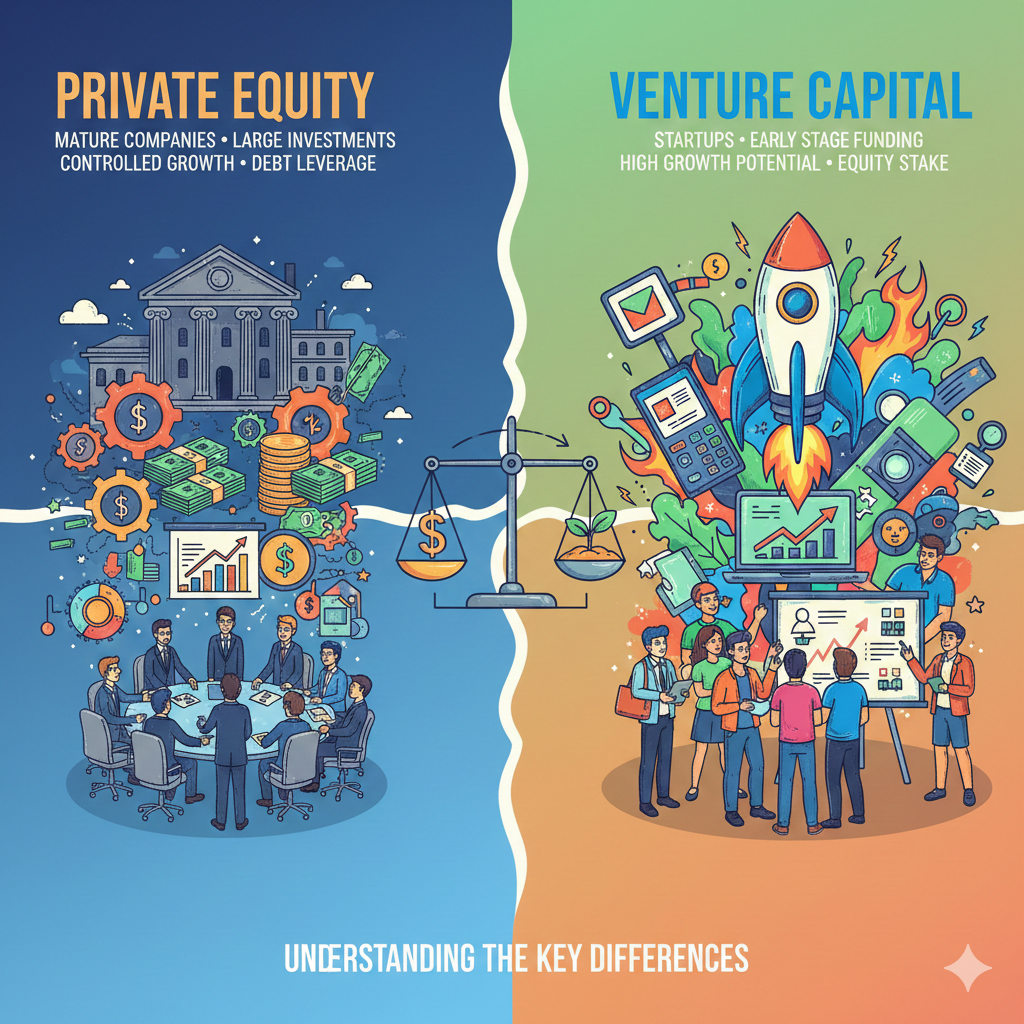
Private Equity vs. Venture Capital: Understanding the Key Differences

When people talk about the world of high finance, two terms often appear side by side: Private Equity (PE) and Venture Capital (VC). At first glance, they may seem similar. Both involve investors putting money into companies that are not listed on the stock exchange, and both expect high returns in the long run. However, despite these similarities, PE and VC operate in different ways, target different types of businesses, and carry different levels of risk. Understanding these differences is essential for entrepreneurs, investors, or anyone curious about how modern business financing works.

1. Difference in the Stage of Companies They Invest In

One of the most fundamental differences between PE and VC lies in the stage of the company they choose to invest in.

Venture Capital firms usually invest in early-stage startups—companies that may only have a prototype, an idea, or a small customer base. These startups are typically young, innovative, and ambitious. They are often found in high-growth industries such as technology, biotechnology, fintech, e-commerce, and renewable energy. These businesses have tremendous potential, but also significant uncertainty. VC firms step in at this early stage by providing the capital needed for product development, team expansion, and market entry.

Private Equity firms, in contrast, prefer to invest in mature companies. These are businesses that already have an established product, steady revenue, and a long operational history. They may be underperforming and in need of restructuring, or they may simply want capital to grow or expand. PE investors look for businesses with track records—firms that may not be glamorous but are stable enough to generate predictable returns. Unlike VC firms, they are not usually chasing brand-new ideas; they’re looking for strong fundamentals they can improve.

2. Investment Size and Ownership Structure

The next major difference lies in the amount of investment and the degree of ownership.

Venture Capital deals tend to be smaller. Investments may range from a few hundred thousand dollars to a couple of million dollars, depending on the stage (seed, Series A, Series B, etc.). VC investors generally do not aim for majority control. Instead, they hold minority stakes, often between 10% and 40%. This allows startup founders to retain decision-making authority, which is crucial during the early growth stage.

Private Equity investments are much larger. PE firms often invest tens or hundreds of millions of dollars in a single company. Because they deploy more capital, they typically seek majority ownership or full control of the company. Through this control, they have the power to make changes to management, operations, cost structure, or strategy. Many PE deals even involve leveraging debt, known as a leveraged buyout (LBO), where the PE firm uses borrowed money to acquire the company and then uses the company’s cash flow to pay back the debt over time.

3. Goals, Strategies, and Business Involvement

Another key difference is how involved investors become in the companies they support.

Venture Capital firms focus on helping startups grow rapidly. Their priority is to help the company scale and become profitable. They may guide founders, provide mentorship, connect them with networks, and help them shape business models. VC firms are more hands-on when it comes to strategy and product direction, but they rarely take over the company’s day-to-day operations. The founders remain in control, and the VC acts more like a partner.

Private Equity firms, on the other hand, are deeply involved in the operations and restructuring of the companies they acquire. PE firms often bring in new executives, cut unnecessary costs, streamline operations, or expand into new markets. Their goal is straightforward: increase the company’s profitability and efficiency. After improving the business, they typically sell it within 5–7 years for a significant profit. This makes operational expertise a key factor in PE success.

4. Risk and Return Profiles

Because VC firms invest in early-stage businesses, the risk level is high. Many startups fail or never become profitable. However, when a startup succeeds, the returns can be extraordinary. Stories like early investments in Google, Facebook, Uber, or Airbnb show why VC firms accept high risk—they are hoping for that one “home run” that delivers massive returns.

PE firms operate differently. Since they invest in established companies with predictable earnings, the risk is comparatively lower. Their returns are more stable and consistent. Instead of betting on revolutionary ideas, PE investors bet on improving businesses that are already working. They are less concerned about uncertainty and more focused on increasing efficiency and long-term value.

5. Diversification and Investment Portfolios

VC firms diversify heavily. Since individual startup success is unpredictable, a VC fund usually invests in dozens of companies. Even if many fail, the few that succeed can cover all losses and generate large overall returns. This portfolio approach allows them to manage risk while still having the chance to back major winners.

PE firms operate with a much more concentrated portfolio. They might invest in only a handful of companies at a time because each investment requires large amounts of capital and deep operational involvement. Their strategy focuses on fewer, carefully selected companies where they can drive measurable change.

6. Industry Focus and Investment Style

While both PE and VC firms can technically invest across sectors, VC firms tend to lean toward innovation-driven industries. They want businesses that can scale rapidly and disrupt markets. This is why tech startups dominate VC portfolios.

PE firms, however, invest across a broader range of industries—manufacturing, retail, healthcare, real estate, logistics, and more. They are not limited to trendy or innovative sectors. Instead, they look for businesses with strong fundamentals and steady cash flow that can be optimized.

Conclusion

Private Equity and Venture Capital may appear similar on the surface—they both provide funding to private companies—but they are fundamentally different in their investment philosophy, the companies they target, the amount of control they demand, and the level of risk they are willing to take.

Venture Capital is all about nurturing young companies and helping them grow. It thrives on innovation, risk-taking, and the possibility of exceptionally high returns. Private Equity focuses on established businesses, operational efficiency, and long-term value creation through strategic restructuring and management expertise.

Understanding these differences helps entrepreneurs decide which type of investor they need and helps potential investors choose the path that aligns with their financial goals. Both PE and VC play crucial roles in shaping modern business landscapes, but they do so in very different ways.

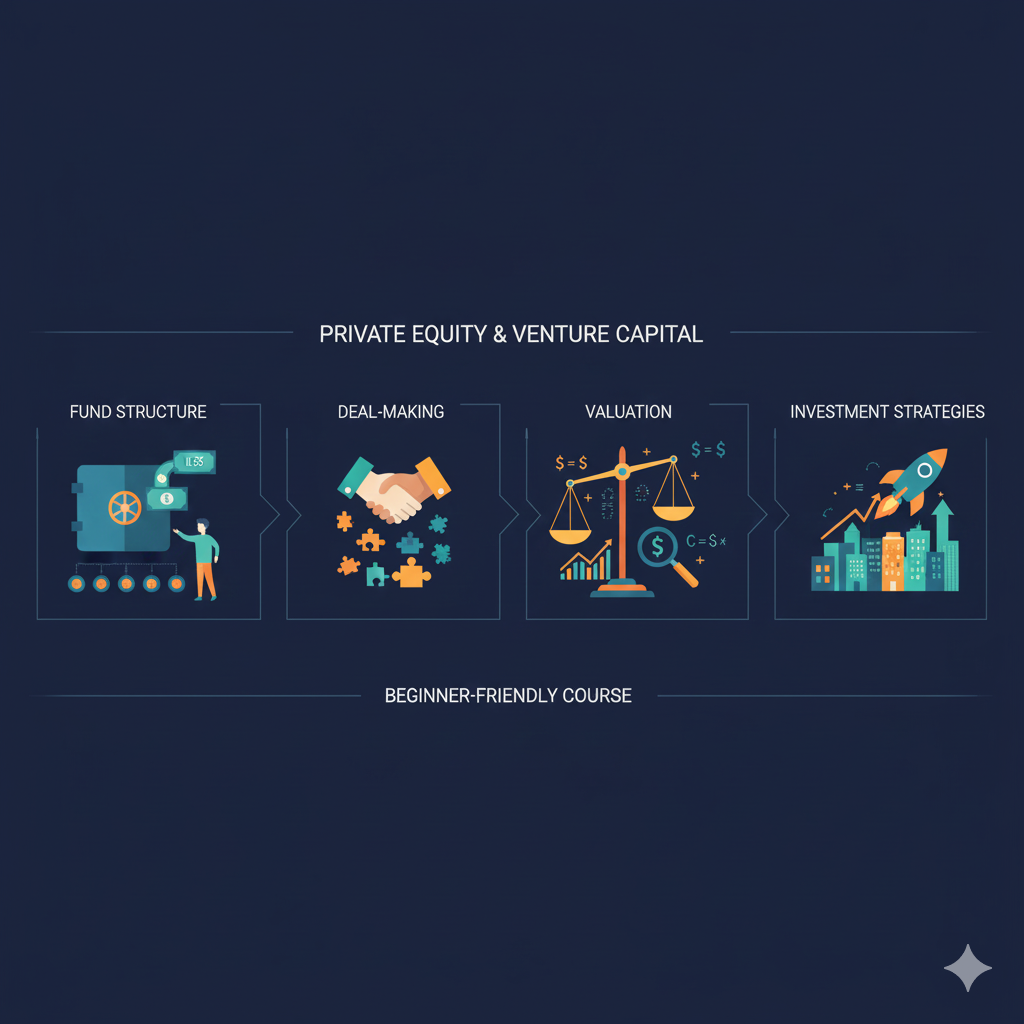
Understanding Private Equity and Venture Capital: A Deep Dive into the Coursera Course

Private equity and venture capital have become two of the most powerful engines behind business growth, innovation, and global entrepreneurship. While public markets such as stock exchanges are widely known and discussed, the world of private markets—where private equity (PE) and venture capital (VC) operate—remains more exclusive and less understood. Coursera’s course on Private Equity and Venture Capital aims to bridge this knowledge gap by offering learners a solid foundation in how private markets function, how investments are made, and how value is created through strategic funding.

This course serves as an accessible entry point for finance students, professionals, entrepreneurs, and anyone curious about how companies are funded before they reach the public market or grow into industry leaders. It breaks down the complex workings of PE and VC into understandable concepts and practical frameworks. What makes it valuable is not just the theory but the real-world understanding it brings to how investors and entrepreneurs collaborate across a company’s lifecycle.

The course starts by explaining what private equity and venture capital actually are. Though people often use these terms interchangeably, the course clarifies the distinction. Venture capital typically focuses on early-stage companies—startups that have big ideas but limited resources. These companies often need funding to build prototypes, hire teams, test the market, and scale operations. Private equity, on the other hand, deals with more mature companies. PE investors often step in when a business is seeking expansion, restructuring, or strategic improvements. Understanding these differences is essential because the way money is invested, the level of risk involved, and the expectations of return vary significantly between the two.

One of the strengths of the course is how it dives into the legal, taxation, and structural foundations of private market investments. In public markets, buying and selling shares is straightforward. In private markets, however, deals are much more complex. Investors must consider legal structures for funds, limited partnership agreements, capital commitments, and regulatory frameworks. Taxation also plays a critical role in determining how fund managers structure investments and how returns are distributed. Without understanding these underlying elements, it becomes difficult to grasp why private equity investments work the way they do, or why they are structured differently from traditional stock market investments.

Another key area covered in the course is the inner workings of private equity and venture capital funds. Many people know that investors contribute money to these funds, but few understand the detailed mechanics behind fundraising, capital deployment, and fund governance. The course demystifies this by explaining who the main players are—limited partners (LPs), general partners (GPs), and portfolio managers. LPs typically include pension funds, insurance companies, wealthy individuals, and institutions looking for long-term returns. GPs are the professionals who manage the fund, scout investment opportunities, evaluate deals, and decide where to allocate capital.

The course also explains how funds raise money, how they commit that money into promising ventures, and how they manage the investment cycle. Students learn how funds aim to balance risk and reward, how they diversify portfolios, and how fund managers make decisions that could impact companies and investors for years to come.

A major focus of the course is valuation and deal-making, which are crucial in both private equity and venture capital. Unlike public companies whose stock prices are visible on exchanges, private companies don’t have a market-assigned value. That means investors need special techniques to estimate worth. The course teaches various valuation methods—such as discounted cash flow (DCF), multiples, and comparable transactions—while explaining how these methods must be adapted to private markets. Students also learn how investors assess a company’s potential for growth, manage due diligence, and negotiate deal terms such as equity stakes, convertible notes, and liquidation preferences.

These insights help learners understand not just how investments are made, but why certain businesses become attractive opportunities while others don’t. Due diligence, for instance, is a critical step where investors analyze financial statements, business models, management capabilities, market conditions, and competition. A poor due diligence process can lead to major losses; a strong one can lead to impressive returns.

Throughout the course, learners also gain valuable practical skills that are directly applicable to careers in finance, entrepreneurship, and investment analysis. These skills include financial modeling, evaluating business growth prospects, understanding investment structures, and analyzing exit strategies such as acquisitions, buyouts, and IPOs. These competencies are especially helpful for individuals aspiring to work in investment banking, consulting, private equity firms, or startup ecosystems. Even entrepreneurs benefit from understanding how investors think, because it helps them prepare better pitches, negotiate term sheets, and structure deals that benefit both founders and investors.

One of the best aspects of the course is its flexibility. Designed to be completed at your own pace, it fits well into the schedule of working professionals or students with busy routines. With around eight hours of total content, it’s concise but informative, giving learners enough depth to build confidence in the subject without being overwhelming. The option to earn a shareable certificate also adds value, as it can be included on résumés, LinkedIn profiles, and professional portfolios.

The course stands out because it translates complex financial concepts into clear, digestible lessons. Whether someone has prior finance knowledge or is encountering these topics for the first time, the explanations remain accessible. By the end, learners not only understand private equity and venture capital in theory, but also see how these investment vehicles affect real companies in the real world.

Private equity and venture capital shape some of the most important economic developments today—from startup innovations that disrupt industries to major buyouts that redefine corporate giants. Understanding how these systems work provides insight into how businesses grow, how investors evaluate opportunities, and how financial strategies influence long-term success. Coursera’s course offers a strong foundation in this powerful area of finance, making it a valuable stepping stone for anyone looking to deepen their knowledge or pursue a career in the investment world.

Understanding Investment Banking: What It Is, How It Works, and Why It Matters

Investment banking is one of the most influential segments of the modern financial system. Whether a company is preparing to go public, planning to acquire another business, or looking for ways to raise large-scale capital, investment banks play a central role in shaping those decisions. Despite their reputation for complexity, the purpose of investment banks is surprisingly straightforward: they help large organizations manage big, strategic financial transactions. These include issuing new securities, raising funds, structuring deals, and offering expert advice for mergers, acquisitions, and corporate growth.

At its core, investment banking is about connecting the people who need money with the people who have it. Large corporations, governments, and institutions often require significant capital for expansion, infrastructure, innovation, or restructuring. On the other side are investors—ranging from individuals to pension funds and global institutions—who are looking for profitable opportunities. Investment banks sit right between these two worlds, helping to bridge the gap and ensure that capital flows smoothly and efficiently.

One of the primary roles of investment banks is to guide companies through major financial transactions, especially those too large or complex for traditional banks to handle. For example, when a company decides it wants to go public by offering shares to the public for the first time, the process is known as an initial public offering, or IPO. Managing an IPO is a complex task: it involves determining the value of the company, deciding how many shares to issue, setting the right price, complying with regulations, and marketing the offering to investors. Investment banks specialize in navigating this complicated landscape so that companies can access the capital they need to grow.

Another significant activity of investment banks is underwriting, which is at the heart of their capital-raising role. When a company decides to issue new stocks or bonds, the investment bank often purchases those securities directly from the company at a predetermined price. After acquiring them, the bank resells the securities to investors. If the market demand is strong, the bank earns a profit; if the demand is weaker than expected, the bank may incur a loss. This makes underwriting a high-stakes business, but it also ensures that the issuing company receives its capital upfront without worrying about market fluctuations.

Investment banks also act as intermediaries between issuers and investors, ensuring that each party’s needs are met. Companies rely on investment banks to help design securities that appeal to investors and structure deals in ways that maximize financial efficiency. Investors, meanwhile, rely on investment banks to vet, analyze, and present investment opportunities. Because investment banks have access to vast amounts of financial data, industry expertise, and market insights, they help create pricing structures and deal designs that benefit both sides.

Beyond raising capital, investment banks provide high-level financial advisory services. When large corporations consider strategic moves—such as buying a competitor, merging with another firm, or selling a division—investment banks step in to guide these decisions. They evaluate the financial health of target companies, determine fair valuations, structure offers, negotiate terms, and help forecast long-term financial outcomes. These services are critical because mergers and acquisitions often involve billions of dollars and can reshape entire industries. Without expert guidance, companies risk overpaying, missing hidden liabilities, or making decisions that undermine long-term value.

Valuation plays a key role in these advisory services. Investment banks use sophisticated models to determine what a company or asset is truly worth. This includes analyzing cash flows, market trends, financial statements, and competitive landscapes. Valuation becomes even more complex in international transactions, where political risks, currency fluctuations, and varying regulatory environments come into play. Investment banks help make sense of these factors so that companies can make informed, strategic decisions.

Another reason investment banks are so important is that they help clients manage risk. Financial markets move quickly, and companies exposed to currency risk, interest rate shifts, or market volatility may face unexpected challenges. Investment banks offer strategies—including derivatives and hedging instruments—to help businesses protect themselves against these risks. By assessing potential threats and designing solutions, they help companies operate more confidently in uncertain environments.

Historically, investment banking operated separately from commercial banking due to regulatory rules implemented after the Great Depression. Commercial banks handled everyday banking services like deposits and loans, while investment banks focused on securities and large transactions. However, in 1999, the regulatory separation was removed, allowing many large financial institutions to integrate both services under one roof. Today, firms like JPMorgan Chase, Citigroup, and Bank of America operate with both commercial and investment banking divisions, offering clients a broader range of financial services.

Although investment banks play an essential role in the economy, their work is not without challenges or controversies. The risk involved in underwriting can lead to major losses if market conditions shift unexpectedly. They also operate in a highly competitive environment, where securing deals and maintaining relationships requires long hours, intense pressure, and constant innovation. The industry has also faced criticism for conflicts of interest, high fees, and its role in financial crises. Nevertheless, investment banking remains a cornerstone of corporate finance, enabling the movement of capital, supporting business expansion, and contributing to economic growth.

For companies, governments, and institutions, investment banks provide a powerful toolkit. They offer access to the capital markets, strategic insights, valuation expertise, risk management techniques, and deep industry knowledge. Without investment banking, many of the world’s most transformative corporate deals, infrastructure projects, or technological breakthroughs would not be possible.

In essence, investment banking enables organizations to dream bigger, invest boldly, and grow beyond traditional limits. Its mix of financial expertise, strategic advisory, and market connections makes it indispensable in shaping the future of global business.

Advanced Corporate Finance: A Deep, Practical Look at High-Level Financial Decision-Making

Corporate finance has always been at the heart of strategic decision-making, but in today’s rapidly changing global environment, the role of finance leaders has become even more critical. Companies operate in a world shaped by volatile markets, fluctuating interest rates, evolving financial technologies, and increasingly complex regulatory environments. To successfully navigate this landscape, leaders must understand not only the fundamentals of finance but also the advanced theories and tools that drive high-stakes decisions. This is exactly where advanced corporate finance education becomes valuable, especially programs designed for senior executives who shape financial policies and long-term business direction.

An advanced corporate finance program goes far beyond introductory finance concepts. Rather than focusing on basic accounting or simple investment decisions, it explores how large-scale financial strategies are designed, evaluated, and executed. It equips executives with the ability to determine how a company should raise capital, manage risks, structure deals, evaluate global opportunities, and respond to shifts in the financial markets. The focus is both analytical and strategic, giving decision-makers the perspective they need to lead with confidence.

A central component of the curriculum is the study of complex capital structure decisions. Companies must constantly decide how to fund their growth—should they rely on equity, take on long-term debt, issue bonds, or use hybrid instruments? These choices are not merely financial; they influence the company’s risk profile, shareholder value, and long-term stability. Understanding how market conditions, interest rates, investor behavior, and internal company goals interact helps leaders determine the optimal mix of financing. Advanced corporate finance training emphasizes how these decisions impact cost of capital and financial flexibility, two elements that directly affect competitiveness.

Another major area of focus is risk management. In modern finance, risk is not limited to market volatility or credit exposure; it also includes operational uncertainties, currency fluctuations, regulatory threats, and geopolitical tensions. Senior finance professionals must know how to identify, measure, and manage these risks while still enabling the company to pursue profitable opportunities. Methods such as hedging, derivatives strategies, and portfolio risk assessment become essential tools. In an advanced finance program, participants learn how to apply these strategies effectively and understand the scenarios in which each method is most appropriate.

Beyond domestic business considerations, the program dives deeply into global financial dynamics. Today’s corporations operate in interconnected markets where economic trends in one part of the world can directly impact operations elsewhere. A sudden change in monetary policy by a major central bank, a shift in global commodity prices, or a regulatory update in a key market can influence investment strategies. Senior executives must be prepared to evaluate these global factors and incorporate them into financial planning. A strong grasp of international economics also helps leaders assess cross-border risks and identify global investment opportunities.

Another advanced skill that the program builds is valuation, especially in an international context. Valuing a company’s assets, potential acquisitions, or strategic projects becomes much more complex outside domestic borders. Executives must consider factors such as exchange-rate risk, political risk, inflation differences, and country-specific financial regulations. The program teaches various valuation models, including adjusted present value, relative valuation, and cash-flow forecasting techniques. More importantly, it shows how these models must be adapted when dealing with international assets or multinational operations.

Real-world application is a key pillar of advanced corporate finance learning. Theory alone is not enough when decisions involve millions—or sometimes billions—of dollars. This is why such programs incorporate case studies, group work, and simulation exercises. Participants dive into real corporate scenarios, analyzing companies that faced major financial challenges or opportunities. For instance, they may study how a multinational firm restructured its debt, how a company managed financial risk during a crisis, or how executives made decisions during a major merger or acquisition. By working through these cases, participants strengthen their ability to apply academic frameworks to practical situations.

Another hallmark of executive finance education is the interactive format. In-class discussions with peers from different industries create a high-value learning environment. Participants share their own real-world challenges, which adds depth and context to the material. Group sessions also mirror the collaborative nature of corporate decision-making. Being able to debate, negotiate, and jointly evaluate strategic financial choices helps participants refine their leadership skills.

Finally, such programs are specifically designed for senior-level leaders—CEOs, CFOs, vice presidents, treasurers, and executives who directly influence financial policy and business strategy. These individuals often oversee teams, manage budgets, approve investments, and guide corporate growth. The program provides them with advanced tools needed to make decisions confidently and strategically, particularly when dealing with high-stakes scenarios such as expansions, acquisitions, restructurings, or major capital investments. Since the decisions they make can shape the trajectory of the entire organization, having a solid grounding in advanced financial principles becomes crucial.

In today’s global financial environment, companies must remain agile, informed, and forward-thinking. Leaders who understand advanced corporate finance are better equipped to steer their organizations through uncertainty and capitalize on emerging opportunities. They can develop financial policies that reduce risks, maximize returns, and support long-term vision. Equipped with the insights gained from an advanced finance program, executives are able to make decisions that are analytically sound, strategically aligned, and globally informed.

Ultimately, advanced corporate finance is not just a technical discipline—it is a strategic mindset. It blends deep financial knowledge with an understanding of global economics, corporate behavior, and market dynamics. For senior leaders, mastering these concepts is essential to driving sustainable growth and building resilient organizations in an increasingly competitive and unpredictable world.

What Are Swaps? A Comprehensive Guide to One of Finance’s Most Powerful Tools

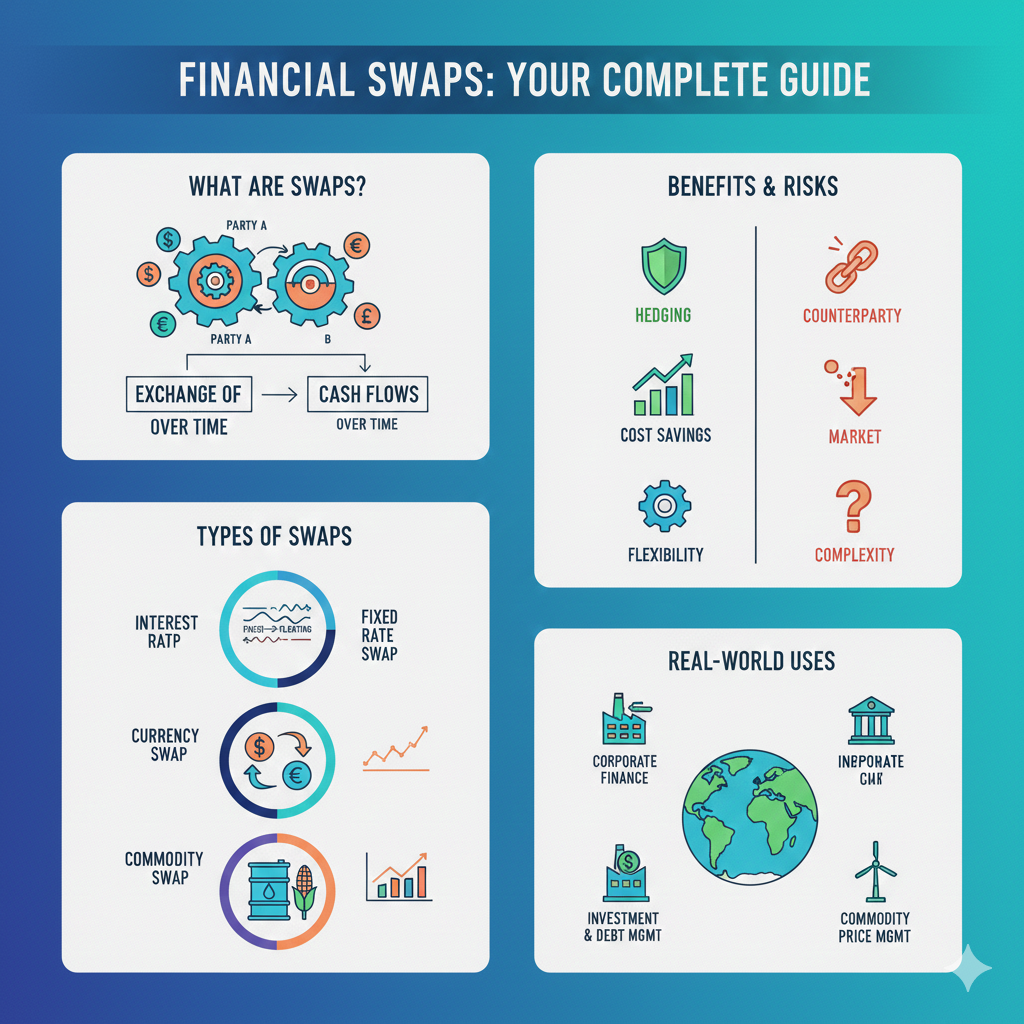
In the world of finance, companies, banks, and investors constantly look for ways to manage risk, stabilize costs, and improve financial performance. One of the most useful tools created for this purpose is the swap. Although the term may sound complex, a swap is simply a contract in which two parties agree to exchange cash flows over a specific period. These exchanges are usually based on interest rates, currencies, commodities, or even the performance of certain assets. Swaps have grown into one of the most important financial instruments in global markets because they allow institutions to handle risks without changing the underlying assets or debt on their balance sheets.

At its core, a swap involves two streams of payments. One stream might be fixed, while the other is variable or floating, depending on some economic benchmark such as an interest rate or a currency exchange rate. The key thing to understand is that swaps do not involve exchanging the actual principal amount. Instead, both parties agree on a “notional principal,” which is used purely to calculate the cash flows they will swap. Since the principal itself never changes hands, swaps can be executed efficiently without disrupting a company’s finance structure.

Swaps are typically traded privately in what’s known as the over-the-counter (OTC) market. This means they are not bought and sold on centralized exchanges like stocks or futures. Instead, they are negotiated directly between two institutions, usually with the help of banks or specialist dealers. The OTC nature of swaps allows for customization—contracts can be tailored to suit the exact needs of the parties involved. However, this also brings counterparty risk, which is the possibility that one party may not be able to meet its payment obligations. After the financial crisis of 2008, regulations increased oversight on swap trading, but most swaps are still customized OTC contracts.

One of the most common forms is the interest rate swap. In an interest rate swap, two parties exchange interest payments on a certain notional amount. Typically, one party pays a fixed rate, while the other pays a floating rate linked to a benchmark such as LIBOR or SOFR. Think of a company with a loan that has a floating interest rate. If interest rates rise, so will their payments, making budgeting difficult. To stabilize costs, the company might enter into an interest rate swap where it pays a fixed rate to a counterparty and receives a floating rate in return. This exchange essentially converts its variable-rate debt into fixed debt without modifying the original loan. Interest rate swaps are widely used because they help companies protect themselves against unpredictable rate movements.

Another important type is the currency swap. These swaps involve exchanging cash flows in different currencies. Unlike interest rate swaps, currency swaps sometimes require exchanging principal amounts at the beginning and end of the contract, although not always. Currency swaps are commonly used by companies that operate internationally and need to manage exchange-rate risks. Suppose a U.S. company needs euros for a European investment, while a European company needs U.S. dollars for operations in the United States. A currency swap allows both companies to obtain the currency they need directly from each other, often at better terms than banks can offer. They also help avoid the instability that comes with fluctuating exchange rates.

Beyond interest rates and currencies, the financial industry has developed a variety of specialized swaps. Commodity swaps involve exchanging cash flows tied to commodity prices such as oil, natural gas, or metals. These are useful for businesses exposed to volatile commodity markets. For example, an airline worried about rising fuel prices can use a commodity swap to lock in fuel costs for future months. Equity swaps and total return swaps link cash flows to the performance of equity indices or individual stocks. These instruments allow investors to gain exposure to assets without actually owning them. Hedge funds and investment banks frequently use these swaps to manage investment exposure, reduce taxes, or bypass restrictions on direct ownership.

One of the most well-known forms of swap is the credit default swap (CDS). A CDS functions like insurance on a financial asset such as a bond. The buyer of the CDS makes periodic payments to the seller. In return, the seller promises to compensate the buyer if the underlying bond issuer defaults. Before the financial crisis, CDS contracts were widely used by institutions seeking protection from credit risk. However, misuse and lack of regulation contributed to systemic issues in 2008. Even so, credit default swaps remain a significant part of the financial landscape, now with stronger regulatory oversight.

Swaps offer major advantages. They allow companies to manage interest rate risk, currency exposure, and commodity price volatility without restructuring their debt or engaging in complicated asset transactions. Swaps also tend to be more flexible than traditional financial products. Since they are negotiated directly between two parties, almost any specification—payment schedule, notional amount, rate benchmarks—can be tailored to fit unique business needs.

However, swaps are not risk-free. Because they are long-term agreements, changes in market conditions can lead to unexpected costs for one party. For example, if a company agrees to pay a fixed rate in an interest rate swap and market rates fall, it may end up paying more than necessary. There is also counterparty risk: if one party defaults, the other may lose expected payments. This makes it important to choose financially strong partners or use clearinghouses that guarantee payment but charge fees. Swaps also require ongoing monitoring. Market movements, regulatory changes, or shifts in economic conditions can affect the value of a swap over time, meaning companies must continually assess their positions.

Despite these risks, swaps remain a core component of modern finance. Banks, corporations, insurance firms, investment funds, and governments use swaps every day to control financial exposure, stabilize operations, and plan for the long term. Their flexibility and efficiency make them particularly valuable in a world where interest rates, currency values, and commodity prices are constantly changing.

In simple terms, a swap is like a financial agreement that allows two parties to reshape their cash flow obligations without altering the underlying assets. Whether used to hedge risk, take advantage of market trends, or gain exposure to specific assets, swaps help create stability in an otherwise unpredictable environment. Understanding how swaps work—and the opportunities and risks they carry—gives businesses and investors powerful tools to navigate global markets with more confidence and clarity.

A Complete Beginner’s Guide to How Forex Trading Works and What Drives the Market

Forex trading—often called FX trading—is one of the most dynamic and fascinating ways to participate in global financial markets. At its core, forex trading is the process of exchanging one currency for another. While that may seem simple on the surface, the forex market is a massive, fast-moving ecosystem shaped by global economics, political events, business flows, and investor sentiment. It operates continuously throughout the week, connecting traders across continents in a market valued at trillions of dollars each day.

To understand forex properly, it helps to start with the basics. Every forex transaction involves two currencies because you’re always buying one while simultaneously selling another. These combinations are known as currency pairs, such as EUR/USD or GBP/JPY. When you open a trade, you are essentially betting on how one currency will perform relative to the other. If you expect the euro to strengthen against the US dollar, you would buy EUR/USD. If you believe the opposite will happen, you would sell the pair. The price you see quoted represents how much of the quoted currency is needed to buy one unit of the base currency.

One of the reasons forex attracts so many participants—from global corporations to individual traders—is its enormous size. According to industry surveys, the forex market records daily trading volumes around USD 7.5 trillion, making it the largest and most liquid financial market in the world. Liquidity matters because it allows traders to buy and sell quickly, often at very competitive prices. This fluidity also reduces the likelihood of getting “stuck” in a trade, a problem sometimes seen in less liquid markets.

Another major attraction of forex is that it operates 24 hours a day, five days a week. The market follows the opening times of global financial centers: Sydney opens first, followed by Tokyo, then London, and finally New York. As one region ends its trading day, another begins, creating an almost seamless flow of activity. For traders, this means they can choose trading times that suit their schedules and react instantly to breaking news, such as economic data releases, geopolitical developments, or central-bank decisions.

Forex trading also commonly involves leverage, which is a powerful yet risky tool. With leverage, a trader can control a large position using only a small portion of capital. For example, with 1:30 leverage, you can open a USD 30,000 position with just USD 1,000 in margin. . A small market movement in the opposite direction of your position could deplete your account quickly. This is why understanding margin requirements, risk management, and trade sizing is essential before jumping into leveraged forex transactions.

Economic indicators such as inflation, employment data, GDP growth, and interest-rate decisions can have a powerful impact on currency prices. Central banks, especially those of major economies like the U.S., Eurozone, Japan, and the U.K., play a major role because they control monetary policies that affect currency values. Political stability, elections, trade agreements, and international conflicts can also cause significant fluctuations, sometimes creating sharp price movements within seconds. Traders must therefore keep an eye on global news and economic calendars to stay ahead of major market drivers.

There are different styles of forex trading depending on a trader’s goals, experience, and risk tolerance. Some people prefer day trading, where positions are opened and closed within the same trading day to avoid overnight market exposure. Others choose swing trading, which involves holding positions for days or even weeks to capture medium-term price movements. Long-term investors might use position trading, relying more on fundamental analysis than short-term price fluctuations. Regardless of the style, successful forex traders often develop a well-structured strategy, test it, refine it, and follow it consistently.

A big part of forex trading involves selecting the right currency pairs to trade. Major pairs—such as EUR/USD, USD/JPY, GBP/USD, and USD/CHF—tend to have the highest liquidity and tightest spreads. These pairs are favored by many traders because they typically offer more predictable price behavior and lower trading costs. Cross-currency pairs like EUR/JPY or GBP/CAD can provide broader opportunities and sometimes higher volatility, while exotic pairs (for example, USD/TRY or EUR/ZAR) can be even more volatile and carry higher spreads. Choosing the right pair depends on your strategy, risk appetite, and familiarity with global economies.

Managing risk is arguably the most important part of forex trading. Because leverage and volatility can create large swings, traders must protect their capital by using tools such as stop-loss orders, take-profit levels, proper position sizing, and disciplined risk-to-reward ratios. Many traders risk only 1–2% of their trading capital on a single trade to ensure survival during losing streaks. Emotional control is another crucial factor. Impulsive decisions, over-leveraging, or chasing losses can rapidly result in significant financial damage.

Technology has made forex trading more accessible than ever. Modern trading platforms allow traders to execute orders quickly, analyze market charts, study price patterns, and automate strategies using algorithms. Educational resources, market research, webinars, and demo accounts allow new traders to practice without risking real money. While forex is open to beginners, it does require patience, discipline, and ongoing learning to navigate effectively.

In addition to speculation, forex also plays a vital role in global trade and business. Companies that operate internationally must constantly exchange currencies to pay suppliers, receive payments, and manage risks related to currency fluctuations. Banks, hedge funds, asset managers, and governments also participate in the forex market for various financial and policy reasons. This diverse set of participants ensures that forex remains active and deeply interconnected with the global economy.

Despite its benefits, forex trading involves meaningful risks. Sudden market movements due to unexpected news events can cause rapid losses. High leverage can magnify even small unfavourable shifts in price. Spreads may widen during low-liquidity periods, such as during holidays or major announcements. Traders must remain cautious, stay updated, and treat forex like a serious financial activity rather than a shortcut to quick riches.

In summary, forex trading offers exciting opportunities thanks to its liquidity, accessibility, global reach, and potential for profit. At the same time, it demands responsibility, knowledge, and risk awareness. With the right strategy, discipline, and understanding of how currencies behave, forex can be an engaging market that rewards careful planning and thoughtful execution.

NFP Report Guide: Why the U.S. Jobs Data Matters for Forex Traders

In the world of forex and financial markets, few events create as much anticipation and volatility as the Non-Farm Payroll (NFP) report. Released once a month by the U.S. Bureau of Labor Statistics, the NFP has the power to move the U.S. dollar, shake major currency pairs, and set the tone for market sentiment across global markets. Although it seems like just another economic report, NFP actually reflects the strength of the world’s largest economy, influences central bank decisions, and plays a major role in shaping investor expectations.

This article breaks down what the NFP is, why it matters, how traders interpret it, and how it affects the forex market. Written in a human, explanatory tone, it offers a clear understanding of this powerful economic indicator.


What Is NFP?

The Non-Farm Payroll report tracks the number of jobs added or lost in the U.S. economy during the previous month, excluding workers in certain categories such as agricultural employees, private household staff, and nonprofit organizations. In simple terms, it measures monthly employment growth in most of the major industries in the United States.

Because employment is one of the strongest indicators of economic health, the NFP gives traders and economists a highly accurate picture of how the U.S. economy is performing. A rising employment count typically signals a growing economy, while declining employment suggests weakness.


When Is the NFP Released?

The NFP report is released on the first Friday of every month at a fixed time. This predictable schedule makes it one of the most widely followed events on the financial calendar. Traders know exactly when to prepare, markets adjust their positioning beforehand, and volatility often increases in the hours leading up to the release.

The anticipation surrounding the NFP ensures that, even before the data comes out, markets begin pricing in expectations. As soon as the numbers are published, however, the market reacts instantly, often creating sharp price movements.


Why NFP Matters So Much

The U.S. dollar is the most traded currency in the world, and U.S. economic data affects nearly every corner of global finance. Because NFP directly reflects the strength of the U.S. economy, it holds tremendous importance.

Here’s why:

  1. Employment drives economic growth.
    When more people are working, they earn money, spend money, and help businesses grow. This supports GDP, production, and overall economic activity.
  2. The Federal Reserve watches NFP closely.
    Strong employment numbers may push the Federal Reserve to raise interest rates. Weak numbers may lead them to pause rate hikes or even cut rates. Interest rate speculation is one of the biggest drivers of currency strength.
  3. NFP influences global market sentiment.
    A strong U.S. jobs report can boost confidence worldwide, while a weak report can trigger risk-off behavior where investors move away from risky assets.

For these reasons, NFP is not just a U.S. economic indicator—it is a global market mover.


How NFP Impacts the Forex Market

The forex market reacts almost immediately when NFP numbers are released. Since the U.S. dollar is on one side of most major currency pairs, even a small surprise in the data can cause price swings within seconds.

Immediate Volatility

Right after the release, volatility tends to spike. Currency pairs like EUR/USD, GBP/USD, USD/JPY, and USD/CAD can move sharply within seconds. Spreads may widen, liquidity may shift, and price may move unpredictably.

This is why many traders either avoid trading during the release or approach it with extreme caution.

Directional Movement

If NFP comes in stronger than expected, the U.S. dollar usually strengthens because a stronger labor market suggests a strong economy and possibly higher interest rates.

If NFP is weaker than forecast, the U.S. dollar may fall because traders expect slower growth and weaker monetary tightening.

Whipsaws and Fake Breakouts

One of the biggest challenges of trading NFP is the initial price spike. Markets often react sharply in one direction and then reverse within minutes. This creates “whipsaws,” where traders can be stopped out quickly if they are not careful.


Components Traders Look At

The headline figure—jobs added or lost—is important, but it is not the only part of the report. Traders also analyze:

  1. Unemployment Rate:
    Shows the percentage of people looking for work but unable to find jobs. A low unemployment rate supports a strong economy.
  2. Average Hourly Earnings:
    Tracks wage growth, which is tied to inflation. Rising wages may encourage the Federal Reserve to raise interest rates.
  3. Labor Force Participation Rate:
    Indicates how many people are actively involved in the labor market.
  4. Revisions of Previous Data:
    Sometimes, previous months’ numbers are revised significantly, which can change market perception of economic momentum.

A complete analysis of all these elements gives traders a clearer picture of the real economic trend.


Why Traders Need Caution Around NFP

NFP trading can be highly profitable but also extremely risky. The speed and unpredictability of movements can catch even experienced traders off guard.

Here are the main risks:

1. Widened Spreads

During high volatility, brokers often widen spreads, making it costlier to enter and exit trades. Scalpers and day traders can suffer losses simply because the spread becomes too large.

2. Slippage

Because markets move so quickly, trades may not be executed at the expected price. This delay can turn a profitable trade into a losing one almost instantly.

3. Emotional Decision-Making

The excitement and volatility may cause traders to act impulsively. Chasing the market, entering late, or holding trades too long can lead to unnecessary losses.

4. Fake Moves

The first movement after the NFP release is often misleading. Many traders wait for the initial spike to settle before entering a position based on the true market direction.


How Traders Prepare for NFP

Traders who participate in NFP often prepare well in advance. Some common approaches include:

  • Reducing position sizes
  • Setting wider stop-loss levels
  • Monitoring forecasts from analysts
  • Studying past NFP reactions
  • Avoiding trades during the first minute or two
  • Waiting for a clear trend to form after the initial spike

Some traders choose not to trade NFP at all, preferring to wait until the volatility cools down.


Who Should Trade NFP?

NFP trading is best suited for:

  • Experienced traders
  • Those comfortable with volatility
  • Traders who understand risk management
  • Individuals with a fast and stable trading platform

Beginners may find NFP overwhelming because of rapid price fluctuations. However, it is still useful to follow NFP even if you don’t trade it, as it helps develop an understanding of market behavior.


Final Thoughts

The Non-Farm Payroll report is one of the most influential economic indicators in global finance. It provides insights into U.S. employment, influences monetary policy, and moves the forex market with significant force. Understanding how NFP works—and how traders interpret it—can help anyone navigate the fast-moving world of currency trading more effectively.

For traders, staying informed, managing risks carefully, and knowing when to act or stay out of the market are essential skills when dealing with NFP. Whether you trade it or simply follow it as a market indicator, NFP remains a powerful tool for understanding economic momentum and market direction.