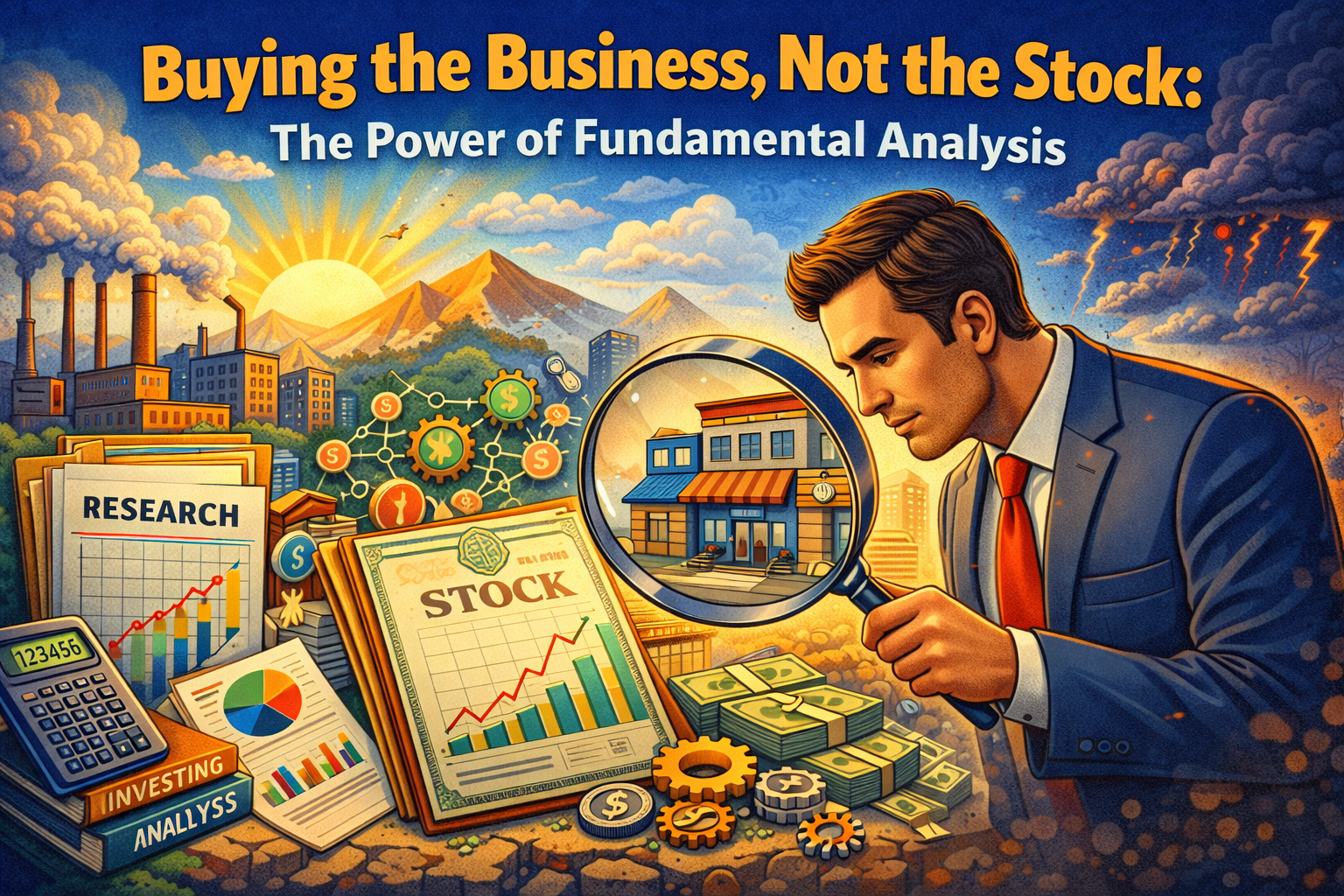
Buying the Business, Not the Stock: The Power of Fundamental Analysis

When we talk about investing, there is a fundamental divide between those who treat the stock market like a gambling den and those who treat it like a business partnership. The latter group almost exclusively relies on a method called Fundamental Analysis. If you want to move beyond “playing the market” and start building a portfolio that can weather decades of economic shifts, understanding the bedrock of fundamental analysis isn’t just an option—it’s a necessity.

At its core, fundamental analysis is the art and science of measuring a security’s intrinsic value. It is the process of stripping away the noise of daily price fluctuations, social media hype, and market panic to look at the “bones” of a business. It asks one simple, yet incredibly complex question: How much is this company actually worth?

The Concept of Intrinsic Value

The central premise of fundamental analysis is that a stock’s market price does not always equal its true value. Imagine you are buying a house. The “market price” is what the seller is asking for today based on current trends. The “intrinsic value,” however, is determined by the quality of the foundation, the neighborhood’s growth potential, and the rental income it can generate.

Fundamental analysts believe that while the market might be “wrong” about a stock’s price in the short term—perhaps due to a temporary scandal or a general economic downturn—it will eventually “correct” itself. By calculating the intrinsic value, an investor can identify opportunities where they are buying a dollar for seventy-five cents.

1. The Quantitative Pillar: The Hard Numbers

The first step in fundamental analysis involves diving into the “quantifiable” data. This is the information you can find in a company’s financial filings, specifically the 10-K (annual report) and 10-Q (quarterly report). There are three primary documents every fundamental investor must master:

  • The Balance Sheet: This is a snapshot of what the company owns (assets) and what it owes (liabilities) at a specific point in time. A healthy balance sheet shows a company that isn’t drowning in debt and has enough “liquidity” (cash and easily sellable assets) to survive a rainy day.
  • The Income Statement: This shows the company’s performance over a period. It tracks revenue (the top line) and subtracts expenses to arrive at the net income (the bottom line). Investors look for “quality earnings”—growth that comes from selling more products rather than just cutting costs or accounting tricks.
  • The Cash Flow Statement: Perhaps the most important document, this tracks the actual cash moving in and out of the business. Profit on paper is one thing, but “Cash is King.” If a company is reporting profits but isn’t actually seeing cash in the bank, it’s a major red flag.

2. The Qualitative Pillar: The Human Element

Numbers only tell half the story. You can have a company with great financials that is being run into the ground by a toxic management team or a failing business model. This is where qualitative analysis comes in.

  • Management Quality: Who is steering the ship? Do they have a track record of success? Are they transparent with shareholders, or do they hide behind jargon? A company is only as good as the people making the big decisions.
  • Is it a simple, repeatable process, or is it overly reliant on one specific technology that could be obsolete in two years?
  • Competitive Advantage (The “Moat”): Coined by Warren Buffett, an economic moat is what protects a company from its rivals. Without a moat, competitors will eventually eat away at a company’s profits.

3. The “Top-Down” vs. “Bottom-Up” Strategy

Investors generally approach fundamental analysis from two different directions.

Top-Down Analysis starts with the big picture. You look at the global economy, then the national economy, then specific industries that are poised to grow. For example, if you believe the world is shifting toward green energy, you look at the solar and wind sectors. Only then do you look for the best individual companies within those sectors.

Bottom-Up Analysis ignores the “macro” noise. These investors believe that a great company can thrive even in a mediocre economy. They hunt for individual businesses with stellar fundamentals, regardless of what the broader industry or GDP is doing. Their philosophy is: “Buy a great business at a fair price, and the rest will take care of itself.”

4. Decoding the Ratios

To make sense of all this data, analysts use financial ratios to compare apples to apples. If a tech company’s stock is $200 and a retail company’s stock is $50, the tech company isn’t necessarily “more expensive.” You have to look at the ratios:

  • P/E Ratio (Price-to-Earnings): This tells you how much investors are willing to pay for every dollar of profit. A very high P/E might mean the stock is overvalued, or it might mean investors expect massive growth in the future.
  • P/B Ratio (Price-to-Book): This compares the market value to the “book value” (what would be left if the company closed today and sold everything).
  • Debt-to-Equity: This measures how much the company is relying on borrowed money. High debt can act as an anchor during an economic recession.

5. The Long-Term Horizon

Perhaps the most significant difference between fundamental analysis and other forms of trading is the time horizon. Fundamental analysis is not for those looking to “get rich quick.” Because you are waiting for the market to realize a stock’s true value, it can take months or even years for your “thesis” to play out.

This requires a high level of conviction. When the market is crashing and everyone is selling, a fundamental analyst looks at their research. If the company’s “fundamentals”—its management, its cash flow, its moat—are still strong, the analyst doesn’t panic. In fact, they might see the price drop as a “sale” and buy more.

6. The Limitations of the Method

No strategy is perfect. The main drawback of fundamental analysis is that it is incredibly time-consuming. It requires reading hundreds of pages of reports and staying updated on industry news. Furthermore, there is always the risk of “garbage in, garbage out.” If a company’s management is committing fraud or cooking the books, your analysis will be based on false data.

Additionally, the “market” can stay irrational for longer than an investor can stay solvent. Just because you know a stock is worth $100 doesn’t mean it won’t drop to $40 and stay there for three years before finally rising.

Conclusion: Becoming a Business Owner

Fundamental analysis changes your perspective. You stop seeing stocks as ticker symbols or gambling chips and start seeing them as ownership stakes in real-world businesses. It gives you a framework to filter out the noise of the “talking heads” on financial news and focus on what truly drives wealth: productivity, innovation, and profitability.

By combining the cold, hard logic of quantitative ratios with the intuitive, investigative work of qualitative research, you build a shield against the emotional volatility of the market. You don’t just invest; you understand. And in the world of finance, understanding is the most valuable asset you can own.


The Disciplined Investor: Turning Market Volatility into Long-Term Wealth

Investing in the share market is often portrayed as a fast-paced, high-stakes game of chance—a digital casino where fortunes are made or lost in the blink of an eye. However, the reality of successful investing is far more grounded. It is a disciplined craft that combines financial literacy, psychological fortitude, and a long-term vision. If you’ve ever looked at the flickering green and red numbers on a trading terminal and wondered how to turn that chaos into a wealth-building machine, you are not alone.

Starting your investment journey is less about “playing the market” and more about participating in the growth of the economy. To do this effectively, you need a roadmap. Based on the fundamental principles of modern equity investment, here is an in-depth guide on how to navigate the share market, from the technical requirements to the psychological traps you must avoid.

1. Understanding the Ecosystem: Primary vs. Secondary Markets

Before you spend a single rupee, you must understand where the shares come from. The stock market is divided into two main segments: the Primary and the Secondary market.

The Primary Market is where a company “goes public.” When a private company wants to expand—perhaps to build new factories or develop new technology—it needs capital. Instead of taking a massive loan, it sells a portion of its ownership to the public through an Initial Public Offering (IPO). When you buy shares in an IPO, your money goes directly to the company.

The Secondary Market is what most people refer to as “the stock market.” This is where investors trade shares that have already been issued. If you buy shares of a company like Reliance or Apple today, you aren’t buying them from the company itself; you are buying them from another investor who wants to sell. The stock exchange (like the NSE or BSE) acts as the regulated marketplace that facilitates this handoff.

2. The Technical Trio: Bank, Demat, and Trading Accounts

In the old days, owning a stock meant holding a physical paper certificate. Today, everything is digital. To enter the market, you need a specific infrastructure consisting of three interconnected accounts.

  • The Bank Account: This is the source of your funds. It is where your investment capital sits before you buy and where your profits go when you sell.
  • The Trading Account: Think of this as your “interface” with the stock exchange. It is the software or platform provided by your broker that allows you to place “Buy” or “Sell” orders.
  • The Demat Account: Short for “dematerialized,” this is like a digital locker for your shares. When you buy a stock, it doesn’t stay in your trading account; it is moved to your Demat account for safekeeping.

Understanding this flow is vital. When you buy a stock, money moves from your Bank Account to the exchange via your Trading Account, and the shares are then deposited into your Demat Account.

3. The Art of Research: Fundamental and Technical Analysis

One of the biggest mistakes beginners make is “tip-hunting”—buying a stock because a friend or a social media influencer recommended it. Successful investors, however, rely on two main types of research.

Fundamental Analysis is the study of a company’s “health.” You look at its balance sheet, its profit and loss statements, and its debt levels. You ask questions like: Is this company making more money than it did last year? Does it have a unique product that competitors can’t easily copy? Is the management team honest and capable? Fundamental analysis is the bedrock of long-term investing; it helps you find “Value.”

Technical Analysis is the study of price movement and patterns. Technicians believe that all known information is already reflected in the stock price, so they look at charts to predict future trends. While fundamental analysis tells you what to buy, technical analysis often helps you decide when to buy it.

4. Defining Your “Why”: Goals and Risk Tolerance

Are you investing to buy a house in five years? Is it for your child’s education in fifteen years? Or are you building a retirement nest egg for thirty years down the line?

Your goal determines your Risk Tolerance. If you need your money in two years, you cannot afford to take high risks because a market crash could wipe out your savings just when you need them. However, if you are 25 years old and investing for retirement, you can afford to weather the market’s volatility because you have decades for the market to recover.

Knowing your risk appetite is about more than just numbers; it’s about “the sleep test.” If your portfolio drops by 10% in a week and you lose sleep over it, you are likely taking more risk than your temperament allows.

5. The Golden Rule: Diversification

You’ve likely heard the phrase, “Don’t put all your eggs in one basket.” In the share market, this is known as diversification, and it is the only “free lunch” in finance.

If you invest all your money in a single tech company and that sector faces new government regulations, your entire portfolio suffers. However, if you spread your investments across technology, healthcare, banking, and consumer goods, a dip in one sector is often offset by stability or growth in another. Diversification doesn’t just mean buying different stocks; it means buying stocks that aren’t correlated—meaning they don’t all move in the same direction for the same reasons.

6. The Psychological Battle: Discipline over Emotion

The greatest enemy of an investor isn’t the market; it is the mirror. Humans are biologically wired for two emotions that are toxic to investing: Greed and Fear.

When the market is booming, greed takes over. People start “chasing” stocks that have already doubled in price, hoping to get rich quick. This is usually when bubbles form. Conversely, when the market dips, fear takes over. People panic-sell their high-quality stocks at a loss, exactly when they should be looking for buying opportunities.

To succeed, you must replace emotion with a Systematic Investment Plan (SIP) or a disciplined strategy. This means investing a fixed amount regularly, regardless of whether the market is up or down. This approach, known as rupee-cost averaging, ensures that you buy more shares when prices are low and fewer when prices are high.

7. Monitoring and Rebalancing

Investing is not a “set it and forget it” activity. While you shouldn’t obsess over daily price ticks, you do need to conduct periodic reviews. Sometimes, a stock you bought because the company was a leader might lose its edge. Or, because one of your stocks performed so well, it now makes up 50% of your portfolio, making you undiversified.

Rebalancing is the process of bringing your portfolio back to its original target. If your plan was to have 60% in stocks and 40% in safer gold or bonds, and a stock market surge makes your portfolio 80% stocks, you should sell some stocks and buy more bonds to maintain your risk level.

Conclusion

Investing in the share market is a journey of continuous learning. It requires the patience of a gardener and the curiosity of a student. There will be seasons of growth and seasons of drought. By setting up the right accounts, conducting your own research, diversifying your holdings, and—most importantly—keeping your emotions in check, you transform the stock market from a place of uncertainty into a powerful tool for financial freedom.

The best time to start was yesterday; the second best time is today. Start small, stay consistent, and let the power of compounding do the heavy lifting for you.

“Smart Ways to Invest $1,000: A Beginner’s Guide”

If you have $1,000 lying around and you’re wondering how best to invest it, you’re not alone. The idea of investing may seem overwhelming, especially for beginners, but there are plenty of ways to grow your money—without diving into complex financial strategies right away.

When considering how to invest $1,000, it’s essential to strike the right balance between risk and reward. While there are countless options, choosing the ones that align with your goals, risk tolerance, and timeline is crucial. In this article, we’ll explore several smart and beginner-friendly investment strategies that can help you make the most of your $1,000.

1. Diversify Your Investments

One of the key principles of investing is diversification. The idea is simple: don’t put all your eggs in one basket. By spreading your $1,000 across different types of investments, you reduce the risk of losing everything if one particular investment goes south.

Diversification works by ensuring that your portfolio includes a mix of asset types, such as stocks, bonds, real estate, and even cash. For instance, you could invest $400 in stocks, $300 in bonds, and leave $300 in cash or a high-yield savings account. This way, if one market sector suffers, your other investments can cushion the blow.

A diversified portfolio helps you manage risk while giving you access to different growth opportunities. Remember, the goal of diversification is to balance high-risk, high-reward assets with more stable, low-risk investments. A well-diversified portfolio offers more security and stability over time.

2. Consider Low-Cost ETFs and Index Funds

If you’re new to investing and want an easy way to build a diversified portfolio, exchange-traded funds (ETFs) and index funds are fantastic options. These funds pool money from many investors to buy a range of stocks or other securities. By investing in one of these funds, you gain exposure to a wide variety of assets, which reduces your individual risk.

ETFs and index funds are particularly attractive for beginners because they are relatively low-cost and require minimal effort on your part. For example, instead of buying individual stocks, you could invest in an index fund that tracks the S&P 500, which includes shares of 500 of the largest U.S. companies. When these companies perform well, so does the index, and by investing in it, you can benefit from their collective success.

The beauty of these funds is that they’re automatically diversified, and you don’t have to spend hours researching individual companies. Additionally, they typically come with low management fees compared to actively managed funds, making them an excellent choice for investors on a budget.

3. Invest in Individual Stocks

For those who are more comfortable with risk, investing in individual stocks is another option. Buying shares of a company means you own a piece of that business. If the company performs well, its stock price goes up, and you could make money through capital gains or dividends.

However, investing in individual stocks comes with higher risk compared to ETFs or index funds. The stock market can be volatile, and there’s always a chance that the companies you invest in might not perform as expected. That’s why it’s important to do your research before buying individual stocks. If you choose this route, consider investing in companies with solid financials, a proven track record, and good growth potential.

One way to approach this is by researching stocks in industries you’re familiar with or passionate about. For instance, if you have a keen interest in technology, you might consider investing in companies like Apple or Microsoft. If you’re more inclined toward healthcare, you could look at pharmaceutical companies or medical device makers.

When buying individual stocks, it’s essential to keep an eye on market trends, company earnings reports, and overall economic conditions. Though the potential for returns is higher, so is the risk, which makes it crucial to stay informed and have a long-term perspective.

4. Build an Emergency Fund

Before jumping into the world of investing, one of the first things you should do is build an emergency fund. This is money set aside for unexpected situations, such as medical expenses, car repairs, or job loss. Having an emergency fund provides a safety net that ensures you won’t have to dip into your investments if something urgent comes up.

The general rule of thumb is to save enough to cover three to six months’ worth of living expenses. But even if you don’t have that much saved up yet, setting aside $1,000 in a high-yield savings account or a money market account can be a great starting point. This way, if you face a financial emergency, you won’t have to liquidate your investments in the middle of a market downturn.

While it’s tempting to dive into investments right away, building a financial cushion first ensures that you won’t have to sell your stocks or bonds prematurely, which could result in losses. An emergency fund acts as a buffer, giving you peace of mind and allowing you to take a longer-term approach to investing.

5. Use Dollar-Cost Averaging

One of the most effective strategies for investing, especially in volatile markets, is dollar-cost averaging. This involves investing a fixed amount of money on a regular schedule, regardless of the price of the asset. For example, if you have $1,000 to invest, you might choose to invest $100 every month over the course of 10 months.

By spreading out your investment over time, you reduce the risk of investing all your money at once when the market is high. Dollar-cost averaging helps you avoid making emotional decisions based on short-term market fluctuations and gives you the benefit of buying at different price points. This approach is particularly useful for those who are investing in stocks or ETFs.

For instance, if the price of an ETF you want to invest in drops during one of your purchases, you’ll be buying more shares at a lower price. On the other hand, if the price rises, you’ll be buying fewer shares, but still at a price that’s aligned with the current market value. Over time, this strategy helps smooth out the ups and downs of the market and can lower your overall average purchase price.

6. Think Long-Term

When it comes to investing, patience is key. Although it’s tempting to chase short-term gains, the most successful investors tend to think long-term. The stock market, for instance, can fluctuate daily, but historically, it has shown steady growth over the long run. By focusing on long-term investment goals—whether that’s saving for retirement, buying a home, or funding a child’s education—you’ll be better positioned to ride out market volatility and benefit from compounding growth.

If you invest $1,000 and leave it to grow for several years, the power of compound interest can help you generate returns. For example, if you invest in an index fund that returns 7% annually, your $1,000 could grow to more than $1,500 over 10 years. However, if you withdraw your funds too soon or constantly try to time the market, you may miss out on these gains.

While it can be difficult to watch the value of your investments dip during market downturns, staying focused on the long-term horizon allows you to stay the course and avoid costly mistakes.

Final Thoughts

Investing $1,000 might seem daunting, but by diversifying your portfolio, considering low-cost ETFs and index funds, and taking a long-term approach, you can set yourself up for financial success. Remember to start with a solid foundation by building an emergency fund, and don’t be afraid to take calculated risks in individual stocks if that aligns with your goals.

Lastly, don’t forget the power of patience. Investing is not a get-rich-quick scheme—it’s about making smart, informed decisions that grow your wealth over time. By using the strategies outlined above, you can turn that $1,000 into the first step toward achieving your financial goals.


This article offers a comprehensive yet accessible overview of the many different ways you can make your $1,000 work for you. Whether you’re just starting out or looking to refine your approach, these strategies will help you take control of your financial future.

The Dividend Orchard: Planting the Seeds of Perpetual Wealth

In the high-octane world of stock market investing, where “moon shots” and overnight crypto-millionaires dominate social media headlines, there is a quieter, more time-tested path to financial independence: dividend investing. If growth investing is about catching a lightning bolt in a bottle, dividend investing is about planting an orchard. It requires patience, a bit of manual labor at the start, and the discipline to let nature—or in this case, compounding—take its course.

As outlined in the classic Investopedia framework, building a dividend portfolio isn’t just about collecting checks; it’s a sophisticated strategy to combat the twin enemies of every investor: inflation and market volatility. Here is a deep dive into how to master the “Art of the Due Diligence” specifically for a dividend-focused strategy.


1. The Great Inflation Hedge: Why Dividends Matter

Most people view risk through the lens of a stock price crashing. However, there is a silent, more insidious risk that destroys wealth over decades: inflation. Imagine you have a million-dollar bond portfolio paying a fixed 5% interest. On paper, $50,000 a year sounds great. But if inflation runs at 3% or 4%, your “real” purchasing power shrinks every single year.

This is where the dividend portfolio shines. Unlike a fixed bond, a healthy company can raise its prices as inflation rises, which often leads to higher earnings and, subsequently, higher dividend payouts. By choosing companies that grow their dividends by 5% to 10% annually, you aren’t just earning income—you are giving yourself a yearly raise that outpaces the rising cost of living. This is the ultimate “human” reason to invest in dividends: it provides a lifestyle that actually gets better, rather than harder, as you age.

2. Industry Diversification: Don’t Put All Your Eggs in One Basket

One of the most common mistakes beginners make is “yield chasing” within a single sector. You might find five different oil companies or three different REITs (Real Estate Investment Trusts) that all pay 7% dividends. It is tempting to put all your money there to maximize your monthly check.

However, professional due diligence requires you to spread your risk across five to seven distinct industries. Why? Because economic cycles hit sectors differently. If interest rates spike, your utilities and real estate stocks might take a hit. If oil prices crash, your energy stocks will suffer. By diversifying into consumer staples, healthcare, technology, and financials, you ensure that if one part of the economy catches a cold, your entire portfolio doesn’t end up in the ICU. Diversification is your insurance policy against the unpredictable.

3. Financial Stability: The “Bulletproof” Balance Sheet

When researching a dividend stock, you have to shift your mindset from a “speculator” to a “business owner.” A speculator cares about the chart; a business owner cares about the bank account. You want to look for companies with “bulletproof” balance sheets.

The gold standard for this is a company’s credit rating. In the world of dividend investing, stability is far more valuable than explosive growth. You are looking for companies that have the financial “wherewithal” to keep paying you even if the economy goes into a recession for two years. This means looking at debt-to-equity ratios and ensuring the company isn’t over-leveraged. If a company is drowning in debt, the dividend is usually the first thing they will cut when times get tough.

4. The Payout Ratio: The “Wiggle Room” Metric

If there is one number that every dividend researcher must memorize, it is the Payout Ratio. This is the percentage of a company’s earnings that it pays out as dividends.

A “human” way to think about this is like a personal budget. If you earn $5,000 a month and your rent is $4,500, you have very little “wiggle room” if your car breaks down. Similarly, if a company earns $1.00 per share and pays out $0.95 in dividends (a 95% payout ratio), any slight dip in business will force them to cut the dividend.

The Investopedia guide suggests looking for a payout ratio of 60% or less. This ensures the company is keeping enough cash to reinvest in its own growth, pay down debt, and—most importantly—maintain your dividend check even during a bad quarter.

5. Identifying the “Aristocrats” and Avoiding the “Traps”

In the stock market, history often repeats itself. Companies that have raised their dividends every year for 25 years or more are known as “Dividend Aristocrats.” These are the blue-chip legends like Johnson & Johnson or Procter & Gamble. Researching these companies gives you a statistical advantage; a company that has survived the 2008 financial crisis and the 2020 pandemic without cutting its dividend is a company with a resilient culture.

Conversely, you must learn to spot the “Yield Trap.” This is a stock that looks incredibly attractive because it has a 12% or 15% yield. Often, a yield is that high because the stock price has crashed in anticipation of a dividend cut. If the yield looks too good to be true, it almost always is. High yields are often a “distress signal” rather than an opportunity.

6. The Magic of Reinvestment: Compounding in Action

The final pillar of dividend research isn’t about the stock you buy, but what you do with the money they send you. For the long-term investor, DRIP (Dividend Reinvestment Plan) is the most powerful tool in the shed.

When you reinvest your dividends, you are using the company’s profits to buy more shares, which in turn generate more dividends, which buy even more shares. Over 10, 20, or 30 years, this “snowball effect” can turn a modest initial investment into a fortune. It shifts your focus away from the daily “noise” of the market and toward a singular goal: increasing your total share count. When the market is down, your reinvested dividends actually buy more shares, turning a market crash into a long-term benefit for your orchard.

Conclusion: The Quiet Confidence of the Income Investor

Researching a dividend portfolio requires a different psychological makeup than day trading. It’s not about the adrenaline of the “big win”; it’s about the quiet confidence of knowing that every quarter, regardless of what the talking heads on TV are saying, a group of the world’s most successful companies is going to deposit cash into your account.

By combining rigorous financial analysis (payout ratios and balance sheets) with qualitative wisdom (moats and management quality), you move from being a victim of the market’s whims to being a master of your own financial destiny. The “Art of Due Diligence” in dividends is ultimately about buying back your time, one share at a time.

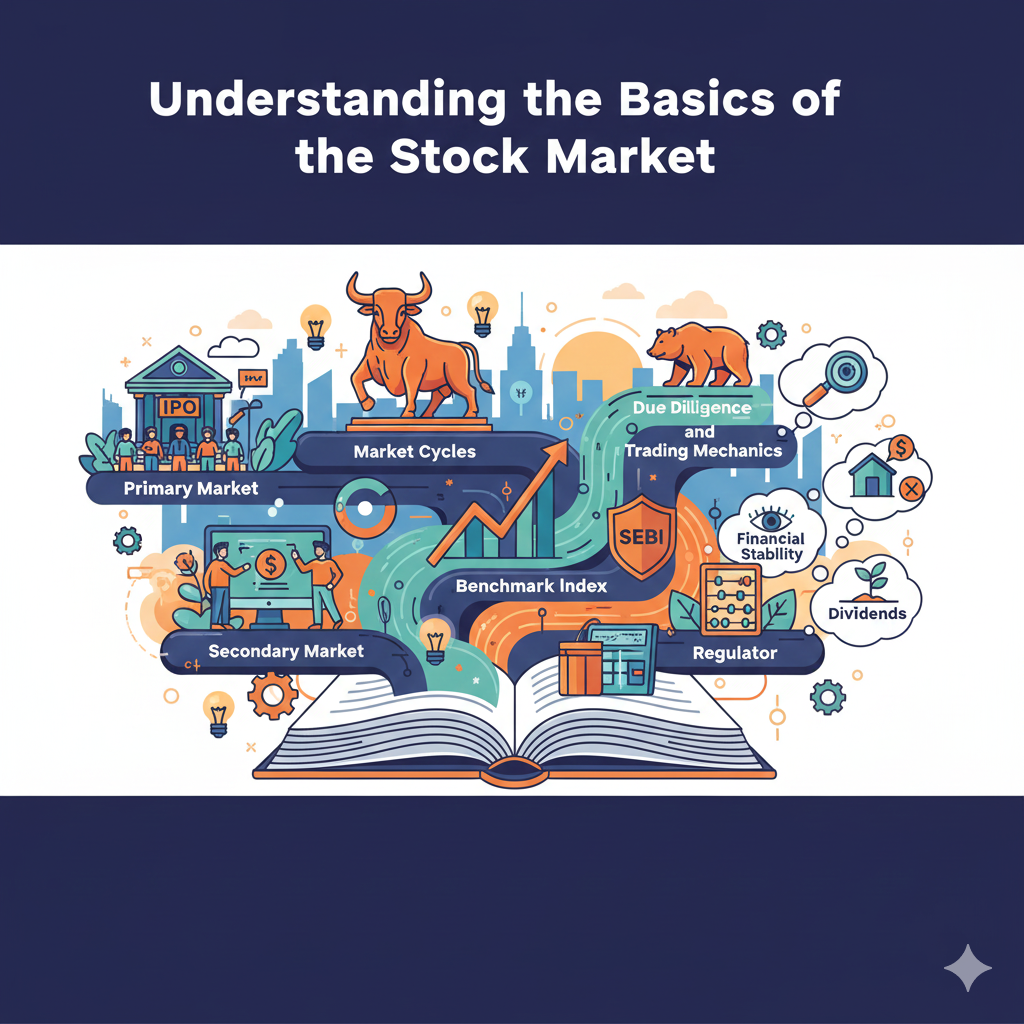
Understanding the Basics of the Stock Market

The stock market is often painted as a high-stakes casino where fortunes are made and lost on the blink of an eye. For the uninitiated, the constant flicker of green and red tickers and the complex vocabulary of “bulls,” “bears,” and “derivatives” can make the whole endeavor feel like a gated community accessible only to the financial elite. However, the reality is far more democratic. At its core, the stock market is simply a marketplace—one that allows regular individuals to participate in the growth of the world’s most successful businesses.

If you are looking to move past the “gambling” phase and into the “wealth creation” phase, you need a solid foundation. This guide serves as a deep dive into the fundamental pillars of the stock market and the essential research techniques needed to navigate it with confidence.


1. The Core Purpose: Why Markets Exist

Before diving into charts and ratios, it is vital to understand why the stock market exists in the first place. Every company, from a small tech startup to a global giant like Reliance or Apple, needs capital to function. Sometimes, internal profits aren’t enough to fund massive expansions or research. To bridge this gap, companies turn to the public.

When a company lists itself on an exchange through an Initial Public Offering (IPO), it is essentially inviting you to become a part-owner. In exchange for your money, you receive shares. This happens in the Primary Market. Once those shares are out in the world, they are traded between investors in the Secondary Market.

Understanding this lifecycle is crucial because it changes your mindset. You aren’t just betting on a ticker symbol; you are providing the fuel that allows a business to build factories, hire employees, and innovate.

2. Navigating the “Pulse” of the Market: Indices and Regulators

In India, the two primary benchmarks are the Sensex (tracking 30 established companies on the Bombay Stock Exchange) and the Nifty 50 (tracking 50 major companies on the National Stock Exchange). These indices act as a barometer for the country’s economic health.

  • Bull Market: This is characterized by optimism, rising prices, and a growing economy.
  • Bear Market: This is a period of falling prices and economic slowdown, where fear often outweighs greed.

To ensure this marketplace remains fair, bodies like SEBI (Securities and Exchange Board of India) act as a watchdog. They create the rules that prevent fraud and ensure that companies provide transparent information to their shareholders. Knowing that a regulator is watching over the “game” is what allows individual investors to sleep at night.

3. Measuring Volatility: The Role of Beta

As you begin researching specific stocks, you’ll encounter a metric called Beta. This is essentially a measure of how “sensitive” a stock is to market movements.

  • Beta of 1.0: The stock moves exactly in line with the market.
  • Beta > 1.0: The stock is more volatile. If the market goes up 10%, a stock with a Beta of 1.5 might go up 15%. However, it will also fall faster during a crash.
  • Beta < 1.0: These are “defensive” stocks. They are slower to rise but offer protection during market downturns.

Your research should always include a check on Beta to ensure the stock fits your personality. If you are someone who panics at a 5% drop, high-Beta tech stocks might not be the best place for your capital.

4. The Bedrock of Research: The Three Financial Statements

Numbers are the native language of business. To truly understand if a company is worth your investment, you must move beyond the marketing “story” and look at the “Big Three” financial documents.

  • The Balance Sheet: This is a snapshot of a company’s financial health at a specific point in time. It lists Assets (what they own) against Liabilities (what they owe). A healthy company has enough assets to cover its debts without feeling squeezed.
  • The Income Statement: This shows performance over a period of time. It starts with total sales (Revenue) and subtracts expenses to reach the “bottom line” (Net Profit). Consistent growth here is the single biggest driver of stock prices over the long term.
  • The Cash Flow Statement: This is the “honesty” statement. A company can show a profit on paper while still being broke if customers haven’t paid their bills yet. The cash flow statement shows the actual movement of physical cash in and out of the business.

5. Decoding the “Vitals” via Financial Ratios

Once you have the raw numbers, you need to put them in context. Ratios are the tools that allow you to compare a massive corporation to a smaller competitor on an even playing field.

  • P/E (Price-to-Earnings) Ratio: This tells you how much the market is willing to pay for every $1 of profit. A very high P/E might mean the stock is expensive, or that investors expect massive growth in the future.
  • PEG Ratio: This takes the P/E and divides it by the growth rate. A PEG under 1.0 is often the “sweet spot” for value investors, suggesting the stock is undervalued relative to its growth potential.
  • ROE (Return on Equity): This measures how effectively management is using your money to generate profit. It is a direct reflection of management’s efficiency.

6. Qualitative Research: The “Crayon” Test

As legendary investor Peter Lynch once said, “Never invest in any idea you can’t illustrate with a crayon.” Beyond the math, you need to understand the Business Model.

Does the company have a “Moat”? A moat is a competitive advantage—like a famous brand name, a patent, or a low-cost production method—that prevents competitors from stealing their customers. A company with great numbers but no moat is like a castle on an open plain; eventually, it will be overrun. Qualitative research involves looking at the world around you: Do people love the product? Is the management team honest? Is the industry growing or being disrupted?

7. The Power of Dividends and Compounding

For many, the goal of the stock market isn’t just a higher stock price; it’s a steady income. Many mature companies pay out a portion of their profits to shareholders in the form of Dividends.

When you research a dividend stock, pay attention to the Payout Ratio. If a company is paying out 90% of its earnings as dividends, it has no room for error. A ratio of 50–60% is generally considered safer. If you don’t need the cash immediately, the most powerful move you can make is to reinvest those dividends. This creates a “snowball effect” where your money makes money, and then that money makes more money. Over 20 or 30 years, this compounding effect is what creates generational wealth.

Conclusion: Starting Your Journey

Stock market research is not a one-time task; it is an ongoing relationship with the businesses you own. By combining the hard data of financial statements with a qualitative understanding of business models and market cycles, you create a 360-degree view of your investments.

The market will always have moments of panic and euphoria. However, if you have done your due diligence, you will have the conviction to stay invested when others are running for the exits. Don’t just buy a ticker; buy a business you understand, at a price that makes sense.

A Comprehensive Guide to Mastering Stock Research

In the modern world, the stock market is often portrayed as a fast-paced arena of flashing lights, high-stakes gambles, and overnight millionaires. This cinematic version of Wall Street suggests that success is a matter of being in the right place at the right time. However, for the seasoned investor, the reality is far more grounded. The bridge between “gambling” and “true wealth creation” is built entirely out of research.

For many beginners, looking at a stock portfolio can feel like staring at a chaotic sea of green and red tickers. It’s easy to feel overwhelmed by the jargon and the constant noise of the 24-hour financial news cycle. But as the most successful investors like Warren Buffett and Peter Lynch have proven, investing is not about luck—it is a systematic process of due diligence. If you want to move beyond hearsay and “hot tips,” you need a framework.

Here is a deep dive into the essential pillars of stock research, designed to help you master the art of both fundamental and qualitative analysis.


1. Harnessing the Power of Expert Insights

The journey into researching a stock often begins with leverage. You don’t have to reinvent the wheel or act as a lone wolf in the wilderness. Financial institutions and brokerage firms employ armies of equity analysts whose entire job is to perform deep dives into specific companies.

These analyst reports are professional-grade resources that provide a “macro-to-micro” view of a company. An analyst doesn’t just look at the stock price; they examine the broader industry landscape, the regulatory environment, and the company’s competitive “moat.” They offer projections on revenue and provide ratings like “Buy,” “Hold,” or “Sell.”

However, a savvy investor uses these reports as a tool, not a rulebook. The “human” way to read an analyst report is to look past the final rating and focus on the reasoning. What are the assumptions they are making about the future? What risks are they highlighting? By comparing reports from different firms, you can begin to see where the consensus lies and where there might be a “blind spot” in the market’s current valuation.

2. The Bedrock: Mastering the Three Financial Statements

Numbers are the native language of business. A company’s marketing team might produce a glossy presentation about “disrupting the industry,” but if their bank account is empty, the story doesn’t match the reality. To truly research a stock, you must become comfortable with the “Big Three” financial documents.

  • It lists what the company owns (assets) versus what it owes (liabilities). A crucial tip for the individual researcher is to look closely at the debt. Even a company with a revolutionary product can be crushed if its debt obligations are too heavy to carry during an economic downturn.
  • The Income Statement: This document tells the story of performance over a period of time. Is the revenue growing year-over-year? Are the costs of goods sold staying under control? Most importantly, is there a net profit? Sustained growth in “bottom-line” profit is usually the most reliable driver of a stock price over the long term.
  • The Cash Flow Statement: This is perhaps the most honest document of the three. Profit on paper (accrual accounting) is very different from cold, hard cash in the bank. The cash flow statement shows if the company is actually generating the liquidity it needs to pay its bills, reinvest in new technology, and return money to shareholders through dividends or buybacks.

3. Decoding the “Vitals” via Financial Ratios

Raw numbers are important, but they need context to be useful. Ratios allow you to compare a massive conglomerate like Apple to a smaller, hungry competitor on an even playing field.

  • P/E (Price-to-Earnings) Ratio: This tells you how much the market is willing to pay for every dollar of profit. A high P/E might suggest a stock is overvalued, or it might mean investors expect massive growth.
  • PEG Ratio: This is the P/E ratio divided by the growth rate. It is an incredibly helpful metric because it asks: “Am I paying too much for this level of growth?”
  • ROE (Return on Equity): This measures how effectively management is using the shareholders’ money to generate profit. It is a direct reflection of management’s efficiency and their ability to turn capital into more capital.

The key is not to look at these ratios in isolation. A low P/E is only “good” if the company isn’t in a terminal decline. Research is about finding the “why” behind these numbers.

4. Understanding the Business Model

Peter Lynch famously said, “Never invest in any idea you can’t illustrate with a crayon.” This is where qualitative research begins. You need to understand how the company actually makes money on a day-to-day basis.

Ask yourself the following questions:

  • What is their “moat”? Does the company have a brand so strong (like Coca-Cola) or a patent so unique that competitors can’t easily steal their market share?
  • Who are their customers? Are they loyal, or will they switch to a cheaper alternative the moment one appears?
  • Is the industry growing? A company might have great financials today, but if they are selling a “DVD product in a streaming world,” the numbers won’t stay good for long.

True research involves looking at the world around you and seeing if the company’s product has the “stickiness” required to last a decade or more.

5. Leveraging Modern Tools and the News Cycle

We live in an era of information overload. To research effectively, you need to filter the noise from the signal. Digital platforms and interactive charts are not just for “day traders.” For a fundamental investor, a chart tells the story of market sentiment.

If a stock’s price is crashing while its earnings are consistently rising, that “divergence” might be your biggest buying opportunity. Furthermore, keeping an eye on the news is vital. A sudden change in government policy, a trade war, or a breakthrough in Artificial Intelligence can change a company’s prospects overnight. The goal is to be informed enough to know when a news headline is a “temporary dip” or a “permanent disaster.”

6. Assessing Management and External Risks

A company is only as good as the people running it. Human-led research involves looking at the CEO and the board of directors. Do they have “skin in the game” (meaning, do they own a significant amount of the stock themselves)? Have they successfully navigated previous crises? Management with a history of over-promising and under-delivering is a massive red flag.

Finally, you must look outward. No company exists in a vacuum. You have to account for macro-economic factors like:

  • Interest Rates: When rates go up, the cost of borrowing increases, which often hits growth stocks the hardest.
  • Inflation: Can the company pass on higher costs to its customers, or will its profit margins be squeezed?
  • Geopolitics: Does a conflict or a trade dispute halfway across the world threaten their supply chain?

Conclusion: The Investor’s Mindset

Researching a stock is not a one-time event; it is an ongoing relationship with a business. By combining the hard data of financial statements with the “soft” data of management quality and business ethics, you create a 360-degree view of your investment.

The most important part of investing is discipline. The research gives you the conviction to stay invested when the market gets panicky, and the wisdom to sell when a business’s fundamentals have truly soured. Don’t just buy a ticker symbol; buy a business you understand, led by people you trust, at a price that makes sense. That is the essence of smart stock research.


Would you like me to help you analyze a specific company using this framework, or should we look into how to build a diversified portfolio?

Tax-Free: The 10 Best Strategies Beyond 80C

In the complex world of Indian personal finance, the mere mention of “March 31st” is enough to trigger a minor panic. For most salaried employees, tax planning usually begins and ends with Section 80C. We scramble to dump money into ELSS funds, Public Provident Funds (PPF), or life insurance premiums, all to hit that magic ₹1.5 lakh ceiling. But here is the reality: for many middle-to-high-income earners, that ₹1.5 lakh limit is exhausted almost instantly by mandatory Employee Provident Fund (EPF) contributions and children’s school fees.

If you stop there, you are essentially leaving money on the table. The Indian Income Tax Act is often criticized for its complexity, but within that complexity lies a treasure trove of legitimate “tax escapes” that go far beyond the exhausted boundaries of 80C.

To truly optimize your take-home pay, you need to look at the “hidden” sections—the ones that reward you for taking care of your health, investing in your retirement, and even paying for your home. Based on the insights from the recent Livemint analysis, let’s dive deep into the 10 most effective ways to slash your taxable income using the “forgotten” sections of the tax code.

1. The NPS Power Move: Section 80CCD(1B)

While the National Pension System (NPS) is often grouped with 80C, it has a secret weapon. Under Section 80CCD(1B), the government allows an exclusive additional deduction of ₹50,000.

If you are in the 30% tax bracket, utilizing this section alone can save you an extra ₹15,000 in taxes every year. Beyond the tax savings, the NPS is one of the most cost-effective retirement tools available, allowing you exposure to equity markets with professional management at a fraction of the cost of a mutual fund. It’s a win-win: you build a sunset fund while keeping the taxman at bay today.

2. The Health Shield: Section 80D

Many people view health insurance as an expense; savvy taxpayers view it as a strategic deduction. Section 80D is remarkably generous.

However, the real benefit kicks in when you pay for your parents. If your parents are senior citizens (over 60), you can claim an additional ₹50,000. Combined, a taxpayer could potentially deduct ₹75,000 from their taxable income. Even if you don’t have insurance for senior citizen parents, you can claim deductions for their medical expenses under this section. Furthermore, don’t forget the ₹5,000 sub-limit for “preventive health check-ups”—it’s a small but easy way to round off your deductions.

3. Investing in the Mind: Section 80E

Student debt is a global crisis, but the Indian tax code offers a significant silver lining. Under Section 80E, the entire interest component of an education loan is deductible. There is no upper monetary limit. Whether you are paying off your own MBA loan or a loan for your child’s engineering degree, every rupee of interest paid can be subtracted from your taxable income.

4. The Homeowner’s Advantage: Section 24(b)

While Section 80C covers the principal repayment of a home loan, Section 24(b) focuses on the interest. For a self-occupied property, you can deduct up to ₹2 lakh in interest payments annually.

In the early years of a home loan, the interest component is usually much higher than the principal, making this section the “heavy lifter” of tax planning. If you own a second home that is rented out, the news is even better: there is currently no maximum ceiling on the interest deduction for let-out properties, though losses under the head “Income from House Property” can only be offset against other income up to ₹2 lakh per year.

5. First-Time Buyers: Section 80EE

If you are a first-time homebuyer, the government wants to reward your milestone. Section 80EE allows an additional deduction of ₹50,000 on home loan interest. This is independent of the ₹2 lakh limit under Section 24. To qualify, the loan must have been sanctioned within specific windows (usually related to the property value and loan amount), but for those who qualify, it brings the total interest deduction potential to a whopping ₹2.5 lakh.

6. The “No HRA” Relief: Section 80GG

A common misconception is that you can only save on rent if your employer provides House Rent Allowance (HRA). What if you are a freelancer, a consultant, or work for a small startup that doesn’t offer HRA?

Section 80GG is your safety net. It allows you to claim a deduction for rent paid even if you don’t receive HRA. While the limit is capped at ₹5,000 per month (₹60,000 per year), it provides essential relief to those in the informal or gig economy who are otherwise overlooked by standard corporate tax structures.

7. Savings Account Perks: Section 80TTA & 80TTB

Most of us keep a “parking fund” in a savings account. The interest earned on these balances is taxable, but Section 80TTA provides a buffer. You can earn up to ₹10,000 in savings interest tax-free.

For senior citizens, the benefit is even more robust under Section 80TTB, which raises the limit to ₹50,000 and includes interest from Fixed Deposits (FDs) and Recurring Deposits (RDs). For retirees living on interest income, this is a vital provision that protects their purchasing power.

8. Supporting Dependents with Disabilities: Section 80DD

Tax law isn’t just about math; it’s about social equity. Section 80DD allows taxpayers to claim a deduction for the medical treatment, training, or rehabilitation of a disabled dependent.

The beauty of this section is that it is a flat deduction. You don’t necessarily need to show every single medical receipt. If the dependent has a disability of 40% or more, you get a flat deduction of ₹75,000. If the disability is severe (80% or more), the deduction jumps to ₹1,25,000. It is a compassionate provision designed to lower the financial burden on families providing specialized care.

9. Treating Specified Diseases: Section 80DDB

The cost of treating critical illnesses like cancer, chronic renal failure, or certain neurological diseases can be ruinous. Section 80DDB provides a deduction for expenses incurred for the treatment of such specified ailments for yourself or your dependents.

The limit is ₹40,000 for individuals, but for senior citizens, it increases to ₹1 lakh. While no one wants to find themselves in a position to need this deduction, it serves as a critical financial cushion during a family’s darkest hours.

10. Donations and Charity: Section 80G

Finally, doing good can also be good for your taxes. Contributions to certain approved charitable funds or institutions are eligible for deductions under Section 80G. Depending on the institution, you can claim either 50% or 100% of the donated amount. However, be cautious: to claim this, you must ensure the charity has a valid 80G registration, and donations above ₹2,000 must be made via digital modes or cheques (not cash) to qualify.

The Strategy: How to Approach Your Taxes

Tax planning should not be a “hide and seek” game played with the authorities. Instead, it should be a structured review of your life’s expenditures.

The mistake most people make is looking for “investments” to save tax. In reality, the most efficient tax planning often comes from expenditures you are already making. Are you paying for your parents’ medicines? (Section 80D). Are you paying rent? (Section 80GG). Are you paying off a degree? (Section 80E).

By shifting your focus away from the crowded 80C corridor and exploring these ten avenues, you can build a tax strategy that is both more effective and more reflective of your actual financial life. Remember, every rupee saved in tax is a rupee earned for your future. Don’t let the simplicity of 80C blind you to the thousands of rupees waiting to be saved elsewhere in the rulebook.

Budgeting by the Numbers: 50/30/20

Managing your finances often feels like trying to solve a complex puzzle without having the picture on the box. Between the rising cost of living, the temptation of instant gratification through online shopping, and the looming pressure of future goals like buying a home or retiring comfortably, it is easy to feel overwhelmed. Many people avoid budgeting altogether because they assume it requires hours of tedious spreadsheet data entry or a degree in accounting. However, financial stability doesn’t have to be complicated.

One of the most effective, time-tested strategies for regaining control of your money is the 50/30/20 Rule. Popularized by Senator Elizabeth Warren in her book All Your Worth, this framework has become a cornerstone of modern personal finance. It is designed to be a “rule of thumb” rather than a rigid set of laws, offering a balanced approach that allows you to live for today while still preparing for tomorrow.

In this guide, we will break down the mechanics of the 50/30/20 rule, explore why it works, and provide a roadmap for how you can implement it in your own life.


The Foundation: Understanding Your “Take-Home Pay”

Before you can divide your money into categories, you must first determine exactly how much you have to work with. The 50/30/20 rule is based on your after-tax income—also known as your “take-home pay.”

If you are a salaried employee, this is the amount that actually hits your bank account every month after taxes, insurance, and retirement contributions have been deducted. If you are a freelancer or business owner, your take-home pay is your gross income minus your business expenses and the amount you set aside for taxes. Once you have this single, clear number, you can begin the process of allocation.

1. The 50%: Managing Your “Needs”

The largest portion of your budget—half of your income—is dedicated to your Needs. These are the non-negotiables. If you stopped paying for these things, your life would experience a significant disruption or legal consequence.

What counts as a Need?

  • Housing: Your rent or mortgage payments, property taxes, and home insurance.
  • Utilities: Electricity, water, heating, and basic internet/phone service (which are essential in the modern world).
  • Groceries: The basic food items required to keep you healthy.
  • Transportation: Car payments, fuel, insurance, or public transit passes required for work and daily life.
  • Healthcare: Insurance premiums and essential medications.
  • Minimum Debt Payments: The absolute minimum required to keep your loans (like student loans or car loans) in good standing.

The goal of the 50% category is to ensure that your basic survival is covered. If your needs currently exceed 50% of your income, it is a signal that you might be “house poor” or “car poor.” In such cases, the rule encourages you to look for ways to downsize or reduce fixed costs so that you aren’t living on the edge of a financial crisis.

2. The 30%: Embracing Your “Wants”

The most common mistake in budgeting is being too restrictive. If you try to cut out every bit of fun from your life, you will eventually experience “budget burnout” and give up entirely—much like a crash diet that is impossible to maintain. This is where the 30% for Wants comes in.

This category is about lifestyle. These are the things you spend money on by choice, not by necessity.

What counts as a Want?

  • Dining Out: Brunches, coffee shop runs, and Friday night takeout.
  • Entertainment: Movie tickets, concerts, and sporting events.
  • Subscriptions: Netflix, Spotify, gym memberships, and gaming passes.
  • Shopping: New clothes that aren’t strictly for work, latest gadgets, and home decor.
  • Travel: Weekend getaways or saving for a major vacation.

Assigning a full 30% to wants allows you to enjoy the fruits of your labor without guilt. It transforms budgeting from a “restrictive chore” into a “spending plan.” As long as you stay within that 30% threshold, you can spend your money on whatever brings you joy, knowing that your essentials and your future are already taken care of.

3. The 20%: Securing Your “Financial Future

The final 20% is the most critical for long-term peace of mind. While the first 50% covers your present and the next 30% covers your enjoyment, this 20% is dedicated to Savings and Debt Repayment.

This isn’t just about putting money under a mattress; it’s about strategic financial movement.

Where does the 20% go?

  • Emergency Fund: Your first priority should be saving 3 to 6 months of living expenses. This acts as a buffer against job loss or medical emergencies.
  • Retirement: Contributions to 401(k)s, IRAs, or pension schemes. The earlier you start, the more “compounding interest” works in your favor.
  • Aggressive Debt Paydown: This goes beyond the “minimum payments” mentioned in the needs category. This is for paying off high-interest credit card debt or extra principal on your mortgage.
  • Investing: Once an emergency fund is established, this money can go into stocks, bonds, or mutual funds to grow your wealth.

By consistently hitting this 20% mark, you ensure that you aren’t just surviving month-to-month, but actually building a net worth that will provide freedom later in life.


Why the 50/30/20 Rule Actually Works

The reason this method has remained popular for decades is its psychological accessibility.

First, it removes the “all-or-nothing” mentality. Many people think that to save money, they must live like a monk. By explicitly carving out 30% for “wants,” the rule gives you permission to spend, which makes the overall plan much more sustainable.

Second, it provides instant clarity. If you find yourself struggling at the end of the month, you can look at these three buckets and identify the leak. Are your “wants” creeping into the 40% range? Is your rent taking up 60% of your income? The rule provides a diagnostic tool to fix your finances.

Third, it automates decision-making. When you get a raise, you don’t have to wonder what to do with the extra money. You simply apply the ratio: half to bettering your current lifestyle/needs, a bit more for fun, and a significant chunk for your future.

How to Get Started: A Step-by-Step Guide

  1. Calculate your income: Look at your last three paystubs to find your average monthly take-home pay.
  2. Categorize your spending: Go through your bank statements from the last month. Mark every expense as a Need, a Want, or Savings/Debt.
  3. Compare your current percentages: See how close you are to 50/30/20. Don’t be discouraged if your numbers are off; the goal is progress, not perfection.
  4. Adjust the “Wants” first: If you are over budget, the easiest place to cut is the 30% category. Small tweaks to subscriptions and dining habits can yield big results.
  5. Automate your savings: Set up a recurring transfer so that 20% of your paycheck goes directly into a savings or investment account the moment it hits your bank. If you don’t see it, you won’t spend it.

Final Thoughts: Flexibility is Key

It is important to remember that the 50/30/20 rule is a compass, not a map. Life is unpredictable. If you live in a high-cost-of-living city like New York or London, your “Needs” might naturally take up 60% of your income. In that case, you might need to adjust your “Wants” to 20% to keep your “Savings” at 20%.

The ultimate goal of the 50/30/20 rule is to foster a healthy relationship with money. It teaches us that financial health isn’t about how much we earn, but about how we manage what we have. By balancing our obligations, our desires, and our future goals, we can reduce financial stress and build a life of true security and enjoyment.

Introduction to Monthly Budgeting

Creating and maintaining a monthly budget is one of the most important steps a person can take to gain control over their finances. A budget is essentially a written plan that shows how money will be earned, spent, and saved over a specific period, usually one month. While many people think of budgeting as restrictive or complicated, it is actually a practical tool that helps individuals make informed decisions about their money and work toward financial stability and personal goals.

At its core, budgeting is about understanding where your money comes from and where it goes. Without a budget, it is easy to lose track of spending and wonder why there never seems to be enough money left at the end of the month. A budget provides clarity by organizing income and expenses into categories, making it easier to see spending patterns and identify areas where changes may be needed. Rather than limiting freedom, a budget empowers people to use their money in ways that align with their priorities.

One of the first steps in creating a budget is identifying financial goals. These goals can be short-term, such as paying off a credit card or saving for a vacation, or long-term, such as buying a home, building an emergency fund, or preparing for retirement. Setting goals gives budgeting a clear purpose and helps motivate consistent effort. When people know what they are working toward, they are more likely to stick to their budget and make thoughtful financial choices.

After setting goals, the next step is determining monthly income. This includes all sources of money received regularly, such as wages, salaries, tips, side jobs, or government benefits. It is important to calculate income carefully, using take-home pay rather than gross income, so the budget reflects the actual amount of money available to spend. For individuals with irregular income, estimating a monthly average or using the lowest expected amount can help avoid overspending.

Once income is identified, expenses should be listed and organized. Expenses generally fall into two main categories: fixed and variable. Fixed expenses are costs that stay the same each month, such as rent or mortgage payments, insurance premiums, car payments, and subscription services. These expenses are usually predictable and easier to plan for. Variable expenses, on the other hand, can change from month to month. Examples include groceries, transportation, dining out, entertainment, and personal items. Tracking these expenses carefully is essential, as they are often the areas where overspending occurs.

Estimating expenses accurately is a critical part of budgeting. Reviewing bank statements, receipts, or credit card records from previous months can provide a realistic picture of spending habits. Many people underestimate how much they spend on small purchases, such as coffee or online shopping, which can add up quickly. By being honest and detailed when listing expenses, individuals can create a budget that truly reflects their financial reality.

After income and expenses are estimated, the next step is comparing the two. Ideally, income should be greater than or equal to expenses. If expenses exceed income, adjustments must be made. This might involve cutting back on non-essential spending, finding ways to reduce fixed costs, or increasing income through additional work. If income exceeds expenses, the extra money can be directed toward savings, debt repayment, or other financial goals.

Saving money is an essential part of any budget. Savings should be treated as a priority rather than an afterthought. This can include building an emergency fund to cover unexpected expenses, setting aside money for future goals, or contributing to retirement accounts. Even small amounts saved consistently can make a significant difference over time. Including savings as a regular budget category helps ensure that financial goals are actively supported.

Tracking actual spending is another crucial aspect of budgeting. Creating a budget alone is not enough; it must be monitored regularly. Tracking allows individuals to compare planned spending with actual spending and identify differences. This process helps highlight problem areas and provides insight into spending habits. Whether tracking is done through a notebook, spreadsheet, or budgeting app, consistency is key. Checking spending weekly or monthly helps prevent small issues from becoming major financial problems.

Budgets are not meant to be perfect or permanent. Life circumstances change, and budgets should be flexible enough to adapt. Unexpected expenses, changes in income, or new financial goals may require adjustments. Reviewing and updating the budget regularly ensures it remains realistic and effective. Making adjustments is not a sign of failure; rather, it shows that the budget is being used actively and thoughtfully.

Another important benefit of budgeting is reducing financial stress. When people have a clear plan for their money, they are less likely to feel anxious about bills or unexpected expenses. A budget creates a sense of control and confidence, making it easier to handle financial challenges. Over time, consistent budgeting can lead to better money habits and improved overall financial well-being.

Budgeting also helps individuals avoid unnecessary debt. By planning expenses and tracking spending, people are less likely to rely on credit cards or loans to cover basic needs. When debt does exist, a budget can help create a repayment plan that fits within monthly income. This structured approach makes debt more manageable and supports long-term financial health.

In addition to practical benefits, budgeting encourages mindfulness and responsibility. It requires individuals to reflect on their values and priorities, deciding what truly matters to them. Whether it is saving for education, supporting family, or enjoying hobbies, a budget helps ensure money is spent intentionally. Over time, this awareness can lead to more satisfying and meaningful financial decisions.

In conclusion, creating a monthly budget is a powerful tool for managing money effectively. By identifying financial goals, tracking income and expenses, monitoring spending, and making adjustments as needed, individuals can take control of their finances and work toward greater stability and security. Budgeting is not about restriction but about making informed choices and planning for the future. With patience and consistency, budgeting can become a positive habit that supports both financial success and peace of mind.

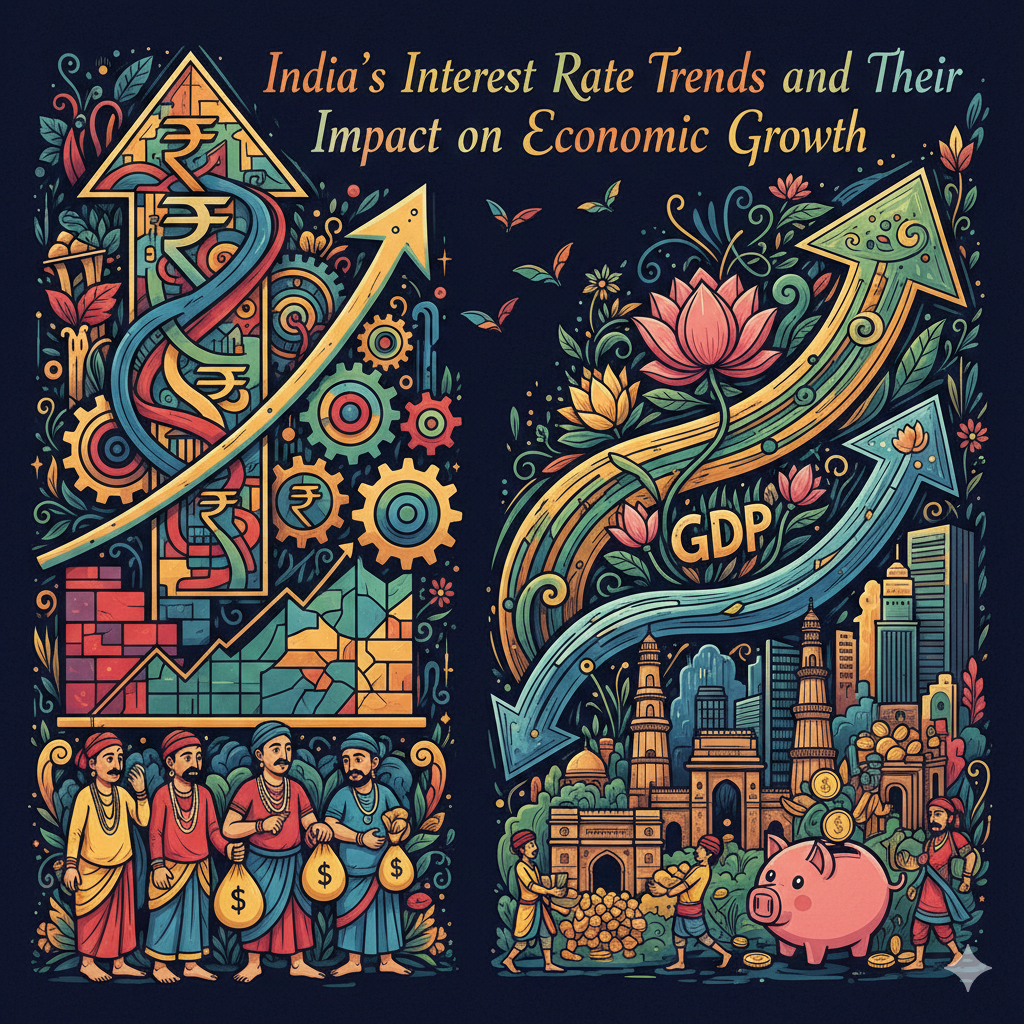
India’s Interest Rate Trends and Their Impact on Economic Growth

Interest rates play a crucial role in shaping the overall economic environment of a country, and in India, they are primarily determined by the Reserve Bank of India (RBI). Over the past few years, the RBI has actively adjusted interest rates to respond to changing economic conditions, inflation trends, and global uncertainties. The most recent changes in India’s interest rate policy reflect a clear shift toward supporting economic growth while keeping inflation under control.

As of the latest monetary policy decision, the RBI has set the repo rate at 5.25 percent. The repo rate is the rate at which the central bank lends short-term funds to commercial banks. Any change in this rate directly affects borrowing costs for banks, businesses, and consumers. A lower repo rate generally encourages borrowing and investment, while a higher rate helps control inflation by reducing excess demand in the economy.

During the year 2025, the RBI implemented a series of rate cuts, reducing the repo rate by a total of 125 basis points. This marked a significant move toward monetary easing and brought interest rates to their lowest level since mid-2022. These reductions were introduced gradually, allowing financial markets and borrowers to adjust smoothly. The objective behind these cuts was to stimulate economic activity at a time when growth was slowing due to both domestic and global challenges.

One of the key reasons for the RBI’s decision to lower interest rates was the improvement in inflation conditions. Inflation, which had previously been a major concern, began to show signs of easing. Food prices stabilized, supply chain disruptions reduced, and global commodity prices softened. With inflation moving closer to the RBI’s target range, the central bank gained more flexibility to prioritize economic growth without risking price instability.

Another important factor influencing interest rate decisions was the need to support economic growth. Although India’s economy remained resilient compared to many other countries, growth momentum showed signs of weakening. Slower global trade, uncertain geopolitical conditions, and cautious consumer spending affected industrial output and investment activity. Lower interest rates were seen as a tool to boost demand by making loans cheaper for businesses and households.

The RBI also maintained a neutral monetary policy stance for much of the period before implementing the final rate cut. A neutral stance indicates that the central bank is neither aggressively tightening nor loosening monetary policy but is instead carefully assessing economic data. This approach reflected the RBI’s cautious outlook, as it balanced the risks of inflation resurgence against the need to encourage growth. Once inflation risks eased sufficiently, the RBI shifted toward a more accommodative position.

The reduction in interest rates has several direct and indirect effects on the economy. For businesses, lower borrowing costs improve access to credit, encourage capital investment, and support expansion plans. Small and medium enterprises, which are often more sensitive to interest rate changes, benefit significantly from lower loan repayments. For consumers, reduced interest rates translate into cheaper home loans, vehicle loans, and personal loans, which can boost consumption spending.

Lower interest rates also impact the banking sector. Banks typically experience increased demand for loans when borrowing costs fall. However, they must also manage narrower interest margins, as lower rates reduce the spread between lending and deposit rates. To maintain profitability, banks often focus on improving credit growth, managing risks efficiently, and expanding fee-based services.

From a broader perspective, interest rate cuts influence financial markets as well. Lower rates tend to support equity markets by improving corporate earnings prospects and making equities more attractive compared to fixed-income investments. Bond markets also react positively, as falling interest rates increase bond prices. At the same time, lower rates can put pressure on the domestic currency by reducing returns for foreign investors, although this effect is often moderated by strong economic fundamentals and capital inflows.

Despite the benefits, sustained low interest rates also carry certain risks. If rates remain too low for an extended period, they may lead to excessive borrowing, asset price bubbles, or misallocation of capital. The RBI remains aware of these risks and continuously monitors financial stability indicators. Its policy decisions aim to strike a balance between supporting growth and maintaining long-term economic stability.

The current repo rate of 5.25 percent represents the lowest level since mid-2022, highlighting a clear shift in the monetary policy cycle. This change signals confidence that inflation is under control and that the economy requires policy support to maintain momentum. However, the RBI has emphasized that future rate decisions will remain data-dependent. Factors such as inflation trends, global economic conditions, crude oil prices, and currency movements will play a critical role in shaping upcoming policy actions.

Looking ahead, interest rates are expected to remain relatively stable in the near term. While further rate cuts are possible, they will depend on how economic conditions evolve. If inflation remains within the target range and growth concerns persist, the RBI may consider additional easing. On the other hand, any unexpected rise in inflation or global financial volatility could prompt the central bank to pause or even reverse its accommodative stance.

In conclusion, India’s current interest rate environment reflects a carefully considered policy response to changing economic realities. The RBI’s decision to lower the repo rate to 5.25 percent demonstrates its commitment to supporting growth while maintaining price stability. Through measured rate cuts, a neutral policy stance, and close monitoring of economic indicators, the central bank continues to guide the economy through uncertain times. Interest rates remain a powerful tool in India’s monetary policy framework, influencing investment, consumption, and overall economic confidence. As conditions evolve, the RBI’s balanced and data-driven approach will remain essential in ensuring sustainable and inclusive economic growth.