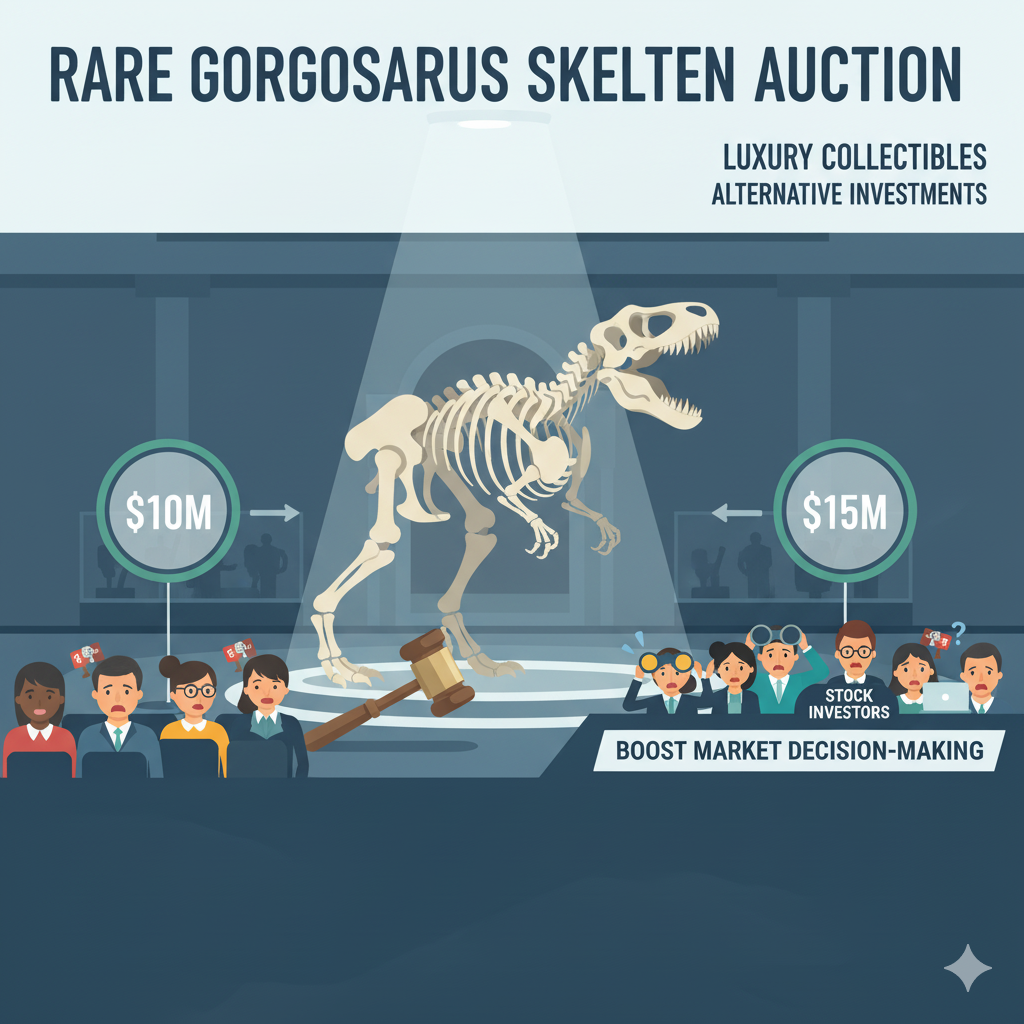
In a world where high-end luxury collectibles continue to capture the imagination of wealthy investors, one of the most unusual—and fascinating—items hitting the auction block is a remarkably well-preserved dinosaur skeleton. This isn’t just any fossil. It’s the skeleton of a Gorgosaurus, a fearsome predator from the Late Cretaceous period, estimated to fetch as much as $15 million. This auction, set to take place at Sotheby’s New York, has caught the attention of not only paleontologists and dinosaur enthusiasts but also investors looking to diversify into a new and niche market: prehistoric artifacts.
The Gorgosaurus skeleton, which is over 75% complete, could set a new benchmark for dinosaur fossils in the world of luxury collectibles. But beyond the scientific and historical value, there’s a compelling story for investors about the increasing crossover between fossils, luxury markets, and alternative investments. In this article, we’ll explore what the sale means for the luxury collectibles market, its potential for setting new trends in investment, and what stock market investors can learn from this auction.
The Gorgosaurus: A Unique Specimen with Scientific and Financial Appeal
The star of this auction is the Gorgosaurus, a relative of the famous Tyrannosaurus rex. Living approximately 76 million years ago, the Gorgosaurus was a top predator of its time, preying on smaller dinosaurs and mammals. Its well-preserved skeleton—over 75% intact—makes it a rare and valuable specimen for scientists and fossil collectors alike. In fact, only a handful of Gorgosaurus skeletons have been discovered, making this find especially significant.
From a scientific standpoint, the fossil’s pristine condition allows paleontologists to study aspects of the Gorgosaurus’s biology and behavior that would otherwise be impossible. Researchers can now glean more information about its size, movement, and even how it interacted with its environment millions of years ago. The high degree of preservation also increases the specimen’s educational and research value, especially for museums looking to add an iconic piece to their collection.
However, beyond its academic worth, the Gorgosaurus skeleton has become a coveted item for collectors. The rare nature of such fossils, combined with their ability to capture the public’s imagination, has created a growing market for prehistoric relics—especially among the ultra-wealthy.
Fossils as Luxury Collectibles: A Growing Niche Market
Over the past decade, we’ve seen a rising trend where high-net-worth individuals (HNWIs) and investors are flocking to alternative asset classes like art, vintage cars, wines, and rare collectibles as a way to diversify their portfolios. Fossils, once primarily a subject of academic study and museum curation, have entered this space as an increasingly sought-after investment.
What makes dinosaur fossils especially appealing as a luxury collectible? First and foremost, they represent an extraordinary link to a time long past—a tangible connection to Earth’s prehistoric era. For those who can afford them, owning a piece of natural history is not just about having a unique item; it’s about acquiring a status symbol with inherent rarity and fascination. Fossils like the Gorgosaurus not only provide an aesthetic or historical value but also act as tangible investments that can appreciate over time.
Unlike many traditional luxury goods, such as luxury cars or watches, fossils are appreciating assets that, in many cases, have proven to deliver strong returns. For instance, in 2020, a Tyrannosaurus rex skeleton, named “Sue,” sold for over $8.36 million, setting a new record at the time. The market for dinosaur fossils is growing, with prices rising as more collectors look to diversify into these rare and exotic items.
The appeal of prehistoric fossils goes beyond their novelty. There is an element of exclusivity and even mystery that attracts both investors and collectors. As high-net-worth individuals look for unique ways to stand out, the market for dinosaur fossils—and specifically fully intact specimens—could become an even more attractive avenue for investment. Investors who can afford these rare items see them as not just an asset to hold but as an heirloom to pass down, making them an investment that transcends generations.
The Investment Case for Dinosaur Fossils
For investors, the key question is whether dinosaur fossils represent a viable asset class for diversification. In the case of the Gorgosaurus skeleton, the expected price tag of $15 million raises an intriguing point: can fossils deliver returns comparable to more traditional asset classes such as stocks, bonds, or real estate? The short answer is that fossil investing is highly speculative, but with the right piece, it offers substantial upside potential.
- Scarcity Drives Value: The rarity of fully preserved dinosaur fossils is the primary driver of their value. Fossils like the Gorgosaurus represent a once-in-a-lifetime find. Only a handful of dinosaur skeletons, especially those over 75% complete, are found each year, making them highly collectible. The unique nature of these fossils ensures that they will continue to be rare and valuable in the market.
- Appreciation Over Time: While dinosaur fossils are not typically traded on public exchanges, the prices of major fossil auctions have demonstrated consistent appreciation. As the market grows, more investors and institutions are showing interest in fossil investments. The rise in prices of iconic pieces, like the T. rex skeleton, reflects a growing recognition of fossils as long-term assets that can appreciate significantly over time.
- Alternative Asset Class: Fossils provide an alternative investment opportunity, especially in times of stock market volatility. They are not correlated with traditional financial markets, which means they can serve as a hedge against economic downturns or market corrections. For high-net-worth individuals looking to diversify away from more conventional assets, fossils offer an intriguing alternative that is tangible, physical, and distinctive.
- Cultural and Historical Appeal: Unlike other forms of investment, such as stocks or real estate, dinosaur fossils hold cultural and historical value. Investors who purchase fossils like the Gorgosaurus aren’t just buying an asset; they’re acquiring a unique piece of natural history that carries with it a sense of wonder and fascination. This dual appeal—both financial and emotional—adds to the value proposition of owning such rare pieces.
Risks and Ethical Considerations
However, as with any investment, there are risks to consider when purchasing dinosaur fossils. First, the market for fossils is still niche and speculative. While the market has seen consistent growth in recent years, it is not as liquid or established as other traditional assets. Additionally, the legal and ethical issues surrounding the sale of fossils are becoming increasingly complex. Fossils are often excavated on public lands, and the question of ownership and rights can raise concerns about the commercialization of scientific heritage.
For investors considering purchasing fossils as a collectible or investment, it’s crucial to understand these ethical dimensions and ensure that their acquisitions are legitimate. Moreover, because the market for fossils is still developing, determining the long-term value of a specific specimen can be challenging, and prices can fluctuate dramatically depending on the rarity and provenance of the item.
Conclusion: A New Era for Luxury Collectibles and Investment
The Gorgosaurus skeleton auction is a fascinating intersection of science, history, and luxury collectibles. It highlights a growing trend in alternative investments where rare, one-of-a-kind items hold significant appeal not just for their intrinsic value but for their uniqueness as luxury assets. For stock market investors, the rise of fossils as a valuable asset class opens up new opportunities for diversification and growth in an increasingly complex financial landscape.
While the market for dinosaur fossils may not be for everyone, the emerging trend suggests that alternative collectibles can play an important role in the investment world, offering investors a chance to tap into a market where rarity, history, and exclusivity create a potent combination. For those looking to get involved, understanding the unique dynamics of this space—and the speculative risks involved—is crucial. The Gorgosaurus skeleton is more than just a piece of natural history; it represents the potential for fossil investments to evolve into a recognized luxury asset class in the years ahead.
This article blends the uniqueness of the Gorgosaurus fossil auction with a focus on its investment potential. Would you like a deeper dive into how investors can access this niche market, or any other insights?
You said:
Brief in 158 characters
ChatGPT said:
A rare Gorgosaurus skeleton could fetch up to $15M at auction, highlighting growing interest in fossils as luxury collectibles and alternative investments.