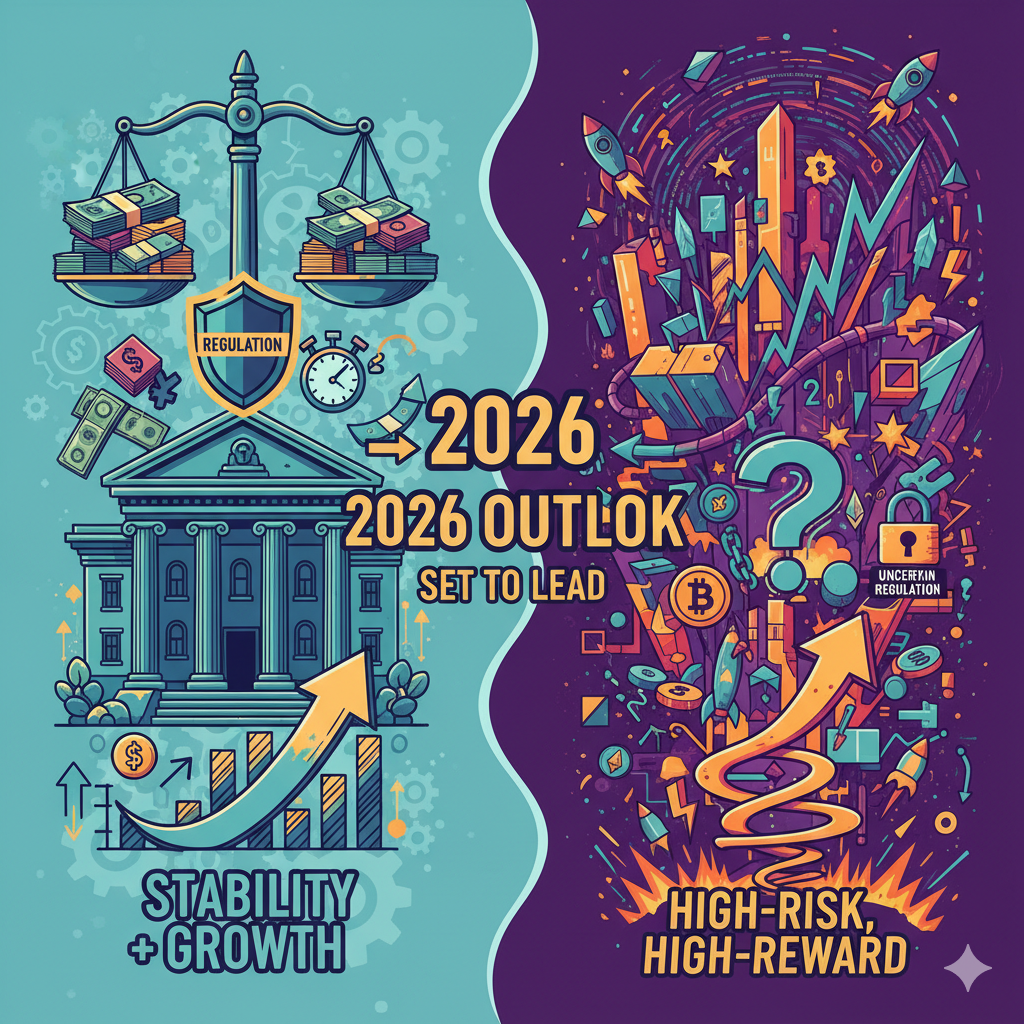
As 2026 approaches, traders and investors find themselves asking one key question — which market will deliver better opportunities in the coming years: Forex or crypto? Both have dominated global financial headlines in their own ways. Forex, the world’s largest financial market, offers stability, regulation, and liquidity, while crypto continues to attract attention with innovation, volatility, and potential for astronomical returns.
The debate isn’t just about profits anymore; it’s about sustainability, safety, and long-term viability. To understand which might lead in 2026, we need to look closely at their fundamentals, market dynamics, and the broader macroeconomic landscape.
The Forex Market: Stability and Scalability
The foreign exchange (Forex or FX) market has long been considered the bedrock of global trading. Every day, trillions of dollars are exchanged as currencies fluctuate based on interest rates, geopolitical developments, and macroeconomic data.
In 2026, the Forex market is expected to maintain its dominance largely because of its scalability and risk-adjusted returns. Unlike crypto, which can surge or crash within hours, Forex moves in more predictable patterns influenced by measurable factors such as inflation, monetary policy, and trade balances.
Institutional investors favor Forex for its liquidity and structure. It’s one of the few markets where large trades can be executed efficiently without causing major price swings. Central banks, governments, hedge funds, and major corporations all operate in the FX space, ensuring constant activity and transparency.
The beauty of Forex lies in its accessibility and resilience. It thrives in both bull and bear environments, adapting to shifting economic trends. For 2026, experts believe that steady inflation rates, global trade recovery, and gradual interest-rate realignments will make Forex a strong performer, especially for investors looking for predictable, consistent returns rather than speculative gains.
Crypto’s Appeal: High Risk, High Reward
On the other hand, the cryptocurrency market continues to captivate investors despite its volatility. Bitcoin, Ethereum, and a growing list of altcoins have transformed how people perceive money, assets, and technology.
Crypto’s greatest strength is its potential for outsized returns. A single bull run can multiply investments several times over, and innovation within blockchain, decentralized finance (DeFi), and digital asset tokenization keeps drawing new participants.
However, this potential comes with a heavy price — instability and uncertainty. Prices in the crypto market are influenced not only by supply and demand but also by social sentiment, media narratives, and regulatory news. Unlike Forex, which operates under well-established legal frameworks, crypto still faces regulatory ambiguity across most jurisdictions.
2026 might see governments taking firmer stances on how cryptocurrencies are classified, taxed, and traded. While that could bring more legitimacy, it may also limit speculative freedom — something that has been a key driver of crypto’s explosive growth.
Still, many analysts agree that crypto will continue to attract a younger, risk-tolerant generation of traders seeking faster profits. The decentralized nature of digital assets also appeals to those skeptical of central bank policies and fiat currency inflation. If inflation remains a concern in 2026, crypto might again find a supportive narrative as a potential hedge, even if its volatility makes it unreliable as a true store of value.
Macroeconomic Conditions Favor Forex’s Framework
The macroeconomic landscape remains one of the biggest deciding factors between these two markets. As inflationary pressures linger and central banks recalibrate policies, the Forex market benefits from clear data-driven movements.
Currencies respond to well-known triggers: interest rate changes, GDP growth, trade deficits, and policy announcements. Traders can build models around these fundamentals, using proven strategies for consistent performance.
Crypto, by contrast, is driven more by sentiment and liquidity cycles. When risk appetite increases, investors flood into digital assets; when uncertainty rises, they flee back to cash or bonds. This cyclical behavior makes crypto more of a speculative instrument rather than a stable trading environment.
For 2026, most analysts expect central banks to maintain a delicate balance between controlling inflation and supporting growth. This environment typically creates sustained volatility in currency pairs — exactly what Forex traders thrive on.
Institutional Preference: Regulation and Infrastructure
One of the strongest arguments in favor of Forex is its institutional reliability. Forex is globally regulated, offering transparency, risk management tools, and established infrastructure. Banks and corporations can hedge risks effectively, ensuring stability in international trade.
Crypto, despite its innovations, remains fragmented. Many exchanges are unregulated, security breaches are frequent, and investors often face issues like wallet losses or lack of customer protection. Institutional investors are cautious; while they recognize crypto’s innovation potential, they are hesitant to allocate significant funds without solid legal assurance.
In 2026, the gap between these two markets may narrow if more crypto regulations are introduced. However, until the digital asset space gains the same level of credibility and compliance as Forex, large investors are likely to prioritize the safer and more reliable FX environment.
The Potential for Crypto’s Comeback
Despite these challenges, crypto should not be written off. The industry has shown remarkable resilience and an ability to reinvent itself after every downturn. If 2026 witnesses favorable regulatory developments, crypto could experience another wave of growth, especially through new use cases like tokenized assets, digital identity, and decentralized financial applications.
The upcoming evolution of central bank digital currencies (CBDCs) may also reshape the landscape, blurring the line between traditional finance and crypto. As mainstream adoption grows, crypto could integrate more deeply into the financial system, becoming less volatile and more functional.
However, this optimistic scenario depends on several uncertain factors — global cooperation on regulation, technological progress, and renewed investor confidence. Without those, crypto risks another cycle of hype followed by disillusionment.
2026 May Not Have a Clear Winner
Ultimately, the 2026 outlook doesn’t present a binary choice between Forex and crypto. Each serves a different purpose and caters to different types of investors. Forex offers steadiness, liquidity, and trust, while crypto provides innovation, excitement, and the chance for exponential gains.
The Forex market will likely continue to attract conservative investors, hedge funds, and institutions seeking dependable returns. Crypto, meanwhile, will draw risk-takers, innovators, and those betting on the future of digital finance.
A smart approach for 2026 might involve diversification — balancing exposure to both markets. Allocating a majority of funds to Forex for stability, while maintaining a smaller position in crypto for high-reward opportunities, could offer the best of both worlds.
As the financial world continues to evolve, the true winner may not be one market over the other, but those investors who understand how to leverage both. Success in 2026 will depend less on choosing sides and more on adapting strategies to capture opportunities from each sector’s unique strengths.
Conclusion
The 2026 financial outlook paints a complex picture. Forex stands as a proven, institutionally backed marketplace with consistent potential and minimal surprises. Crypto, though unpredictable, remains a hub of innovation and possibility.
Those seeking steady growth and lower risk will likely find comfort in the Forex market’s structured environment. Those with higher risk tolerance and a vision for future technological disruption may continue to chase crypto’s potential.
In truth, 2026 may not crown one absolute winner. Instead, it could mark the year when investors finally learn that Forex and crypto can coexist, each playing a crucial role in shaping modern finance — one built on trust, and the other on transformation.
One thought on “2026 Outlook: Forex vs. Crypto — Who Actually Wins?”
Comments are closed.